

TL;DR
- Reality TV shows film for 6 to 10 weeks minimum. Arranging pet care, housing, and job coverage for that long is a completely different problem than a weekend favor from a friend.
- Most contestants pay their full rent or mortgage out of pocket during filming. Production covers housing on set and nothing back home.
- Jobs are not protected. Many contestants return to find their position filled or eliminated, and reality TV contracts do not include income replacement.
- Big Brother contestants are typically required to designate a legal and financial contact before filming begins. Other shows leave the logistics entirely to the contestant.
- The total out-of-pocket cost of going on a reality show, before any prize money or post-show income, can reach $5,000 to $10,000 for a contestant in a mid-size US city.
Before a contestant films a single confessional, they have already solved roughly a dozen logistical problems most people don’t think about until moving day. The dog needs a keeper for ten weeks. The rent still comes due. The employer wants a reason. None of it can be explained clearly to anyone, because the NDA was signed before the flight was booked.
Most people picture the logistics of going on a reality show as something like: a friend watches the dog, someone grabs the mail, and life resumes when the cameras stop. That picture is missing about 90% of the actual problem. These shows run for months. The financial obligations don’t pause. The employer doesn’t always wait. And production companies require contestants to have every personal arrangement confirmed before departure as a contractual condition, not as a courtesy suggestion.
This piece maps the full logistics problem: pets, jobs, housing, finances, cars, mail, and what production actually covers versus what gets left entirely to the contestant. By the end, you’ll have a clear picture of why saying yes to a reality show is less like booking a vacation and more like executing a two-month disappearing act with real financial consequences.

The Timeline Problem Nobody Thinks About Until It’s Too Late
The first thing that changes how you think about all of this is the actual length of these shows.
The Bachelor films for roughly six to eight weeks. Survivor runs 39 days on location. Big Brother keeps contestants in the house for 75 to 90 days. Love Island US runs approximately six weeks. These are not long weekends. These are the kinds of timelines you see in extended medical leave paperwork or international work assignments.
Consider what “a friend watching your dog” actually means at the two-month mark. It means your friend is making vet appointment decisions, managing an animal they didn’t sign up to own, and doing it without a clear end date because the NDA prevents you from telling them when you’ll be back with any certainty. It means they are handling a behavioral flare-up or a mystery limp or a medication refill entirely on their own judgment.
That reframe is the key to understanding everything else in this piece. The question is never “can someone cover for me for a bit?” The question is “can someone run a parallel version of my life for two to three months, with no real-time updates from me, starting in about three weeks?”
Former Bachelor contestants have described receiving as little as two to three weeks between their casting confirmation call and their departure date. That window is not enough time to casually make arrangements. It is enough time to execute arrangements you’ve already thought through, which is why production companies formalize the requirement. You cannot board the plane until the checklist is complete.

What Do Reality TV Contestants Do With Their Pets While Filming?
Most reality TV contestants arrange for a family member, close friend, or paid boarding facility to care for their animals during filming. The arrangement is more involved than typical pet-sitting because it requires veterinary authorization, emergency decision-making access, and behavioral familiarity across a two-month stretch with no reliable contact point.
The NDA Problem for Pet Care
The confidentiality requirements on major reality shows are strict enough that contestants cannot tell their designated pet caregiver where they are going, when they will return, or how to reach them if something goes wrong. The caregiver is, in practical terms, taking on temporary ownership of the animal without any of the normal communication backup.
The Bekah Martinez situation from Bachelor Season 22 is the clearest public illustration of this. Her mother filed a missing persons report during filming because her family genuinely did not know where she was or when she’d be back. A dog or cat in that same household would have been in the same information blackout. The caregiver has to be someone trusted enough to make medical decisions for an animal while operating completely in the dark about the owner’s location and return date.
This is why the designated caregiver almost always needs to be a family member rather than a casual friend. The level of access and decision-making authority required is too significant for someone without a deep investment in both the contestant and the animal.
What Happens When the Pet Has Medical or Behavioral Needs
Routine vet visits, prescription medications, and anxiety-prone animals raise the complexity significantly. A dog who needs thyroid medication twice a day is not the same logistics problem as a healthy dog who needs walks and kibble.
Some contestants opt for professional boarding kennels specifically because kennels document care, maintain vet records, and handle emergencies through established protocols that don’t require contestant access. A kennel doesn’t need to call you to handle a situation. A friend does.
The cost of boarding a dog for eight to ten weeks at a mid-range facility in a US city runs roughly $1,500 to $3,000. Production does not cover this expense. It comes entirely out of the contestant’s pocket, before any prize consideration, before any post-show income, and with no guarantee the show will even air footage of them.

The Job Situation — Some Employers Hold, Many Don’t, and Nobody Can Say Why You’re Leaving
Reality TV contracts require confidentiality, which means contestants often cannot give their employer a real reason for an extended absence. Whether the job is held depends almost entirely on the employer, not the production company.
The Survivor Version of This Problem
Survivor contestants face the most extreme version of the employer conversation. They are flown to a remote international filming location and cannot disclose the destination to anyone. Some contestants have described telling employers they needed an unpaid personal leave for family reasons, which is technically true and functionally useless as a scheduling explanation.
An employer hearing “I need ten weeks off for personal reasons and I can’t tell you where I’m going or what I’m doing” is not receiving a request that most HR departments have a clean process for approving. The employment outcome in that scenario depends almost entirely on how the relationship between the contestant and their employer was before the conversation happened.
The Bachelor and Big Brother Windows
The Bachelor and Bachelorette require contestants to be away for roughly six to eight weeks. A number of former contestants have spoken publicly about returning to find their position filled, their contract not renewed, or a situation that effectively forced a resignation. The show does not compensate for this.
Big Brother‘s 75-to-90-day timeline is the hardest employer conversation in the reality TV calendar. Season 16 contestant Caleb Reynolds described real financial stress following the show despite a long run in the house. The show provides a small weekly stipend, which former contestants have reported at roughly $100 per week for The Bachelor, though this figure varies and has been disputed. That stipend does not replace a salary.
Gig workers, freelancers, and commission-based earners absorb the income loss directly. There is no employer to negotiate with. The income simply stops for the duration of filming. Love Island US contestants have raised this point in post-show interviews with notable consistency.
Production companies do not compensate for lost employment. As covered in Bamfuzzle’s breakdown of reality TV contract details, these contracts routinely and explicitly exclude job-loss provisions. The contestant assumes all employment risk.
The one category with some protection is unionized workers and government employees in jurisdictions where unpaid leave policies apply. Reality TV participation is not a qualifying reason under the Family and Medical Leave Act, so federal protections do not extend here.

Rent, Mortgages, and the Housing Situation Nobody Talks About
Rent and mortgage payments do not pause during filming. Contestants are responsible for their full housing costs at home throughout the entire production schedule. Production provides accommodation on set and covers nothing back home.
Renters — Subletting, Lease Violations, and What Most People Do
Subletting is the obvious solution and also the one most likely to create a new problem. Most standard residential leases in the US require explicit landlord approval for any subletting arrangement. Subletting without that approval risks eviction proceedings, which would begin while the contestant is unreachable in a filming location under NDA.
Most contestants solve this by leaving their unit empty and continuing to pay rent out of pocket, or by asking a family member to move in informally for the duration. Neither of these is financially painless. Paying rent on an apartment you aren’t sleeping in for two months is a real cost that doesn’t show up in the show’s promotional materials.
Contestants who live in expensive coastal markets and appear on shows like Love Island US have specifically noted this financial pressure in post-show interviews. A $2,500-per-month apartment sitting empty for eight weeks is $5,000 in housing costs for the privilege of being on television.
Homeowners — Mortgages, HOA Fees, and Property Management
Homeowners face the same cost problem with an additional layer of complexity around ongoing property management. Automatic payment setup covers the mortgage and HOA fees, but it doesn’t handle the burst pipe or the neighbor dispute or the property tax notice that arrives mid-filming.
This is where limited power of attorney becomes a practical tool rather than a legal abstraction. For Big Brother contestants specifically, arrangements involving formal financial delegation are common because the filming window is long enough that unexpected decisions will arise. Setting up every recurring bill on autopay and designating a parent or sibling as financial backup is the standard approach contestants have described publicly.

Cars, Mail, and the Miscellaneous Logistics Stack
The big categories (pets, jobs, housing) get the most attention, but the smaller items in the logistics stack are where most people underestimate the total complexity.
Cars are a problem that gets solved at departure and then forgotten until return. Contestants who drive to their departure point typically leave their vehicle with a family member rather than paying for airport long-term parking, which runs $400 to $800 at major US airports over a ten-week stretch. Some have described coordinating a family member to drive them specifically to avoid that cost.
Mail is the most commonly overlooked problem. Physical mail accumulates fast over two months. Jury summons arrive. Prescription refills expire. Packages pile up on a doorstep or get returned. Big Brother contestants are typically required to arrange a formal mail handler before filming begins. Other shows leave this entirely to contestant judgment, which means some people think of it and some don’t.
Prescriptions and medical management require pre-arrangement for the full filming period. Production medical staff handle on-set emergencies but do not manage ongoing prescriptions for conditions that predate the show. A contestant who takes daily medication needs a supply that covers the full run, plus buffer, arranged before departure.
Social media accounts on shows like Big Brother often require that a trusted contact be given access to manage or freeze profiles during filming. Some contestants set up automated posts. Others arrange for a family member to handle fan responses. The alternative is an account that goes silent for 90 days, which reads as odd to followers who don’t know why.
Recurring subscriptions are minor individually and significant collectively. A gym membership, streaming services, cloud storage, meal kits, and software subscriptions running for ten weeks while unused add up faster than most people calculate in the excitement of getting cast.

What Production Actually Requires Before You Leave
Production companies require contestants to confirm that personal arrangements are in place before filming begins. This is a contractual obligation, not a recommendation. Solving the logistics is the contestant’s problem.
Casting contracts for shows like Big Brother explicitly require contestants to have designated contacts for legal, financial, and medical matters before departure. Production provides a checklist of required arrangements to complete. That checklist is not a support service. It is a liability management document for the network designed to confirm that the contestant has no legally or medically unresolved obligations that could disrupt filming.
What production covers is specific and limited. The show pays for transport to the filming location, provides housing and food on set, and pays a weekly stipend that varies by show and is generally modest. Former Survivor contestant Spencer Bledsoe has spoken publicly about the gap between what viewers assume about contestant compensation and the actual numbers. The show is not a paid vacation. It is closer to an unpaid sabbatical with a camera crew, for which the contestant has spent weeks organizing a parallel life to keep running without them.
Former Bachelor contestants have reported stipends around $100 per week, though this figure has been disputed and likely varies by season and contract. Even accepting a more generous figure, the stipend does not offset two months of rent, boarding costs, and lost wages. The financial math only works if the contestant has significant external support or wins.
For a deeper look at how much contestants actually take home, Bamfuzzle’s breakdown of Traitors contestant pay shows how dramatically compensation varies across formats.
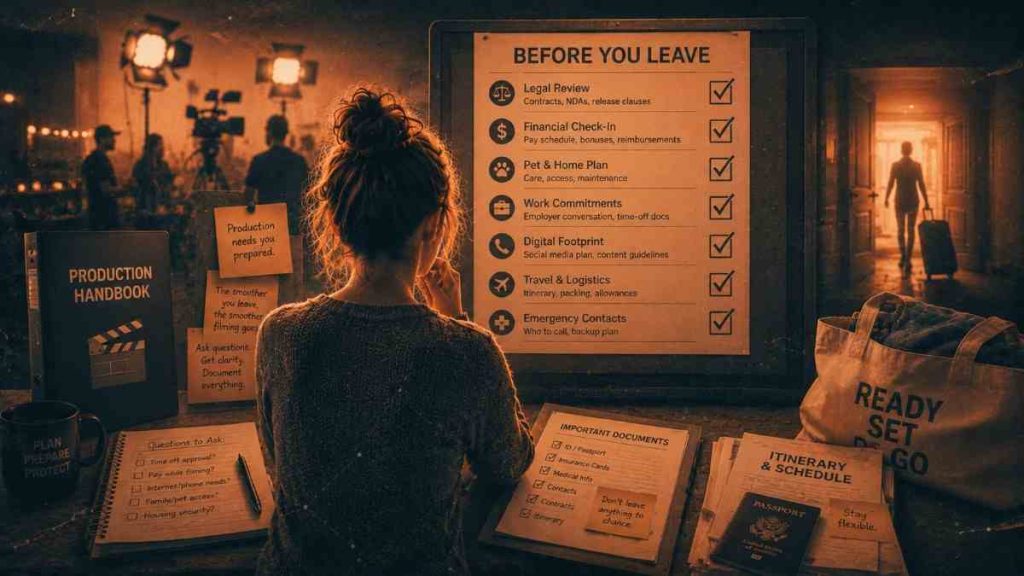
The Real Cost of Saying Yes — What Contestants Don’t Account For
The visible cost of going on reality TV is the time away. The cost that doesn’t appear in the excitement of getting the casting call is the infrastructure required to keep a life running during that absence.
Add it up for a contestant in a mid-size US city:
- Pet boarding for 8 to 10 weeks: $1,500 to $3,000
- Rent on an empty apartment: $2,000 to $5,000 depending on market
- Lost wages or lost job: highly variable, potentially significant
- Recurring subscriptions running unused: $100 to $300
- Car storage or transport logistics: $200 to $800
- Prescription stockpiling and medical prep: $100 to $500
The out-of-pocket total before any prize money or post-show income reaches $5,000 to $10,000 for many contestants. That number doesn’t include the job that didn’t come back.
This is partly why reality TV casts skew toward contestants with nearby family support systems. Not because casting directors select for it explicitly, but because the people who can actually say yes to a ten-week disappearing act tend to be the ones with parents who can move into their apartment, siblings who love their dog, and employers who will tolerate an open-ended personal leave. The logistics filter the applicant pool before the audition tape ever gets reviewed.
The contestants who struggle most after filming often aren’t the ones who had bad experiences on camera. They’re the ones who came home to a financial gap they underestimated before they left. The show ends. The bank account doesn’t reset. And the dog still needs to eat.

FAQ
What do reality TV contestants do with their pets while filming?
Most contestants arrange for a trusted family member or professional boarding facility to care for their pets during filming. Because NDA requirements prevent contestants from disclosing their location or providing a firm return date, the designated caregiver needs the authority to make veterinary decisions independently. Professional boarding is increasingly common because kennels handle emergencies through established protocols without needing to reach the owner. The cost of boarding a dog for eight to ten weeks at a mid-range US facility typically runs $1,500 to $3,000, which production does not cover.
Do reality TV contestants have to quit their jobs to appear on a show?
Not always, but many effectively do. Because confidentiality agreements prevent contestants from explaining where they’re going or for how long, employers receive vague requests for extended unpaid leave. Whether the job survives depends entirely on the employer. Survivor’s 39-day international filming window and Big Brother’s 75-to-90-day schedule are the hardest timelines to negotiate with an employer. Multiple alumni from both shows have described returning to find their position eliminated or filled. Production does not replace lost income or provide any job-loss compensation under standard contracts.
Who pays for a reality TV contestant’s rent while they’re filming?
The contestant does. Production provides housing at the filming location but covers nothing at the contestant’s home address. Rent and mortgage payments continue on their normal schedule. Most contestants either pay out of pocket for an empty unit or make informal arrangements for a family member to stay there. Subletting without landlord approval violates most standard US residential leases and can trigger eviction proceedings, so many contestants absorb the cost of a vacant apartment rather than risk a lease issue while they’re unreachable.
Do any reality shows require contestants to set up legal arrangements before filming?
Yes. Big Brother contracts are the clearest example. Contestants are typically required to designate a legal and financial contact before departure, often with authority to manage mail, bills, and financial decisions during filming. Other major shows require contestants to confirm that personal arrangements are in place as a condition of the contract, even if they don’t formalize a legal designation. The checklist production provides is a liability management tool, not a support service. The contestant solves the logistics. Production confirms they’ve been solved.
Can a reality TV contestant sublet their apartment while filming?
Technically possible, but practically risky. Most standard residential leases in the US require explicit landlord approval before any subletting arrangement. Subletting without that approval is a lease violation that can result in eviction proceedings, which would begin while the contestant is on set and unreachable. Most contestants leave their units empty and continue paying rent rather than risk a legal dispute they can’t respond to. The financial cost is real: eight weeks of rent on an apartment sitting empty is a significant out-of-pocket expense that doesn’t appear in any promotional description of what it means to be cast.
Isn’t this all worth it for the exposure and potential prize money?
For some contestants, yes. For many, the math doesn’t work out that way. Most reality show contestants don’t win the prize. Post-show income from brand deals and appearances is heavily concentrated among a small number of high-visibility cast members. The majority of contestants return to their regular lives with a depleted bank account, a potential gap on their resume, and no guarantee of meaningful income from the show’s airing. The exposure has real value for people with the right platform and audience fit. For everyone else, the financial disruption is the lasting outcome, not the windfall.
What This Actually Means for the People Who Get the Call
Getting cast on a reality show is not the moment you think it is. It is the starting gun for a 60-to-90-day emergency life reorganization that most people are completely unprepared for because nobody describes it that way.
The single most important insight from all of this is simple: production requires your life to be handled before you arrive. They confirm it contractually. They don’t help you solve it. The logistics problem is yours from the moment you pick up the casting call, and the financial consequences of underestimating it are yours long after the finale airs.
If you’re the kind of person who thinks about this stuff before you ever fill out an application, the right move is to run the full cost calculation now. Price out pet boarding. Check your lease for subletting terms. Have the honest conversation with your employer before you need to have it under pressure. The people who handle the experience without lasting financial damage are almost always the ones who treated the logistics as seriously as the audition.