
What Exactly Happened in Season 4, Episode 6
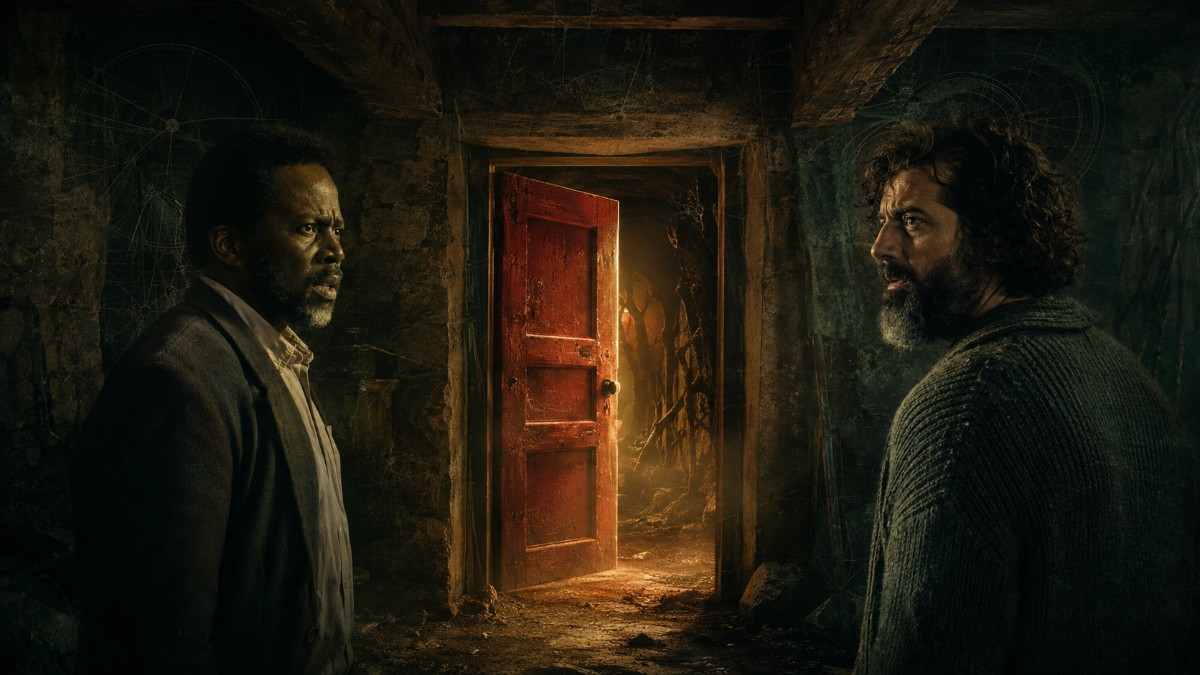
Jade finds the red door by following a vision, not a map. That distinction matters from the start.
His visions have been pulling him toward specific locations and objects throughout Season 4, functioning less like hallucinations and more like directed instructions from something that wants him to find particular things. In Episode 6, that pull takes him underground into the tunnel system beneath the town, near the area where the graves are located above ground. He is not exploring. He is being guided.
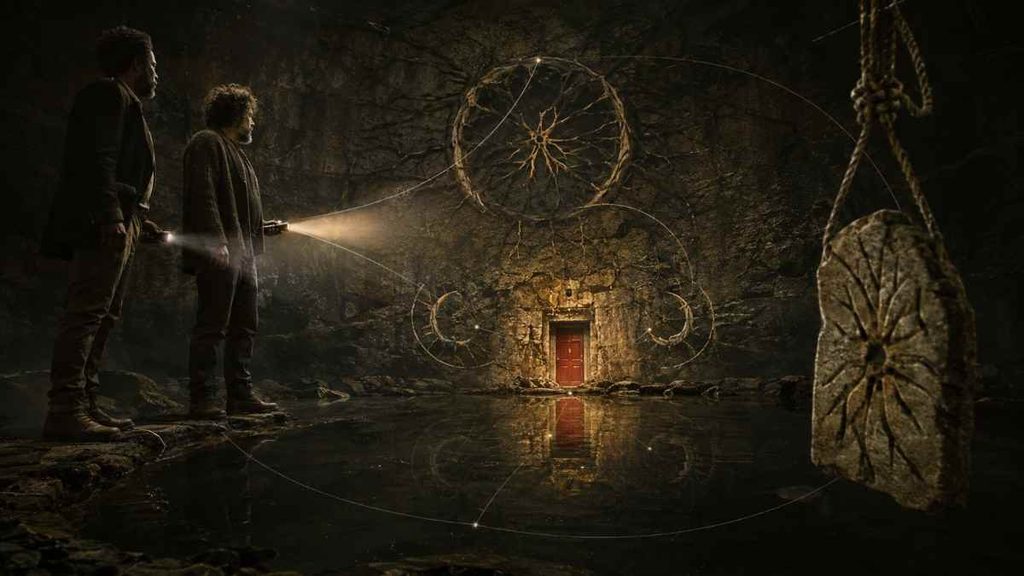
The door appears in the tunnel wall. It is red, it is clearly painted, and it reads as a manufactured object. A real door that someone installed in an earthen tunnel, not a formation that grew there or materialized overnight. Jade’s reaction when he sees it is not panic. It is recognition mixed with dread, which tracks with how his visions have been operating: he keeps arriving at things that feel like he was always supposed to find them.
What the episode does NOT show is what is on the other side. The camera holds on the door. We do not get a point-of-view shot from beyond it. We do not get confirmation that there is a space behind it rather than a wall behind the paint. The show treats the door’s existence as the revelation, not its contents, which is a deliberate narrative choice about where it wants the audience’s attention to land.
One more detail worth noting: the visions that led Jade here have previously connected to the man in yellow, which keeps that figure in the frame as someone who may have knowledge of what the door is and who is supposed to find it.
Why the Location Matters More Than the Door Itself
The location is not set dressing. In FROM, nothing is placed without function.
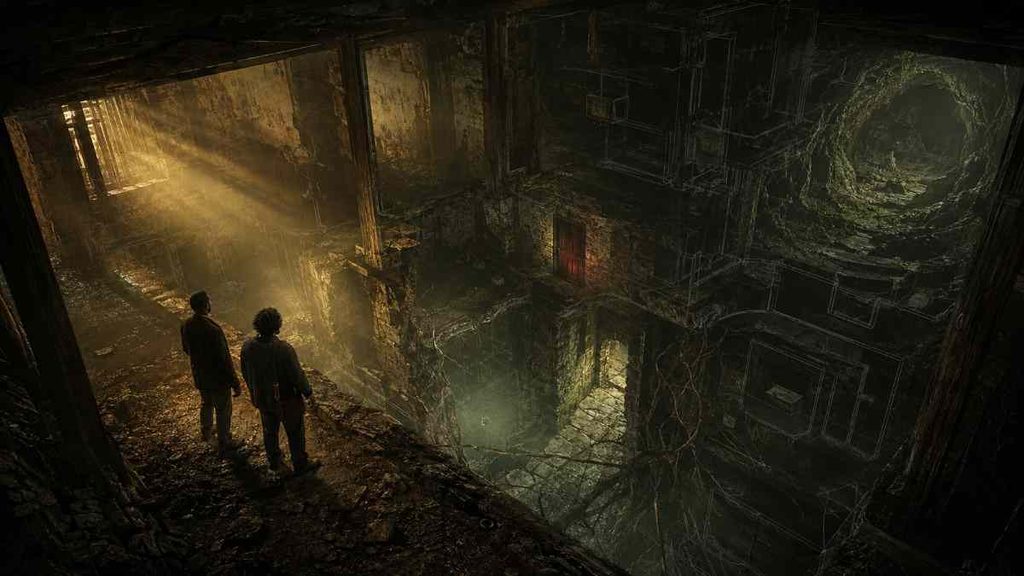
The graves above the tunnel are a charged site in the show’s mythology. They connect to death, memory, and the children who appear throughout the series as markers of the town’s deeper rules. The underground space beneath them is not neutral ground. It is already loaded with symbolic weight before the door appears in it. Placing the door in that specific tunnel rather than in any other location in the town is a statement about what the door is adjacent to: death, burial, the passage between states.
Every other significant threshold in FROM sits above ground and comes with rules. The colony house door operates under the law that residents must be inside by nightfall or they die. The talisman-marked perimeters function as invisible borders that the creatures will not cross. Both thresholds are known by the residents, explained to newcomers, and enforced by consequences. The system communicates those thresholds openly, because the system wants residents to use them correctly.
The red door has none of that. No one told the residents it existed. No rule has been articulated around it. It sits in the ground beneath the graves with no announcement, no instruction set, and no community knowledge. That makes it the first true anomaly of its kind in the show’s environment. The town has always been a trap with clearly posted edges. This door was hidden.
That hiding is meaningful. You conceal an access point when you do not want everyone to use it. The door being underground near the graves, discovered only by someone receiving selective visions, suggests it was designed to be found by a specific person at a specific time. It was not meant to be stumbled onto randomly by any resident with a shovel. For more on FROM’s symbol and threshold patterns throughout the series, the pattern of threshold symbolism goes back to Season 1.
Someone Built This Door — And That Changes Everything
The Town’s Environment Has Never Behaved This Way Before
Stop and think about what the town’s environment normally looks like. The road loops that fold back on themselves. The creatures that emerge at night from some origin point no one has located. The radio signals, the lighthouse, the way the town seems to respond to emotional states and choices. All of it feels systemic, like outputs from a machine rather than decisions made by a person.
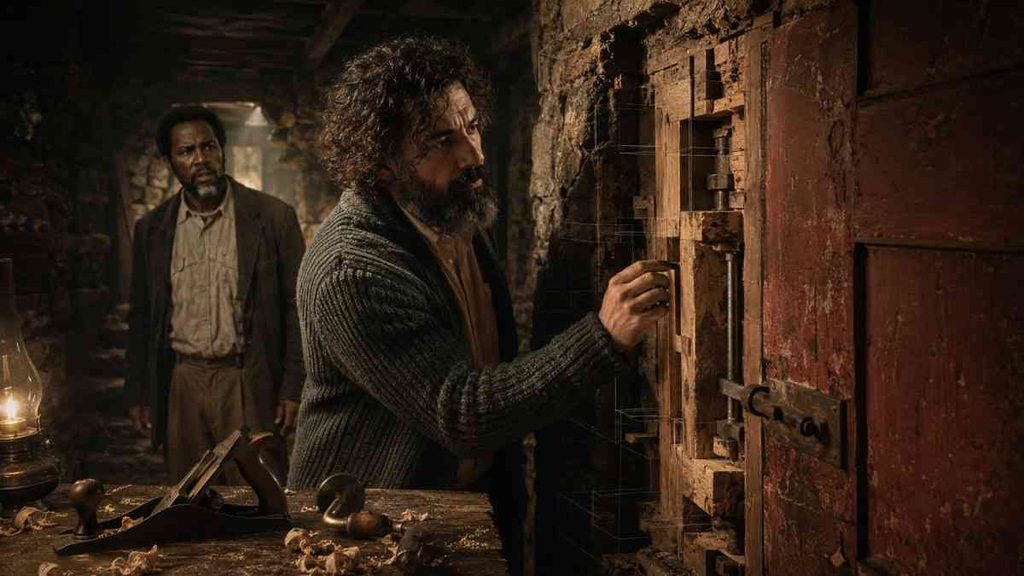
The door is painted red. Paint is a human choice. It is not a supernatural event, not an environmental response, and not a creature behavior. Someone acquired paint, stood in an underground tunnel near the graves, and applied it to a door. That is a person doing a thing for a reason. It is categorically different from every other piece of the town’s environment.
The show has given us constructed objects before: the talismans, the colony house itself, the buildings the residents use. But those exist as remnants of whoever was in the town before the current group of residents. They are archaeological. The red door does not read that way. Its location in the underground tunnel near the graves suggests it was placed in relation to something the town already had, which means whoever built it understood the town well enough to place things intentionally within its system.
Who Has the Knowledge to Build Something Like This?
The candidates narrow quickly when you think about who would need to know enough about the town to place a door underground near the graves with any purpose behind it.
A long-term resident with inside knowledge is one option. Someone who has been in the town long enough to map its underground structures, understand the relationship between the graves and whatever lies beneath them, and build something that a vision-guided person would eventually find. That person would have to be hiding significant knowledge from the rest of the community.
An outside agent who can move in and out of the town is another option. If the escape mechanism allows selective entry and exit, someone operating from outside could theoretically have placed the door as an access point or test. This would imply the town has an administrator who interacts with the physical environment, not just an abstract force.
The man in yellow remains the most compelling candidate given what we know. He appears to operate with more freedom than standard residents, he connects to the visions that guided Jade to the door’s location, and his entire presence in the show suggests access to rules that other characters do not have. If he built the door or knows what it is, the question becomes: did he build it to help someone escape, or to make sure the right kind of person gets filtered into whatever is on the other side?
Jade’s visions being the delivery mechanism is the detail that tilts this toward something intentional. The door was not found by accident. It was found by someone who was being guided toward it. If the guiding force is the same entity that knows what the door is for, then Jade was not discovering the door. He was being delivered to it.
How the Red Door Connects to FROM’s Existing Symbol System
Doors and Thresholds in FROM Have Always Been Rule-Bound
Doors in FROM do not just open and close. They mark the line between what is survivable and what is not.
The colony house door rule is the clearest version of this: cross that threshold by nightfall or die. The door does not enforce the rule through any mechanism you can see. The rule exists, it is real, and the threshold marks where it applies. Residents learn this rule the hard way, or they learn it from someone who survived learning it the hard way.
The talisman perimeters work the same way at larger scale. They mark a boundary, and something on one side of that boundary will kill you if you cross to the other side at the wrong time. The threshold has power because of what the system assigns to it, not because of anything physically special about the line itself.
The red door introduces what might be a third threshold type. Not a safety boundary that keeps danger out, and not an enforced rule about nightfall. A possible access point into something that exists within the system. That is a qualitatively different function, and it suggests the town’s threshold system is more layered than the residents have been allowed to see.
Red as a Signal Color in the Show’s Visual Language
Red in FROM does not mean one thing. It signals significance, which is different from signaling meaning.
Blood is red. The creatures’ interactions with victims produce red. Warning contexts in the show’s visual grammar lean toward red. But red also appears in contexts that read more like markers than threats, moments where the camera uses color to say “pay attention here” without telling you what to pay attention to.
A red door in a tunnel of earth and shadow is impossible to miss. The color is the point. Whoever painted it red made a choice to make it visible, which cuts against the idea that the door was hidden as a secret. You do not paint something red when you want it to go unnoticed. The red is an announcement. The hiding is in the location, underground, not in the color.
That ambiguity feels intentional. The door announces itself visually while concealing itself spatially. It is meant to be found by someone who gets close enough to find it, but not by someone casually passing through. The red does not say “danger” or “safety.” It says “this is the one.”
The Children and the Underground
The children in FROM have appeared consistently at the edges of what the town allows residents to understand. They show up near death. They appear in spaces that connect to the town’s deeper logic. Jade’s visions have featured them in ways that suggest they function as guides or gatekeepers rather than victims. They know things about the system that living adult residents are not supposed to know.
The graves above the tunnel are one of the spaces most associated with the children’s presence in the show’s mythology. What the bottle means in FROM connects to this same network of objects and locations that the children seem to orbit: things placed deliberately, found by the right people, pointing toward the town’s hidden architecture. The red door appearing in a tunnel beneath a space the children are connected to follows an established pattern. The show has been consistent about using the children to mark places where the town’s rules run deeper than the residents have been told.
If the children are aware of the door, or if they helped deliver Jade to it through the vision sequence, that has significant implications. It would mean the children are not just observers of the system. They are participants in directing who goes where inside it.
What the Red Door Does to the Escape Theory
The escape theory heading into Season 4 had a general shape: getting out of the town requires understanding and completing some kind of cycle or ritual that the town runs on. The residents are not trapped by a lock that can be picked. They are trapped by a process that needs to play out. Physical exits are not the point.
The red door complicates that framework in a specific way. It is a physical, constructed access point that someone placed deliberately. That means physical movement within or out of the system may be possible for someone with the right knowledge or the right credentials. The town might not be a closed box after all. It might be a box with a door that most people do not know exists.
That shift changes the antagonist question entirely. If the escape mechanism is a ritual or a cycle, the enemy is ignorance, not knowing how the system works. If the escape mechanism involves a physical access point controlled by a person with inside knowledge, the enemy is that person and whatever agenda they have for deciding who gets to leave.
The residents have always been operating under the assumption that the town is a trap with no designer. A supernatural event that happened to them, not a system that was built for them. The red door is the first piece of evidence that someone designed this. Someone made choices about where to put things and what color to paint them and who to guide toward specific locations through vision sequences.
That someone has goals. Those goals may not align with the residents’ survival. Getting out of the town might require getting past whoever built the door as much as it requires finding the door in the first place. For a full look at where all of this might be heading, the Season 4 finale theories lay out the strongest current readings of how the endgame could play out.
What to Watch For Before the Finale
Three things are worth tracking in the remaining episodes, and they are specific enough to tell you a lot about what the red door actually is.
Whether Jade returns to the door. His first encounter established the door exists. If he goes back and the show gives us a point-of-view shot from inside or beyond it, that confirms there is a space behind it rather than just a wall with paint on it. The show knowing we are waiting for that shot means it will use that reveal deliberately, not accidentally.
Whether any other character shows knowledge of the door before being told about it. If Jade tells no one and another character references the underground location, the tunnel, or the door itself without prompting, the show is telling you that character has inside knowledge of the system. That is your most important reveal about who the architect is.
Who else receives visions pointing them underground. The visions have been selective so far. Jade is not everyone. If the guidance system starts directing other characters toward the same location, the door may be entering a phase where it becomes usable, which would suggest the town’s system is moving toward something, not just holding steady.
The town has always felt like a trap with no one at the controls. The red door is the first evidence of a hand on the wheel. What the show does with that evidence in the finale will define whether Season 4 is where FROM stops asking questions and starts giving answers that actually hold.
FAQ
What is behind the red door in FROM Season 4?
As of Season 4 Episode 6, the show has not confirmed what lies beyond the red door. The camera holds on the door from Jade’s perspective without providing a point-of-view shot from the other side. Based on its placement underground near the graves and its constructed, painted appearance, the door appears to be a designed access point within the town’s system. It is not a dead end and not a naturally occurring feature. What it leads to, whether a physical space or a passage within the town’s mythology, remains one of Season 4’s open questions heading into the finale.
What episode does Jade find the red door in FROM?
Jade discovers the red door in Season 4, Episode 6. He is pulled to the location by one of his recurring visions, which guide him into the tunnel system running underground near the town’s graves. The door appears in the tunnel wall, painted red and clearly manufactured rather than formed naturally. This episode does not show Jade opening the door or what exists on the other side.
Who built the red door in FROM?
The builder has not been identified as of Season 4 Episode 6. The leading candidates are a long-term resident with deep inside knowledge of the town’s underground geography, or a figure like the man in yellow who appears to move with more freedom than standard residents. The door’s deliberate placement near the graves, combined with the fact that Jade was guided to it through selective visions, suggests whoever built it had both architectural knowledge of the town and the ability to direct who finds it and when.
Is the red door connected to the escape theory in FROM?
Yes, in a way that reshapes the theory significantly. The dominant escape framework entering Season 4 held that leaving required completing some ritual or cycle the town runs on, not finding a physical exit. The red door introduces the possibility that physical movement within the system is possible for someone with the right knowledge. If it functions as a designed access point rather than a symbolic location, escape may be gated by whoever controls the door, not just by whether residents understand the town’s rules. That shifts the obstacle from ignorance to gatekeeping.
Does the red door mean someone built the town intentionally?
The door is the strongest piece of evidence yet that someone with inside knowledge has been shaping the town’s environment, but it does not confirm the entire town was built from scratch by a human architect. What it does confirm is that at least one element of the town’s physical environment was placed deliberately by someone who understood the system well enough to make strategic choices about location, color, and access. That is qualitatively different from the supernatural and systemic features the show has relied on before, and it suggests the town has an administrator, even if it did not have an original human creator.
Why is the door red specifically?
Red in FROM signals significance rather than a fixed meaning. The color makes the door impossible to miss at close range, which means it was painted to be found by someone who got close enough to look for it, not to be hidden from everyone. The ambiguity in FROM’s use of red, which appears in warning contexts but also as a pure visual marker, means the door’s color does not tell you whether it is dangerous or safe. It tells you it matters. The choice to paint it rather than leave it unpainted is also evidence of human decision-making, which is the more structurally important detail.
The most important thing the red door tells us is not where it leads. It is that it was built at all. In a show where the environment has always felt like weather, something that happens to people rather than something designed for them, a painted door in an underground tunnel is a fingerprint. Someone was here. Someone made a choice. Someone has been shaping this system from inside it in ways the residents have never been equipped to see.
Watch the finale with that lens. The question is no longer whether the town can be escaped. The question is who holds the key and what they need from the people they decide to let through.