What Are the Talismans in FROM?
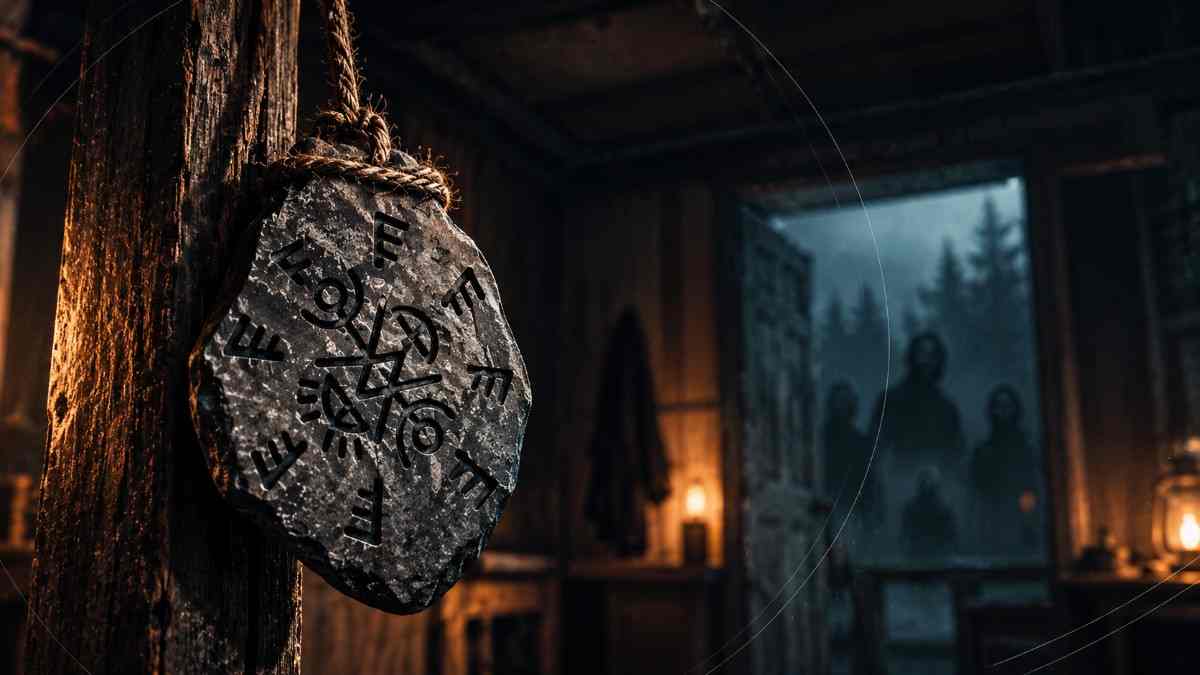
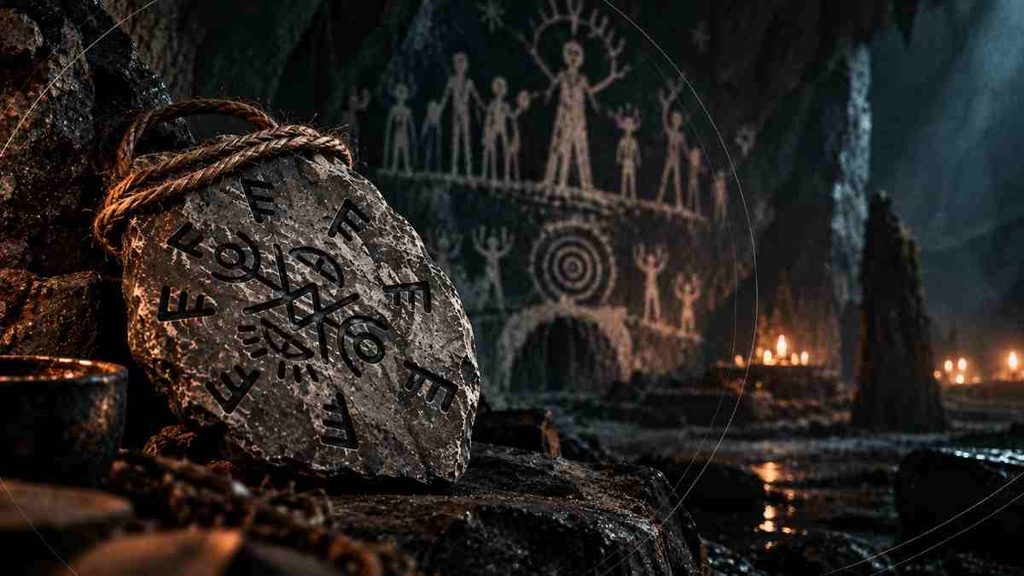
Talismans are carved stone objects inscribed with rune-like symbols, and they are the only reliable protection residents of the town have against the creatures that hunt at night. That is the short version. The longer version is more specific and more unsettling.
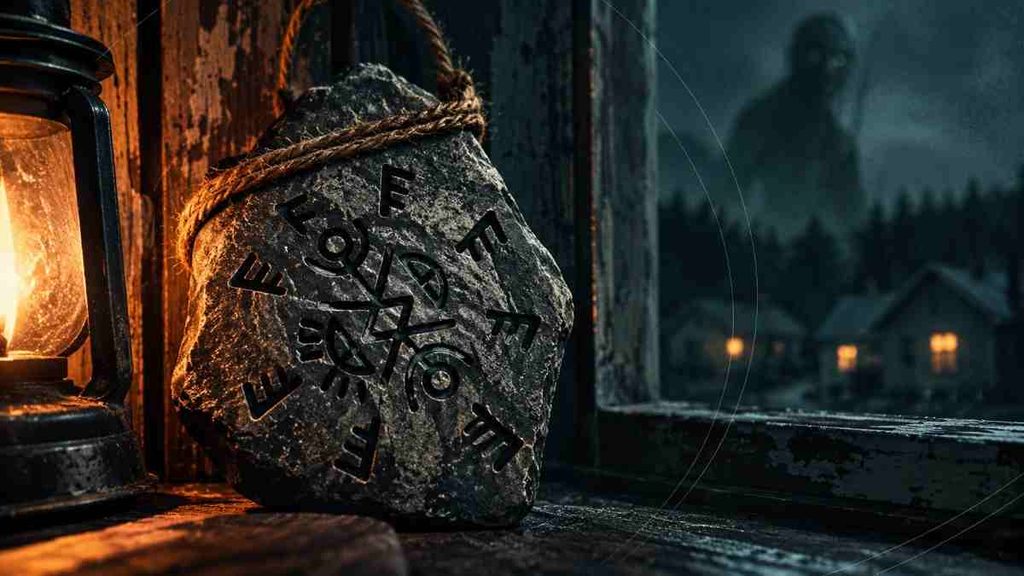
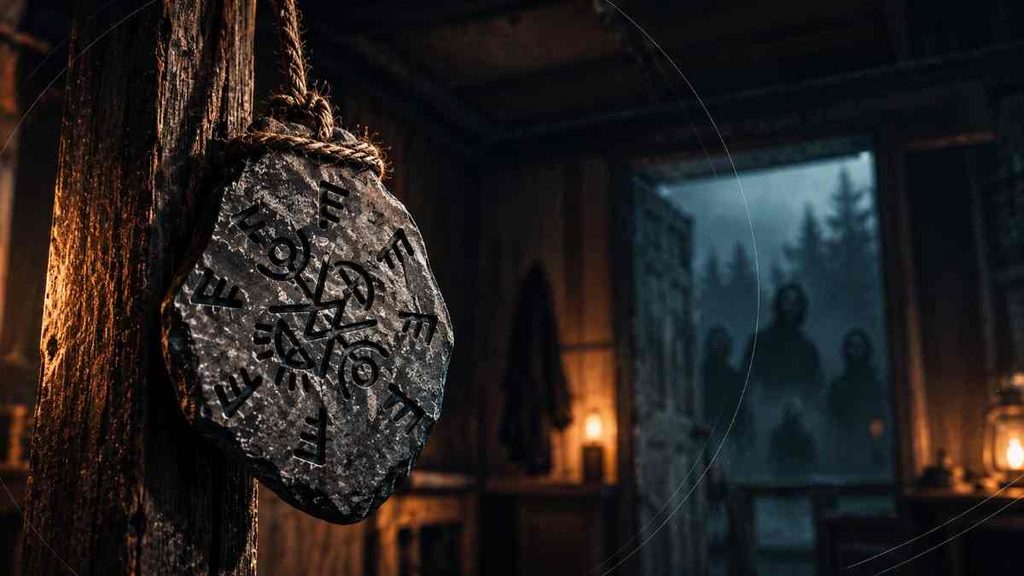
Physically, the talismans appear to be flat or roughly shaped stones with symbols etched into their surface. Residents nail them beside doors and entry points, not as decoration and not carried on their person. The placement matters. The talisman marks the structure, not the individual inside it. This distinction is one the show establishes clearly. It has enormous practical consequences for anyone who thinks they can pocket one and walk outside.
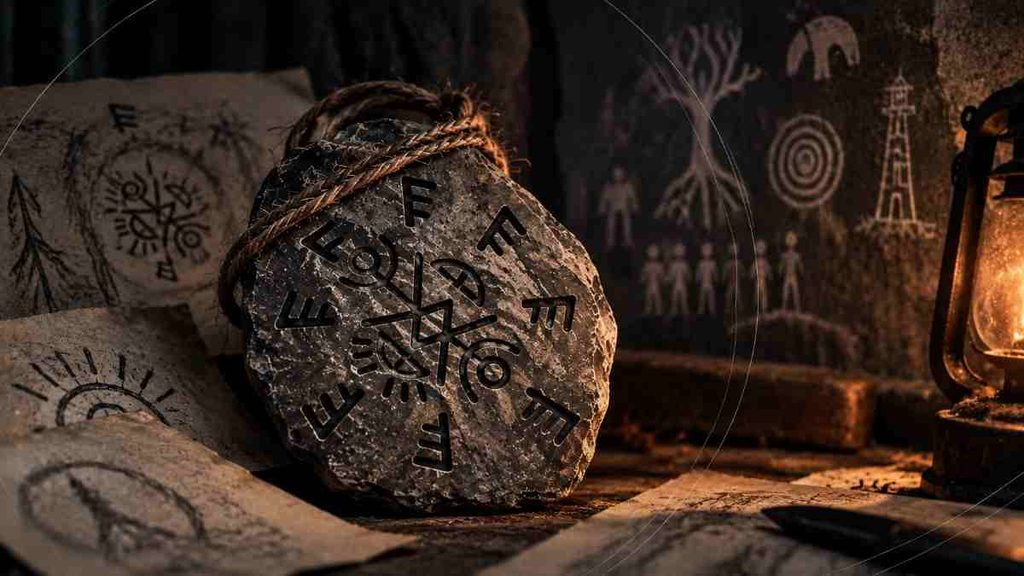
Boyd Stevens discovered a supply of them in a cave beneath the town and distributed them to residents. That origin detail is worth sitting with. Boyd did not make them. He found them in a location that already connects to the town’s broader symbol system, pre-placed, as though whoever put them there knew someone would eventually come looking. The cave and its markings share visual language with the talismans themselves. This is either a design coincidence or a thread the show is pulling toward a much larger answer. For more on what the town’s deeper architecture might mean, the breakdown of the town in FROM covers the structural theories in detail.
The implied logic of how talismans function is threshold logic. The object sits at the entry point and the protection extends inward from there, covering the enclosed space behind it. This is why residents nail them beside doors rather than placing them in the center of a room. The talisman is a marker, a boundary declaration, and the creatures recognize it as one.
How Do the Talismans Work in FROM? The Confirmed Rules
The talismans work by preventing creatures from entering enclosed structures where a talisman has been properly anchored. That is the confirmed core mechanic. Everything beyond that exists on a spectrum from demonstrated on screen to strongly implied to genuinely unknown.
Here is the full rules framework, organized by what the show has actually shown:
| Rule | Status | Evidence |
|---|---|---|
| Talismans prevent creature entry into enclosed structures | Confirmed | Demonstrated consistently across seasons 1 through 4 |
| Protection only applies while the talisman is physically present and anchored | Confirmed | Removal or displacement breaks protection |
| Talismans do not protect open outdoor spaces | Confirmed | No outdoor protection observed in any season |
| Creatures will not enter a protected structure even when residents are visible inside | Confirmed | Creatures linger at thresholds across multiple episodes |
| The protection does not follow the person | Confirmed | Carrying a talisman outside provides no demonstrated defense |
| The structure must be enclosed for protection to apply | Confirmed | Partial or open structures are not protected |
| New talismans can be carved by residents | Implied | Suggested but not fully demonstrated on screen |
| Talisman symbols carry specific meaning tied to the town’s mythology | Implied | Cave symbols share visual language with talismans |
| Creatures have innate awareness of talisman boundaries | Implied | Behavioral evidence across multiple seasons |
| Talismans weaken or expire over time | Unknown | No on-screen evidence either way |
| Specific symbols do different things | Unknown | Not clarified by the show |
| Who originally created the talismans | Unknown | Leading theory involves Julie; not confirmed |
The Enclosed Space Rule
The enclosed space rule is the most consequential mechanic in the entire talisman system, and it is the least discussed. Protection does not activate because a building exists. It activates because the space qualifies as enclosed AND a talisman has been properly anchored at its threshold.
This creates real in-show ambiguity about edge cases. A car is not automatically safe. A tent provides no protection. A structure with broken walls or open roofing is not going to be treated by the creatures the same way a sealed farmhouse is. The show has used this distinction as a source of tension in situations where characters assume they are protected and discover they are not.
The lighthouse is a standing question in this framework. It is an enclosed structure, and the show has treated it as having some degree of protection, but the specifics of its talisman status are not fully clarified. The theories around the lighthouse as a special location within the town’s rule system remain genuinely open.
What Happens If a Talisman Is Removed or Damaged
Removing a talisman from its anchor point breaks the protection immediately. The show has demonstrated this in episodes where a talisman falls, is pulled down, or is displaced mid-night. The result is not a slow fade. The boundary collapses.
This is one of the highest-anxiety mechanics in the series precisely because it turns every talisman into a vulnerability. The question is never just “do we have a talisman?” It becomes “is it still up? Is it still secure? Did something knock it loose?” Physical removal is the most direct way protection fails, and the show leans into that tension repeatedly.
The activation condition matters here. A talisman works because of placement, not possession. Holding one in your hand while the mounted one falls does nothing. The anchor is the mechanism, not the object in isolation.
What the Talismans Cannot Stop
Talismans cannot stop the creatures from being present. They can only stop them from entering. That distinction sounds minor until you spend a night in Fromville, where “cannot enter” still allows everything short of physical contact.
The outdoor world is completely unprotected. A talisman nailed to your door does nothing for the person who steps outside for sixty seconds. The show has made this clear at enormous cost to various characters across its seasons. There is no radius of protection, no aura, no portable shield. Once you cross the threshold going outward, you are in the same position as someone with no talisman at all.
The creatures can still communicate from outside. They can stand at windows, call out to people inside, mimic voices, and engage in the kind of psychological manipulation that makes surviving the night a test of mental endurance as much as physical safety. The talisman addresses one vector of threat and leaves the rest entirely open. Residents who want to understand what exactly the creatures are doing when they stand outside and smile will find that the piece on why FROM monsters smile gets into the behavioral mechanics in detail.
The talismans do nothing for threats that originate inside the protected structure. Internal conflict, human violence, illness, the psychological toll of indefinite captivity: none of that is touched by the talisman system. The town has other rules for those problems, and most of them are worse.
Here is the read that the SERP consistently avoids: the talisman system may not be a mercy. If the town was designed as a captivity mechanism, which the show’s mythology increasingly suggests, then the talismans serve the design perfectly. They keep residents alive through each night, which keeps the captivity going. Remove the talismans and everyone dies immediately. Keep them in place and everyone survives indefinitely inside a system they cannot leave. From that angle, the talismans are not a gift given to trapped people. They are the feature that makes the trap sustainable. Safety and captivity are the same thing here, and that is a genuinely uncomfortable way to watch someone nail a rock to their door frame.
What the Symbols on the Talismans Mean in FROM
The symbols on the talismans have not been decoded within the show’s narrative. No character has translated them. No episode has provided a key. What the show HAS established is a visual connection between the talisman markings and the symbols Boyd encountered in the cave, which suggests they belong to the same system of meaning even if that meaning has not been surfaced yet.
Fan analysis has noted that the central marking on some talismans appears to show two figures mirrored, one light and one dark, which aligns with the show’s recurring duality themes. The town in FROM operates on contrasts: the benign surface and the horror underneath, the safety of day and the danger of night, the creatures who look human and behave like something entirely else. If the symbols encode that duality, it would connect the talisman to something foundational about what the town is rather than just what the rules are.
The shared visual language between the cave symbols and the talismans is not a small detail. The cave predates Boyd’s arrival. Someone put those talismans there before any current resident needed them, which means someone understood the rules well enough to encode a protection mechanism and place it where it could be found. The broader context of the town’s symbol system is worth exploring separately. The piece on FROM symbols and meaning maps those connections across the full series.
What the symbols do NOT tell any character, or viewer, is whether different symbols do different things. Every talisman appears functionally identical in terms of what it accomplishes. Whether there are specialized versions, whether the specific inscription matters or whether the object’s type is sufficient, those questions are open.
Who Made the Talismans in FROM? The Leading Theory
Boyd found the talismans. He did not make them. Somebody else put them in that cave, and the show has not revealed who on screen, which means this is still the territory of theory rather than confirmed fact.
The leading theory involves Julie. The structural logic runs like this: Julie appears capable of moving through time in ways other characters cannot. If she has already witnessed the town’s mechanics from a position that lets her understand the rules, she could have created the talismans and placed them in the cave specifically so that Boyd would find them at the right moment. This creates a closed loop where the protection mechanism was provided by someone who had already seen it work.
The “story” framing the show has used around the town’s mythology supports this reading. The idea that events in Fromville are part of a structured narrative, with pieces placed in advance for specific characters to find, fits a scenario where Julie encoded the rules she understood into stone and left them for a future discovery. The deeper theories about how this plays into the season’s endgame are covered in the piece on FROM Season 4 finale theories.
What makes the Julie theory structurally compelling is not just the time travel component. It is what it implies about her knowledge. If she made the talismans, she understood the creatures’ rules well enough to build a counter-system that the creatures themselves respect. That level of understanding goes far beyond anything any current resident possesses. It suggests Julie has access to information about the town that nobody else in the narrative has yet reached.
This is still a theory. The show has not confirmed it. Treat it as the most well-supported open question in the talisman system, not as settled lore.
The Biggest Unanswered Questions About Talismans in FROM
The confirmed mechanics cover a lot of ground. What they leave open is just as important for understanding where the show might be heading.
Can new talismans be made? The show implies this is possible but has not demonstrated it clearly on screen. If the supply Boyd found is finite and cannot be replenished, the town faces a long-term crisis that the talisman system itself creates. Structures get damaged. Talismans get lost. Residents die and their buildings sit empty. A fixed supply is a countdown timer, and if the show acknowledges that, it changes the stakes of every season going forward.
Do specific symbols do different things? All talismans appear functionally identical in the show’s current evidence base. No episode has shown one talisman doing something another cannot. But the visual diversity in the symbols suggests the system is more complex than “one type, one function.” Whether the show will ever distinguish between them is unknown.
Why do the creatures follow the rules at all? This is the question that gets the least attention and deserves the most. Nothing in the show explains what physically prevents a creature from crossing a talisman threshold. They stop. They linger. They do not enter. This looks like choice, not inability. A locked door stops a person because of physics. A talisman stops a creature because the creature respects it, or because the town’s rules demand compliance from them too, or because crossing would cost them something the show has not named yet. The distinction between “cannot enter” and “will not enter” has enormous implications for what the creatures actually are.
Is the talisman system part of the town’s unified rule set, or is it a separate layer? The town runs on rules that nobody fully understands, including rules about roads, the forest, the structures, the nighttime cycle, and the creatures themselves. Talismans might be one piece of that integrated system, placed by whoever designed the town. Or they might be a workaround that someone external to the design introduced, which would mean the town’s original mechanics do not include any protection for residents at all.
What about the cave itself? The cave is enclosed. Boyd entered it. The creatures do not appear to patrol inside it the way they patrol the town at night. Is the cave protected by its own logic? By its depth? By something placed inside it long before Boyd arrived? That question has not been addressed directly. The answer would tell us something significant about whether the enclosed space rule applies everywhere or only to structures residents have actively marked.
FROM Talismans: Frequently Asked Questions
Do the talismans in FROM ever stop working?
Yes, under specific conditions. The most confirmed failure mode is physical removal: if a talisman is taken down from its anchor point, protection collapses immediately. A structure that is not fully enclosed also does not receive protection regardless of whether a talisman is present. There is no on-screen evidence that talismans degrade or expire over time, but this has not been ruled out by the show. The protection is structural and conditional, not permanent or automatic.
Can you carry a talisman for personal protection in FROM?
No. On-screen evidence across all seasons consistently shows that talisman protection applies to the enclosed structure where the talisman is anchored, not to any individual carrying one. A person who takes their talisman off the door and walks outside with it in their pocket receives no demonstrated protection. This is one of the most important practical distinctions in the system, because it means the object itself is not the source of safety. The anchor placement is.
What are the talismans in FROM made of?
They appear to be carved stone with inscribed symbols. The show does not specify the material beyond what is visible on screen, and no character has described a manufacturing process in detail. The ones Boyd found in the cave appear to be pre-existing objects rather than items produced by any current resident. Whether the specific type of stone matters, or whether the inscription is the active element, has not been addressed.
Are the talisman symbols ever decoded in FROM?
Not as of the current season. No character within the show’s narrative has translated the symbols, and the show has not offered a direct explanation of what they mean. What has been established is a visual connection between the talisman markings and the cave symbols Boyd encountered, which suggests shared origins. Fan analysis has noted possible duality imagery in the central markings, but this is viewer interpretation, not confirmed in-show information.
Why do the creatures in FROM actually obey the talisman rules?
The show has not answered this directly, and that is one of the genuinely interesting gaps in the mythology. The creatures stop at talisman thresholds. They do not appear physically incapable of crossing. Their behavior looks like compliance with a rule rather than an inability to act. Whether the town’s system compels them, whether crossing costs them something, or whether the talisman taps into some deeper mythology about what the creatures are, none of this has been confirmed. The honest answer is that the creatures follow the rules and the show has not yet explained why.
Is the idea of talisman protection based on real folklore?
The show has not confirmed any specific real-world source for the talisman system or its symbols. Threshold protection appears widely across folklore traditions independently, including concepts in various European folk beliefs where objects placed at entry points were believed to repel harmful forces. The FROM version appears original to the show’s mythology. The symbols do not map cleanly onto any single known runic or symbolic tradition, which suggests they were created for the show rather than borrowed from an existing system.
What is the strongest theory about who made the talismans?
The most structurally coherent theory is that Julie created them. This depends on the show confirming Julie’s time-related abilities, which the narrative has strongly implied but not fully explained. If Julie has already witnessed the town’s mechanics and understands the creature rules at a level no current resident does, she would be the logical candidate to encode that knowledge into stone and place it where Boyd would find it. The closed-loop nature of this explanation, where the protection was provided by someone who had already seen the outcome, fits the show’s mythology about the town’s “story” structure. It remains unconfirmed.
The Cage With a Lock That Works Both Ways
The talisman system in FROM is more complete than most summaries give it credit for. Carved stones, cave origins, Boyd’s distribution, threshold placement, structural protection, confirmed failure conditions, creatures that observe boundaries they are never shown learning about. The rules hold up under scrutiny. What they reveal under scrutiny is something more unsettling than a safety mechanism.
The talismans keep people alive just enough to keep them trapped. That is the part worth holding onto. Every night a resident survives is another night they are still in Fromville, still under the rules, still no closer to understanding what the town wants from them. If someone designed this system rather than discovered it, they were not being generous. They were being efficient. A captivity that kills everyone on the first night is a poor captivity. One with a reliable survival mechanism built in is a perfect one.
The unresolved questions matter because they point toward what the show is actually building. Who made the talismans and why they work are not trivia questions about a TV prop. They are load-bearing elements of whatever the finale is going to reveal about the town’s nature and purpose. When those answers arrive, go back to the rulebook. The mechanics will look different once you know whose rules they really are.