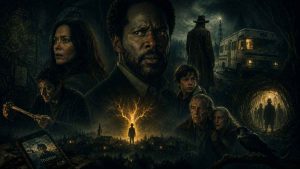
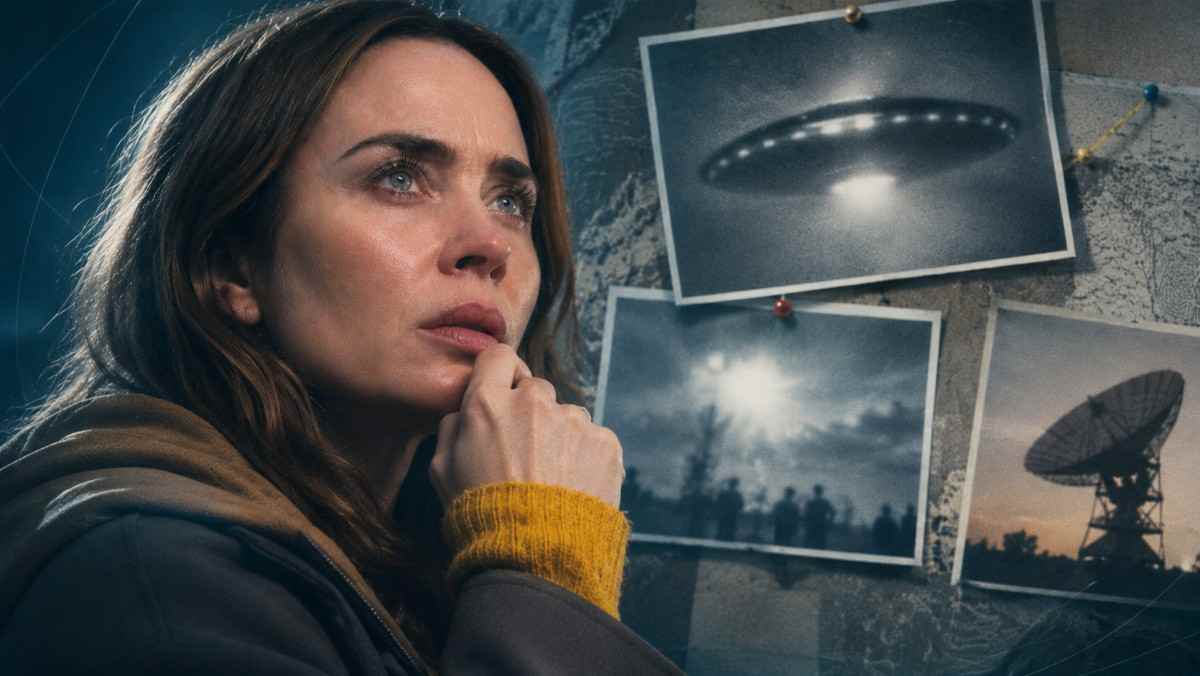
Steven Spielberg’s Disclosure Day finally landed on Peacock on Friday, Oct. 9, 2026, and within a day it was the No. 1 movie on Peacock’s U.S. Top 10, according to FlixPatrol data cited by CBR and ScreenRant. A new wave of viewers just hit the same wall theater audiences hit in June: a live alien in a newsroom, a whisper nobody else hears, and one word before the screen cuts to black. Here is the full ending, what the filmmakers have said about the final line, and what the movie leaves open.
Spoiler warning: full spoilers for Disclosure Day, including the final scene, follow.
TL;DR
- How it ends: Margaret (Emily Blunt) and Daniel (Josh O’Connor) take over her Kansas City TV station and broadcast Daniel’s stolen archive of alien evidence to the entire planet.
- The big reveal: Hugo (Colman Domingo) wheels a living, elderly alien, known as In Vivo 17, into the studio. It whispers to Daniel, and Daniel passes the message to Margaret.
- The last line: Margaret turns to the camera and says “Listen.” Then the film ends.
- What the alien says: Nobody outside the cast knows. Spielberg says he will never reveal it, and O’Connor says he knows but will not share it.
- What “Listen” means: Screenwriter David Koepp says it is both the start of the alien message and the movie’s thesis: listen to one another.
- Why Margaret and Daniel: Both were taken as children on the same night and given complementary gifts, language for Daniel and empathy for Margaret, so they could deliver the message when the time came.
- Post-credits scene: None.
- Sequel: Not announced. Blunt and Domingo have said there is more to explore, but nothing is in development.
At the end of Disclosure Day, the world learns aliens are real when Margaret Fairchild broadcasts decades of hidden evidence from her local news station. A living alien then whispers a message to Daniel, who relays it to Margaret, and she begins sharing it with the world by saying “Listen.” The film never reveals the rest of the message on purpose. Spielberg and Koepp built the ending so the point is the act of listening itself, not a secret the audience gets to hear.
What Is Disclosure Day About? A Quick Setup
Disclosure Day is Spielberg’s original sci-fi thriller, written by David Koepp from a story by Spielberg. It opened in U.S. theaters on June 12, 2026, runs 145 minutes, and stars Emily Blunt, Josh O’Connor, Colin Firth, Eve Hewson, and Colman Domingo, per Wikipedia’s film entry. John Williams wrote the score, his thirtieth collaboration with Spielberg.
The world of the film is on the edge of nuclear war. A cybersecurity specialist steals proof of an 80-year alien cover-up, and a TV meteorologist suddenly starts speaking a language nobody on Earth knows.
The main players by the finale:
- Margaret Fairchild (Emily Blunt), a Kansas City TV meteorologist and former journalist
- Dr. Daniel Kellner (Josh O’Connor), the whistleblower who stole Wardex’s archive and an alien device
- Noah Scanlon (Colin Firth), head of the Wardex Corporation, the contractor running the cover-up
- Jane Blankenship (Eve Hewson), Daniel’s girlfriend and a former religious novice
- Hugo Wakefield (Colman Domingo), Wardex’s former Director of Biological Assets, now leading a team of defectors
- Casper Boyd (Henry Lloyd-Hughes), Scanlon’s head of security
Wardex stands for Waived Reporting, Development, and Extraction, according to Wikipedia’s plot summary. In other words, the company exists to keep things off the books.
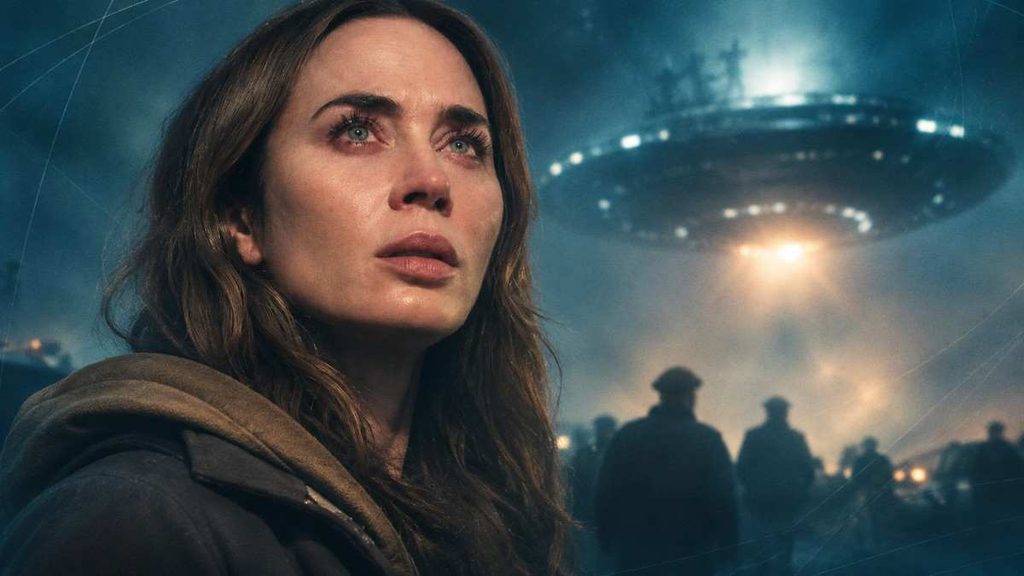
How Does Disclosure Day End? The Finale, Beat by Beat
The memory comes back
The last act starts in a warehouse where Hugo’s team has rebuilt Margaret’s childhood home. GamesRadar+ explains the house is a “passage” to unlock a buried memory: the night of February 23, 1996, when she and Daniel were visited by aliens and given their gifts.
USA Today describes the flashback as storybook-like. The two kids were lured into a forest by aliens disguised as animals, ended up at a snowy cabin, and came out with new abilities: highly advanced language for Daniel and deep empathy and connection for Margaret. Their memories were wiped so the pair could relay the aliens’ message when the visitors returned.
The escape and the power cut
Wardex surrounds the warehouse. Margaret uses the alien device to turn the group invisible, and they escape in fire trucks before the device burns out and crumbles. At the KCXE studio, Daniel uploads the archive and Margaret prepares a special report.
Wardex cuts the power station and the backup generator. Then Jane arrives with the second alien device, the one Daniel took before the movie began, and Margaret uses it to bring the studio back online.
Noah Scanlon stands down
This is the beat first-time viewers rewind. GamesRadar+ notes the film never says exactly why Scanlon gives up and pulls up a chair. Wikipedia’s summary says he and his team stand down, to Boyd’s dismay. Den of Geek reads it as the end of a long arc for the “deeply cynical and misanthropic” Scanlon, who finally “sees the light” after a movie full of Margaret’s empathy reaching people who were working against her.
The broadcast goes global
Margaret announces “Disclosure Day” on air. The archive spreads worldwide through NBC’s control center at 30 Rock while a national anchor (Courtney Grace) struggles to narrate it. The footage shows craft in flight, burned alien bodies, and living aliens led into a military tent. GamesRadar+ notes the broadcast confirms the 1947 Roswell crash and the 1965 Kecksburg, Pennsylvania incident as real within the film’s world.
The war that has been building in the background all movie seems to pause as the planet stops to watch.
In Vivo 17 and the last word
A white truck pulls into the loading bay. Hugo uncovers a figure in a wheelchair: an old, frail alien, far bigger than the others seen earlier. Wikipedia, citing ComicBook.com, identifies it as In Vivo 17, the captive Hugo secretly freed from Wardex five years before the story.
Margaret and Daniel approach it and embrace. The alien whispers to Daniel in what GamesRadar+ describes as an 8-bit binary language only he understands. Daniel smiles and passes the message to Margaret. She goes back to the anchor desk, faces the camera, and says “Listen.” Cut to credits.
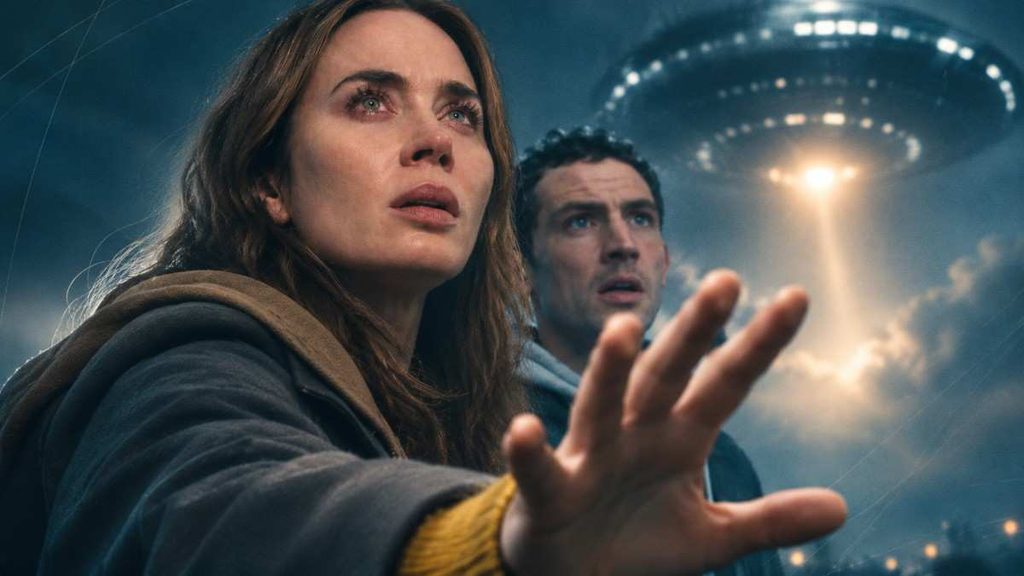
What Does the Alien Whisper at the End of Disclosure Day?
The honest answer is that the movie will not tell you, and neither will anyone who made it.
Spielberg told USA Today that there was never a version of the script where audiences hear what Margaret says next. “I’m never going to give that away,” he said. “Nobody will ever know that except [the actors], and they’re not allowed to say.”
O’Connor has confirmed he is in on it. When GamesRadar+ asked whether he knew what the alien told Daniel, he said: “Yes… But I’m not going to share it.”
That leaves the film’s own clues:
- The world is about to go to war. News reports through the whole movie point to conflict around North Korea and Europe, and “World War 3” comes up more than once.
- The aliens value empathy. In Hugo’s conversation with Noah, the aliens see empathy as the “foremost evolutionary advantage,” and its rejection as a path to extinction, per GamesRadar+.
- Margaret’s first message was a warning against fear. Her strange on-air outburst at the start of the film, as Daniel translates it, is “Don’t be afraid of what you don’t know.”
Put those together and the most grounded reading is a message of peace aimed at stopping humanity from destroying itself. GamesRadar+ lands on the same guess. It fits how the cast talks about the aliens too. Blunt told Entertainment Weekly, in an interview republished by AOL, that she and Spielberg discussed visitors who seem to be “protecting us and a way of ensuring that we don’t wipe ourselves out.”
Treat that as interpretation, not fact.
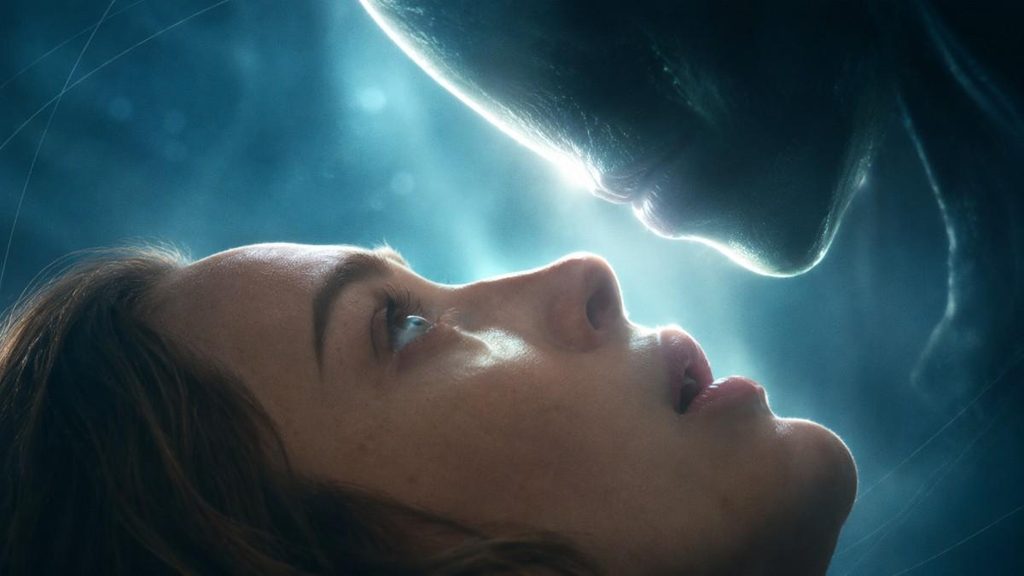
What Does “Listen” Mean? The Last Line Explained
The final scene was the first thing Spielberg came up with, according to both Den of Geek and USA Today. The rest of the story was essentially built backward to reach it. The word itself, though, came from Koepp.
“[The last line is] in my very first draft,” Koepp told Den of Geek. “She’s saying ‘listen,’ because the space boy just told me a bunch of interesting stuff, and she’s saying ‘listen to one another,’ which is the heart of the message.”
He also pointed to where the word shows up beyond the movie. “It just so happens to be the first word of one of my favorite books, Slaughterhouse-Five,” he said. “It’s also the first word of numerous Hebrew prayers. So I wrote ‘listen,’ and then I just typed a period, because I think when you have one word that says everything you want to say, you should stop talking.”
The two leads read it slightly differently, and both readings hold up.
- Blunt thinks the single word can stand alone. “The message could actually hold as a singular word, because in many ways, what’s been revealed to the world at the end is enough to make you do the thing that I tell you to do at the end,” she told EW. “However, I think she also may go on to tell you more of what the message is.”
- O’Connor sees it as an opening line. “My interpretation is that ‘Listen’ is the beginning of a message,” he said, before adding that the word alone “is suffice to tell the entire message.”
So “Listen” works on three levels: the first word of the alien’s message, an instruction to everyone watching, and the movie’s argument for empathy in a world on the brink. For another October streaming hit with a creature at its center, see our Below ending explained guide.
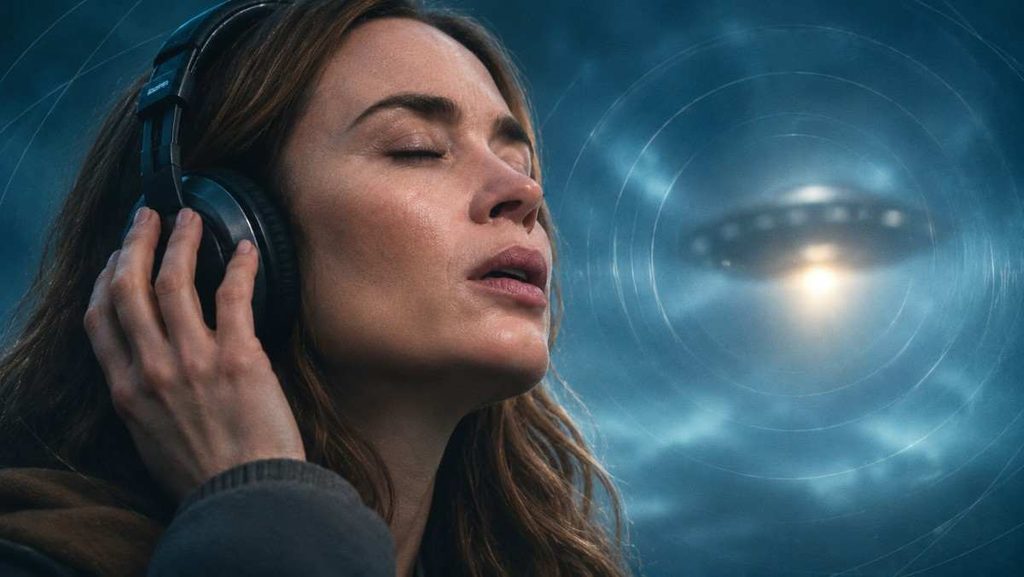
Why Did the Aliens Choose Margaret and Daniel?
The film keeps this vague, but it gives a few hard details. Hugo tells them early on, “There’s always been just the two of you,” per GamesRadar+, which suggests they are the only two people the aliens prepared for disclosure, or at least the only two who matter for it.
Their gifts are designed to fit together. Daniel can understand the alien language, which is why he grasps Margaret’s broadcast as if she were speaking English. Margaret has the empathy to reach people, which is how she talks her way out of a Wardex black site. One can translate. The other can make people hear it.
The fairy tale angle matters. Spielberg told USA Today that “Hansel and Gretel” terrified him as a child. “Being lured into a space on a false promise? It’s ultimately a story of betrayal,” he said. The film flips it: two kids are lured into the woods, but instead of being trapped, they are given something.
USA Today notes the aliens’ animal disguises, stags, foxes, and cardinals, match what real experiencers have reported. Fittingly, Margaret’s awakening starts with a cardinal flying into her house. For another 2026 alien story that saves its biggest reveal for the end, see our Alien: Earth finale explainer.
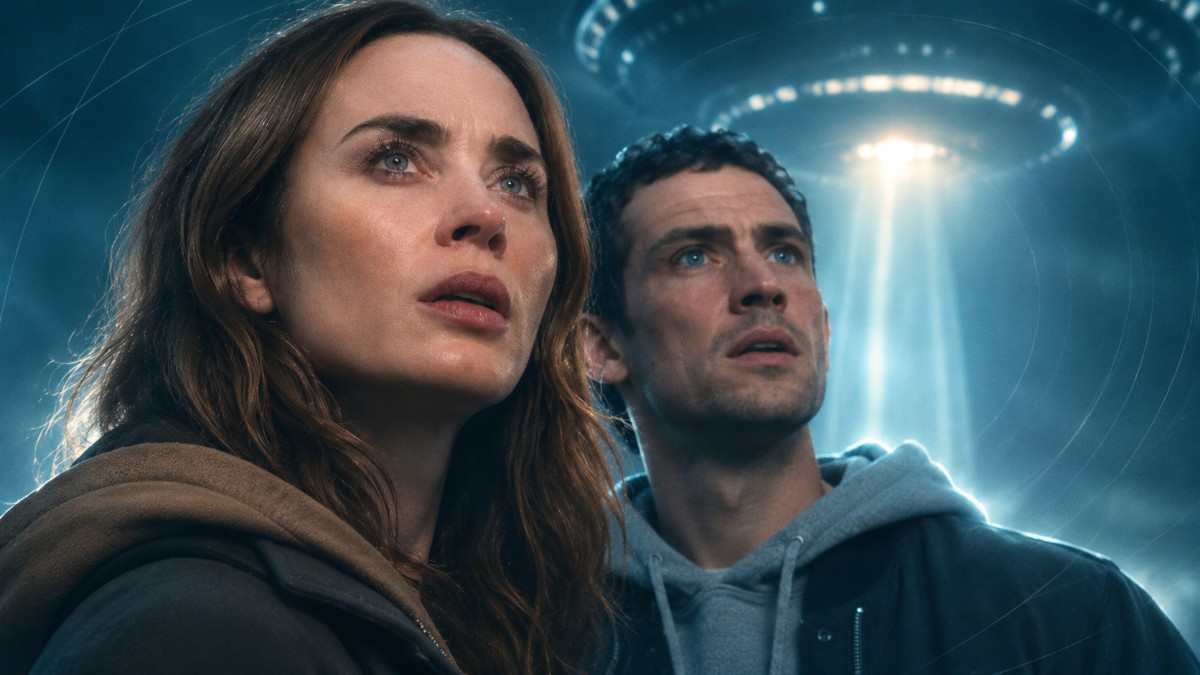
Who Is Hugo, and What Did He Know?
Hugo freed In Vivo 17 from Wardex and has been in contact with it since. GamesRadar+ notes the alien told Hugo to recruit Daniel out of prison eight years before the film, so the plan was running long before Margaret or Daniel knew it.
Domingo pointed EW to a detail most people miss on a first watch. During the flood of archive footage in the finale, there is a shot of Hugo pressing his head against a white curtain with In Vivo’s silhouette on the other side. “The way they communicated was touching head-to-head or hand-to-hand and downloading information,” he said, adding that Spielberg told him the moment is “for the ones that’ll watch the movie two or three times.”
Domingo also told EW the alien was a practical, mechanical effect, not CGI.
Is Disclosure Day Based on a True Story?
No. Margaret, Daniel, Wardex, and In Vivo 17 are invented. GamesRadar+ is blunt about it: rumors that Spielberg was working with the government to reveal real aliens through the film were unfounded.
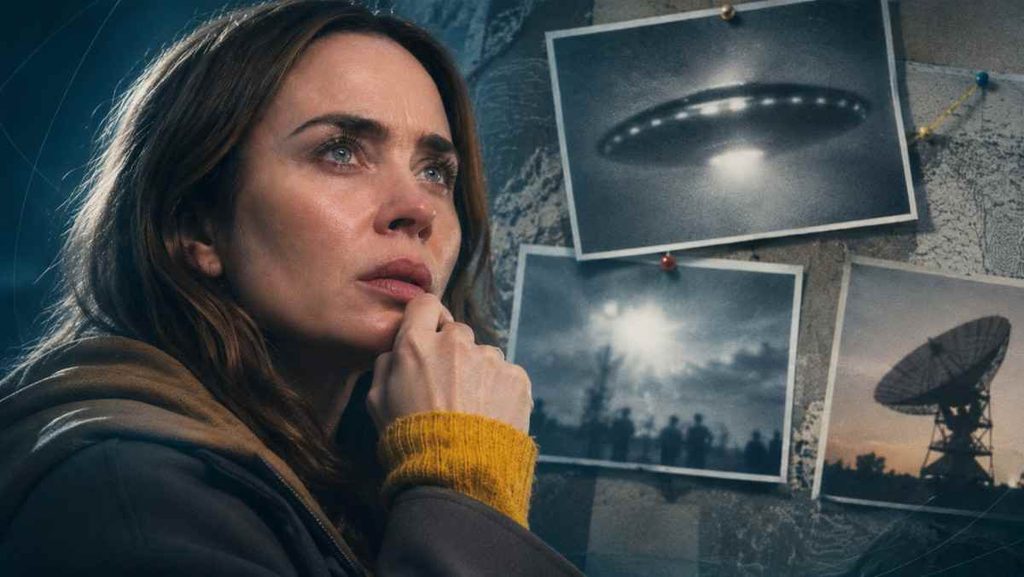
The film does lean on real UFO history and lore:
- Roswell: The 1947 Roswell incident in New Mexico, the most famous alleged UFO crash, is treated as real in the movie’s archive footage.
- Kecksburg: The film also confirms, within its story, the 1965 Kecksburg UFO incident in Pennsylvania.
- The Twining memo: Wikipedia notes one Wardex defector, Nathan Twinning, is named as a nod to Nathan Twining, author of a 1947 memo on flying discs.
- The research: USA Today reports Spielberg and Koepp read congressional testimony transcripts and books including Donald Keyhoe’s The Flying Saucers Are Real. Wikipedia adds that Spielberg’s interest was rekindled by a 2017 New York Times article on the Pentagon’s UFO program.
Spielberg also explained why the villain is a contractor and not the government itself. “I really don’t believe that governments can keep secrets. But big tech companies can,” he said, as quoted by CBR. “Wardex is operating outside constitutional restraints, and they hold all this knowledge.”
If the archive-footage finale scratched an itch, the shadow-agency paranoia is classic X-Files territory. Bamfuzzle’s ranking of the creepiest X-Files episodes is a good next stop.
Are the Aliens Connected to God in Disclosure Day?
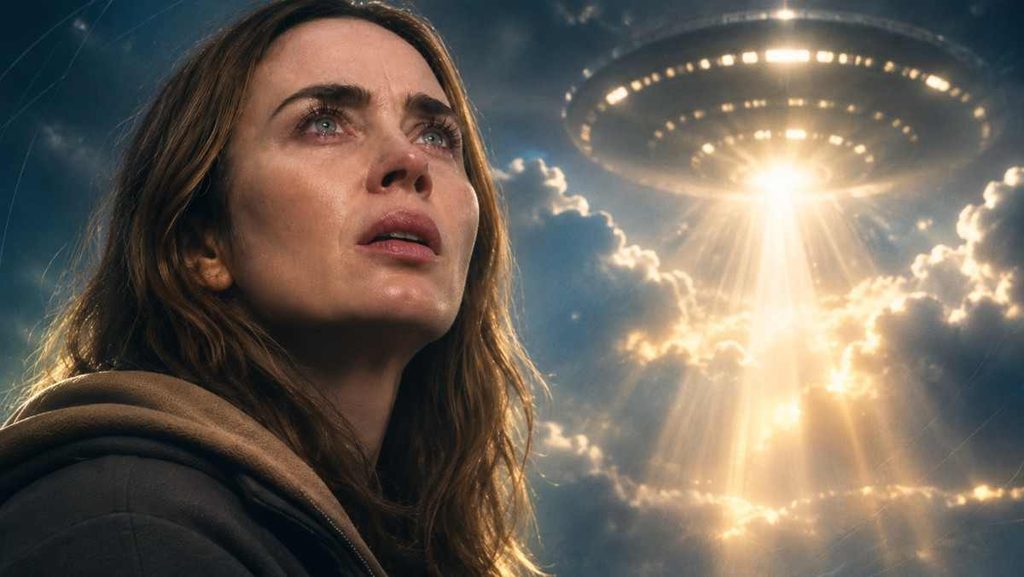
The movie is full of religious imagery, from Jane’s convent to a believer crossing herself after one of Margaret’s “miracles.” Koepp stays careful on the question.
“I do think there are references and I do think that there are visitations that occurred for thousands of years throughout human history,” he told Den of Geek. “But my reading of it is not that human events on Earth were affected, or that they built the Pyramids.” He still conceded, “I think you can’t talk about outer space and possible extraterrestrial life without talking about God.”
For another story where belief and something otherworldly collide in a small community, see Bamfuzzle’s Midnight Mass ending explained.
Is There a Disclosure Day Post-Credits Scene?
No. GamesRadar+ confirms there is no post-credits scene. The credits run over John Williams’ score, which builds through to the end, so there is a reason to sit through them, but no extra footage.
Will There Be a Disclosure Day 2?
There is no sequel announced, and the filmmakers have framed the story as complete. Koepp told Den of Geek the movie was always meant to stop on the night of the reveal. “If the movie was called ‘Disclosure Day and the Subsequent Week,’ then you know you got a lot of explaining to do,” he said. “But our story was accomplished and it was time to end it.”
The cast sounds open to more. Blunt told EW, as reported by Gizmodo, “Listen, we would all be beside ourselves to get back together and be with Steven again. But we’ll have to see just how this story hits people and if it’s wanted.” She added that she thinks there is “more to explore” in the fight over who controls the truth. Domingo wondered aloud about the aftermath: “What happens to the government? What happens to religion?”
Even the filmmakers disagree on what happens next. Koepp told USA Today he expects “a lot of suffering and death” on the way, while Spielberg believes the event would bring the world together.
The fresh Peacock success could revive sequel talk, but as of Oct. 12, 2026, there is no confirmed follow-up.
Is Disclosure Day a Sequel to Close Encounters?
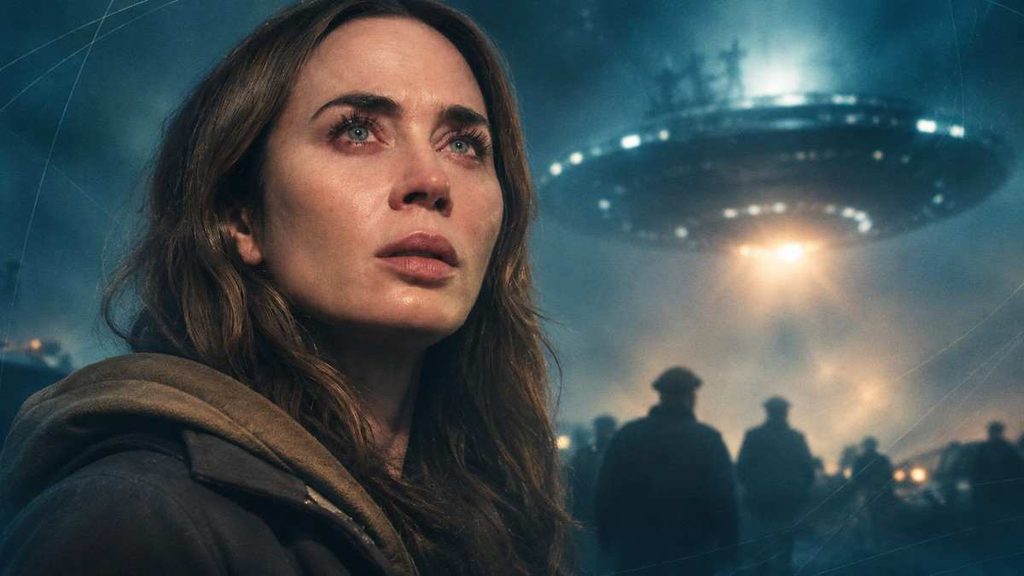
No. Critics compared it to Close Encounters of the Third Kind, and IndieWire’s David Ehrlich called it a possible “spiritual sequel,” per Wikipedia. Spielberg shut down the idea directly. “It is not a sequel in any way, shape, or form to Close Encounters,” he said, as quoted by CBR.
Where to Watch Disclosure Day and How It Performed
Disclosure Day is streaming exclusively on Peacock as of Oct. 9, 2026, a date first set by Variety and Deadline. It hit digital rental platforms on July 21 and 4K, Blu-ray, and DVD on Aug. 25, per Wikipedia.
The numbers behind the streaming bump:
| Metric | Figure | Source |
|---|---|---|
| U.S. opening weekend | $44 million domestic, $93 million worldwide | Wikipedia |
| Worldwide box office | About $244.4 million | Wikipedia, CBR |
| Production budget | $115 million | Variety, Wikipedia |
| Rotten Tomatoes | 79% critics, 69% audience | CBR, ScreenRant |
| CinemaScore | B | Wikipedia |
| Peacock U.S. Top 10 | No. 1 on Oct. 10, a day after its debut | CBR, ScreenRant |
Variety reported about $80 million in marketing, which is why CBR calls the theatrical run barely profitable: an original, non-franchise blockbuster that opened at No. 1 but never broke out. Bamfuzzle’s Hollywood Originality Report shows how rare it has become for original films to reach the top of the box office at all. If you are working through this summer’s other big endings, our Spider-Man: Brand New Day ending explained covers that one.
Our Take on the Disclosure Day Ending
The ending is a gamble, and it mostly pays off. Spielberg spends two and a half hours building toward a reveal, then withholds the one thing the audience most wants. ScreenRant notes reception grew more divided after opening, with complaints about the plot and the alien effects.
But the choice fits the movie. Disclosure Day is not really asking whether aliens exist. It is asking what people would do if forced, all at once, to pay attention to something bigger than their fights. Ending on “Listen” turns that question back on the viewer, and the frustration is the point.
FAQ
How does Disclosure Day end?
Margaret and Daniel broadcast Wardex’s secret archive of alien evidence from Margaret’s Kansas City TV station, and the footage spreads worldwide. Hugo brings a living alien, In Vivo 17, into the studio. It whispers to Daniel, Daniel tells Margaret, and Margaret begins the message on air with the word “Listen.”
What does the alien say to Daniel at the end of Disclosure Day?
It is never revealed. Spielberg has said he will never give it away, and Josh O’Connor says he knows but will not share it. The film’s clues point toward a message of peace and empathy.
Why does Margaret say “Listen” at the end?
Screenwriter David Koepp says the word is both the start of the alien’s message and the film’s core idea of listening to one another. He also notes it is the first word of Slaughterhouse-Five and of numerous Hebrew prayers.
Is there a post-credits scene in Disclosure Day?
No. There is no post-credits scene, just John Williams’ score over the credits.
Will there be a Disclosure Day 2?
No sequel has been announced. Koepp says the story is complete, while Emily Blunt and Colman Domingo have said there is more to explore if audiences want it.
Is Disclosure Day based on a true story?
No. The characters and plot are fictional, but the film draws on real UFO lore, including the Roswell and Kecksburg incidents and decades of disclosure claims.
Where can I watch Disclosure Day?
It is streaming exclusively on Peacock as of Oct. 9, 2026, and is also available on digital and physical media.
Sources
- CBR: Disclosure Day No. 1 on Peacock, Oct. 11, 2026: FlixPatrol ranking, box office, Rotten Tomatoes, Spielberg’s Close Encounters and Wardex quotes.
- ScreenRant: Disclosure Day streaming success, Oct. 10, 2026: Peacock chart and divided reception.
- Den of Geek: Disclosure Day ending explained with screenwriter David Koepp, June 11, 2026: the “Listen” line, religion, the Device, why it ends where it does.
- USA Today: Steven Spielberg breaks down the Disclosure Day ending, June 13, 2026: Spielberg on the whisper, Hansel and Gretel, research, Koepp’s future debate.
- GamesRadar+: Disclosure Day ending explained, June 10, 2026: finale beats, O’Connor quote, post-credits, sequel odds.
- AOL / Entertainment Weekly: Disclosure Day ending explained, June 12, 2026: Blunt, O’Connor, Domingo, and Koepp interpretations.
- Gizmodo: Emily Blunt on more to explore, June 16, 2026: sequel comments.
- Variety: Peacock release date and Deadline: Peacock streaming debut, Sept. 9, 2026.
- Wikipedia: Disclosure Day: cast, runtime, release dates, box office, reviews, Twining homage.
- ComicBook.com: Disclosure Day ending explained: In Vivo 17 naming, via Wikipedia.
- Wikipedia on the Roswell incident and Kecksburg UFO incident: real-world UFO background.