How Rob Rausch Won The Traitors Season 4: Four Tactics That Held Up All Season
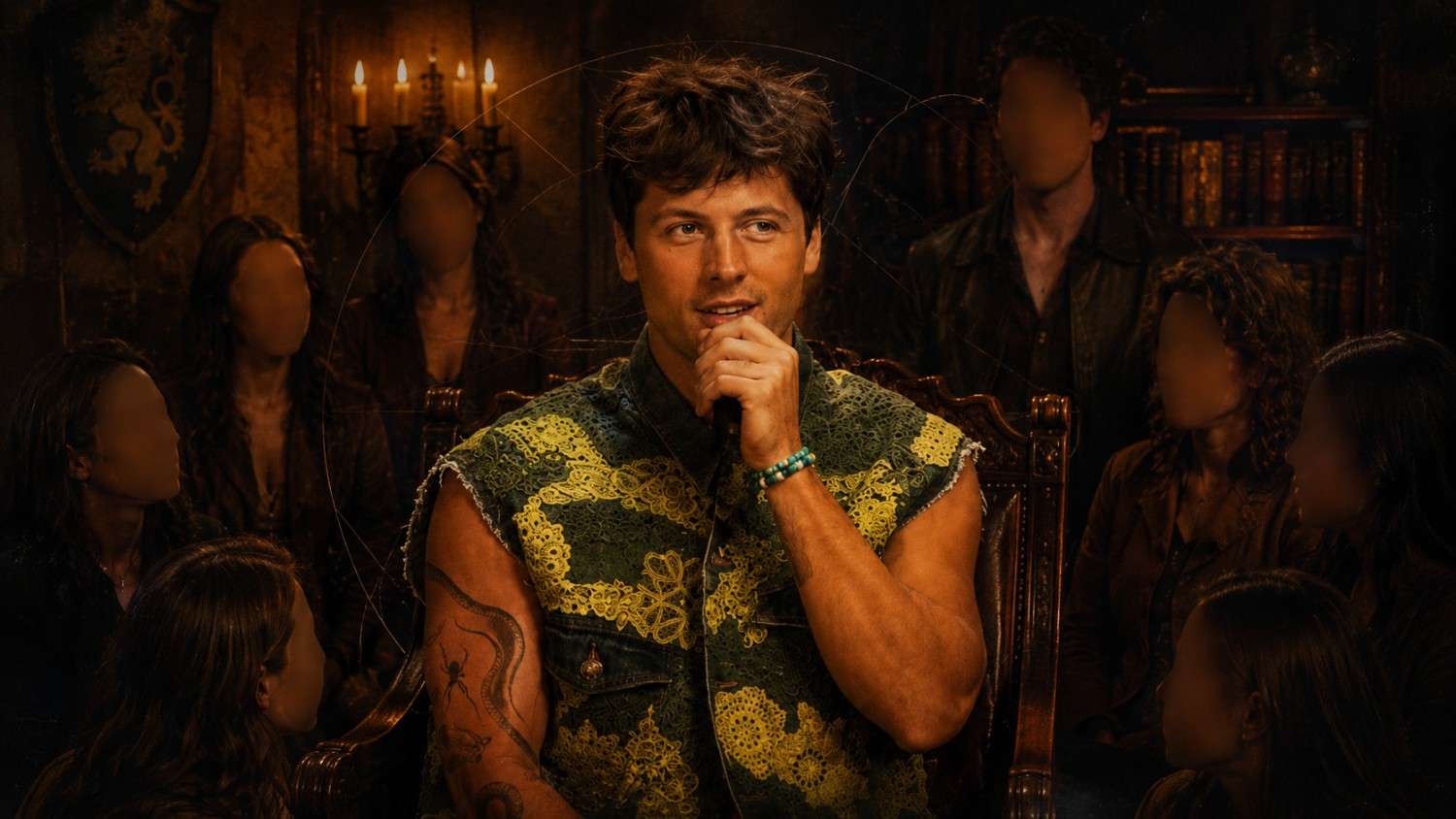
Rob was a Traitor from day one of Season 4. He survived eleven episodes without facing serious organized opposition, recruited and then sacrificed a co-Traitor, and walked away with the entire prize. The question isn’t whether he deserved to win. He played a nearly flawless game by any objective measure. The question is how, exactly, he pulled it off, and why the evidence against him failed to land even when it was sitting right there in the open.
Each of his four core tactics targeted a specific cognitive weakness in how groups process suspicion under social pressure. None of them required genius-level deception. All of them required discipline and self-awareness across twelve consecutive episodes of high-stress gameplay.
Tactic 1: He Built a Human Shield Before the Game Reached Full Speed
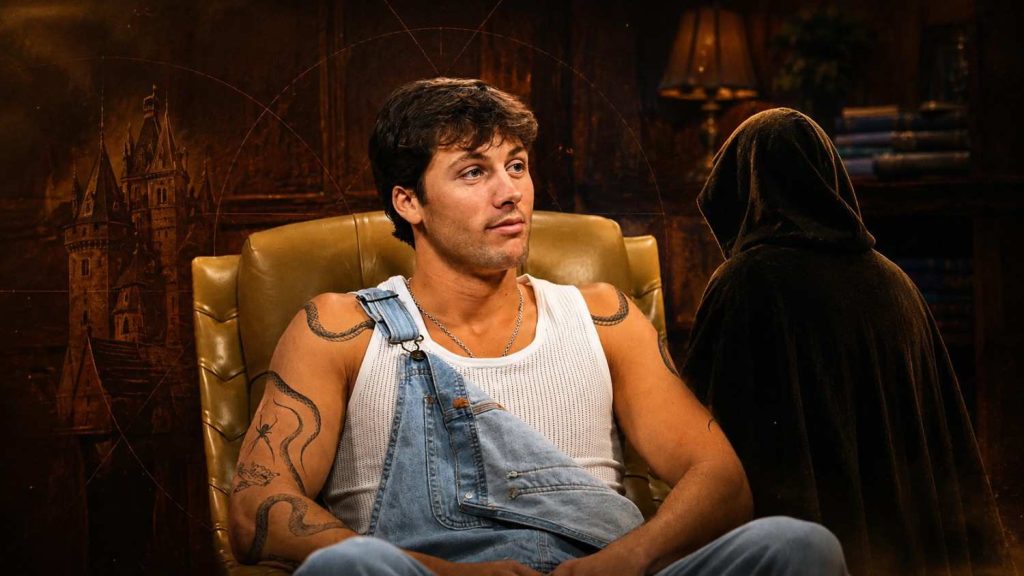
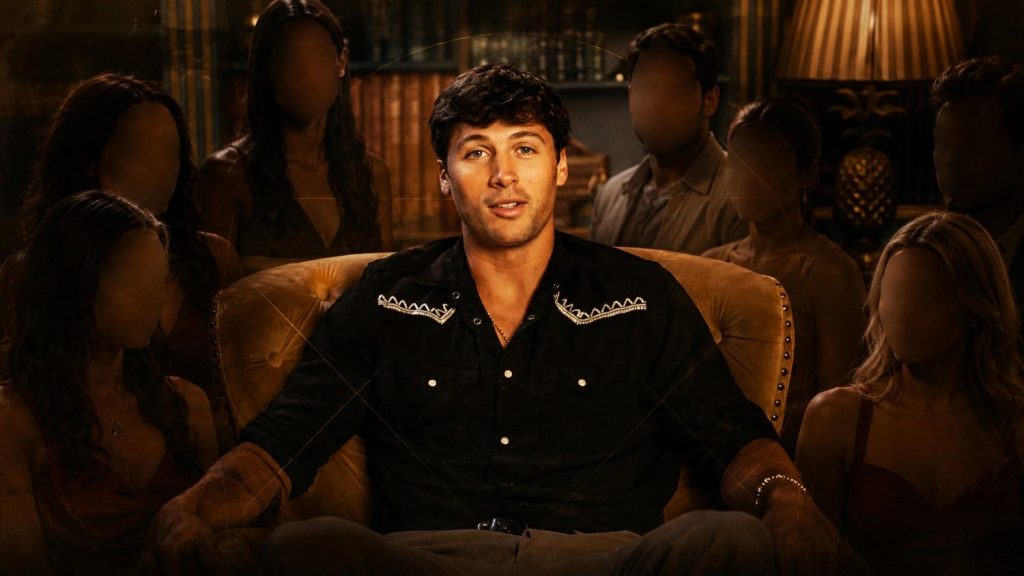
Rob’s relationship with Maura Higgins was not incidental warmth. It was structural cover, and he knew it. The two shared a Love Island background, which gave them an organic, pre-established reason to gravitate toward each other from the first episode. That origin story mattered because it made their alliance look like friendship rather than strategy.
The psychological mechanism here is specific. Once Maura became Rob’s most vocal defender, accusing Rob required any other player to first overcome Maura’s credibility. That’s a two-step cognitive process, and most players in a live social deduction game don’t run two-step reasoning when they’re also managing their own survival. They identify the most visible immediate threat and act on that. Rob was never the most visible immediate threat because Maura was always standing in the way.
Rob has discussed in post-game interviews his awareness that Maura’s emotional investment in their alliance was a strategic resource. That’s a cold-blooded read of a genuine human relationship, and it’s also exactly what separates Traitors who win from Traitors who get caught in week three. Anyone who watched Love Island USA before this season and tracked how that show builds emotional loyalty will recognize exactly how Rob understood the dynamic he was working with.
Tactic 2: He Voted Out His Own Traitors Before They Could Expose Him
The counterintuitive move in The Traitors isn’t surviving accusations from Faithfuls. It’s recognizing when a fellow Traitor is about to make you the collateral damage of their own exposure. Rob voted against Lisa Rinna and Candiace Dillard Bassett when their suspicion-magnetism became a liability to his game. That’s not disloyalty. That’s sequencing.
Lisa Rinna was generating enough ambient heat that keeping her around as a co-Traitor created risk with no corresponding reward. Candiace Dillard Bassett was a sharper strategic player whose growing visibility threatened to pull the group’s attention toward the Traitor cohort generally. Rob moved on both before either of them could be used as a thread that unraveled him.
Candiace’s vote against Rob on her way out is the single most underanalyzed data point in the entire season. She named him. She did it twice. The evidence was visible, audible, and specific. The Faithful players collectively did not act on it in any organized way until episode 11 of 12.
The psychological dynamic that explains this is well-documented in social deduction research. Groups under social pressure tend to resolve suspicion by targeting whoever is loudest or most recently visible, not by connecting older evidence to newer behavior across time. Rob controlled the timing of who became visible. He kept himself quiet while the players the group was already focused on drew all the heat.
Tactic 3: He Recruited the Most Controllable Player in the Castle, Then Sacrificed Him
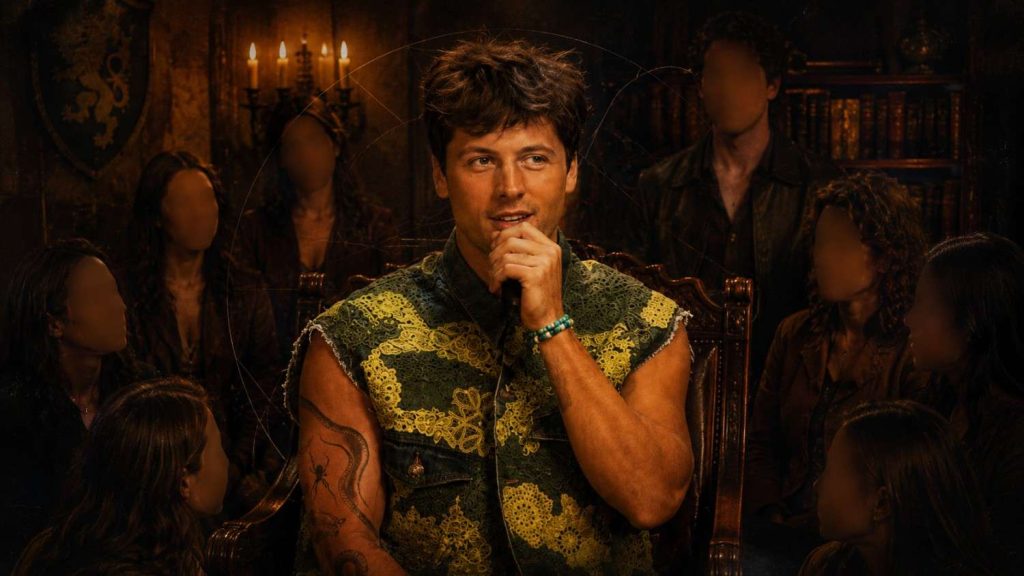
When Rob needed to recruit a new Traitor, he chose Eric Nam because Eric was quiet, low-status relative to the broader cast, and unlikely to freelance his own agenda. Rob has been explicit in post-season interviews that he wanted a follower, not a strategic partner. That framing is important. A co-Traitor with equal strategic power becomes a competitor for the endgame. A co-Traitor with less power becomes a resource you manage.
Eric Nam’s own post-game comments to E! News confirmed that he understood, at some level, that Rob had positioned himself as the dominant player in their pairing. Eric’s decision not to flip on Rob even when he had the opportunity became its own subject of post-finale analysis. The loyalty, or the resignation, read differently depending on who you asked.
In the finale, Rob moved against Eric rather than splitting the $220,800 prize. If Eric had survived the final vote, they would have shared it. Rob took the full amount by engineering Eric’s elimination in the last round. The tactical principle he demonstrated is straightforward: when you must recruit, recruit down in status, not sideways or up. A controllable ally gives you all the operational benefit of having a co-Traitor with none of the endgame risk of a legitimate competitor who might decide the split isn’t worth it.
Tactic 4: He Made Strategy Look Impossible Coming From Him
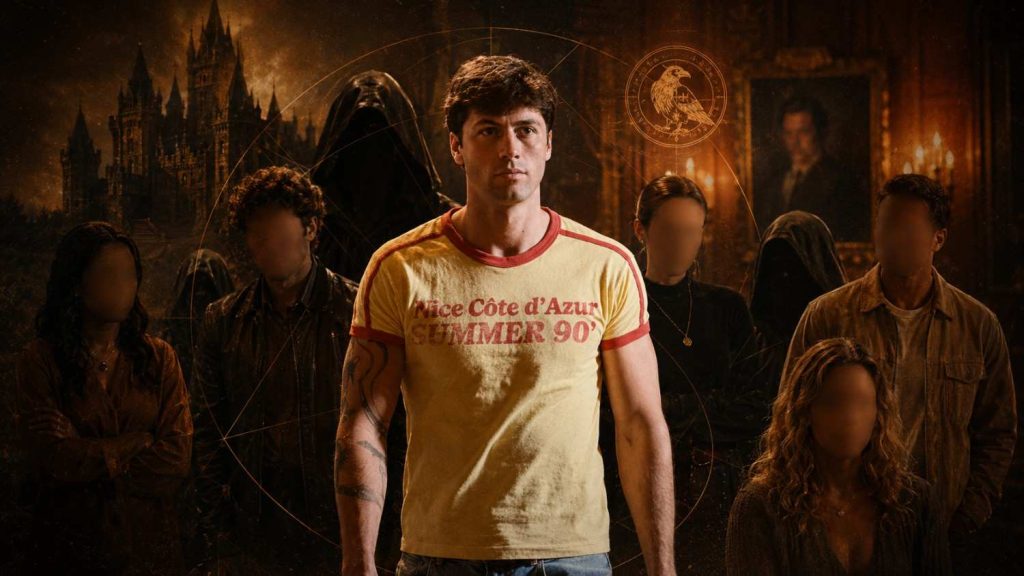
Rob’s “dumb hot guy” presentation was an active strategic tool he maintained across twelve episodes. His own words in post-game coverage described a deliberate Southern-charm affect that made his moves feel like social behavior rather than calculated gameplay. People watched him laugh, be warm, be low-key physically present, and their brains told them the rest of the picture was equally uncomplicated.
This is a recognized archetype in Traitors gameplay across both the U.S. and U.K. versions. Cirie Fields won U.S. Season 1 in significant part because her grandmother-at-the-fireplace presentation made aggressive strategy feel inconsistent with her image. Harry Clark’s apparent youthful naivety served the same function in the U.K. version. The persona creates a cognitive dissonance that protects you: when you do make a move, observers explain it away as accident or emotion rather than calculation.
Rob’s version of this had one feature the others didn’t. His cover was reinforced by a genuine pre-existing relationship with Maura. Most persona-players have the persona, but they don’t have a structural defender. Rob had both running simultaneously, which is why even when the cracks showed in episode 11, the response came too late to change the outcome.
Alan Cumming, who has a front-row seat to every confessional, every round, and every vote across all four U.S. seasons, called Rob one of the strongest Traitors the show has produced. That assessment carries specific weight because Cumming is not watching from the couch. He is watching from inside the room.
Why Nobody Suspected Rob Rausch Until Episode 11: The Halo Effect in a Strategy Game
The halo effect is the documented cognitive bias through which perceived positive qualities in one domain, physical attractiveness, social warmth, charm, inflate perceived trustworthiness and competence in completely unrelated domains. You see someone as likable and your brain quietly adjusts its estimate of how likely they are to be lying to you.
The Traitors is, structurally, a halo-effect detection game. Every round, contestants are asked to override their instinctive social trust assessments and find the person who is actively deceiving them. The players who win are almost always the ones who benefit most from the halo effect and manage it actively. That’s not an accident. That’s the show’s core psychological engine.
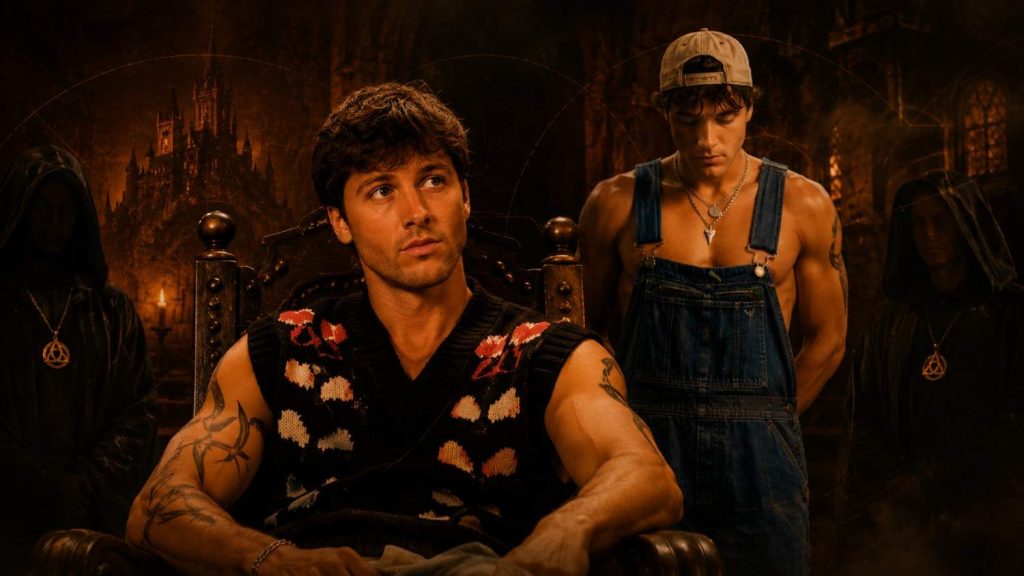
Rob’s game produced a four-layer halo stack. He was conventionally attractive. He was warm and socially fluent. He had a pre-existing relationship with a cast member who activated in-group loyalty on his behalf. His persona made calculated strategy feel tonally inconsistent with everything players observed about him. Each of those four elements generates a separate halo. Stacked on top of each other, they created near-complete cover for eleven straight episodes.
Candiace’s vote against Rob was the evidence. The halo effect is why it didn’t land. When a player the group had already marginalized told them the charming, warm, Maura-adjacent guy was the liar, the math didn’t compute. The halo overrode the data point. This happens in the real world too, in hiring decisions, in courtrooms, in political campaigns. The Traitors just compresses it into a visible, well-documented, week-by-week record.
Rob understood this dynamic consciously and played into it intentionally. Most halo-effect beneficiaries don’t know they’re benefiting. Rob knew. He cultivated the conditions that would maximize the effect. That’s the line between luck and strategy.
The Traitors Season 4 Casting Pattern: Is Rob’s Win Part of a Bigger Story?
Rob played a brilliant game. Everything in the previous sections stands on its own. What follows is not a revision of that assessment. It’s an additional layer of analysis that the show itself invites by being, structurally, a game about who people choose to trust and why.
The pattern across all four U.S. seasons is specific enough that it deserves to be named directly. The Traitors who escaped suspicion longest, not the ones who played hardest or won most dramatically, but the ones the group simply did not look at for the longest period, have consistently skewed toward conventionally attractive young white men.
Walk through the seasons with actual suspicion timelines:
- Season 1: Cirie Fields won, but she faced active accusation throughout. Her path to victory ran directly through sustained suspicion she had to manage and deflect. The win came despite the scrutiny, not in the absence of it.
- Season 2: Phaedra Parks won, and she faced consistent and vocal suspicion from multiple players across the season. Her navigation of that pressure is its own kind of strategic achievement, possibly a harder one. But the path was contested in a way that Rob’s was not.
- Season 3: The Traitor cohort included Carolyn Wiger, and suspicion was distributed more evenly across the group. No single Traitor had the kind of extended no-fly zone that Rob enjoyed in Season 4.
- Season 4: Rob was the one player among four Traitors, alongside Lisa Rinna, Candiace Dillard Bassett, and the recruited Eric Nam, who went essentially unchallenged until episode 11. His three co-Traitors all faced earlier and more pointed suspicion. Rob’s trajectory was categorically different from theirs.
Reality Blurred noted in their Season 4 finale coverage that Rob was the one white male among the Season 4 Traitor cohort and the one who faced the least heat for the longest stretch. That’s a data point, not a verdict.
The casting pattern across four seasons shows that the Traitors who benefit most from sustained invisibility have consistently skewed toward conventionally attractive young white men. The ones who had to fight hardest to survive, who were named earlier and louder, were more often women and people of color. The halo effect research explains why this happens in the general population. The Traitors is just running the experiment with cameras.
This is not an argument that Rob didn’t earn his win. He did. He played four excellent tactics with discipline across twelve episodes. The argument is that the structural conditions he operated in were not neutral. Some players started the game having to work against a suspicion deficit. Rob started the game with a suspicion surplus: people were actively less inclined to look at him, and he knew how to deepen that inclination. That’s a real advantage, and the show hasn’t fully reckoned with it.
The halo effect doesn’t operate in a vacuum. Casting decisions shape which players walk into the castle, and casting decisions are made by people who are not immune to the same cognitive biases the show is documenting on screen.
What Season 5’s Civilian Casting Will Tell Us
The announced civilian version of The Traitors, filming in 2026, is the closest thing the show has to a controlled experiment on this question. Celebrity casting introduces external variables: pre-existing fanbases, parasocial relationships, pre-loaded reputations, the baggage of an existing public persona. A civilian cast removes most of those variables. The players will be evaluated almost entirely on what they project in the castle.
If the suspicion pattern holds in a civilian cast, that tells us the dynamic is about the halo effect operating on real-time social observation, not about fame or pre-existing associations. If the pattern breaks, that tells us celebrity casting is doing more structural work than the show has acknowledged. Either result is informative.
The civilian version is also a test of whether the show’s producers have absorbed the casting-pattern critique at all. Season 5’s casting choices will be the first concrete evidence of whether the show is watching its own data or not.
What to watch in the civilian cast: track when each Traitor first gets named, how quickly that naming gains traction, and whether the pattern of extended invisibility correlates with anything observable in the first three episodes. You won’t need twelve episodes to see the shape of it. By episode four, the suspicion distribution will already tell you something.
Rob’s win was brilliant and it was also structurally assisted. Both things are true at the same time, and watching the civilian season with that frame in mind will make it a significantly more interesting show.
Frequently Asked Questions
Why did nobody vote for Rob Rausch for most of The Traitors Season 4?
Rob benefited from a four-layer halo effect: physical attractiveness, social warmth, a pre-existing alliance with Maura Higgins that positioned her as his vocal defender, and a deliberately cultivated low-strategy persona. Each element separately reduces suspicion. Combined, they created near-complete cover for eleven of twelve episodes. Candiace Dillard Bassett named him twice on her way out, but by that point the group’s suspicion architecture had been so thoroughly shaped by Rob’s presentation that no organized response formed until it was too late to change the outcome.
Was Rob Rausch actually the best Traitor in The Traitors US history?
Alan Cumming, who has watched every confessional across all four U.S. seasons, described Rob as one of the strongest Traitors the show has produced. By tactical metrics, the case is strong: he lasted longest without serious challenge, preemptively eliminated two co-Traitors to manage his own exposure, recruited and then strategically sacrificed Eric Nam, and won the full $220,800 solo. Cirie Fields and Phaedra Parks both won their respective seasons under significantly more sustained suspicion pressure, which is its own kind of achievement. The “best ever” debate depends on how you weight degree of difficulty.
Why did Rob Rausch betray Eric Nam in the finale instead of splitting the prize?
Rob’s recruitment of Eric was built on a controllability calculation rather than a partnership one. Rob has stated in post-season interviews that he wanted a follower, not a co-strategist. Splitting $220,800 was never the likely endgame from Rob’s perspective because the entire logic of the recruitment was to have a manageable asset, not an equal partner. In the finale, eliminating Eric was the cleanest path to the full prize. Eric’s own post-game comments suggest he understood, at some level, that he was in a subordinate position within the Traitor pairing.
Is there really a pattern of white men winning The Traitors, or is that reading too much into it?
The specific pattern isn’t about who wins. Both Cirie Fields and Phaedra Parks won their respective seasons. The pattern is about who faces the least suspicion for the longest period, which is a different metric. Across four U.S. seasons, the Traitors who operated with the longest stretches of uninterrupted invisibility have consistently been conventionally attractive young white men. The halo effect research on how attractiveness and perceived competence interact in group trust assessments provides a documented psychological framework for why this happens. Reality Blurred flagged it in Season 4 finale coverage. The pattern is real as a suspicion-distribution question, even if the win column looks more mixed.
Did Maura Higgins know Rob Rausch was a Traitor the whole time?
No. Maura was a Faithful player who genuinely trusted Rob throughout the season. Her role as his most effective cover worked precisely because her defense of him was not performed. She was not complicit in his strategy. Post-reunion coverage indicated that their relationship was strained by the finale, which is both the human cost of the strategy and the part of the win that doesn’t show up in the $220,800 figure.
What does “the halo effect” mean in the context of The Traitors?
The halo effect is a documented cognitive bias in which positive attributes in one area, being attractive, warm, or socially likable, inflate an observer’s assessment of a person’s trustworthiness in completely unrelated areas, including whether they’re lying. In The Traitors, where the entire game asks players to override instinctive social trust and find the liar, halo-effect beneficiaries have a structural advantage because other players are working against their own cognitive defaults to suspect them. Rob stacked four separate halo-generating attributes simultaneously, which made him functionally invisible even when evidence against him was audible and visible.
What should I watch for in The Traitors Season 5 civilian version?
Track when each Traitor first gets named and how quickly that naming builds momentum into organized action. The civilian version removes pre-existing fame and parasocial relationships from the casting mix, making it a cleaner test of whether the halo-effect suspicion pattern is about celebrity associations or about real-time social observation in the castle. If the pattern of extended invisibility for conventionally attractive young white male Traitors holds in a civilian cast, that is strong evidence the dynamic is structural and cognitive rather than fame-driven. The shape of suspicion distribution usually becomes visible by episode three or four.
The Bigger Picture
Rob Rausch won The Traitors Season 4 by doing four things exceptionally well across twelve high-pressure episodes: he built structural cover with Maura before the game accelerated, he preemptively eliminated co-Traitors whose visibility threatened him by association, he recruited a controllable ally and disposed of him when the prize was in reach, and he maintained a persona that made calculated strategy feel tonally impossible coming from someone who looked and acted like him. Any one of those tactics in isolation is good Traitors play. All four together, running simultaneously, is why Alan Cumming said what he said.
The casting-pattern argument doesn’t subtract from that. It adds a second layer that the show needs to sit with as it moves into Season 5. The halo effect isn’t something Rob invented. It operates on every cast, in every social environment where people are asked to identify deception under time pressure. What Rob did was understand it consciously and build his game around it in a way that most players, even experienced reality TV veterans, don’t do explicitly. That’s the difference between someone who benefits from a structural advantage and someone who weaponizes it.
Watch the civilian season with both lenses open. Track who gets named first. Track who gets named loudest and whether it builds or dissipates. Track how long it takes for an accusation to become an organized vote. The answers will tell you more about how trust and suspicion actually work in a group under pressure than any of the season’s confessionals will.