The Film Says Indiana. The Cameras Were in Georgia the Whole Time.
Now and Then is set in Shelby, Indiana, in the summer of 1970. Shelby is a fictional town. It does not appear on any Indiana map because it was never a real place.
What is real is the source of inspiration. Screenwriter I. Marlene King grew up in Winchester, Indiana, a small Randolph County city in the eastern part of the state. The nostalgic, small-town summer feeling that runs through the entire film draws directly from her experience of that kind of Midwestern upbringing. Winchester gave the film its emotional DNA. Georgia gave it its actual shooting locations.
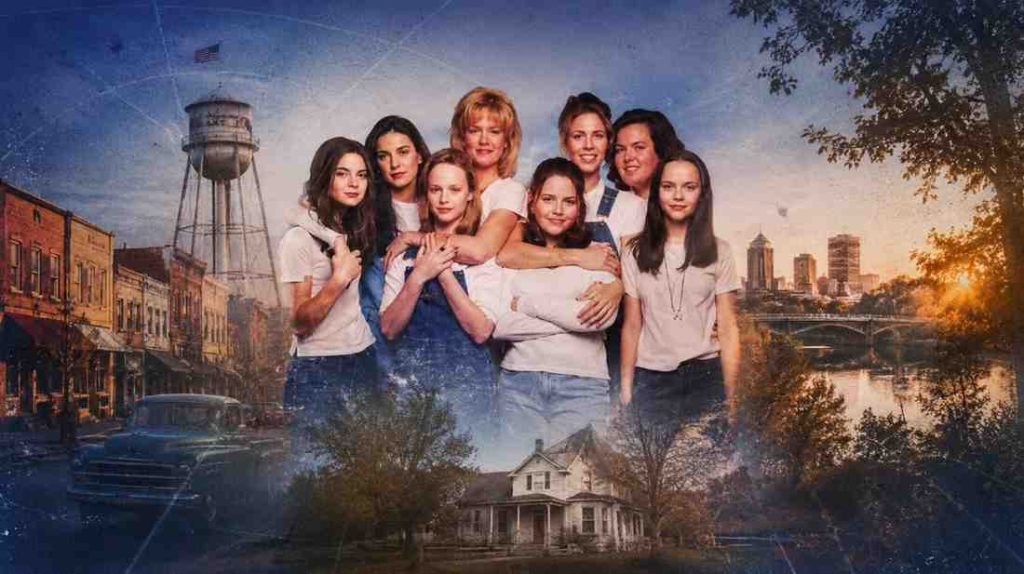
Production chose Savannah and Statesboro for practical and visual reasons. Savannah offered established residential neighborhoods with mature tree canopy that could plausibly read as a 1970s Indiana suburb with the right set dressing. The production team modified the locations, adjusting porch colors, signage, and landscaping, to strip away anything too visually Southern and replace it with a more neutral small-town American look.
The result was so effective that decades of fans have assumed they were watching a real Indiana town. They were watching coastal Georgia dressed in Midwestern clothes.
This matters for anyone trying to visit the locations. You will not find a Shelby, Indiana, because it does not exist. Everything is in Georgia, split between two cities about an hour apart.
The Savannah, Georgia Locations in Now and Then
Savannah handled the core of the film: the residential neighborhood, the cemetery scenes, and the community pool. These are the locations that define the visual identity of the movie for most fans.
The Country Walk Subdivision (The Gaslight Addition)
The Gaslight Addition is not a real neighborhood name. It is the fictional name used in the film for what is actually the Country Walk subdivision, a residential community off Coffee Bluff Road in Savannah, Georgia.
This is the neighborhood where the girls live, where they ride their bikes down the street, and where the exterior shots of Samantha’s house, Chrissy’s house, and the surrounding blocks were filmed. The curving residential streets and mature tree cover made it the ideal stand-in for a Midwestern suburb, especially after the production team adjusted the set dressing to reduce the Southern architectural cues.
Country Walk is a functioning residential neighborhood today. The streets are publicly accessible, and you can drive through the subdivision. The houses themselves are private property and have changed significantly over 30 years. The production-designed version of these streets, with its dressed stoops and period-specific details, no longer exists as it appeared on screen.
Visiting requires a basic level of residential courtesy. You are driving through someone’s neighborhood. Slow passes and photographs from the street are reasonable. Parking in front of private homes for extended periods is not.
Old Town Cemetery
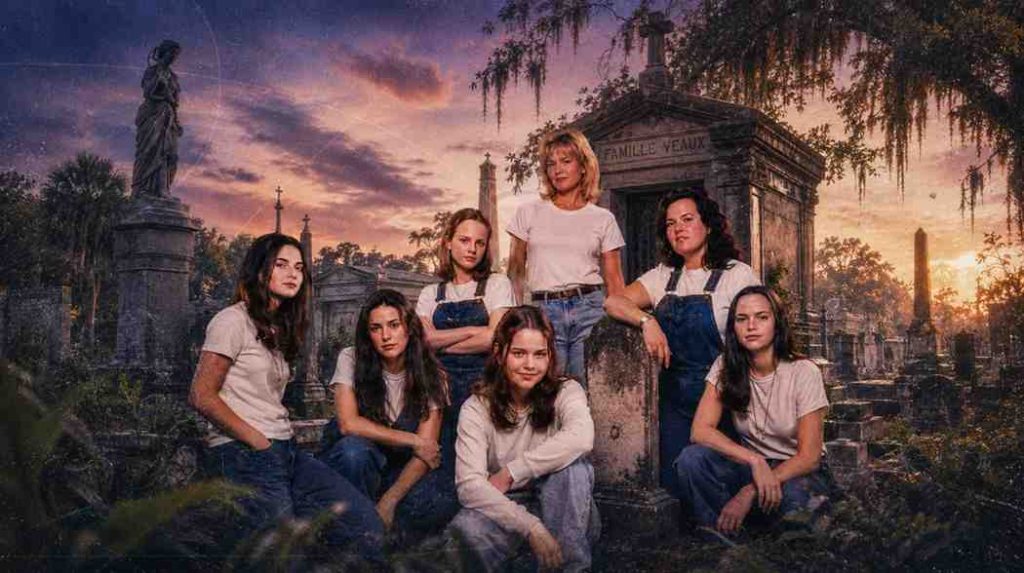
The cemetery where the girls investigate Johnny’s grave and conduct their séance was filmed at Bonaventure Cemetery in Savannah, one of the most visually distinctive burial grounds in the American South.
Bonaventure is a 160-acre cemetery on the eastern edge of Savannah along the Wilmington River. It is the same cemetery that became nationally prominent through its appearance in Midnight in the Garden of Good and Evil, published the same year Now and Then was released. The Spanish moss, the dense tree canopy, and the 19th-century grave markers created exactly the atmospheric quality the film needed for its mystery plot thread.
Bonaventure Cemetery is publicly accessible and free to visit, with grounds open daily during daylight hours. It is a historically significant cemetery still in active use, so standard visiting conduct applies. The atmosphere that made it perfect for a 1990s nostalgia film has not changed.
The Swimming Pool
The community pool scenes, including the diving board sequences, were filmed at a pool associated with the Country Walk area in Savannah.
The pool scenes are the trickiest of the Savannah locations to visit. A neighborhood pool tied to a residential subdivision is typically accessible only to residents or members of that community, not to the general public. If visiting the Country Walk area, you may be able to see the pool from adjacent public access points, but access to the facility itself is not guaranteed for non-residents.
The Statesboro, Georgia Locations in Now and Then
Statesboro sits approximately 60 miles northwest of Savannah, about a one-hour drive on US-80. Most online coverage of Now and Then filming locations either skips Statesboro entirely or mentions it in passing without explaining which scenes were filmed there. That is a significant omission, because the downtown main street sequences did not come from Savannah at all.
The Averitt Center for the Arts (Main Street Scenes)
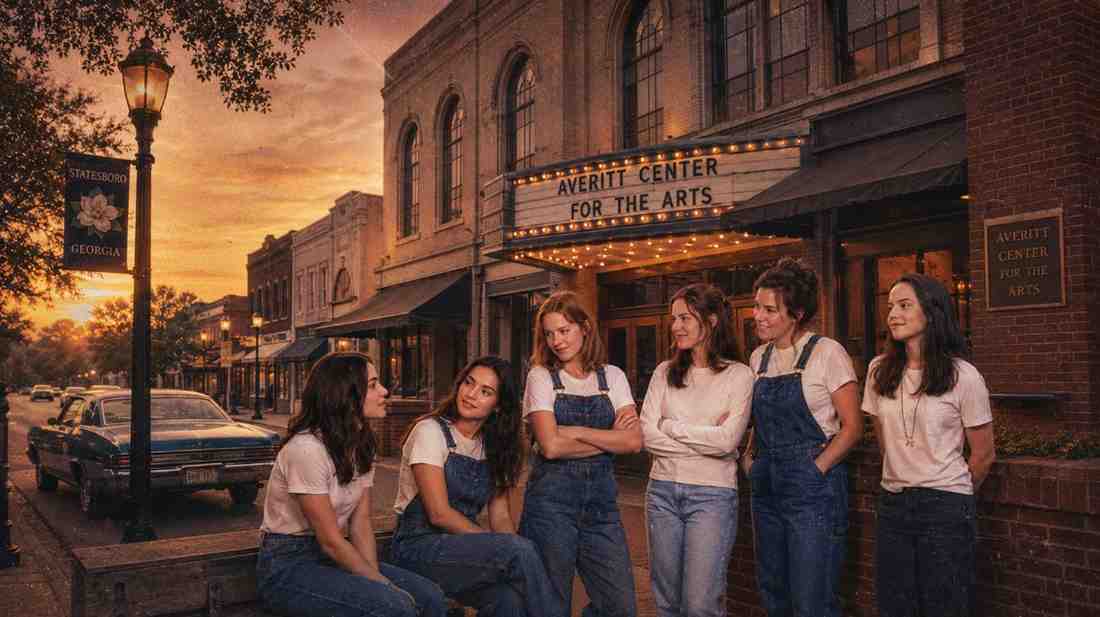
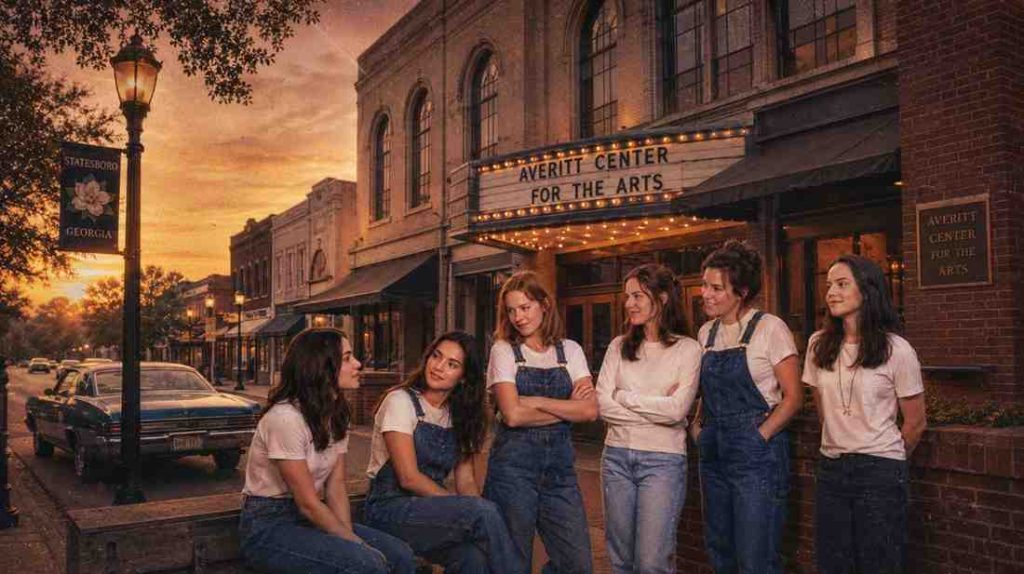
The five-and-dime storefronts, the main street scenes, and the wide downtown sequences were filmed in Statesboro, and the Averitt Center for the Arts on South Main Street is the primary anchor point for those scenes.
The Averitt Center is a performing arts venue housed in a historic building in downtown Statesboro. In 1995, the building and the surrounding streetscape provided the classic American main street visual that the film needed for its town square sequences. The production team dressed the storefronts and street to reflect the 1970s period setting, but the underlying architecture was already doing most of the work.
The Averitt Center is still standing and still active as a real arts venue with its own programming calendar. The building is publicly visible from the street and the surrounding downtown area is fully accessible.
Downtown Statesboro Streets
The wider street scenes in the film used the general downtown Statesboro streetscape, including the blocks surrounding the Averitt Center, for the establishing shots that made Shelby feel like a real functioning town.
Downtown Statesboro has changed since 1995 in the ways that any small American downtown changes over 30 years. Some storefronts have changed tenants and some facades have been updated. The general layout and the architectural bones of the district are intact, and a viewer familiar with the film who walks those blocks today will recognize the scale and proportions of the street.
The entire downtown area is publicly accessible with standard street parking and no admission or special permission required.
What Has Changed Since 1995, and What Is Gone
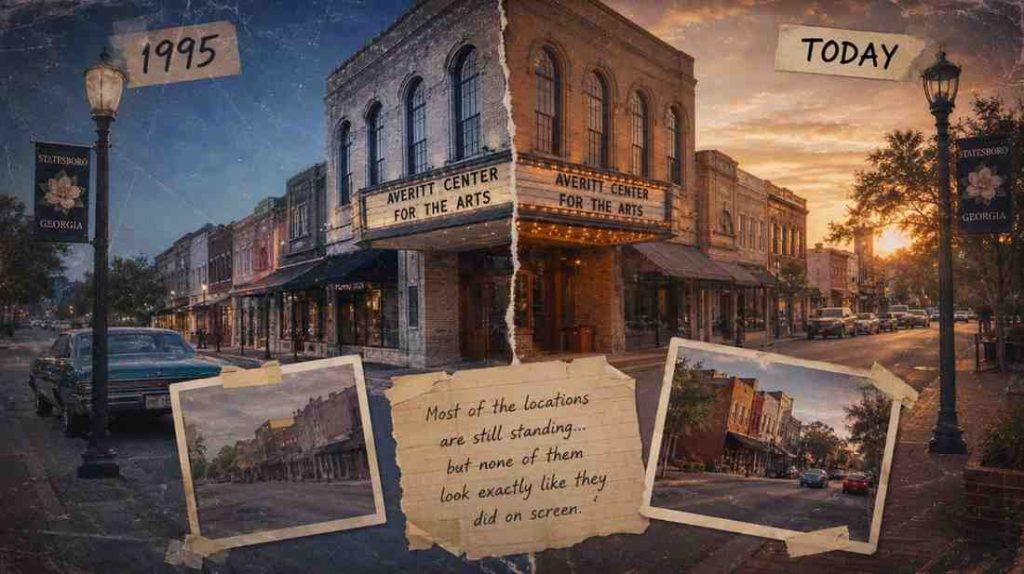
The short answer: most of the locations are still physically standing, but none of them look exactly like they did on screen.
The most significant change is that the film’s visual identity was constructed, not captured. Production design modified every major location to read as a 1970s Indiana town. The period-specific signage, the set-dressed porches, the repainted storefronts, all of that disappeared when the crew packed up and left.
The Country Walk subdivision homes have been updated by their owners over 30 years. Landscaping has grown in, been removed, and been replanted. The specific houses used for Samantha’s and Chrissy’s exteriors are identifiable by their position on the street, but they no longer match their on-screen appearance precisely.
Bonaventure Cemetery has remained largely unchanged, which makes it the most film-accurate location to visit today. The trees are older and larger, and the overall atmosphere is intact.
The treehouse is the one location that cannot be confirmed to a specific public address. Based on the available production record, the treehouse was likely a constructed set piece built on or near private property within the filming area. Any source claiming to pinpoint the treehouse to a specific address should be treated with skepticism unless they can provide production documentation.
The Averitt Center in Statesboro is the most structurally unchanged of all the locations. The building is the building, and the primary filming landmark is intact and in active use.
How to Visit the Now and Then Filming Locations
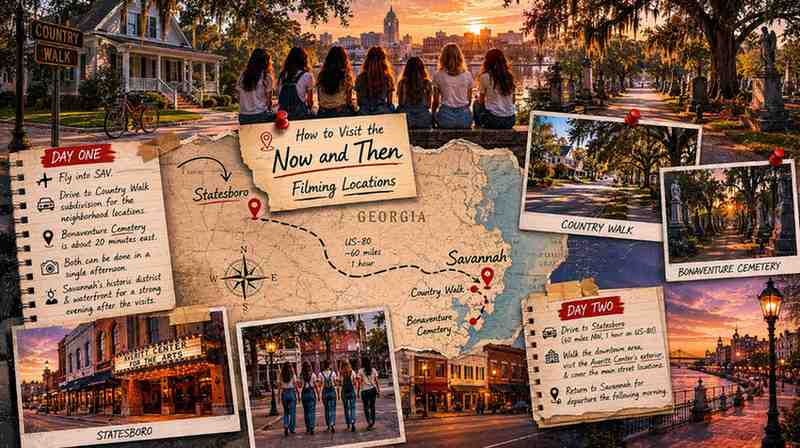
Both cities can be covered in a single weekend. Here is the practical structure.
Nearest airport: Savannah/Hilton Head International Airport (SAV) is your entry point. It sits roughly 20 to 25 minutes from the Country Walk area and approximately 75 minutes from downtown Statesboro.
The loop route:
- Day one: Fly into SAV. Drive to the Country Walk subdivision for the neighborhood locations. From there, Bonaventure Cemetery is about 20 minutes east. Both can be done in a single afternoon, and Savannah’s historic district and waterfront make for a strong evening after the location visits.
- Day two: Drive to Statesboro (approximately 60 miles northwest, one hour on US-80). Walk the downtown area, visit the Averitt Center’s exterior, and cover the main street filming locations. Return to Savannah for departure the following morning.
Total driving distance for the loop is under 150 miles. Neither city requires more than half a day for the filming-location-specific stops.
Best time of year: Spring (March through May) and fall (September through November) are the practical windows. Georgia summers are genuinely hot and humid, with Savannah regularly reaching the upper 90s in July and August. The Country Walk neighborhood and Bonaventure Cemetery are outdoor visits where weather makes a real difference. Avoid summer unless you have a strong tolerance for Southern heat.
One practical note on Country Walk: The subdivision is a residential neighborhood, not a tourist attraction. The streets are public, but the homes are private. Drive through, take photographs from the street, and leave the neighborhood the way you found it.
Frequently Asked Questions About Now and Then Filming Locations
Was Now and Then actually filmed in Indiana?
No. The film is set in the fictional town of Shelby, Indiana, but no filming took place in Indiana. All principal photography was shot in Savannah, Georgia, and Statesboro, Georgia. The Indiana setting was drawn from the personal experience of screenwriter I. Marlene King, who grew up in Winchester, Indiana, but the production never left Georgia.
Where is the Gaslight Addition from Now and Then?
The Gaslight Addition is the fictional neighborhood name used in the film. In reality, it corresponds to the Country Walk subdivision off Coffee Bluff Road in Savannah, Georgia. The subdivision is a functioning residential community today. The streets are publicly accessible, though the houses are private property and have changed considerably since 1995.
Is Shelby, Indiana, a real place?
Shelby, Indiana, does not exist as a city or town in Indiana. The name was invented for the film. The closest real-world connection is Winchester, Indiana, the hometown of screenwriter I. Marlene King, which served as the emotional and cultural reference point for the fictional Shelby. Winchester is a real city in Randolph County in eastern Indiana, but it has no direct connection to the filming of the movie.
Is the Now and Then treehouse still standing?
The treehouse from the film cannot be confirmed to a specific publicly accessible address. The most likely explanation is that it was a constructed set piece built on private property during production. No verified treehouse location with public access has been documented. If a source claims to know the exact address, ask for the production documentation before making a trip specifically to see it.
What town were the main street scenes in Now and Then filmed in?
The main street and downtown scenes were filmed in Statesboro, Georgia, not in Savannah. Statesboro is about 60 miles northwest of Savannah, a one-hour drive. The Averitt Center for the Arts on South Main Street is the most identifiable building from those sequences and is still standing and operating as an active arts venue today.
How far is Statesboro from Savannah?
Statesboro is approximately 60 miles northwest of Savannah. The drive takes about one hour via US-80. Both cities can be covered in a single weekend trip if you split the Savannah locations onto day one and the Statesboro locations onto day two. The total loop is under 150 miles of driving.
The Real Geography of a Made-Up Indiana Summer
The most interesting thing about the Now and Then filming locations is not where they are. It is the gap between what the film made you feel and where those feelings were actually manufactured.
Marlene King wrote from a real place: Winchester, Indiana, a real small town with a real summer and real girls riding bikes down real streets. But the film’s version of that memory was constructed in Georgia, in a residential subdivision off Coffee Bluff Road and on a downtown block in Statesboro, by a crew who painted porches and swapped out signs to make the South look like the Midwest. That is its own kind of filmmaking magic, and it worked so completely that the illusion has held for 30 years.
If you want to visit, start in Savannah. Drive to Country Walk, walk through Bonaventure Cemetery, and let Statesboro be your second day. The locations are real. They are standing. And now you know exactly where to find them.