What Was Bug Juice on Disney Channel?
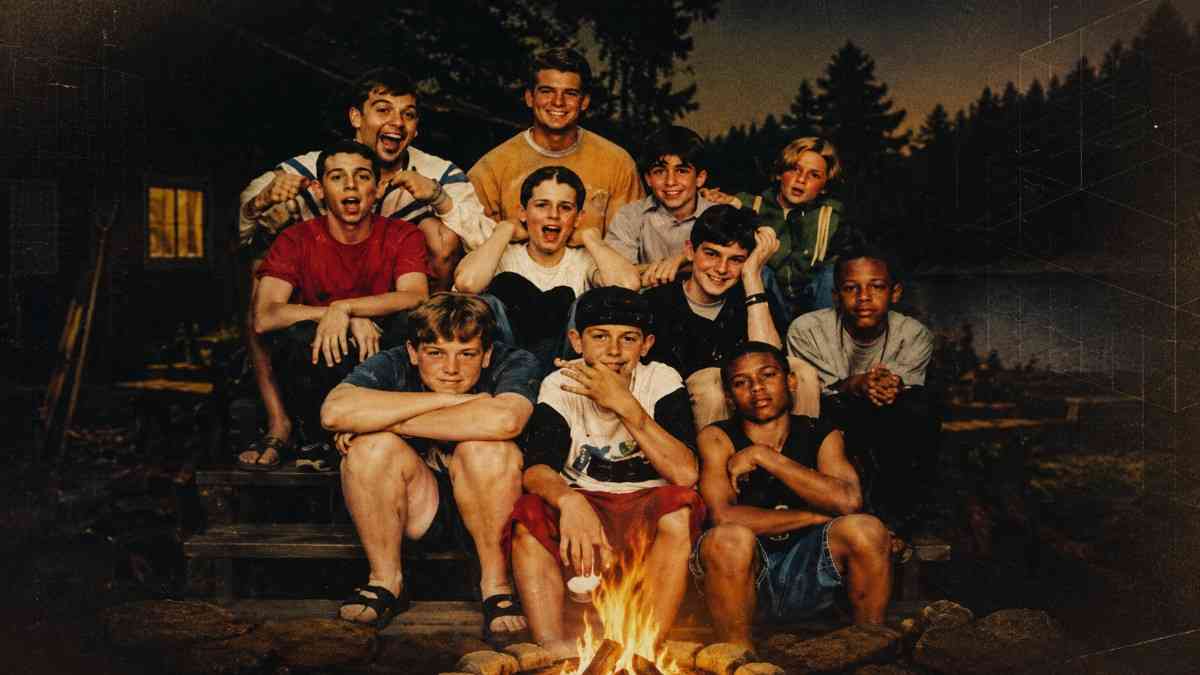
Bug Juice was a Disney Channel reality series that premiered on February 28, 1998. It followed approximately 20 real kids per season through a summer session at Camp Waziyatah in Wayne, Maine. No actors. No scripts. No eliminations. Just actual children living through actual summer camp.
The name came from camp slang. “Bug juice” is what campers called the large pitchers of extremely sweet, vaguely fruit-flavored drink served at meals. It had nothing to do with the bottled drink brand that causes so much search engine confusion.
The format was observational documentary, not competition. Nobody got voted off. Nobody won a prize at the end. The show captured ordinary camp life: friendships forming, friendships breaking, crushes, conflicts, moments of genuine homesickness, and the occasional drama that ends in someone going home early. This matters because it positioned Bug Juice closer to a documentary than to what most people think of as reality TV.
The timing was genuinely significant. Bug Juice premiered before Survivor (2000) and before The Real World had become a household reference point for younger viewers. Reality TV had not yet developed the recognizable grammar that makes today’s shows feel familiar. Watching it in 1998 meant watching something that had no real template: kids on camera, acting exactly like kids, with no manufactured stakes and no scripted resolution. That was unusual television, and it was unusual for Disney Channel especially, which had spent years building its identity around animated series and family-friendly films.
How Many Seasons Did Bug Juice Have and When Did It Air?
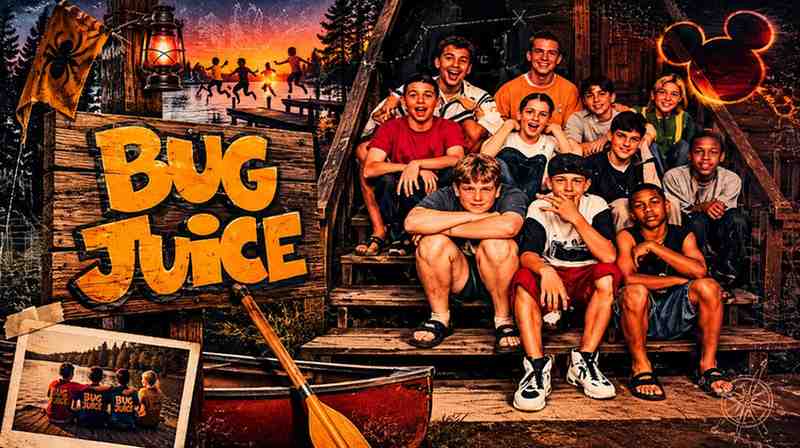
Bug Juice ran for three original seasons. Season 1 premiered February 28, 1998. Season 2 followed in 1999. Season 3 aired in 2001.
Each season featured a completely new group of campers. The continuity across seasons was the place (Camp Waziyatah) and the format, not returning cast members. If you loved a specific kid from Season 1, you did not get to find out what happened to them in Season 2. You got a new group of strangers and had to start again. That structure is part of why the cast questions have lingered so long: the show gave you no natural follow-up, so curiosity about specific people never got resolved on screen.
The show stopped producing new episodes after Season 3 in 2001. Then in summer 2004, Disney Channel ran Season 1 reruns nightly in chronological order. This is the detail that explains why so many people who describe themselves as Bug Juice fans are slightly too young to have watched it during its original run. An entire second wave of viewers discovered the show during those 2004 reruns. For kids who were 8 or 9 years old that summer, Bug Juice was a revelation: a show about kids their age that was completely real.
Disney’s early Disney Channel programming was a genuinely interesting mix of live-action originals, animated series, and DCOMs before the scripted era fully took over. Bug Juice sat in that window where the network was still experimenting.
Where Was Bug Juice Filmed? Is Camp Waziyatah Still Open?
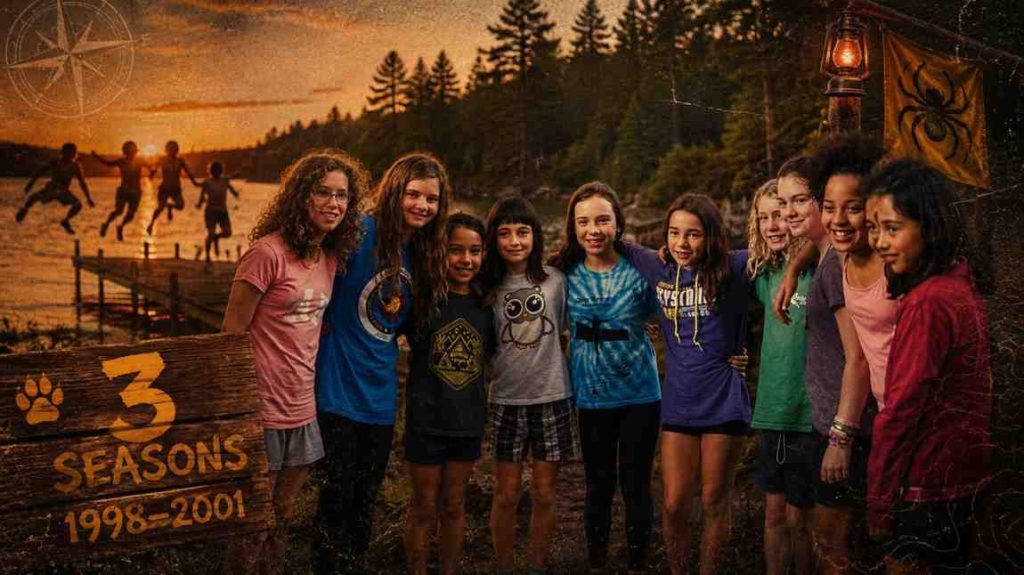
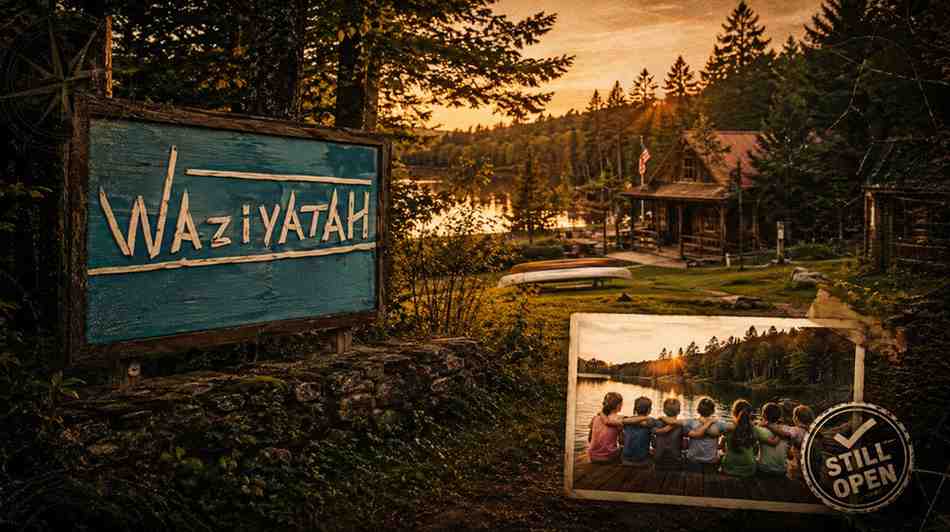
Camp Waziyatah is a real summer camp in Wayne, Maine, and it is still operating. You can still send your kids there today.
The camp was founded in 1921, which means it was already more than 75 years old when Bug Juice started filming there. It was never a set dressed to look like summer camp. The kids on screen were actual paying campers who happened to be filmed for a national cable series. The cabins were real cabins. The lake was a real lake. The counselors were real counselors managing real children.
This is the detail that grounded Bug Juice in a way that most nostalgia content simply cannot claim. The physical place still exists. The tradition continues. If you grew up watching Bug Juice and felt something specific about that Maine setting, you can look up Camp Waziyatah right now and the website will be there.
The filming arrangement also raised questions that nobody in 1998 was thinking to ask. When you send your child to summer camp, you expect them to come home with stories. You do not necessarily expect them to appear on a Disney Channel series watched by millions of households. The consent frameworks and minor protections that exist now around reality TV did not exist then in any structured way. Bug Juice operated in a space that had no real rules yet, because nothing quite like it had existed before.
Why Did Bug Juice Get Cancelled After Season 3?
Disney Channel made a deliberate, strategic decision to move away from reality and documentary content toward scripted originals, and that shift happened roughly between 2000 and 2003. Bug Juice did not fit where the network was going.
The shows that came to define the next era of Disney Channel were Lizzie McGuire (2001), That’s So Raven (2003), and eventually Hannah Montana (2006). These were not random choices. Disney had figured out something specific: scripted, star-driven content could generate merchandise, build identifiable talent relationships, and give the network control over its own story. A show built around Hilary Duff could produce albums, clothing lines, and tour appearances. A show built around anonymous children at a summer camp in Maine could produce Season 2 of Bug Juice, and not much else.
Reality TV gave the network unpredictable children in unpredictable situations with stories that could not be shaped after filming. The editorial control was limited and the commercial extension possibilities were minimal. Bug Juice was cancelled not because it was a failure but because the network’s business model moved somewhere the show could not follow. Strategic fit was the problem, not ratings.
What Happened to Bug Juice Between 2001 and 2018?
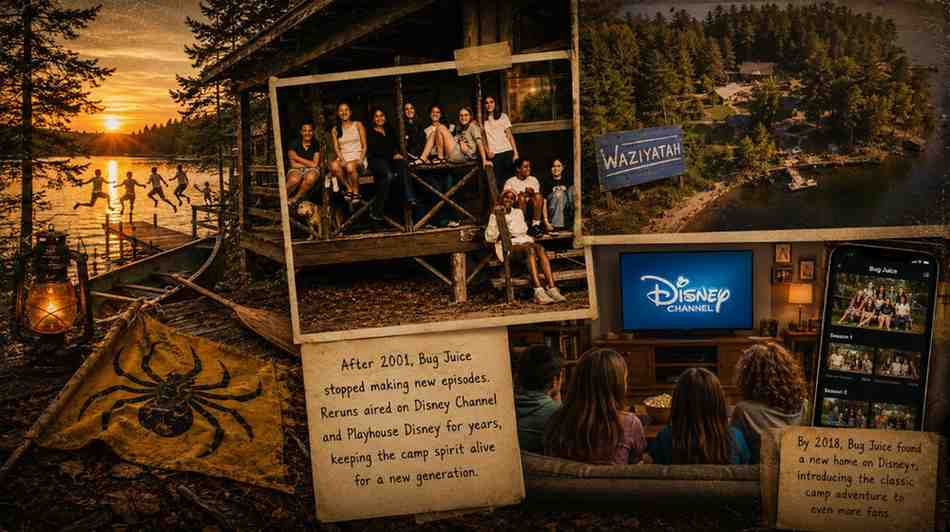
The show was off the air for 17 years between Season 3 and the 2018 reboot. The 2004 rerun run suggests Disney still saw some residual audience value, but no new season was commissioned during that stretch.
The gap did not kill the show’s cultural footprint. It preserved it in amber. The kids who watched Bug Juice during its original 1998 to 2001 run grew up, became adults in their 30s, and started doing what nostalgic adults do: they talked about it on Reddit, referenced it on social media, and felt a specific kind of fondness for a show that felt nothing like anything else they remembered watching.
By 2018, the demographic that had first watched Bug Juice as 10-year-olds was approximately 30 years old. That is a meaningful nostalgia window. It is also the window when that demographic starts having children of their own and camp-age kids in their lives. The conditions for a reboot were actually quite good. Disney read the appetite correctly. What they got wrong was where to put the show.
Why Did the Bug Juice Reboot Fail in 2018?
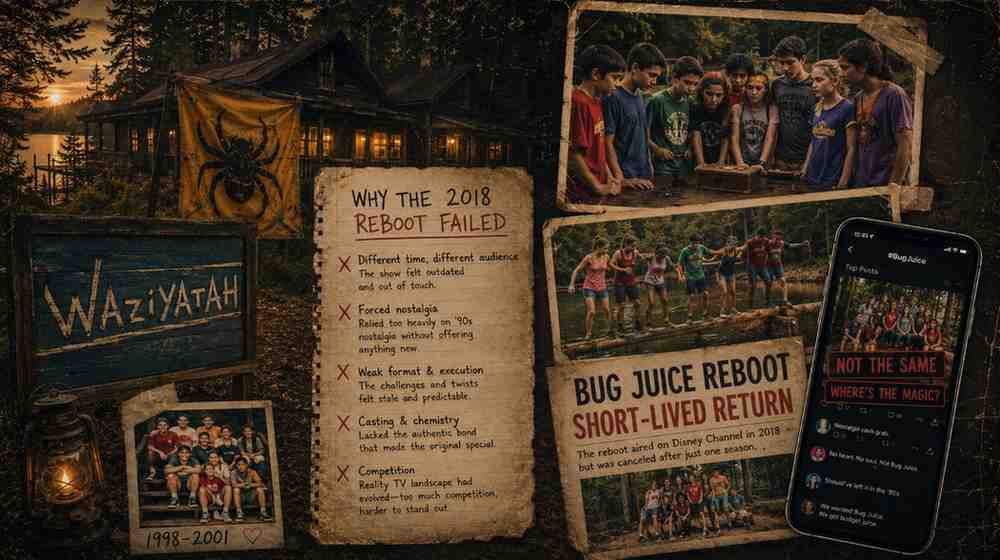
Bug Juice: My Adventures at Camp premiered on Disney Channel in July 2018. The format returned largely intact: real kids, real camps, observational documentary structure. No renewal was announced after the initial run, and the reboot did not continue.
The failure was a mismatch problem more than a quality problem. By 2018, Disney Channel had spent 17 years building a brand around scripted content, named performers, and franchise potential. Dropping an observational reality show about anonymous kids into that programming schedule was like releasing a black-and-white film at a multiplex that has only been showing Marvel movies for a decade. The format was not bad. It was just aimed at the wrong room.
The show later aired on Freeform, which is Disney’s older-skewing cable network targeting teens and young adults. That migration tells you something real about who was actually watching. The audience for Bug Juice: My Adventures at Camp was teenagers and nostalgic adults in their 30s, not the 8-to-12 demographic Disney Channel was primarily serving in 2018.
The version of the 2018 reboot that might have worked would have lived on a streaming platform. On Disney+ or a comparable service, a nostalgia property with a built-in adult audience and a heartfelt format can find its viewers without competing against a scripted brand identity. Launched into linear cable programming in 2018, it was asking Disney Channel audiences to engage with a format their network had explicitly abandoned. That is a structural problem, and no amount of good footage from a summer camp fixes a structural problem.
If you want to understand how networks respond when a format no longer fits the brand, the pattern with Bug Juice follows the same logic described in this breakdown of show cancellations: the decision is rarely about the show in isolation.
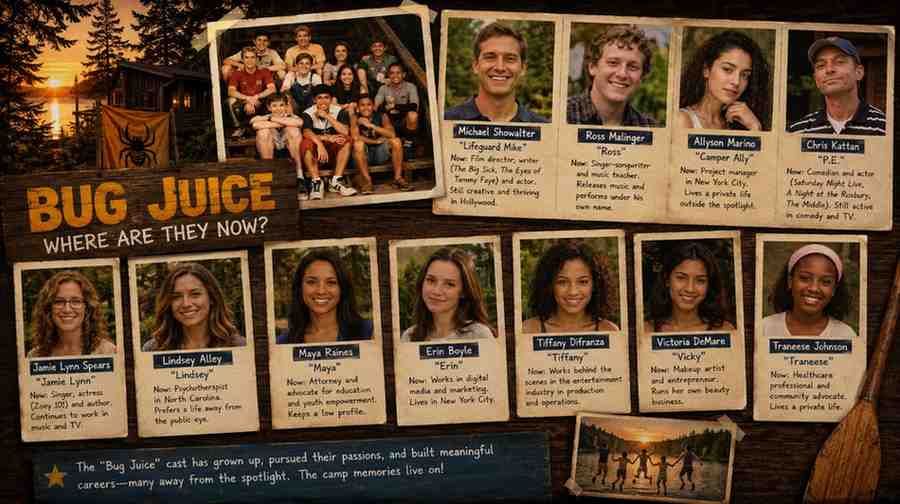
What Happened to the Cast of Bug Juice? Where Are They Now?
A note before the names: every person listed below was a child when Bug Juice filmed. They did not audition for a career in entertainment. They went to summer camp and ended up on a Disney Channel series watched by millions of households. The “where are they now” question deserves to be answered with that context clearly in mind.
Stephanie and Connor
Stephanie and Connor were one of the most-followed storylines in Bug Juice’s original run. Their friendship and romantic tension was the kind of thing that had viewers genuinely invested.
As adults, their lives look like ordinary adult lives, which is not a criticism. Stephanie went into therapy and works as a therapist. Connor lives in New York and runs a multimedia company. They are not famous and they are not child stars who became adult stars. They are people who happened to be on a memorable show as children and then grew up.
Eve
Eve is the cast member with the most publicly documented adult perspective on what Bug Juice was actually like from the inside.
She gave an interview to Vice Magazine (published in issue 28, No. 1) that remains one of the most honest accounts in the short history of child reality TV subjects looking back on their experience as adults. The headline, “Eve from Bug Juice Would Love It If You’d Stop Emailing Her,” tells you a lot before you even read the piece. Her take was direct: the show filmed her during a genuinely difficult period in her family situation, the attention that followed her online years after the show aired was not something she wanted, and she was asking people to leave her alone.
That interview is not just a nostalgia artifact. It is an early document in a conversation that the entertainment industry is still having: what is owed to children who appear on reality television before consent frameworks for minors existed in any meaningful form? The kids on Bug Juice were among the first to experience what happens when your childhood is documented on camera, then rediscovered by the internet 20 years later when you are just trying to live your life.
The difference between Bug Juice kids and Disney Channel child actors of the same era is stark on this point. Child actors signed contracts, had management, had legal protections, and made deliberate choices to enter the industry. The Bug Juice cast did none of those things. They went to camp.
Why Did Eve Get Kicked Off Bug Juice?
Eve’s removal from camp during filming was shown on the series and connected to behavioral issues that arose during her time there. The details that exist publicly come from what aired and from what she discussed in her own Vice interview.
The more important context is this: whatever happened was happening to a child, in front of cameras, in a period when no one had seriously worked out what ethical guardrails reality television should have around minors. Her Vice interview makes clear that being on Bug Juice was not straightforwardly positive for her. The show’s legacy in her life was complicated in ways that a simple “she got in trouble at camp” answer does not capture.
Her own words, in that interview, are the most complete account available. She gave them voluntarily as an adult. That is the framing worth using.
Did Any of the Bug Juice Kids Become Famous?
No, not in any traditional entertainment sense. Bug Juice was not a launching pad. That was the point.
The casting process for Bug Juice was not a talent search. Disney did not identify children with star potential and film them at camp. It filmed kids who were already going to camp, which means the selection criteria had nothing to do with charisma or performance ability or the qualities that typically lead to entertainment careers.
What makes the cast interesting is not who became famous. It is what they became. One became a therapist. One runs a multimedia company. One gave a candid, uncomfortable, honest interview about child reality TV that holds up as a primary document in the conversation about how the entertainment industry treats minors. Those outcomes are more interesting than a conventional fame narrative would be.
Bug Juice was never trying to create stars. That was what made it genuinely different from almost every children’s show on Disney Channel before it and every one that came after. Its absence of famous outcomes is not a failure. It is a feature.

Is Bug Juice Coming Back?
As of 2025, there is no announced revival, streaming pickup, or development deal for a new Bug Juice season.
The appetite clearly exists. The show trends periodically on Reddit and TikTok, almost always driven by adults in their 30s and 40s who watched it as children. Camp Waziyatah is still operating. The observational summer camp documentary format has proven durable in other contexts. The ingredients for a revival are present in a way they were not 10 years ago.
A streaming platform revival makes far more practical sense than another linear network attempt. The core audience for Bug Juice nostalgia is currently between 35 and 45 years old. That demographic watches streaming and responds to nostalgia properties presented with care. A Disney+ run, or even a run on a platform like Max or Peacock that actively pursues nostalgia content, is a more natural home than Disney Channel’s linear schedule ever was for the 2018 reboot.
The Full Picture
Bug Juice did not just get cancelled. It got cancelled for two entirely different reasons, 17 years apart, by two different versions of the same network. The first cancellation was a corporate pivot that had nothing to do with the show’s quality. The second was a platform mismatch that had everything to do with where the network put the show instead of whether anyone wanted it.
The more lasting story is the one Eve told in that Vice interview. Bug Juice put real children on national television before the entertainment industry had thought through what that meant. The show was ahead of its time in format and completely unprepared for its own implications. That tension is why it still gets searched, still gets talked about on Reddit at midnight by people who cannot explain exactly why they still care about it.
If you want to watch the original episodes, the availability has been inconsistent. Physical media remains the most reliable path. The camp, at least, you can still visit.
FAQ
What was Bug Juice on Disney Channel about?
Bug Juice was a documentary reality series that aired on Disney Channel from 1998 to 2001. It followed approximately 20 real kids per season through a summer session at Camp Waziyatah in Wayne, Maine. No actors, no scripts, and no elimination format. Each season featured a new group of campers, and the show captured ordinary camp life including friendships, conflicts, crushes, and homesickness. It predated Survivor and most mainstream reality TV formats, making it genuinely unusual for its time and for Disney Channel specifically.
Is Camp Waziyatah from Bug Juice still open?
Yes. Camp Waziyatah in Wayne, Maine is still operating as of 2025. It was founded in 1921 and was already more than 75 years old when Bug Juice filmed there. The camp was never a set or a production location built for television. It was and remains a real summer camp that real families send their kids to. The filming of Bug Juice happened around an already existing camp program, which is part of what made the show feel so genuinely documentary in tone.
Why was the Bug Juice reboot cancelled in 2018?
Bug Juice: My Adventures at Camp launched on Disney Channel in July 2018 and was not renewed after its initial run. The core problem was a platform mismatch. By 2018, Disney Channel had built its identity around scripted, star-driven content for nearly two decades. An observational reality show about anonymous kids at summer camp did not fit that brand identity. The show later aired on Freeform, Disney’s older-skewing network, which better reflected its actual audience: nostalgic adults in their 30s and teens, not the younger kids Disney Channel primarily targeted.
What happened to Stephanie and Connor from Bug Juice?
Stephanie and Connor were among the most-followed cast members from Bug Juice’s original run. As adults, both have moved into ordinary professional lives. Stephanie works as a therapist. Connor lives in New York and runs a multimedia company. Neither pursued entertainment careers after the show. Their trajectory reflects something true about the Bug Juice cast broadly: these were kids at summer camp, not aspiring performers, and most of them grew up to become adults with careers that have nothing to do with television.
Wasn’t Bug Juice just cancelled because of low ratings? Why does the strategy explanation matter?
The ratings explanation is the one that floats around most searches, but it is incomplete for the first cancellation. Season 1 of Bug Juice performed well. Viewership was not the crisis that ended the show in 2001. The network was actively pivoting its entire programming model toward scripted content with franchise potential, and that pivot made Bug Juice’s format commercially irrelevant regardless of how many kids were watching. The ratings explanation matters more for the 2018 reboot, where performance in Disney Channel’s linear schedule was genuinely below what the network needed. Both cancellations are real. They just had different causes.
Where can I watch the original Bug Juice episodes now?
Streaming availability for the original Bug Juice series has been inconsistent and is not currently stable on any major platform. Physical media, specifically DVD releases of the original seasons, remains the most reliable way to watch the original episodes. Disney+ has not made the original series a standard part of its library. Sporadic uploads have appeared on video platforms over the years but are not authorized and do not persist. If a legitimate streaming release changes this, it would most likely come through Disney+ given Disney’s ownership of the content.
What did the Bug Juice kids actually think of being on TV?
The most detailed public answer to this question comes from Eve, an original cast member who gave an interview to Vice Magazine as an adult. Her account was candid and uncomfortable: the show filmed her during a difficult personal period, the online attention she received years after filming was unwelcome, and she asked publicly for people to stop contacting her. Her experience reflects a broader problem with child reality TV from this era. The kids on Bug Juice never auditioned for public life. They went to summer camp. The consent frameworks and protections that exist now around minors in reality television did not exist when Bug Juice filmed.