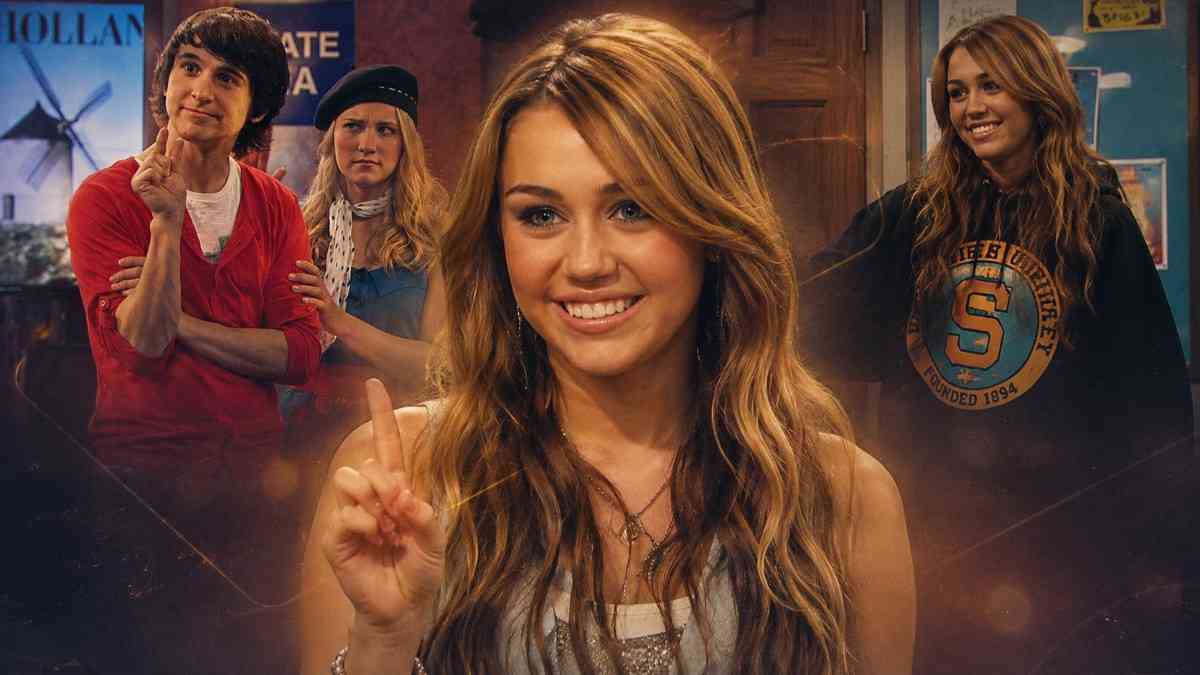
Did Hannah Montana Have an Alternate Ending? Yes, and Here’s What It Was
The alternate ending is not a fan theory. It is documented through showrunner commentary and circulating clips that have surfaced across social platforms.
The version that was developed alongside the finale showed young Miley waking up, essentially, from the entire show. The camera pulled to a little girl sitting quietly, holding a Hannah Montana doll. No Paris. No Spielberg. No dorm goodbye. Just the suggestion that a child had imagined all of it.
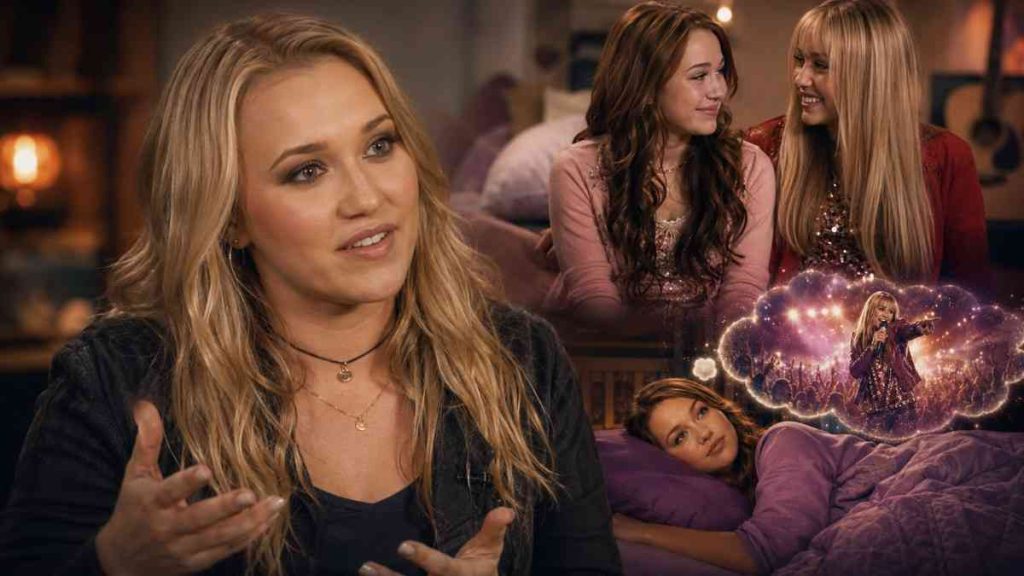
Emily Osment, who played Lily Truscott across all four seasons, has spoken publicly about the finale. Her accounts center on the emotional reality of filming the dorm-doorway scene, the hug, the door closing. She describes it as the ending she filmed and the ending she remembers most.
Her account does not contradict the alternate version. It simply confirms that the cast filmed what aired. The dream ending appears to have been developed in parallel, not filmed by the same cast in the same way as the aired version.
One honest flag: the extent to which the alternate ending was fully filmed versus in late script or concept development is not confirmed in public reporting. What is confirmed is that it existed, it was real enough to be seriously considered, and a choice was made between the two.
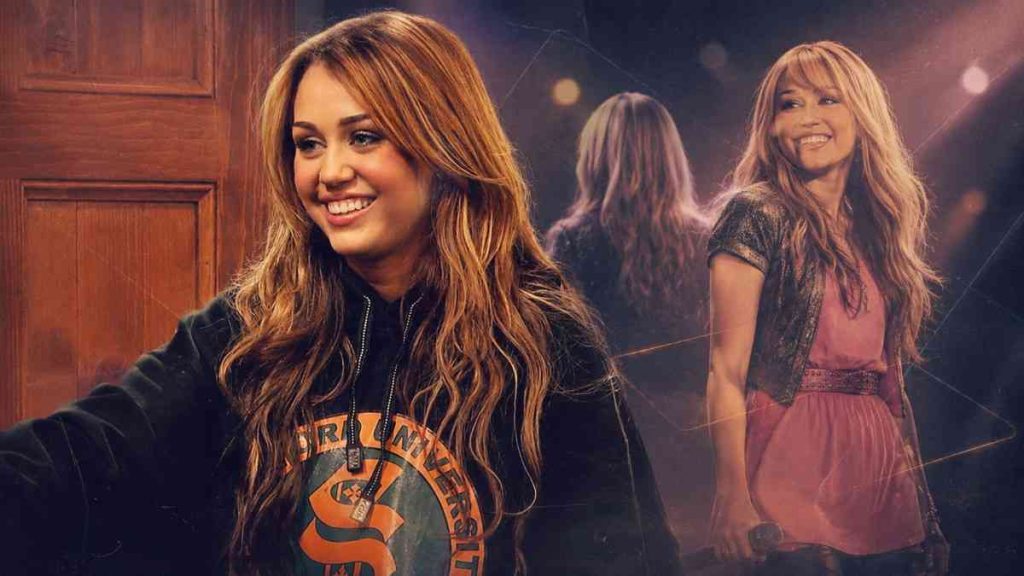
What Actually Aired: The “Wherever I Go” Finale
“Wherever I Go” was written by executive producers Michael Poryes and Steven Peterman. It ran 22 minutes and closed out four seasons of a show that had, at its peak, been one of the most-watched programs on Disney Channel.
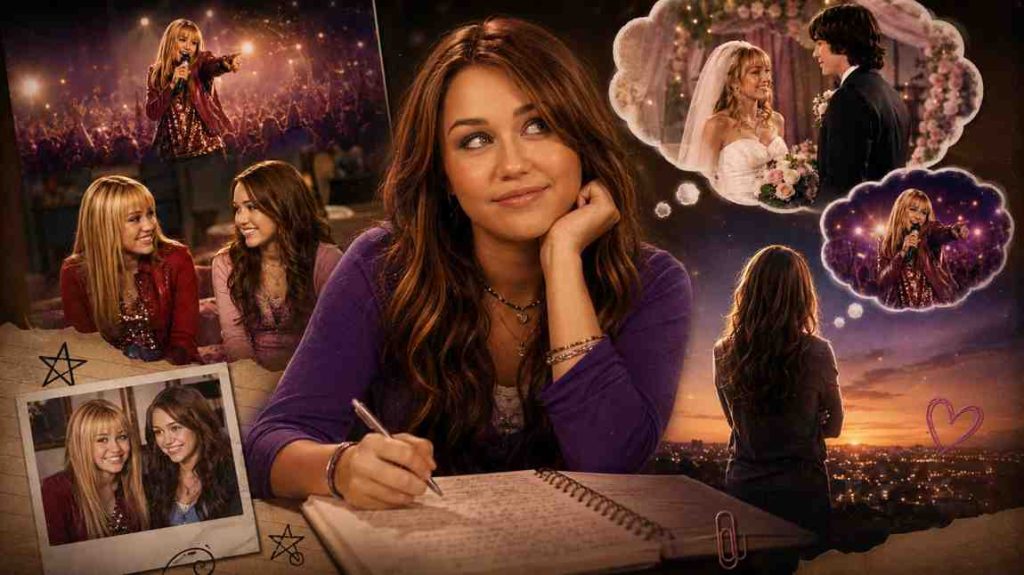
The plot moved fast. Miley receives a film offer from a director modeled on Steven Spielberg, with Tom Cruise attached. The role requires her to move to Paris. She faces a choice that the whole show had been circling: music career or a normal life with her best friend Lily, who is heading to Stanford.
She chooses Paris. Before she leaves, she reveals her Hannah Montana identity to her entire hometown of Crowley Corners, Tennessee. The reaction is warm. The secret is out. The double life is over.
The final image is Miley and Lily hugging in a dorm doorway. Miley says “Sweet niblets,” the show’s signature phrase. The door closes.
The callbacks were intentional. The writers wanted the final moments to feel like a bow tied on the show’s own mythology. Structurally, the ending answered Hannah Montana’s central question directly: Miley cannot have both worlds forever. She picks the career. She lets the normal life go.
That answer was thematically honest. Getting there, though, was not a straight line.
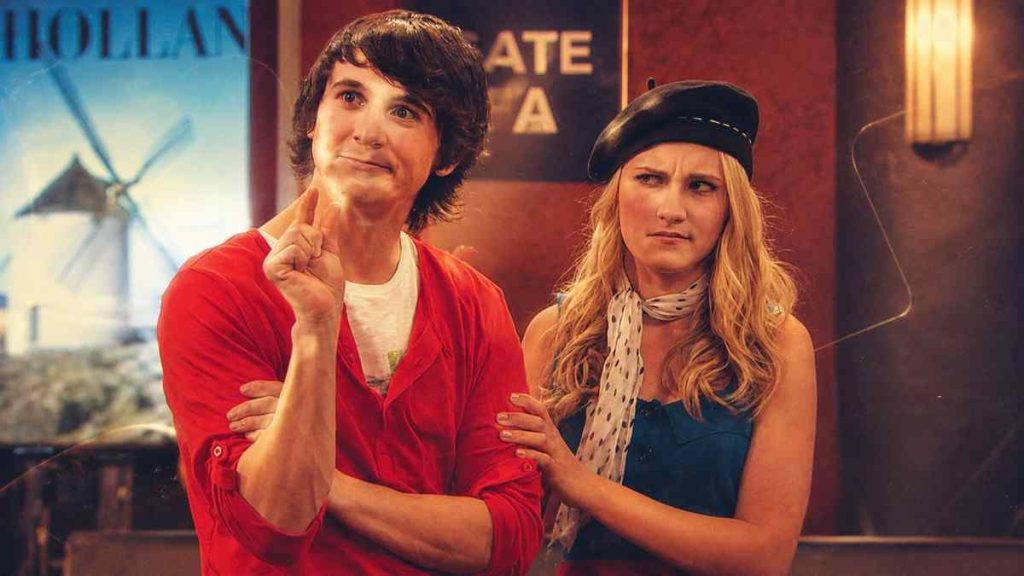
Who Actually Decided Which Ending to Use
Miley Cyrus did. According to accounts from the show’s creative team, the choice between the two endings was handed to her directly.
She chose the version that aired, which aligned with what executive producer Michael Poryes had wanted for the show. The Spielberg-Paris-dorm-goodbye ending was, by that account, both the star’s preference and the showrunner’s preference. The dream version was the road not taken.
Think about what that means. A 17-year-old performer was given the final say over how a four-season Disney Channel show would conclude. That does not happen by accident. It reflects the specific power dynamic that had developed around Hannah Montana by the time Season 4 was filming.
By 2010, the show needed Miley Cyrus more than Miley Cyrus needed the show. Handing her that decision was both a creative courtesy and a practical reality. She was the reason people were watching. If she had strong feelings about how the show should end, fighting her on it would have been pointless.
She did not fight for the dream ending. She chose the real one.
Why the Show’s Ending Changed From Its Original Arc
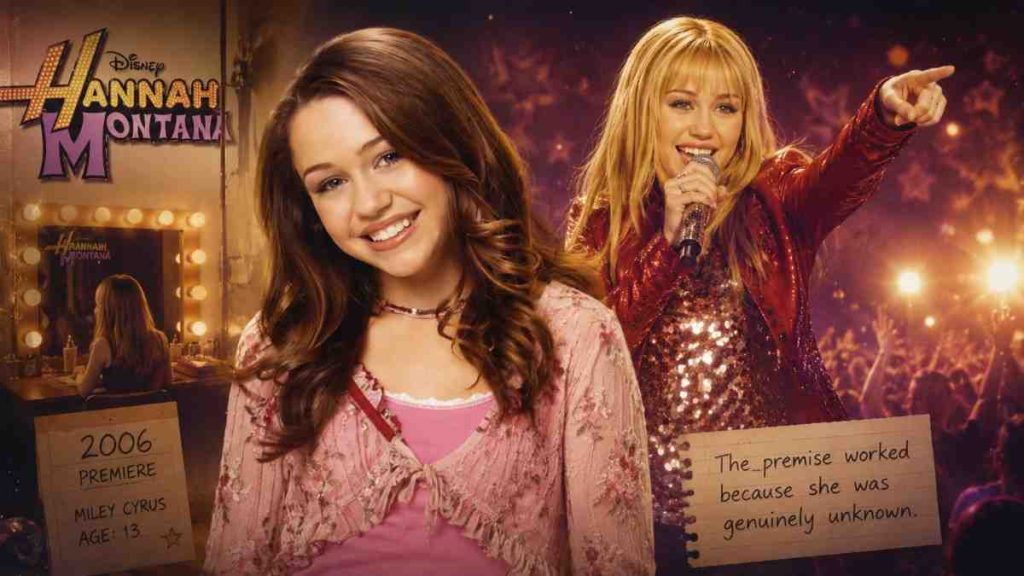
Hannah Montana premiered in 2006. Miley Cyrus was 13. The premise worked because she was genuinely not famous outside of Disney. A girl with a secret pop star life read as whimsical and fun because the performer behind the character was truly unknown.
That premise had a built-in expiration date, and by 2009 it had expired.
Miley had released multiple studio albums under her own name. Her Best of Both Worlds Concert film grossed over 70 million dollars in theaters, becoming one of the highest-grossing concert films ever at that point. She had magazine covers, award show appearances, and a public profile that made the idea of “secret pop star” increasingly absurd. You cannot play a character who is pretending to be famous when you are famous. The gap between Miley Stewart’s fictional anonymity and Miley Cyrus’s real-world celebrity had become a canyon.
The Movie Made It Worse, Not Better
The 2009 Hannah Montana movie tried to resolve this tension directly. The whole film is built around Miley choosing her real identity over her pop star persona. She throws the Hannah wig off a cliff. The crowd cheers. Problem solved.
Except then she puts the wig back on at the end of the film.
The movie wanted to eat its cake and keep it too. It gave audiences the emotional catharsis of Miley choosing realness while simultaneously preserving the franchise. The show then had to figure out what to do with that mess.
Season 4 Was Structurally Different
Season 4 ran 13 episodes. Previous seasons ran closer to 26. The pacing was noticeably faster. Longer-running story arcs got resolved earlier than expected. The season felt, structurally, like a show that knew it was wrapping up and needed to get somewhere specific before the runway ran out.
The ending the show landed on matched where Miley Cyrus had already landed in real life. She was choosing her career over normalcy. She was stepping fully into celebrity rather than hiding from it. The finale and her real trajectory were pointing in exactly the same direction. That alignment was not a coincidence.
What the “It Was All a Dream” Ending Would Have Actually Meant
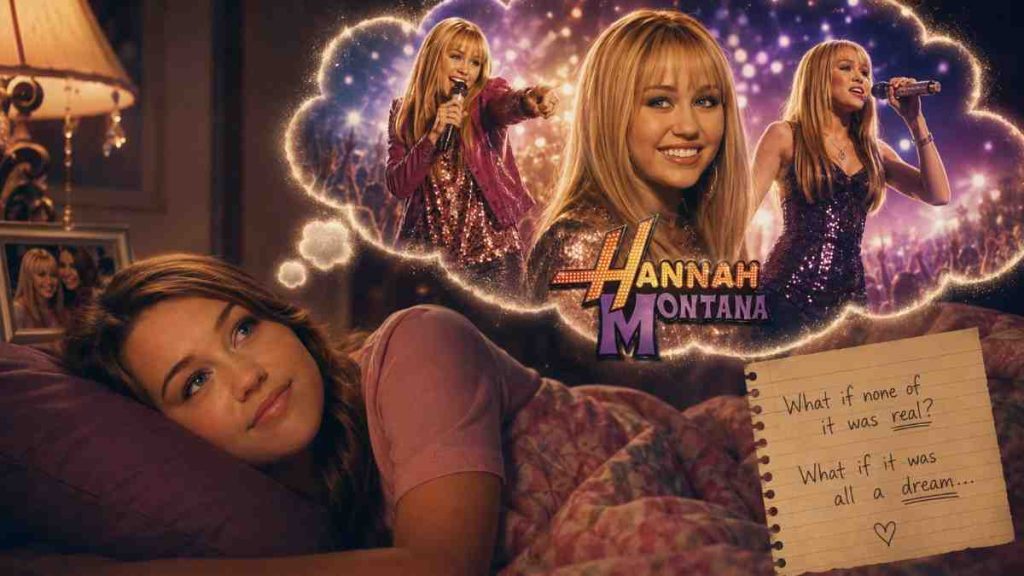
The dream ending is bolder than anything the show attempted in four seasons. If it had aired, every episode would have been retroactively reframed as the fantasy of a little girl who wanted to be a star.
That is a genuinely strange creative choice for a children’s show. It takes the audience’s investment and flips it upside down. The fights, the friendships, the Jake Ryan drama, the Lilly-and-Oliver romance: none of it real. All of it imagined.
There is also something almost painfully self-aware about it. Kids who watched Hannah Montana were living vicariously through a fantasy of being famous while staying normal. The dream ending would have made that explicit. It would have looked at its own audience and said: we know why you watched this. We know what this was for you.
That is a lot to ask from a Disney Channel finale. It is the kind of ending that critics might have loved and eight-year-olds would have found confusing and maybe a little devastating.
Miley chose not to do that to the audience. Whether that was instinct, genuine affection for the fans, or simply a preference for a cleaner ending is not something anyone has confirmed publicly. What matters is that the option was real and she passed on it.
Was a Hannah Montana Wedding Episode Ever Planned?
No evidence exists in any public production record of a scrapped wedding episode.
This question circulates in fan spaces because several relationships were ongoing through the final season. Oliver and Lily’s relationship was a long-running thread. Miley had romantic storylines that never fully resolved. It is easy to imagine fans constructing a version of events where those threads ended with a wedding.
Oliver and Lily do end up together in the finale. Their arc is closed. But it is closed in conversation and implication, not in a ceremony that was written and then cut.
If someone told you there was a planned Hannah Montana wedding episode that got scrapped, that claim does not have documented support. The wedding question appears to come from fan speculation layered onto a show that left romantic storylines open long enough for audiences to fill in the blanks themselves.
What Emily Osment Said About the Original Ending
Emily Osment has talked about the finale in interviews, most notably with Teen Vogue, and her memory of it centers on the dorm-doorway goodbye.
That final hug between Miley and Lily, the door closing, Miley saying “Sweet niblets” and walking away: that is what Osment remembers and what she has described as the emotional core of filming the finale. She has spoken about how real that goodbye felt, both for the characters and for herself and Miley Cyrus as people who had grown up together on the show.
Her account focuses on what was filmed, not on what was considered and set aside. She does not address the dream ending in those comments.
That is consistent with how alternate endings typically work in production. The primary cast films the version that airs. Alternate concepts may exist in script form or in limited development without the full cast ever shooting them. Osment filming and remembering the dorm goodbye does not tell us the dream ending was never real. It tells us that the dream ending, whatever form it took, was not the version she was called to set to perform.
The Bigger Pattern: When Real Life Rewrites the Script
Shows get reshaped by forces outside their own scripts all the time. The ending a show airs is often several versions removed from the ending originally planned.
The reasons vary. Sometimes it is network pressure. Sometimes a performer leaves. Sometimes the creative team looks up mid-production and realizes the show they set out to make no longer matches the show they are actually making. The honest version of how television gets made includes a lot of endings that existed in outline form and never made it to screen.
The Archive 81 cancellation is a sharp recent example of a show whose planned arc simply never reached the audience. The story was mid-flight when the ending got taken away entirely. Hannah Montana at least got to choose.
For anyone who grew up on the original Disney Channel era, the Bug Juice cancellation hits in a similar way. It is a reminder that even beloved Disney content was always at the mercy of decisions being made well above the creative team.
The OA Season 3 story covers exactly that territory too. The OA’s creators had a complete vision for where the show was going. Audiences never got to see it. Hannah Montana audiences did. The difference between those two outcomes has everything to do with who held the power in each situation.
FAQ: Hannah Montana Original Ending Questions Answered
Did Hannah Montana have an alternate ending?
Yes. A confirmed alternate ending exists in which the show’s events are framed as a dream, ending on a shot of a young girl holding a Hannah Montana doll. This version was not a fan theory. It was documented through showrunner and cast-adjacent accounts as a real option that was developed alongside the finale that aired. The full extent of how far into production this alternate version went has not been confirmed publicly, but it was substantive enough that a decision had to be made between the two.
Who decided which ending of Hannah Montana to use?
According to accounts from the show’s creative team, the decision was given directly to Miley Cyrus. She chose the version that aired, which aligned with what executive producer Michael Poryes had envisioned for the finale. The fact that she was given this choice reflects how much creative authority she held over the show by Season 4. By that point in her career, the show’s producers were not in a position to finalize the ending without her buy-in.
What was the actual Hannah Montana series finale about?
The finale, titled “Wherever I Go,” aired January 16, 2011. Miley receives a film offer requiring her to move to Paris, produced by a director modeled on Steven Spielberg with Tom Cruise attached. She chooses to take the role over staying for college with Lily. Before leaving, she reveals her Hannah Montana identity to her hometown of Crowley Corners. The final scene is Miley and Lily hugging in a dorm doorway. Miley says “Sweet niblets,” the door closes, and the show ends.
Was there a Hannah Montana wedding episode that got scrapped?
No confirmed production records support the existence of a planned and then scrapped wedding episode. The idea circulates in fan discussions, likely because several character relationships, including Oliver and Lily’s, were unresolved for much of the final season. Oliver and Lily do end up together in the finale, but their arc is resolved in conversation rather than ceremony. If someone has told you a wedding episode was planned and cut, the documented evidence for that claim does not exist in any public reporting.
Why did Hannah Montana end after Season 4?
Season 4 was the show’s final season, running only 13 episodes compared to earlier seasons closer to 26. By that point, Miley Cyrus had built a solo career that had substantially overtaken the Hannah Montana brand. Her real-world celebrity had made the show’s central premise increasingly difficult to sell. The creative and practical logic of continuing had run its course. Both the network and the production team recognized that extending the show further would have served no one well.
Wasn’t the Hannah Montana movie supposed to end the show? Why did it keep going?
The 2009 Hannah Montana movie leaned hard into the idea of Miley choosing her real identity over her pop star persona. She throws the Hannah wig away, the crowd reacts warmly, and for about 90 minutes it looks like the show’s central tension is resolved. Then she puts the wig back on. The movie preserved the franchise while gesturing toward closure. The show continued for another season and a half after the film, which required the writers to essentially pretend the movie’s emotional resolution had not happened. That is part of why Season 4 felt different in tone and pacing from the earlier seasons.
Is the dream ending theory just something fans made up?
No. The dream ending is not a fan-generated theory. It has been referenced in showrunner-adjacent commentary and circulating production material. Fan theories are invented from scratch. This version was developed as an actual alternative to the finale that aired. The confusion comes from the fact that it was never officially announced as a scrapped ending by Disney or the production in a formal press release. It surfaced through behind-the-scenes commentary that leaked out over years rather than through official acknowledgment. This was a real creative option, not something an internet forum invented.
The Real Story Behind the Ending
The Hannah Montana finale was not the product of a writers’ room that had always known where the show was going. It was the product of a production that had to solve a real problem: how do you end a show about a girl pretending to be a pop star when the actress playing her has become one of the most famous teenagers on earth?
The answer they landed on was honest. Miley chooses her career. She stops hiding. She steps into the version of herself that already existed in real life. The show finally caught up to its own star.
The dream ending would have been a different kind of honest. It would have looked at four seasons of double lives and fictional fame and called the whole thing what it actually was: a fantasy built for children who wanted to believe that normal and extraordinary could coexist. That is not a cynical reading. That is a clear one. And Miley passed on it.
If you want to understand the ending that aired, you have to understand the year it was made. 2010 Miley Cyrus was not 2006 Miley Cyrus. The girl who started that show and the performer who finished it were not the same person. The finale was not just a narrative conclusion. It was an acknowledgment of a transformation that had already happened off camera, and the show found a way to honor it.