The Feeling Is Real, and It Has Nothing to Do with Being a Kid
The “you just got older” dismissal sounds reasonable until you actually test it. Adults who encounter old Disney Channel shows for the first time as adults, with no childhood attachment to them, still consistently describe a distinct tonal and visual quality that separates them from current programming. The texture is observable. It is not constructed by memory.
Nostalgia explains why you love the shows. It does not explain why they look and sound structurally different from what replaced them. Those are two separate phenomena happening simultaneously, and conflating them is where the lazy analysis falls apart.
The old shows had a specific visual signature: bright, flat, even lighting. A specific audio texture: audience laughter as a rhythmic element of the comedy. A specific storytelling pace: conflict introduced, escalated, and resolved inside 22 minutes with enough clarity that you never needed to have seen the previous episode. None of those qualities came from the decade they were made in. They came from deliberate choices that Disney made about production format, scheduling targets, and talent development. The shows that replaced them made different choices. The result feels different because it actually IS different.
If you have ever fallen down a rabbit hole comparing, say, the Hannah Montana series finale to modern Disney Plus originals, you already know that the emotional register is completely different. The finale lands the way it does partly because of how the preceding episodes were structured, which is itself a product of the formula we are about to break down.
The Multi-Camera Formula Disney Borrowed (and Perfected)
Disney did not invent the format that defined its golden era. It borrowed the multi-camera sitcom structure from 1990s network television, Full House, Fresh Prince of Bel-Air, Saved by the Bell, and applied it to a younger audience with a level of production consistency that the source material never matched.
What Multi-Camera Actually Means
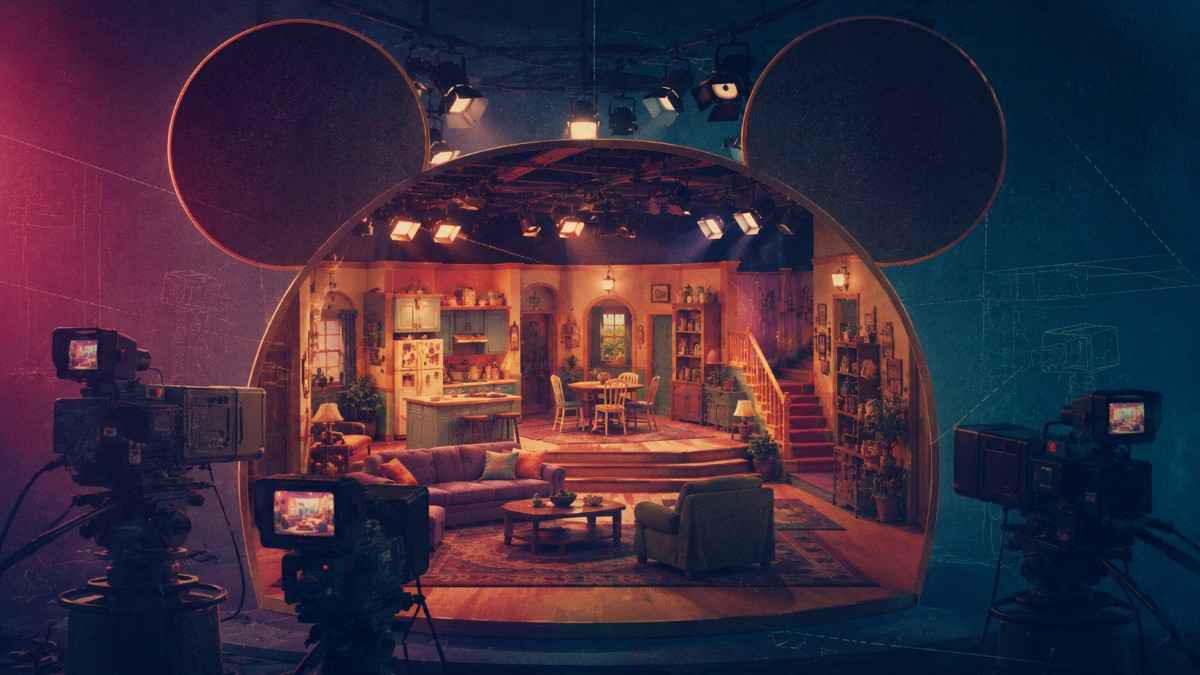
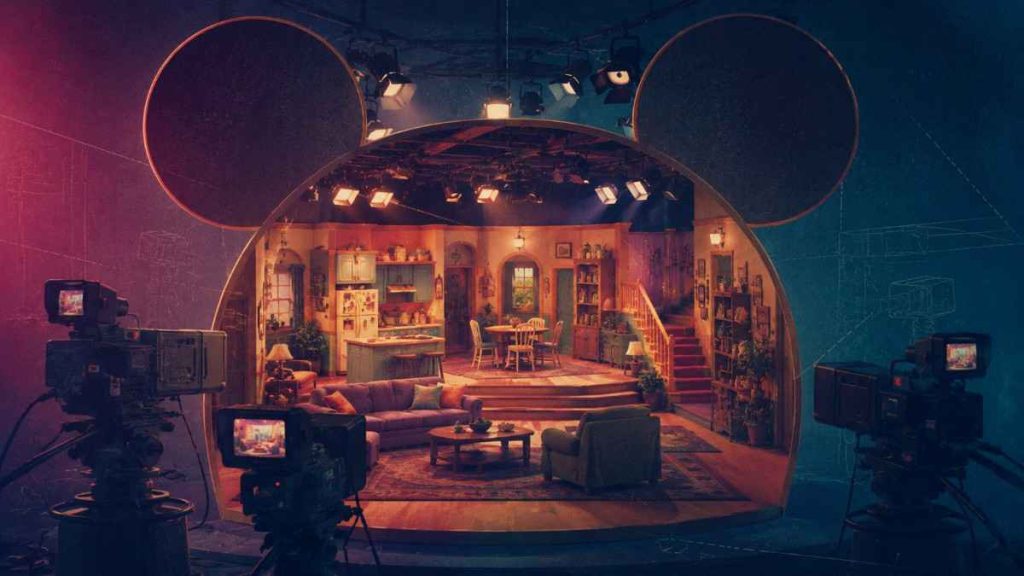
Multi-camera production means filming in front of a live studio audience, or with audience sound added in post, using three or four cameras running simultaneously from different angles. The result is a visual language that most people recognize immediately even if they never learned the term for it.
The lighting in multi-camera productions is bright, flat, and even across the set. There are no dramatic shadows, no moody pools of light, no high-contrast cinematography. Every corner of the soundstage is lit to roughly the same level so that any of the four cameras can cut to any angle without a lighting mismatch. This is what creates the “washed out” look that people associate with old Disney Channel. It is not a budget limitation. It is an intentional feature of the format.
Camera movement is minimal. Most shots are static medium frames and reaction cuts. The show looks more like a stage play than a film, which creates something interesting: the viewer feels like an audience member watching live performance rather than a camera following characters through a world. That intimacy is baked into the format.
The pacing is faster than single-camera productions because there is no time spent repositioning cameras or resetting lighting between setups. Shooting an episode in three to five days was standard for multi-camera. Single-camera productions typically require seven to ten days per episode. Disney’s multi-camera format was both a creative choice and a cost-efficient one that allowed the network to produce higher episode counts within its annual budget.
Why the Laugh Track Was a Feature, Not a Bug
The laugh track in a multi-camera sitcom is a social cue, not a crutch. Research in social psychology has found, repeatedly, that people laugh more when they hear others laughing. The laugh track was engineered around this reality, not chosen out of laziness.
Disney’s version was calibrated louder and more responsive than typical network sitcoms. The audience reaction came faster after the joke, which amplified comedic energy for a viewer demographic that was still developing the interpretive skills to recognize when a joke had landed. The laugh track told you when to react. It made watching comedy alone feel like watching it in a room full of people.
When laugh tracks disappeared from Disney Channel shows after roughly 2012, the shows did not become less funny. They became quieter. Jokes landed in silence. The rhythm changed completely. That is a perceptual shift that every longtime viewer felt, even the ones who could not name what had changed.
The 65-Episode Rule and Why It Shaped Every Story
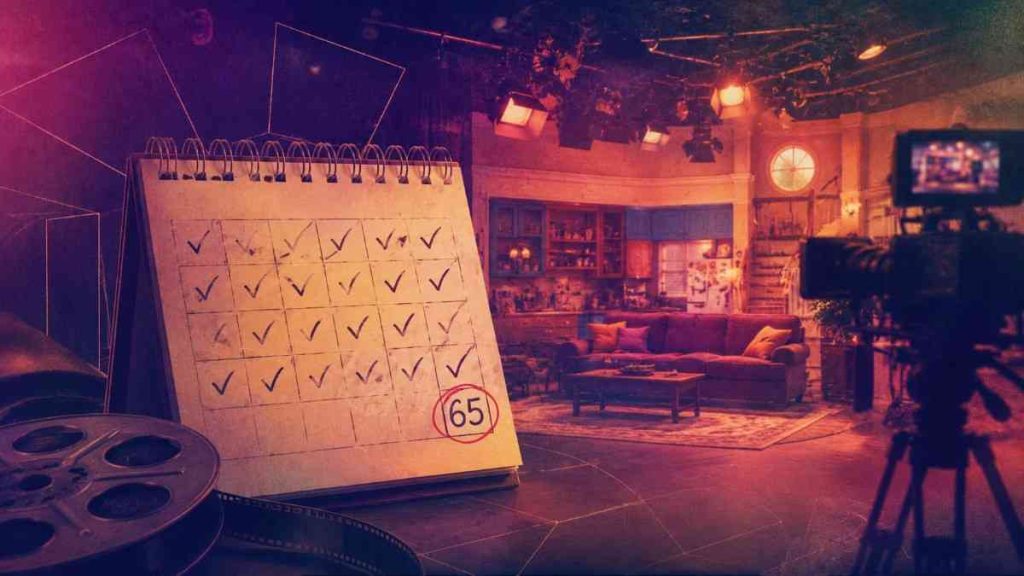
The 65-episode threshold was the traditional benchmark for a US television show to enter syndication, meaning it could be sold to other networks and cable channels to rerun indefinitely. Disney Channel explicitly targeted this number as a production goal, which is why most classic shows ran for two or three seasons with high episode counts rather than the 10-to-13 episode seasons that streaming normalized.
This target shaped storytelling in every direction. Plots had to be self-contained within each episode because syndicated reruns air out of order. Character development had to be gradual enough that a viewer dropping in at episode 47 could still follow the show without context. Conflict always resolved within 22 minutes because unresolved tension would confuse new viewers encountering the show mid-run on a cable rerun block.
The “problem of the week” structure everyone associates with old Disney Channel was not a sign of lazy writing. It was the logical output of a syndication model. Writers were not failing to tell longer stories. They were succeeding at telling stories that worked for the commercial format they were operating inside.
When streaming eliminated the syndication incentive, the 65-episode target disappeared with it. Story arcs got longer. Character development deepened. The episodic comfort food feeling evaporated because the structural reason for it no longer existed. If you have ever wondered why Suite Life on Deck ended when it did rather than running another season, the economics of that syndication model are part of the answer. The production math on extending a show past the syndication threshold worked very differently than continuing a streaming series today.
Disney’s Star-Making Machine Was a Deliberate Pipeline, Not a Happy Accident
Miley Cyrus, Selena Gomez, Demi Lovato, Zac Efron, and Shia LaBeouf did not accidentally all emerge from Disney Channel in the same decade. The network ran a structured talent pipeline that operated as a system, not a series of lucky casting decisions.
The Disney Channel Original Movie as an Audition
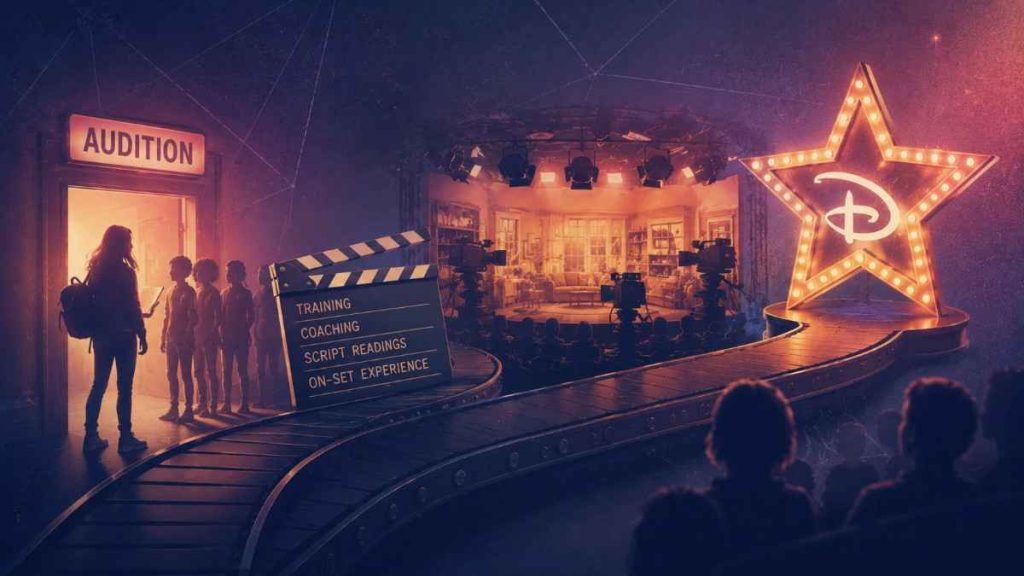
The Disney Channel Original Movie, from the mid-1990s through the late 2000s, functioned as a testing ground for talent before the network committed to a series. This was not coincidental. It was the mechanism.
A DCOM required its lead actor to handle comedy, light drama, and in many cases musical performance inside a single 90-minute project. That is almost exactly the skill set a Disney Channel sitcom lead needed. The DCOM was how Disney evaluated whether a performer had the specific energy that translated into multi-camera live performance: the ability to land jokes in front of a live audience, hold a comedic scene without filmic editing to rescue a flat take, and carry emotional moments without the tonal complexity that prestige drama allows. When High School Musical launched in 2006, it was not just a successful movie. It was an audition result that Disney used to launch a franchise and identify a cast. The structure of the best Disney Channel Original Movies, the tonal range they demanded, the live performance component, was designed with that downstream use in mind.
Why the Pipeline Broke
The volume of DCOMs declined significantly after 2012. By the mid-2010s, Disney was producing fewer than half the original movies it averaged during the peak years of the format. The testing ground shrank. Fewer performers cycled through the proving-ground format.
As Disney Plus launched in 2019, original movie production shifted to the streaming platform with a completely different talent acquisition logic. The new platform needed names that could drive subscriptions, not untested young performers who needed to be evaluated through the DCOM format. Several classic titles from the original movie era were also quietly removed from the streaming library during rights reconfigurations. The result of the pipeline breakdown was that series leads arrived with less experience in the specific multi-camera format the old shows required, and the format itself was already disappearing at the same time.
When Did Disney Channel Actually Start Changing?
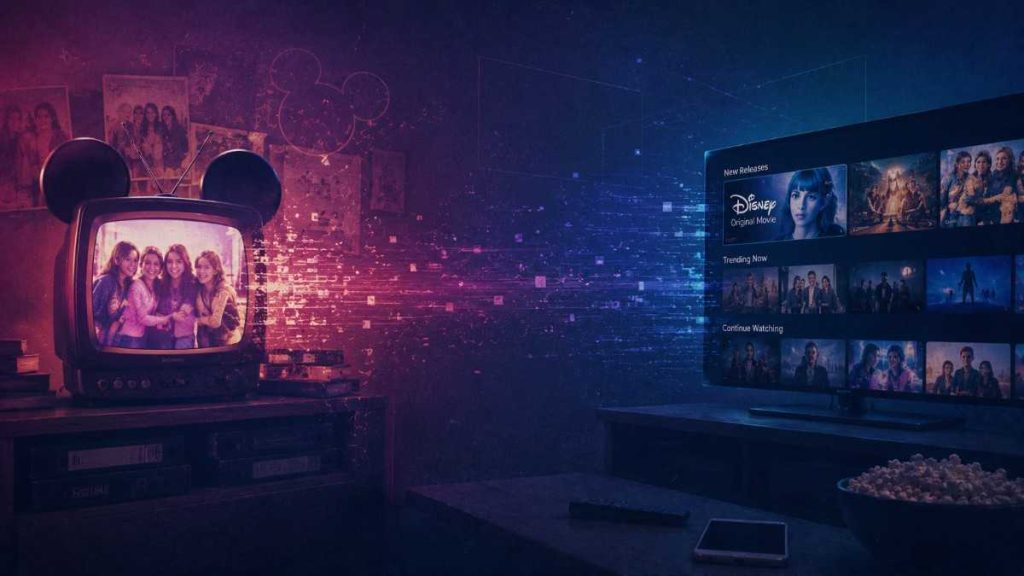
The format shift began around 2011 to 2012. The 2017 to 2018 period that often gets cited reflects when viewership numbers became impossible to ignore publicly, but the technical and structural changes happened earlier. That later date is the lagging indicator, not the starting point.
Shake It Up (2010) and A.N.T. Farm (2011) still ran on multi-camera format. Gravity Falls (2012) was single-camera animated. Liv and Maddie (2013) held the multi-camera format. Dog with a Blog (2012) was an early hybrid that showed the format was no longer a given. The cleaner break point is 2015 to 2016, when single-camera live-action became the default rather than the exception for new series development.
Andi Mack (2017) is usually cited as the moment Disney Channel changed its tone, and that is accurate in terms of content and ambition. The technical shift, the one that changed what the shows looked and sounded like at a production level, preceded it by several years. Disney Channel averaged around 100 million viewers per month in 2004. By 2022, linear viewership had fallen to under 20 million per month. The decline tracks almost exactly with the format transition, and the format changed first. The audience followed.
Phil of the Future is one of the early examples of Disney canceling shows mid-formula, before the format shift was complete, which shows the transition was not clean or linear. The network was already making inconsistent decisions about which shows to extend and which to cut even while the multi-camera era was nominally still running.
The Single-Camera Shift Changed More Than the Look
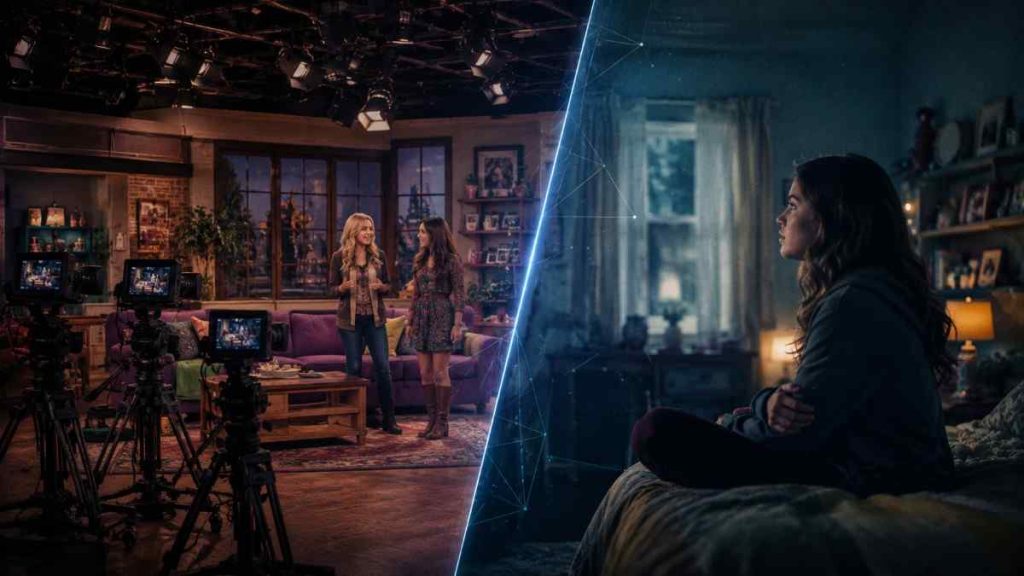
Single-camera production is not worse than multi-camera. It is designed for a different emotional register, and that difference explains most of the tonal gap people feel when they compare old Disney Channel to what came after.
Removing the audience, real or implied, changes everything about how comedy functions. A joke in a single-camera show lands in silence. There is no audio cue telling you it was funny. The emotional scene carries no ambient warmth from a crowd. This requires a different kind of performance from actors and a different kind of attention from viewers. It asks more of both.
Single-camera production also allows location shooting, varied lighting setups, and cinematic framing choices that are impossible on a multi-camera soundstage. The shows look more expensive. They look more “serious.” Serious, though, is not the same as engaging for an audience that came for comfort comedy in a format they had spent years learning to receive.
Disney Channel’s core demographic, roughly 6 to 14 year olds, responds to multi-camera partly because it is legible. The joke happens. The audience laughs. You know it was funny. You can relax. Single-camera comedy requires the viewer to do interpretive work that a 9-year-old watching after school on a Friday does not necessarily want to do. This is not a statement about which format is better. Prestige television is almost entirely single-camera for good reasons. It is an explanation of why shows that look technically superior can feel less satisfying to the audience that grew up calibrated to the older format.
Streaming Finished What the Format Shift Started
Disney Plus did not kill Disney Channel. The linear channel still exists. What streaming eliminated was the underlying logic that made Disney Channel feel like a place rather than a library.
Appointment viewing was not a side effect of the old Disney Channel experience. It was a core feature of the programming strategy. Friday nights. Saturday morning blocks. The Disney Channel Original Movie premiere event, where the whole school watched the same thing at the same time and talked about it Monday. These were not accidental. Disney programmed the channel to create communal viewing moments because communal viewing moments built brand loyalty in ways that passive content consumption does not.
Streaming eliminated appointment viewing by design. When everything is available all the time, the scheduling logic that created events disappears. There is no premiere night. There is no “did you see it last night.” There is a release date and then a permanent presence in a menu. The communal experience of watching at the same time, discussing it the next day, feeling like you shared something with other kids your age, that was a property of broadcast scheduling, not a property of the shows themselves. The shows could not carry that feeling into a streaming environment because the environment was built to eliminate the condition that created it.
The Lizzie McGuire reboot story illustrated this clearly. The show was revived for Disney Plus in 2019 with the original cast and a production team committed to honoring the source material. It collapsed before a single episode aired due to creative disagreements over tone and content direction. The audience that would have made a new Lizzie McGuire a cultural moment was already fragmented across a dozen platforms. Even if the creative dispute had been resolved, the event-viewing infrastructure that made the original series matter was gone. That failed revival is not just about one show. It is about the structural impossibility of recreating broadcast-era television inside a streaming-era platform.
So Is It Nostalgia?
Yes and no, and the “and no” part is the part worth understanding.
Nostalgia explains the emotional intensity of your attachment to the old shows. It explains why rewatching Even Stevens feels like going home rather than watching a stranger’s old home videos. It does not explain why Even Stevens looks, sounds, and moves differently from Andi Mack or any current Disney Plus original. Those differences are technical and structural. They exist in the frame rate, the lighting design, the audio mix, the episode length, the story architecture, the casting pipeline that produced the performers. You can measure them. They are not constructed by memory.
What nostalgia does, and this is where it gets interesting, is make the structural differences feel meaningful in a way they might not if you encountered them neutrally. The flat lighting and audience laughter of a 2003 Disney sitcom would not necessarily feel warm to someone who had no childhood connection to it. But to someone who watched those shows at age 9, those same technical qualities carry an emotional charge. The formula is not just a formula. It is a sensory memory.
The brightness of the set, the rhythm of the laugh track, the 22-minute resolution of conflict: all of it is encoded as “childhood feels safe and fun,” and your nervous system responds accordingly. Knowing this changes how you watch. You can hold both things at once: the real structural differences are real, and the emotional response they trigger in you is also real. The old Disney Channel formula was a specific machine built for specific purposes. It ran well. It was then replaced by different machines built for different purposes. Neither is objectively better. But they are genuinely different, and the difference is in the blueprint.
FAQ
Why do old Disney Channel shows look so different visually compared to new ones?
Old Disney Channel shows used multi-camera production filmed on soundstages with bright, flat, even lighting. This was required so that multiple cameras could shoot from any angle without lighting mismatches. The result was the washed-out, stage-like look associated with the era. Newer shows use single-camera production with varied lighting, location shooting, and cinematic framing, which looks more like a film and less like a stage performance. The visual difference is a direct product of the production format, not a change in budget or ambition.
Did Disney Channel use a laugh track, and why did they stop?
Disney Channel shows in the multi-camera era used audience laughter, either from a live studio audience or added in post-production. The laugh track served as a social cue that told viewers when a joke had landed and created the feeling of watching comedy with other people. Research in social psychology has confirmed that people laugh more when they hear laughter around them. Disney stopped using laugh tracks as it transitioned to single-camera production after roughly 2012 to 2014. The shows did not become less funny, but they became quieter and required more interpretive work from viewers.
What is the 65-episode rule and how did it affect Disney Channel shows?
The 65-episode threshold was the traditional minimum for a US television show to qualify for syndication, meaning it could be sold to other networks for reruns. Disney Channel explicitly targeted this number, which is why classic shows had higher episode counts and self-contained episodic plots. Every story had to resolve within 22 minutes so that syndicated reruns could air in any order without confusing new viewers. When streaming eliminated the syndication revenue model, the 65-episode target disappeared, and shows shifted to longer arcs and serialized storytelling.
Is it just nostalgia that makes old Disney Channel shows feel better, or did something actually change?
Something actually changed, and nostalgia is a separate phenomenon layered on top of it. Nostalgia explains the emotional intensity of the attachment but does not explain why the shows are structurally and technically different from current programming. The production format changed from multi-camera to single-camera. The episode count model changed. The talent pipeline changed. The broadcast scheduling that created communal viewing events changed. Adults who encounter old Disney Channel shows with no childhood connection to them still register a distinct tonal and visual quality. The difference is observable and measurable, not purely emotional.
Why did so many famous stars come from Disney Channel in the 2000s but not anymore?
Disney ran a deliberate talent pipeline centered on the Disney Channel Original Movie as a testing ground. Actors cycled through DCOMs before getting series roles, and the DCOM format evaluated exactly the skills a multi-camera sitcom lead needed: comedy timing, light drama, and often musical performance in a single project. DCOM production volume dropped significantly after 2012, and the talent acquisition logic shifted when Disney Plus launched. The pipeline did not break accidentally. It was replaced by a different model that prioritized established names for streaming rather than developing unknown young performers through the DCOM system.
When exactly did Disney Channel start to change, and why does everyone say 2017?
The format transition began around 2011 to 2012, when single-camera production started appearing alongside multi-camera as an option rather than an exception. The cleaner break point is 2015 to 2016, when single-camera became the default for new live-action series. The 2017 to 2018 date cited in many discussions reflects when viewership numbers became publicly impossible to ignore, which is a lagging indicator. The audience declined after the format changed, not before. Andi Mack (2017) marked a visible tonal shift, but the technical and structural changes preceded it by several years.
Did Disney Plus kill the old Disney Channel experience?
Disney Plus did not kill Disney Channel, but it eliminated the broadcast scheduling logic that made the channel feel like an event. Appointment viewing, Friday night premieres, the Disney Channel Original Movie premiere as a shared cultural moment, these were features of broadcast programming that built communal viewing habits. Streaming makes everything available all the time, which eliminates the conditions for event viewing. The communal experience of watching the same thing at the same time and discussing it the next day was a product of the scheduling model, not the shows themselves. That structural condition cannot be recreated inside a platform designed to replace it.
Conclusion
The single most useful thing to take from all of this is that the old Disney Channel formula was a coherent system, and coherent systems produce consistent outputs. Multi-camera production, laugh tracks, the 65-episode syndication model, the DCOM talent pipeline, and the appointment-viewing broadcast schedule were not separate trends. They were interlocking parts of a machine that ran for about 15 years and produced a very specific kind of television. When enough of those parts changed at once, the output changed completely.
If you want to do something with this knowledge, watch one old episode and one new episode back to back with this framework in mind. Pay attention to the lighting, the audio after each joke, and whether the conflict resolves or carries into the next episode. You will see the formula operating in one and absent in the other, and that observation is more satisfying than any argument about which era was better.
The old Disney Channel will not come back in its original form. The economic conditions that made it viable, syndication revenue, appointment-viewing ad rates, a single dominant cable channel for kids, no longer exist. What can come back, and occasionally does in different forms, is the specific commitment to a formula executed with consistency. The era felt special not because it was magical but because it was intentional.