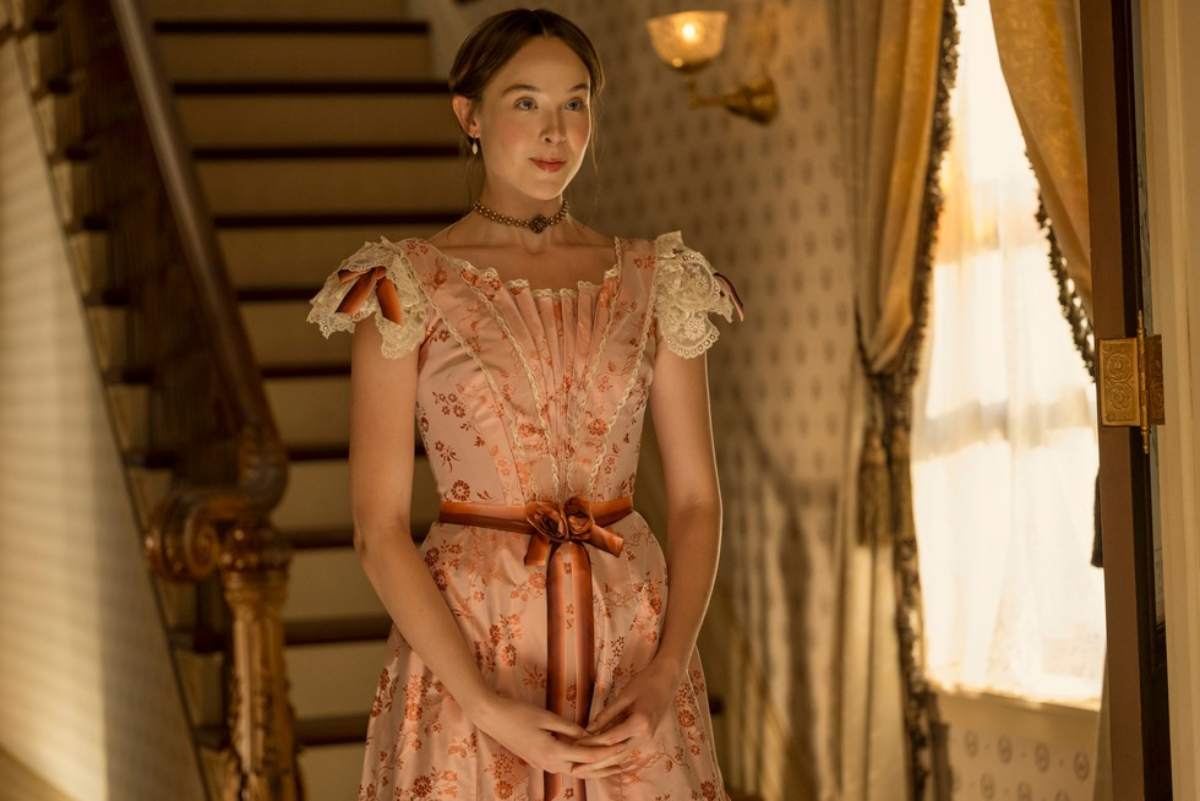
Do Reality TV Contestants Keep Their Clothes? The Wardrobe Rules, Sponsor Deals, and Return Policies Nobody Explains
TL;DR
- Most reality TV contestants bring their own clothes and pay for them entirely out of pocket, with zero reimbursement from production.
- Shows like Love Island USA work with brand sponsors to supply wardrobe, but those are media placement deals, not gifts. Whether contestants keep the clothes depends on what the contract says.
- American Idol only provides styling and wardrobe support once contestants reach the live rounds, typically the top 14. Before that, contestants dress themselves.
- Survivor contestants pack their own clothes, but producers direct which outfits to wear for filming continuity, and some show-specific items are collected after elimination.
- Real Housewives cast members pay for their own wardrobes across all franchises, including for reunion tapings.
- Sponsored clothing can be a loan or a gift. The viewer cannot tell the difference, and the contestant sometimes cannot either until they read the contract.
One Bachelor contestant estimated she spent somewhere between $8,000 and $10,000 on dresses before filming started. Production did not cover a single piece. From the outside, every contestant looks expensive, polished, and sponsored, so viewers naturally assume someone else is picking up the tab. That assumption is almost always wrong.
The short answer to whether reality TV contestants keep their clothes is: yes, because the clothes were theirs to begin with. The longer answer is where things get genuinely interesting, and a little uncomfortable.
Most people assume production functions like a giant fashion closet where everything is provided, worn once, and either kept or returned. The reality is that wardrobe on these shows follows production economics, continuity requirements, and sponsor contracts, none of which have anything to do with making contestants feel good about their outfits. What contestants wear, who owns it, who controls it, and what happens to it after filming are all separate questions with separate answers depending on the format.
This piece breaks down how wardrobe actually works across competition shows, dating formats, and franchise reality TV, including what “sponsored wardrobe” really means and what contestants are actually signing away when they agree to wear it.
Most Reality TV Contestants Pay for Their Own Wardrobe
Production does not pay for clothes on most reality shows. The contestant owns the clothes, bought them, packed them, and will take them home when filming ends.
Real Housewives is one of the clearest examples of this. Carole Radziwill, a former cast member on The Real Housewives of New York City, confirmed publicly that cast members buy their own wardrobes. There is no styling budget, no production allowance, no wardrobe department pulling looks for them. The same applies to reunion tapings, which viewers often assume involve some kind of styling package. Cast members cover those costs themselves, which partly explains why reunion outfits tend to be so dramatic. Nobody is going to spend that much on a dress and then wear something forgettable.
Vanderpump Rules operates the same way. The cast brings personal wardrobes. No costume department exists for them. What viewers see is what the cast chose, bought, and paid for.
Temptation Island works from a similar model. Showrunner Trifari White has stated that cast members come with their own clothes. Production gives guidance on what reads well on camera and what reflects a contestant’s personality on screen, but the clothes themselves belong to the cast.
The practical reason behind all of this is budget. Most unscripted shows are not funded like network dramas. A full costume department is a significant line item that reality production rarely carries. Scripted television builds wardrobe costs into the production budget as a standard expense. Reality television generally does not.
The continuity problem this creates is real. Contestants filming over weeks in the same locations have to pack enough variety to avoid obvious outfit repetition across episodes. That is why Bachelor contestants are famously photographed arriving at the mansion with enormous suitcases. They are not being dramatic. They are solving a practical problem production created by not dressing them.
The Shows That Actually Provide Clothes (And Why)
Some shows do supply wardrobe, but the reason is almost never generosity. It is money, specifically the kind of money that comes from a brand wanting millions of viewers to see their clothes on television every week.
Love Island Has a Sponsor Model, Not a Wardrobe Budget
Love Island UK pioneered the sponsored wardrobe format. Early seasons worked with ASOS to supply villa clothing. Later seasons shifted to other fashion brand partners as the show’s commercial value grew and the audience expanded.
Love Island USA has operated under similar arrangements. Brands provide pieces in exchange for sustained on-screen visibility across a season that reaches a substantial weekly audience. This is not production paying for clothes out of goodwill. It is a media placement deal. The brand gets exposure. The contestant wears the product. Production gets a cost offset.
Whether contestants keep those clothes depends entirely on the terms of the individual deal between the show and the brand partner. Some sponsored items are loans, meaning they go back to the brand at wrap. Some are gifted outright. Some shows operate a post-filming gifting arrangement where cast members receive a selection of pieces before they leave. The terms vary by season, by brand, and sometimes by individual cast member visibility. There is no standard policy.
Temptation Island works with cast wardrobes but fills gaps, particularly for specific scheduled events and group scenes where some visual cohesion matters to production. The showrunner has described it as working with what the cast brings rather than supplying a wardrobe from scratch.
American Idol Has a Two-Phase System
Early rounds of American Idol work the same way as most unscripted television. Contestants dress themselves, pay for their own clothes, and receive no styling support from production. Audition episodes are shot across multiple cities in bulk, which makes dressing hundreds of contestants logistically impossible even if production wanted to do it.
The model changes at the live rounds. Once contestants reach the top 14, production assigns stylists along with hair and makeup support. This is where the show’s polished visual identity actually kicks in, because these are the broadcast-quality episodes with a live weekly audience. The investment makes commercial sense at that point in the season. Before that, it does not.
Competition Format Shows Handle It Differently
RuPaul’s Drag Race contestants design and construct most of their own runway looks. This is simultaneously a creative requirement of the show, a judging criterion, and an economic reality. The runway is evaluated on their personal work. Production does not supply it.
Survivor contestants pack their own clothes, but the relationship with production is more involved than on most shows. Producers regularly direct contestants to wear a specific outfit on filming days where continuity with previous footage matters. A conversation filmed across two separate days needs to look like it happened in one sitting, which means the outfit has to match. After elimination, some items, particularly pieces tied to tribal identity like buffs, are collected by production rather than going home with the contestant.
Rock the Block and similar home renovation competition formats have contestants wearing their own clothes across episodes often filmed on consecutive days at the same location. Outfit repetition is a direct result of the filming schedule, not carelessness. When a single renovation takes multiple shoot days, the wardrobe options run out fast.
What “Sponsored Wardrobe” Actually Means for a Contestant
Sponsored clothing sounds like a benefit. The reality is more complicated and comes with conditions contestants are contractually bound to.
The basic mechanics work like this: a brand provides items either as a loan or as gifted product. Loan arrangements mean the items are returned at wrap. Gifted arrangements mean the contestant keeps them. From the viewer’s perspective, both look identical on screen. The distinction is entirely contractual and invisible unless someone talks about it publicly.
Brand restriction clauses are common in reality TV contracts broadly. Contestants on shows with fashion sponsors are frequently restricted from wearing competitor brands on camera, and sometimes in social media posts during and after the show airs. If you are wearing Brand A’s swimsuit on screen, wearing Brand B’s to a sponsored event after the show is potentially a contract violation. The broader scope of what contestants agree to before cameras roll is genuinely surprising, and the wardrobe restrictions are just one layer of it. The reality TV contract details that contestants sign cover far more than most viewers would expect.
The more interesting development is what happens after filming ends. For contestants who build significant social media followings after appearing on a show, the clothes worn during filming become less relevant than the access to future brand partnerships. Love Island alumni in the UK regularly move into paid fashion and beauty partnerships within weeks of leaving the villa. The wardrobe during filming is, in practical terms, an audition for that pipeline. It introduces them to brand partners, establishes their visual identity to a large audience, and sets up the commercial relationships that pay far more after the show than any gifted swimsuit ever would.
Why Production Cares What You Wear Even When They’re Not Paying
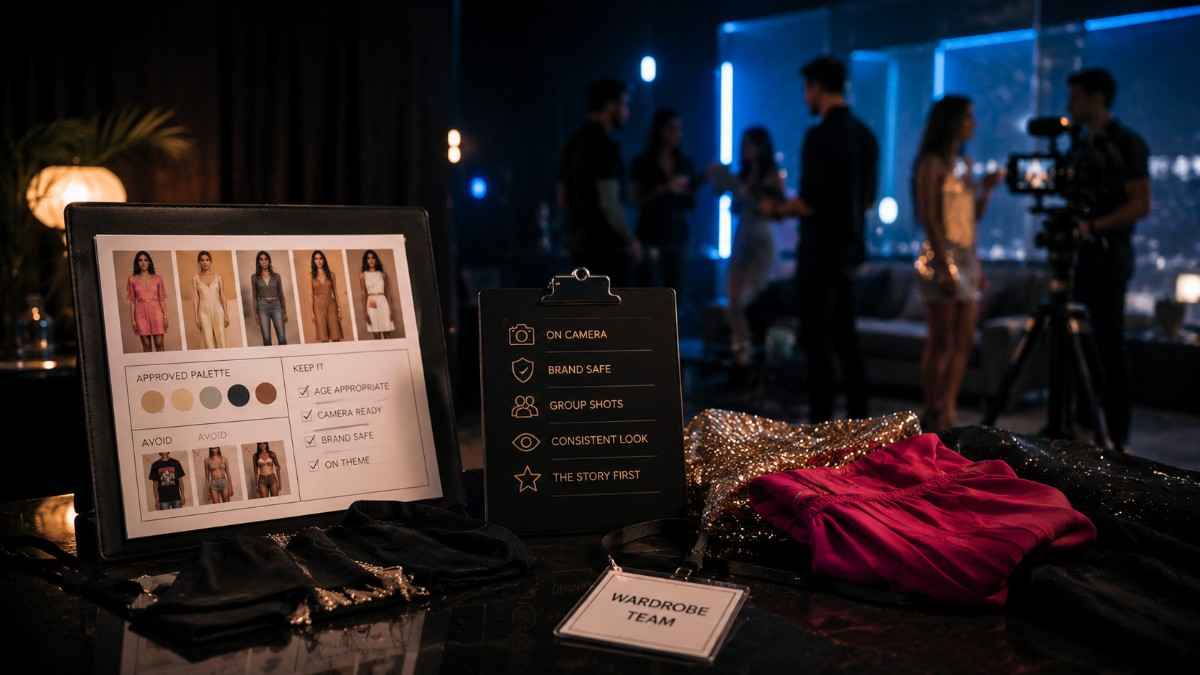
Production has strong opinions about contestant wardrobe even on shows where it is not covering a single clothing cost. Those opinions are not about fashion. They are about legal clearance, visual consistency, and editing logistics.
Logo and brand restrictions are the most universal rule. Nearly every reality TV production prohibits visible logos on clothing during filming. A competitor’s logo appearing in a broadcast episode creates both a legal and a commercial problem, specifically the kind that involves lawyers. Contestants are told to remove or cover branded items before cameras roll. This is not optional.
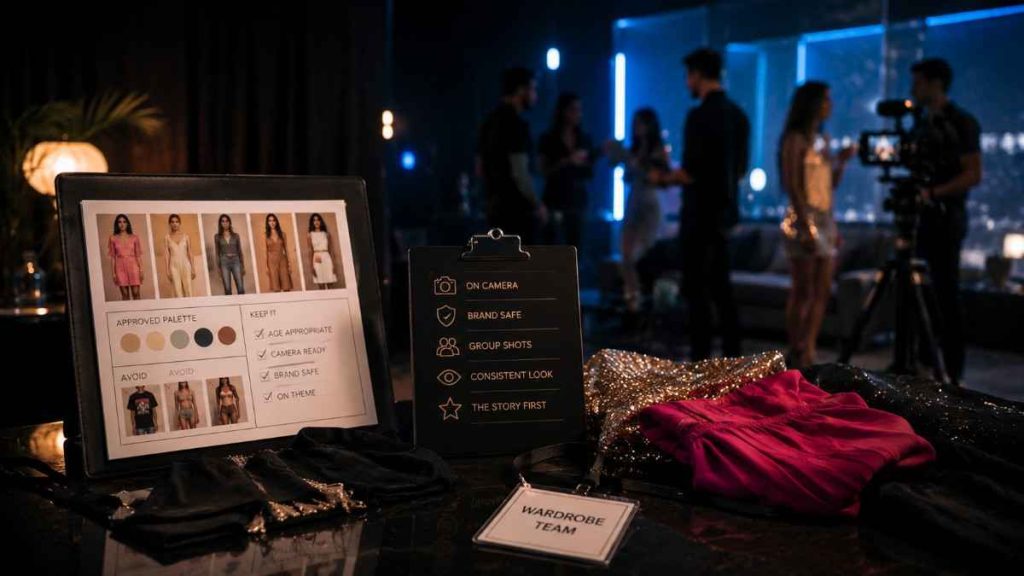
Color coordination matters more than most viewers realize. Producers think about the visual palette of each episode. On shows where contestants appear together in group scenes, wardrobe guidance often involves steering individuals away from colors that clash badly or that are too similar to another cast member’s look. In editing, two people in near-identical colors creates confusion and slows the viewer’s ability to track who is speaking. Production solves this problem on the front end, before anyone calls action.
The continuity issue is arguably the most controlling factor of all. Reality TV is edited non-linearly. Conversations filmed on different days are frequently cut together to form what appears to be a single continuous exchange. If a contestant wears a red dress in one shot and a blue dress in a shot meant to follow directly from it, the edit falls apart. This is why producers sometimes ask contestants to hold a specific outfit across a full shoot day regardless of comfort. It is also why understanding how editing actually constructs reality TV conversations matters for understanding the wardrobe rules. The technique called frankenbiting, where dialogue from different moments is stitched together, depends entirely on visual continuity to work invisibly.
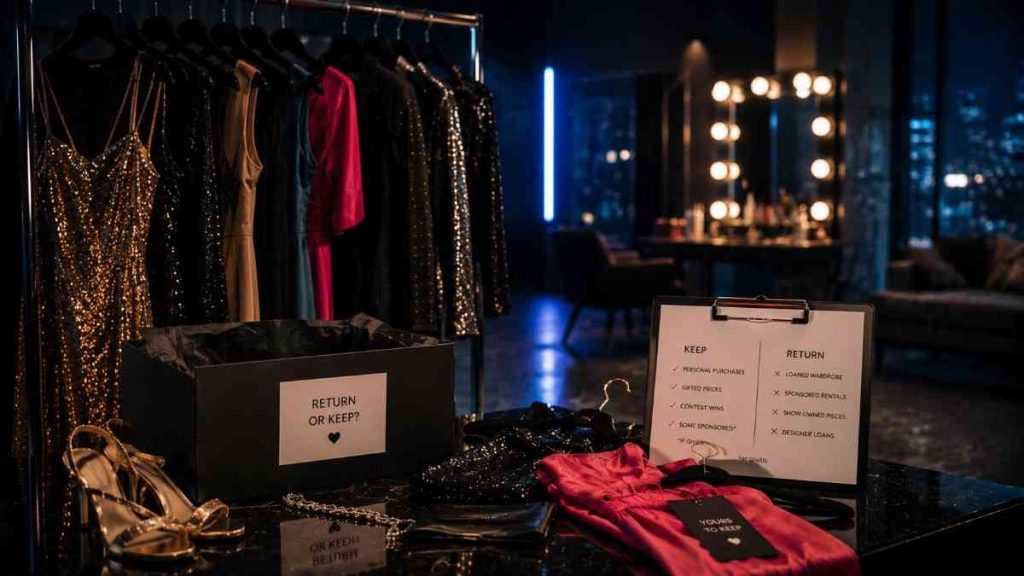
Do Contestants Get to Keep the Clothes After the Show?
The answer depends on who owned them in the first place, and that answer changes by show format.
If contestants brought their own clothes, they take them home. This covers the majority of reality TV formats. The Real Housewives, Vanderpump Rules, Temptation Island, Survivor, and most competition shows all fall into this category. The contestant owns the wardrobe and leaves with it regardless of how much screen time it got.
If production or a sponsor supplied items, the contract determines what happens next. Some items are gifted outright and go home with the cast. Some are on loan and return to the brand at wrap. Some shows run a post-filming process where a curated selection of pieces is offered to cast before they leave. None of this is standardized across the industry.
Elimination changes the math in an interesting way. A contestant eliminated early from a long format show like The Bachelor or Love Island likely packed for eight or more weeks of filming and wore only a fraction of those clothes on camera. They still take everything home. The audience only saw three outfits. The suitcase going home has thirty.
Items with direct production value are a different category. Branded merchandise, show-specific costumes, and anything that carries clearance issues generally stays with production. The tribal buff from Survivor is production property. The floral sundress you packed is not.
The financial picture of appearing on a reality show is considerably heavier than it looks from the outside. Wardrobe is one piece of a larger set of uncompensated costs contestants absorb. For a fuller picture of what Bachelor series contestants actually get paid, the numbers are more sobering than most fans expect.
How Much Do Contestants Actually Spend on Clothes Before Filming?
The numbers are not small, and they are almost entirely unrecovered.
Bachelor contestants have publicly estimated pre-filming wardrobe spending ranging from around $8,000 on the lower end to $30,000 or more for contestants who expect to go deep into the season. Every rose ceremony requires a different dress. Cocktail parties need separate looks. Group dates and ITMs require additional options. The wardrobe investment scales with how long a contestant expects to stay, which means the people most invested in the show financially are also spending the most before they film a single frame.
Love Island USA contestants, knowing that sponsors supply some pieces for the villa, tend to pack lighter personal wardrobes. The personal investment is still real, but the scale is different from a show where nothing is provided.
Survivor contestants face a completely different calculation. The show runs approximately 26 days in an outdoor environment. The clothing requirements are functional, not aesthetic. Durable footwear, weather-appropriate layers, and swimwear matter far more than cocktail dresses. The financial pressure is lower, but the physical demands on the clothing are considerably higher.
Game show contestants face a logistical issue nobody talks about. A Jeopardy! champion who wins multiple consecutive episodes films those episodes across just a couple of production days. Ten episodes means ten outfit changes, all packed in advance, all purchased by the contestant before anyone knew how many episodes they would need. Production does not supply wardrobe for game show contestants. The champion who appears on screen five nights in a row bought every single one of those outfits themselves and packed them all for a two-day shoot.
The financial weight of wardrobe is one of several real economic costs contestants absorb that audiences rarely consider. For more on the full financial picture across formats, including what The Traitors contestants get paid versus what they spend to participate, the gap between perception and reality is significant.
FAQ: Reality TV Wardrobe Rules, Answered Directly
Does Love Island USA give contestants their clothes?
Some pieces, yes. Love Island USA works with brand sponsors who supply clothing for the villa. Contestants also bring personal wardrobes. Whether sponsor-supplied clothing is kept after filming depends on the individual deal terms between the show and the brand for that specific season. Some items are gifted outright. Others are on loan and returned at wrap. The arrangement is a media placement deal, not a production gift, which means the brand’s terms drive the outcome, not production’s generosity.
Do Bachelor contestants get a wardrobe budget?
No. The Bachelor and Bachelorette franchise provides no clothing budget to contestants. Every dress, accessory, and outfit is sourced and paid for entirely by the contestant before filming begins. Publicly shared estimates from former cast members put pre-filming wardrobe spending anywhere from $8,000 to $30,000 depending on the individual and the season. None of that money is reimbursed by production.
Does production tell Survivor contestants what to wear?
Partly. Survivors pack their own clothes and pay for them personally. Producers do direct contestants to wear specific outfits on particular filming days when continuity with previously shot footage requires it. Some show-specific items, such as tribal buffs, are managed by production rather than treated as personal property. After elimination, certain production-associated items may be collected. Personal clothing goes home with the contestant.
Can reality TV contestants wear brand logos on camera?
Generally not. Most reality TV productions prohibit visible logos during filming as a standard clearance requirement. A competitor brand appearing in a broadcast episode creates legal and commercial complications for the network and production company. Contestants are typically told before filming begins to cover or remove any branded items before cameras roll. On shows with fashion sponsors, wearing a competitor brand on camera can be a direct contract violation.
Do contestants keep sponsor-provided clothes after the show?
It depends entirely on the contract between the show and the sponsor. Sponsored clothing can be classified as a loan, in which case it is returned to the brand after filming, or it can be gifted, in which case the contestant keeps it. Some shows run a post-filming gifting process where cast members receive a selection of pieces. Viewers cannot tell the difference on screen. Even contestants may not know the specific terms until they have read the contract carefully.
Why do reality TV contestants repeat outfits across episodes?
Outfit repetition is almost always a product of the filming schedule, not budget limitations. Shows that film multiple episodes on consecutive days at the same location will exhaust wardrobe options quickly. A home renovation competition shooting a single project over several days requires the same outfit across all of those days for editing continuity. Additionally, wardrobe packed for a long filming run has natural limits. Contestants who expected to go further in a competition packed more. Those eliminated early had less variety to show on camera.
Do Real Housewives cast members have a clothing budget?
No. Real Housewives cast members across all franchises are responsible for their own wardrobes with no production budget or reimbursement. This applies to regular episode filming and to reunion tapings. Former RHONY cast member Carole Radziwill confirmed this publicly. The high-fashion looks viewers see are entirely self-funded, which is one reason franchise cast tends to be drawn from backgrounds where that level of personal spending is sustainable.
The Part That Changes How You Watch
The most important thing to take away from all of this is not a specific policy or a specific show. It is the underlying logic: wardrobe on reality TV is a production variable, not a personal choice. What contestants wear is shaped by clearance rules, continuity requirements, sponsor contracts, and editing needs. The contestant is often the last person with meaningful input into what ends up on screen.
The next time a Bachelor contestant shows up in a memorable dress or a Love Island cast member is photographed in a specific brand, the question worth asking is not “did she keep that?” but “who decided she’d wear it, and who benefits from the visibility?” Those two questions point in a more interesting direction than the clothes themselves.
If you want to keep pulling at this thread, the financial reality of appearing on reality television goes well beyond wardrobe. Time off work, travel costs, and the terms contestants sign before a single camera rolls all add up to a picture that looks very different from the inside than it does from a couch on a Tuesday night.