
Ghostbusters Gozer Explained: Who Is the Ancient Entity Behind the Franchise’s Biggest Threat?
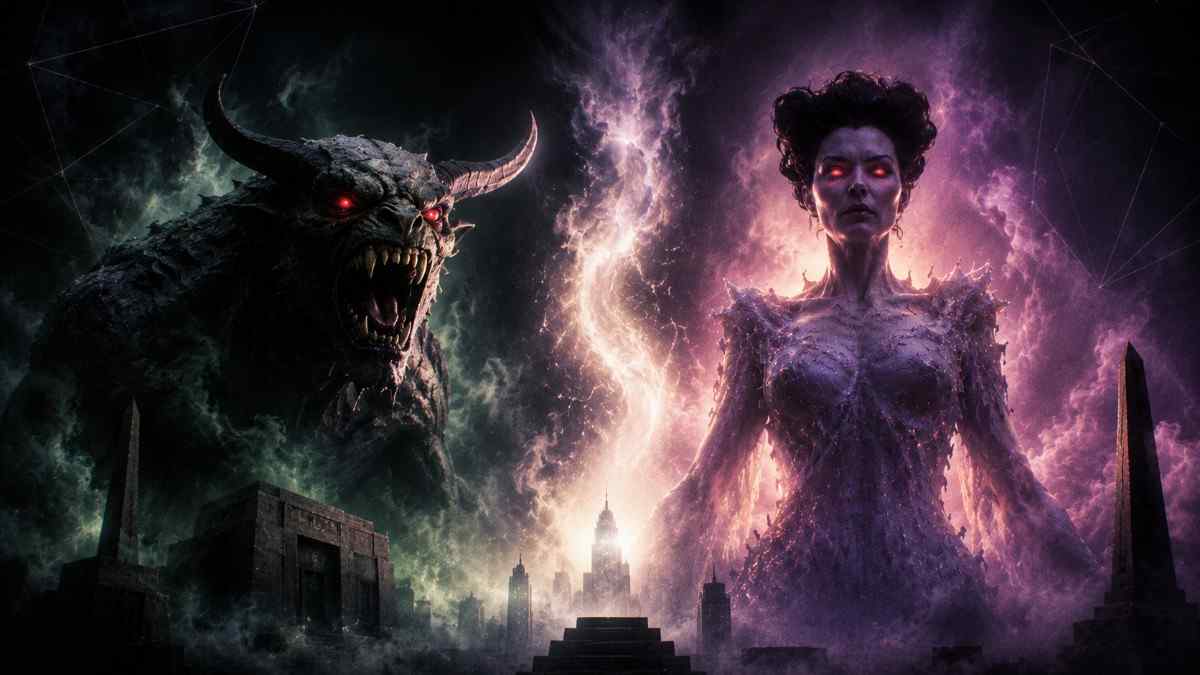
Gozer is a shape-shifting entity summoned through ritual to destroy cities, and it does not have one fixed physical form. In the movies, characters refer to it as “Gozer the Gozerian” or “Gozer the Traveller,” a title that shows up right before the line “The Traveller has come,” delivered like it is supposed to mean something to you.
Gozer is not a monster in the traditional sense. It is closer to a force that borrows a body to do its work. That distinction matters, because it explains why Gozer looks different depending on who summons it and how. The 1984 version is not a creature with a backstory and a lair.
It is described in-universe as an ancient, dimension-crossing power that other beings serve. That is exactly why it needs helpers to open the door for it in the first place. Understanding that hierarchy is the key to understanding the entire third act of the original film.
Was Gozer in the Original Ghostbusters? Here’s the 1984 Scene That Started It All
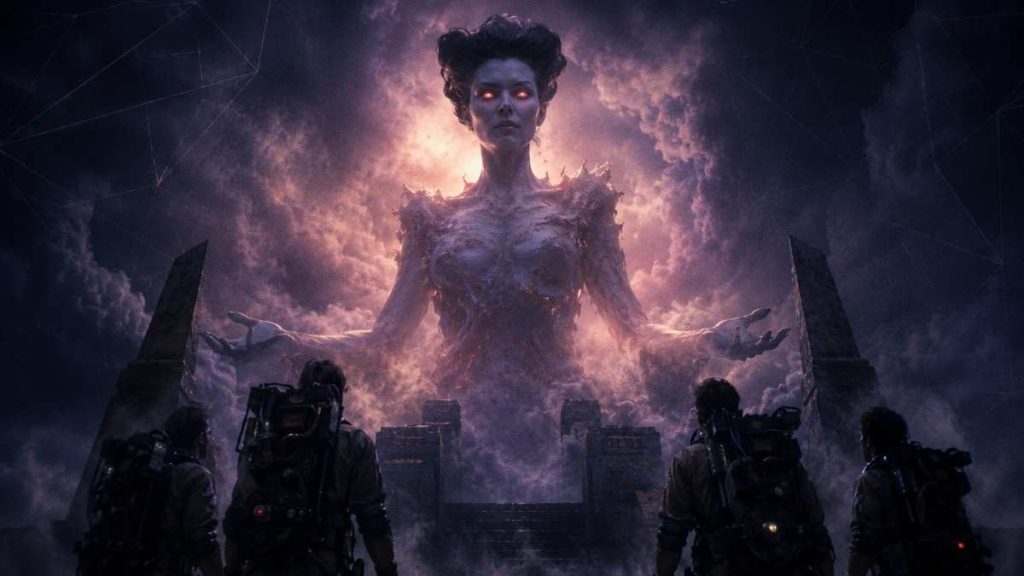
Yes, Gozer is the central threat of the 1984 film, and the entity’s on-screen appearance was played physically by Slavitza Jovan. Gozer shows up in the third act after being summoned atop 55 Central Park West, the apartment building that architect Ivo Shandor secretly designed decades earlier as a machine built to call Gozer down.
That detail is easy to miss on a first watch, but it is the whole reason the movie’s final act happens on a rooftop instead of in a basement lab. Shandor built a literal antenna for an interdimensional god into the New York City skyline, and nobody in the building noticed for fifty years.
The physical performance under the makeup and lighting effects belonged to Jovan, while the vocal delivery in the finished film was altered for that deep, otherworldly quality audiences remember. Reporting on exactly who provided that vocal work varies enough across fan sources that it is worth treating as an open question rather than a settled fact until a primary cast list confirms it. If you’re curious how other franchise villains were brought to life on a practical-effects budget, our breakdown of 80s horror comedy special effects, explained covers similar cases.
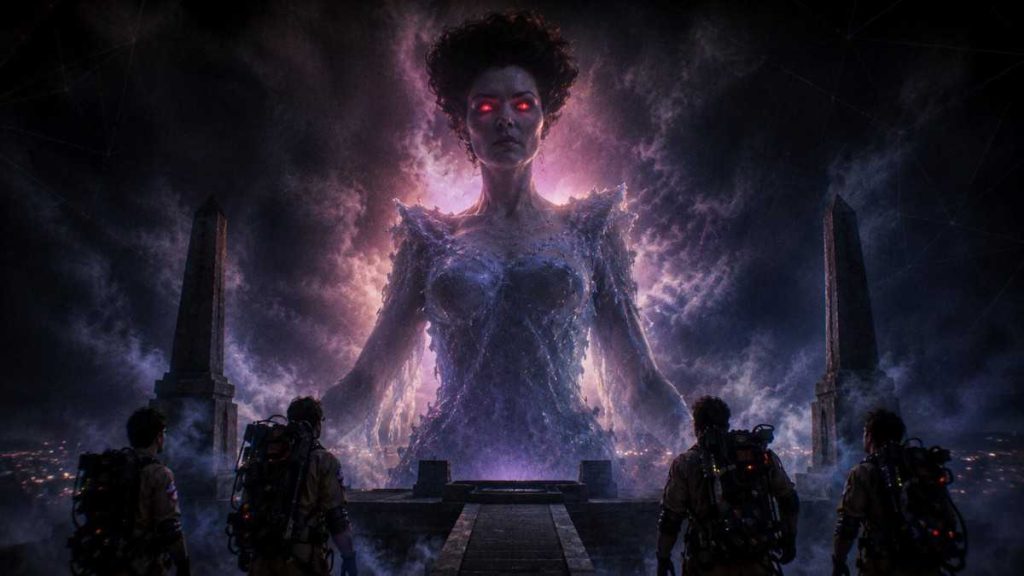
Are Zuul and Gozer the Same? Why Everyone Mixes This Up
No, Zuul and Gozer are not the same entity. Zuul is a minion called the Gatekeeper, and it possesses Dana Barrett to help open the door for Gozer’s arrival, but Zuul itself is not Gozer.
The confusion makes sense because Zuul gets more screen time and more dialogue than Gozer does. Sigourney Weaver’s character spends most of the movie growling “There is no Dana, only Zuul,” which sticks in your head far more than a title like “the Gozerian.” Vinz Clortho plays the same supporting role on the male side, possessing Louis Tully and functioning as the Keymaster who has to link up with the Gatekeeper before Gozer can cross over.
Here is the full chain of command, laid out so you never have to rewatch the ending again just to remember who does what.
| Entity | Role | Who It Possesses | Function |
|---|---|---|---|
| Gozer | The god/entity being summoned | No one directly | The actual destroyer, arrives last |
| Zuul | Gatekeeper (minion) | Dana Barrett | Opens the door for Gozer |
| Vinz Clortho | Keymaster (minion) | Louis Tully | Must unite with the Gatekeeper to unlock the portal |
| Terror Dogs | Gozer’s beasts | N/A | Physical enforcers that possess Dana and Louis |
Once you see it in this order, the ending makes a lot more sense. The Terror Dogs are the muscle, Zuul and Vinz Clortho are the lock and key, and Gozer is the thing that walks through once the door is open. If you want the full rundown on how Dana and Louis get roped into the ritual in the first place, check out our Ghostbusters 1984 plot breakdown.
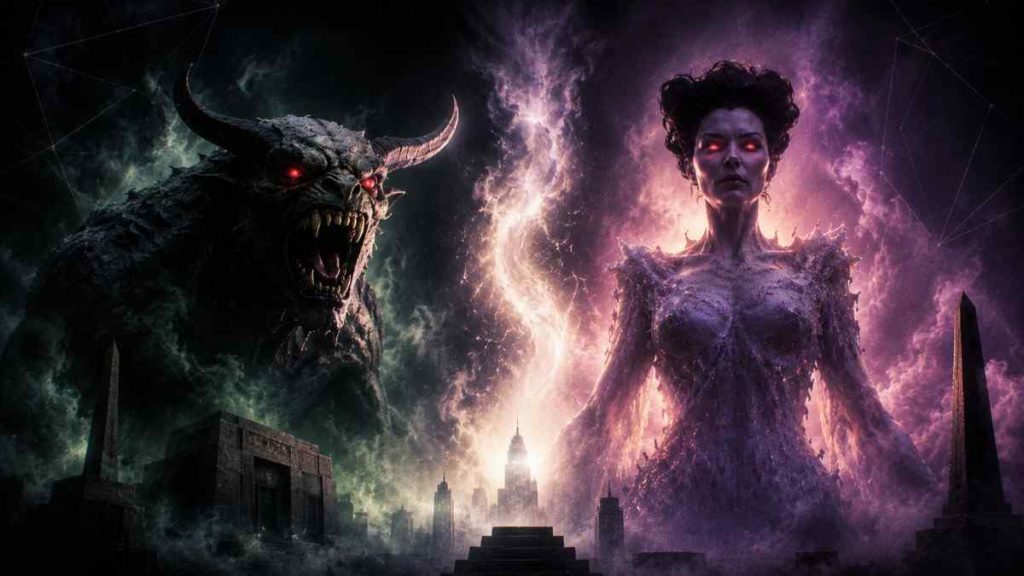
What Powers Does Gozer Have? Shape-Shifting and One Fatal Loophole
Gozer’s core power is shape-shifting combined with the ability to cross between dimensions, but its most important rule is that it cannot simply choose its own destructive form. Instead, Gozer forces a human present at the summoning to pick the shape of “the Destructor” from their own mind, and whatever image that person unknowingly conjures becomes the thing that shows up.
This is the entire reason the Stay Puft Marshmallow Man exists. Ray Stantz tries desperately not to think of anything, fails, and the first image that pops into his head from childhood becomes a hundred-foot-tall walking mascot stomping through Manhattan. It is genuinely one of the funniest twists in eighties blockbuster filmmaking, because the most terrifying entity in the franchise gets defeated by a guy accidentally thinking about a marshmallow logo.
That loophole is Gozer’s one real weakness across the films. The entity is powerful enough to level a city, but it depends entirely on a human’s unconscious mind to give it a physical shape. That means the Ghostbusters’ real strategy has never been fighting Gozer directly. It has been controlling what a terrified person thinks about at the worst possible moment.
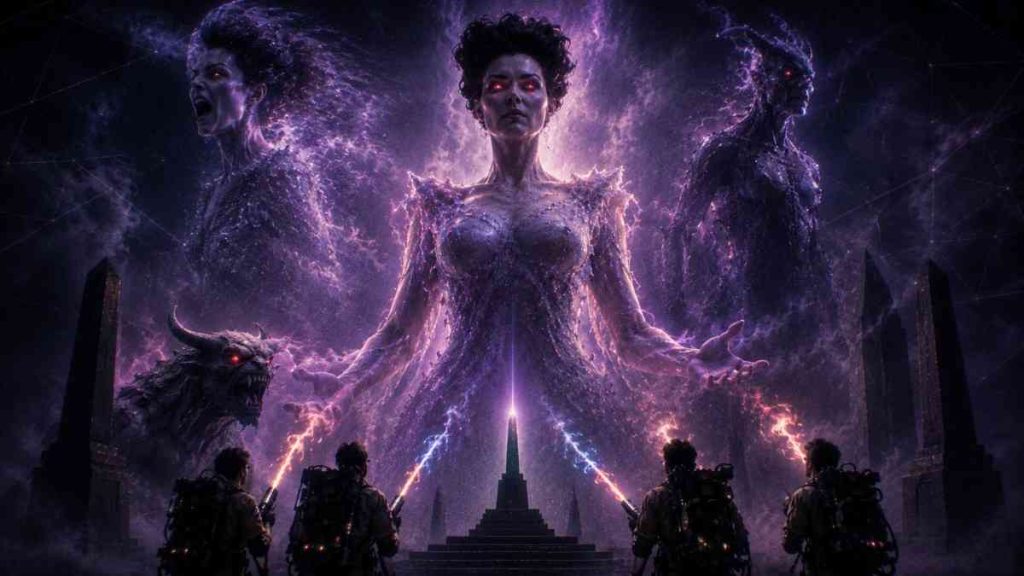
Did Gozer Return in Ghostbusters: Afterlife or Frozen Empire?
Gozer did return for a sequel appearance in Ghostbusters: Afterlife (2021), continuing the character’s role as the franchise’s signature interdimensional threat. Specific details about the full performer lineup for that version have been reported inconsistently across fan sources, so treat any single name you see attached to the role as unconfirmed until a studio credit list settles it.
Whether Gozer factors into Ghostbusters: Frozen Empire (2024) is also unclear based on currently available reporting. If you see a confident claim either way circulating online, it is worth double checking against an official cast or plot summary before repeating it. This is exactly the kind of detail that gets flattened into “fact” by fan wikis long before anyone verifies it. Our guide to Ghostbusters: Afterlife cast and callbacks covers what has actually been confirmed for the newer films.
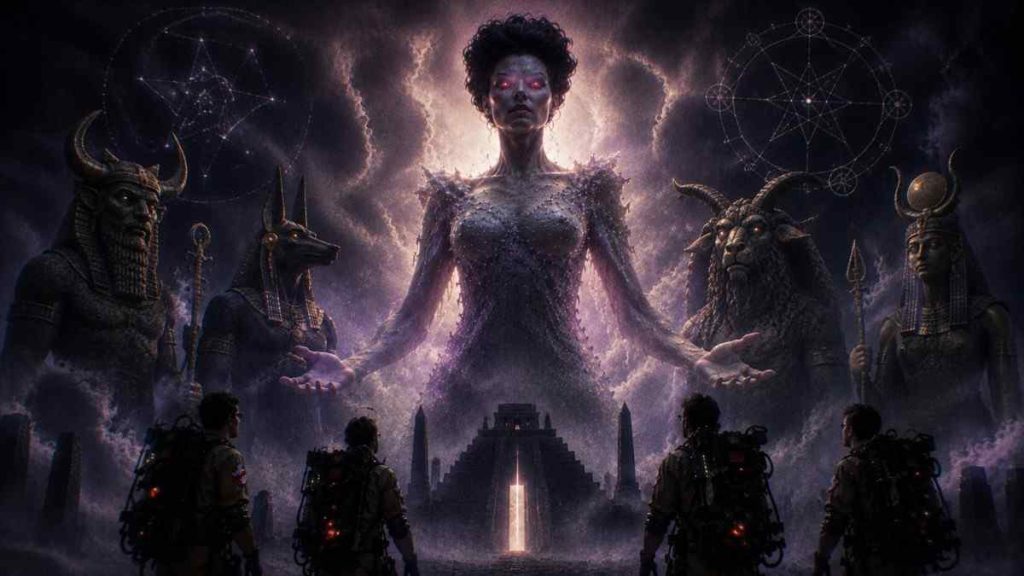
Is Gozer Based on a Real Mythology or Deity?
No, Gozer is not a documented deity from any real-world mythology, despite the “Gozerian” framing that makes it sound like it belongs to an ancient pantheon. The name and title were created for the film, and there is no Sumerian, Mesopotamian, or otherwise historical religious tradition that references a god called Gozer.
The movie leans into a Mesopotamian-adjacent aesthetic on purpose, mixing invented terminology with just enough ritual language to feel plausible. That is a smart screenwriting trick, not a historical citation. If a friend swears Gozer comes from real ancient texts, you now have the receipts to correct them without sounding like a know-it-all about it.
FAQ: Quick Answers to Common Gozer Questions
Is Gozer a god or a demon?
Gozer is written and referred to in the films as a god-like entity, not a demon in the traditional horror sense. It is described as an ancient, shape-shifting power capable of destroying cities, summoned through ritual rather than conjured like a classic demonic figure. The movies never frame Gozer within any specific real religious tradition, treating it as a fictional cosmic threat instead.
What does Gozer actually look like?
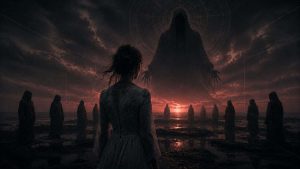
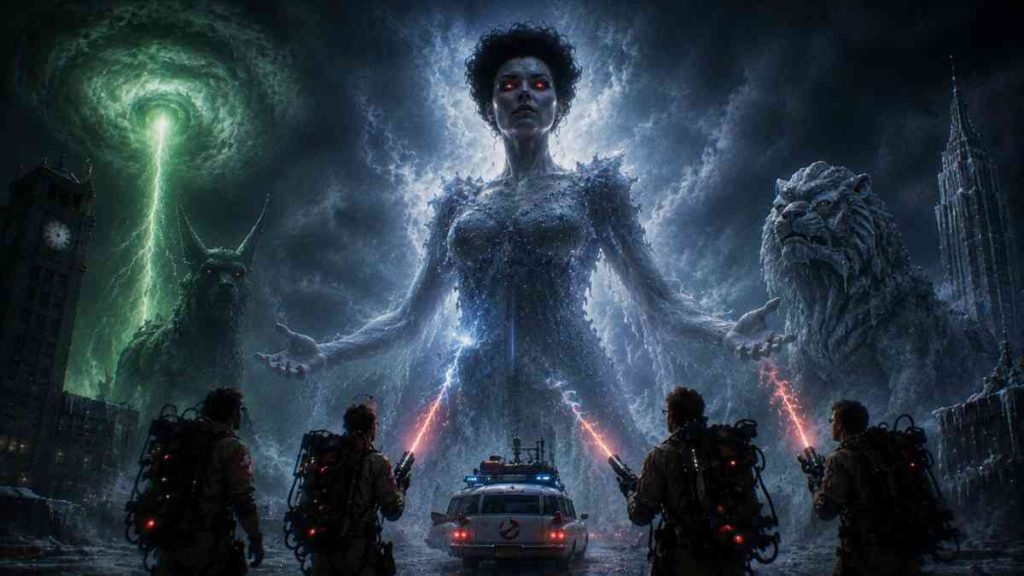
Gozer does not have one fixed appearance. In the 1984 film, the entity appears in a tall, androgynous, robed form before taking on the Stay Puft Marshmallow Man shape that a human mind unknowingly selected. Because Gozer’s true form depends on the “Destructor” loophole, its look can technically change depending on who is present at the summoning.
Why is Gozer called “the Gozerian”?
“Gozerian” is used as an in-universe title, similar to calling someone “the Traveller.” It is not a reference to any documented mythology or religious tradition. The film uses invented terminology to give Gozer an ancient, otherworldly feel without tying the character to any real historical belief system.
Is Zuul more powerful than Gozer?
No. Zuul is a minion working for Gozer, not a rival or a stronger entity. Zuul’s job as the Gatekeeper is to help open the path for Gozer’s arrival by possessing Dana Barrett. Gozer is the actual destructive force the entire ritual is built around, while Zuul exists purely to serve that arrival.
Did the same actor play Gozer in both 1984 and 2021?
No, the physical performance in the original 1984 film is credited to Slavitza Jovan, and the 2021 sequel used a different set of performers for its version of the entity. Public reporting on the full 2021 casting details has been inconsistent, so specific names beyond that should be treated as unconfirmed until an official source verifies them.
Gozer works so well as a villain because it barely behaves like one. It has no dialogue, no motive beyond destruction, and no fixed shape, which makes it feel less like a movie monster and more like a natural disaster with a name. That is the real reason the marshmallow man twist lands so hard: the scariest thing in the franchise gets undone by a very human moment of panic.
If you take one thing away from this rewatch, make it the hierarchy. Gozer is the god, Zuul and Vinz Clortho are the key and the lock, and the Terror Dogs are just muscle. Once that clicks, the entire third act of the 1984 film stops being confusing and starts being one of the smartest setups in eighties horror comedy.
Next time someone claims Gozer is pulled straight from ancient mythology, or that Zuul and Gozer are interchangeable, you will have the actual chain of command ready to go, no rewatch required. For more franchise deep dives, check out our Ghostbusters ghosts and creatures, ranked and Ghostbusters: Afterlife cast and callbacks guides.