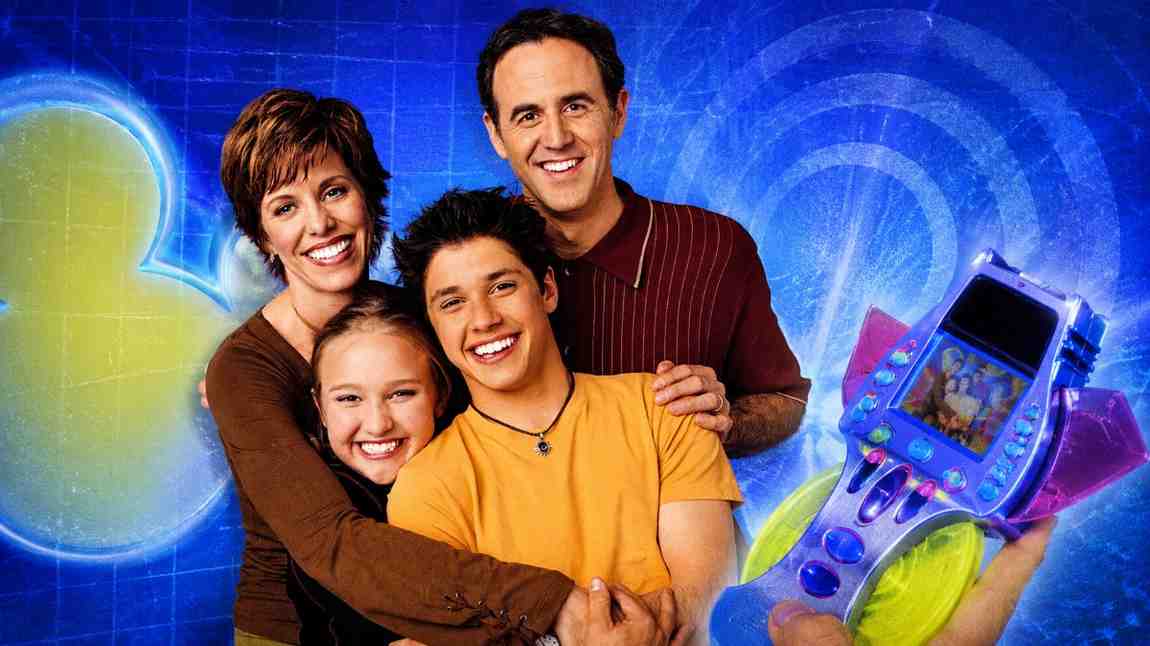
Did Phil of the Future Get Cancelled or Just End?
It was cancelled. The series finale, “Back to the Future (Not the Movie),” aired on June 24, 2006, and it gave Phil and Keely a romantic resolution, but the episode’s structure tells on itself. A family repairs their time machine and departs. A girl asks a boy from the future to wait for her. That is a setup, not a landing. It reads exactly like a writers’ room that got word late in production that the show was not coming back and did the best they could with what they had.
Disney Channel did not announce a formal cancellation. The show simply did not return. No press release, no statement from the network, no send-off. One day it was on, and then it was not.
How Many Episodes Did Phil of the Future Have?
Phil of the Future produced 43 total episodes: 21 in Season 1 (2004 to 2005) and 22 in Season 2 (2005 to 2006). For context on how short that run is, Lizzie McGuire produced 65 episodes. Even Stevens ran 65 episodes. Kim Possible ran 87. Phil of the Future got 43 and stopped.
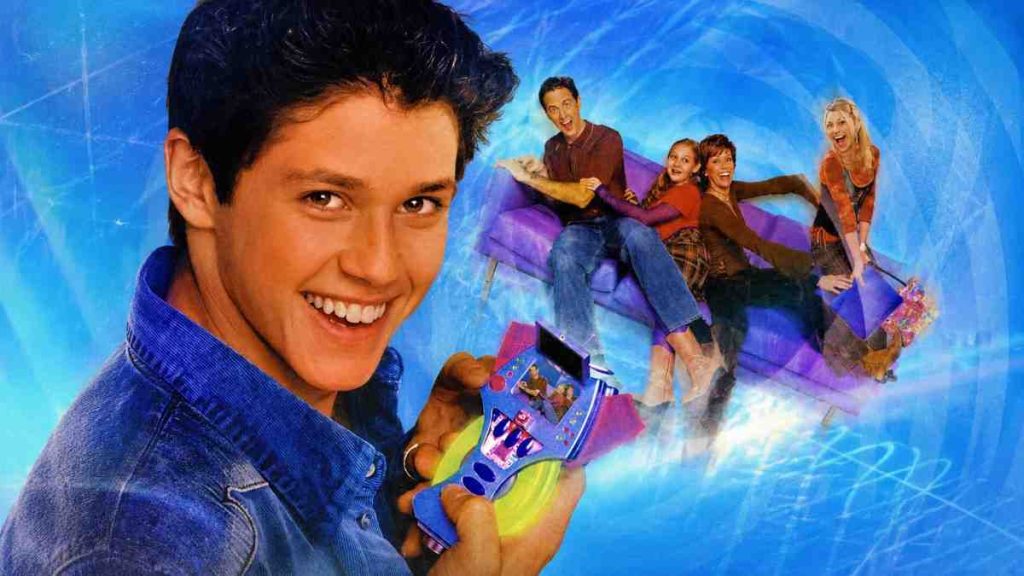
The 65-Episode Rule Explains Some Disney Cancellations, But Not This One
The 65-episode threshold was a real internal framework at Disney Channel, not a myth fans invented. Under this policy, many shows were guided toward approximately 65 episodes before the economics of continued production and syndication licensing made renewal less attractive. It was a business calculation, not a creative one, and it explains why several early 2000s Disney Channel shows ended at similar episode counts without any dramatic in-universe conclusion.
Phil of the Future ended at 43 episodes, which is 22 short of that benchmark. If the rule was the reason, the numbers would look different. Disney would have let the show run longer before pulling it. The fact that Phil stopped significantly earlier than the rule required means the rule is not a sufficient explanation on its own. Something else was actively shortening the runway.
What Was Actually Going On at Disney Channel in 2005 and 2006?
Two shows changed everything. The Suite Life of Zack and Cody premiered in March 2005. Hannah Montana premiered in March 2006. Both were built around a completely different model than anything Disney had been making before them.
Hannah Montana was not just a TV show. It was a commercial operation. Miley Cyrus released albums, concert tours filled arenas, and licensing revenue flowed across clothing, accessories, and school supplies. The show itself was almost secondary to the franchise infrastructure around it. The Suite Life was similarly built for scalability and eventually launched a spin-off that extended the property further.
Phil of the Future was a well-crafted, character-driven sci-fi sitcom about a family of time travelers from the year 2121 stuck in present-day suburbia. It had good writing and strong chemistry between its leads. What it did not have was a soundtrack, a built-in pop star, or any obvious merchandise angle. The show was built for an era of Disney Channel that was actively ending.
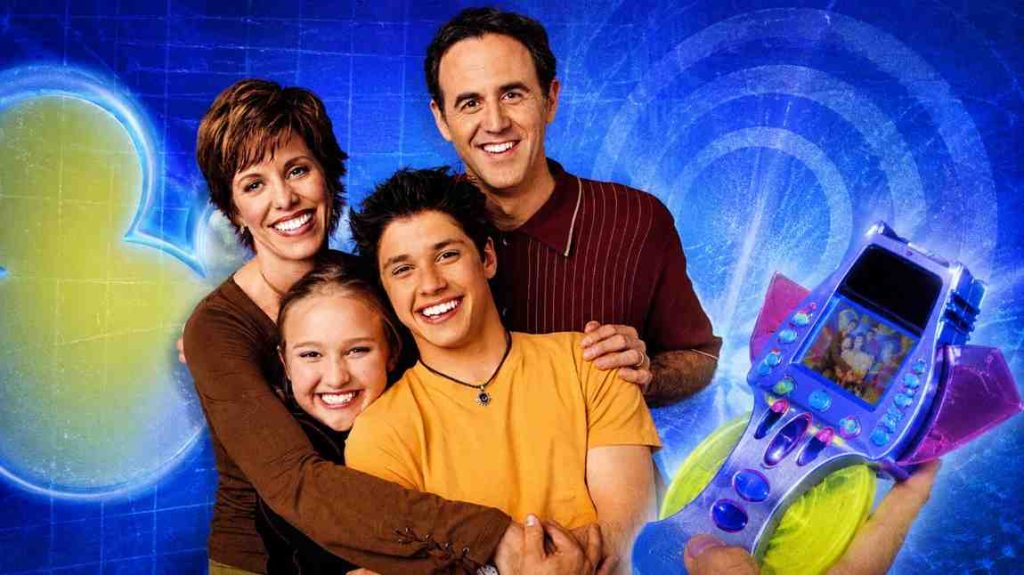
What the Phil of the Future Ratings Actually Looked Like
The show was not struggling. Phil of the Future launched in June 2004 with strong viewership for Disney Channel’s Friday programming block and held competitive ratings through most of Season 1. It was not a breakout on the scale of Lizzie McGuire, but it was performing well enough that a renewal was not a surprise. Season 2 got made, after all.
The cancellation looks far more like a resource reallocation decision than a response to audience abandonment. Multiple productions were competing for the same network budget and scheduling real estate at exactly the moment Hannah Montana was coming online. Something had to make room. Phil of the Future was the show that did not fit the new template, and “fits the template” carries more weight than “has decent ratings” when a network has already committed to a new direction.
The show did not die because viewers stopped showing up. Viewers were still there. Disney stopped investing because it had decided what kind of network it wanted to be, and Phil of the Future was not that kind of show.
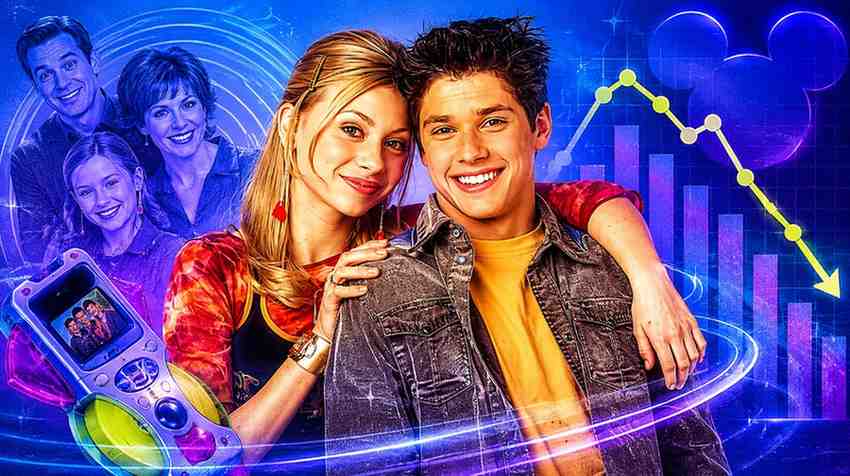
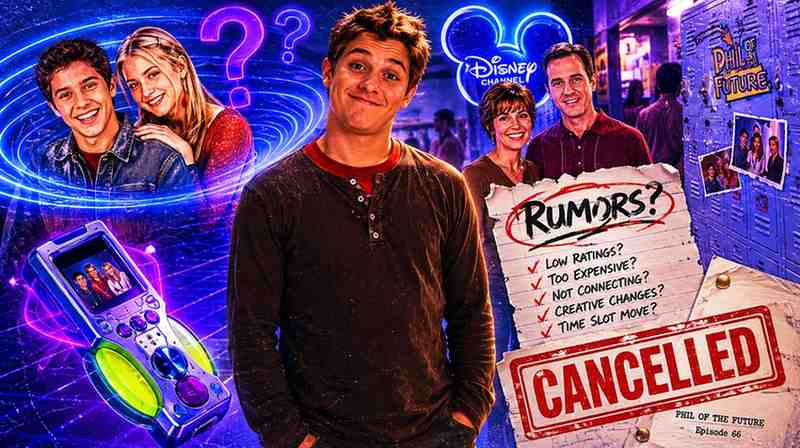
What Was Rumored About the Phil of the Future Cancellation
Not every explanation that circulated over the years is supported by evidence. Some have a real basis. Some are fan speculation that calcified into internet “fact.”
The Back to the Future Copyright Theory
This one has legs, even if the full story is not confirmed. The people behind the Back to the Future franchise have historically been protective of time-travel storytelling adjacent to their IP, and the overlap between Phil of the Future’s premise and the Back to the Future brand was close enough to create tension. There are accounts from fan and discussion forums suggesting that copyright concerns limited what the show could do creatively, particularly in terms of how far it could develop its mythology. Whether those limitations directly caused the cancellation or simply made a Season 3 harder to write around is not documented anywhere conclusively. What is documented is that the series finale was literally titled “Back to the Future (Not the Movie),” which suggests the creative team was aware of the IP proximity and navigating it carefully.
Aly Michalka’s Music Career as a Factor
The timing is notable. Aly Michalka and her sister AJ released their debut album as Aly and AJ in 2005 while Phil of the Future was still in production. Their music career was accelerating through the show’s second season in a real way, not as a side project. Whether Disney Channel viewed that as a scheduling conflict, a competing priority, or a natural transition moment for the actress is not on the record anywhere. Michalka has not publicly pointed to her music career as a reason for the show’s end. The timing just sits there, noted and unresolved.
Was There Behind-the-Scenes Drama?
No documented evidence of cast or production conflict exists in the public record. This does not appear to have been a situation where a difficult set or interpersonal breakdown forced the network’s hand. Every available account points to this being a network-level strategic decision, made above the production.
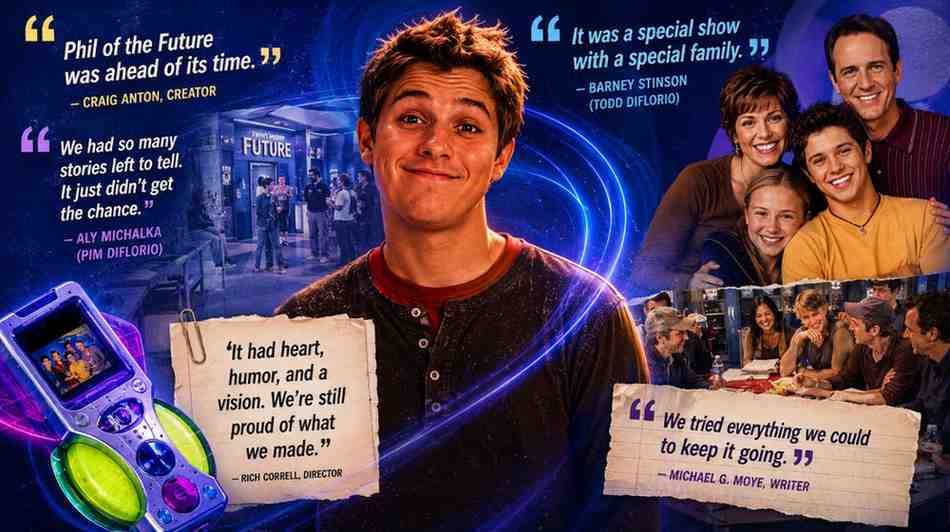
What the People Who Worked on the Show Have Said
Raviv Ullman has been the most forthcoming of the cast members about the show’s ending. Over the years in fan interactions and interviews, Ullman expressed genuine warmth toward the show and acknowledged openly that the finale was not originally conceived as a finale. That detail matters enormously. When the person who played the lead character says the ending was not designed as an ending, it confirms what the episode itself suggests: the writers were told late that Season 2 was it, and they adjusted accordingly.
The Phil and Keely romance is the clearest evidence of that adjustment. The relationship had been built up carefully across two full seasons. It had all the slow-burn logic of a will-they-won’t-they arc that was meant to pay off over time. Collapsing it into the final episode feels compressed because it was. Two seasons of romantic tension resolved in one episode, with a promise to wait, and then nothing.
What we do not have is a statement from any showrunner or writer explaining exactly when they learned the show was ending or what they originally planned for Season 3. That gap in the public record is real, and it is frustrating for anyone who wants the complete picture.
Was There a Phil of the Future Season 3 Planned?
No Season 3 was officially ordered. There are no documented scripts, pitch documents, or production orders that have surfaced publicly for a third season.
The Season 2 finale left enough open to strongly suggest the writers expected more story. Phil’s family returns to the future while Keely stays in the present. Phil promises to wait for her. That is the beginning of a premise, not the resolution of one. The central emotional tension of the show across two seasons was always building toward a genuine choice: Phil’s future versus his present. The finale gestures at that choice but does not make it.
A plausible Season 3 would have explored what Phil’s life looked like when he returned home, whether Keely eventually found a way to reach the future, and whether the separation would hold or break. The show was, at its core, about belonging somewhere you were not supposed to be. For similar stories about planned seasons that never happened, the OA Season 3 plans situation carries some of the same energy: a show with a clear narrative destination that never got to arrive.
Will There Ever Be a Phil of the Future Reboot?
Probably not, and the copyright situation is a real structural obstacle. Any reboot attempting to use time travel as a central premise would need to be developed carefully around the Back to the Future IP environment, and historically the rights holders for that franchise have not been generous about adjacencies. A Phil of the Future reboot that meaningfully resembles the original show faces a harder clearance path than most nostalgia projects.
Both Ullman and Michalka have spoken about the show with genuine affection in retrospect, and fan appetite is clearly present. The show has found a second audience through streaming and nostalgia content online. But fan love and development interest are different things, and no studio has publicly moved on anything. For a broader look at beloved Disney Channel properties that never returned, the Bug Juice cancellation story covers some of the same pattern of network decisions overriding audience attachment.
Where Is Raviv Ullman Now?
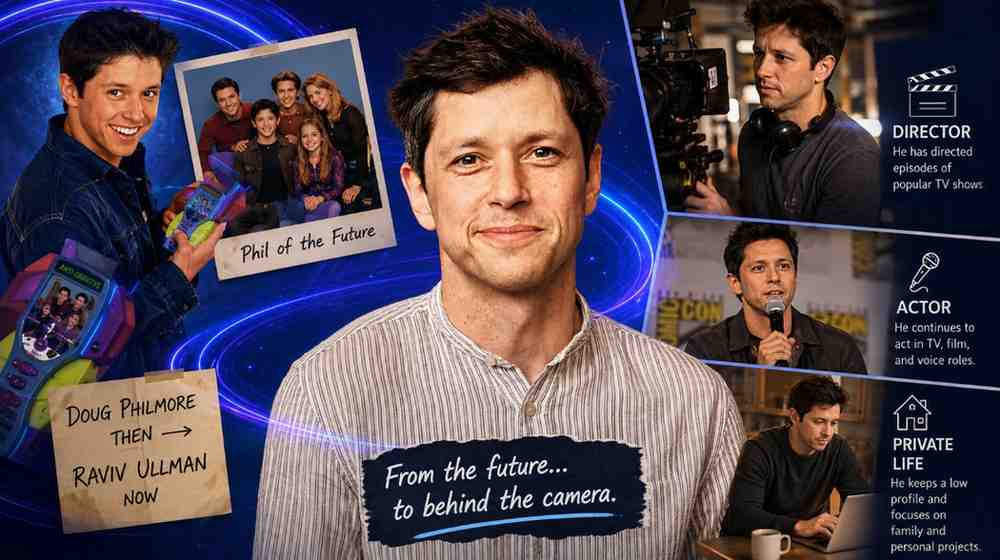
Raviv Ullman continued acting after Phil of the Future with a career that moved toward theater and independent projects rather than the mainstream Disney pipeline. He built a presence in stage work and smaller screen roles through the 2010s and has maintained a lower public profile than several of his Disney Channel contemporaries. His name surfaces reliably in Phil of the Future retrospective content, and he has engaged warmly with the show’s ongoing fanbase over the years.
Where Is Aly Michalka Now?
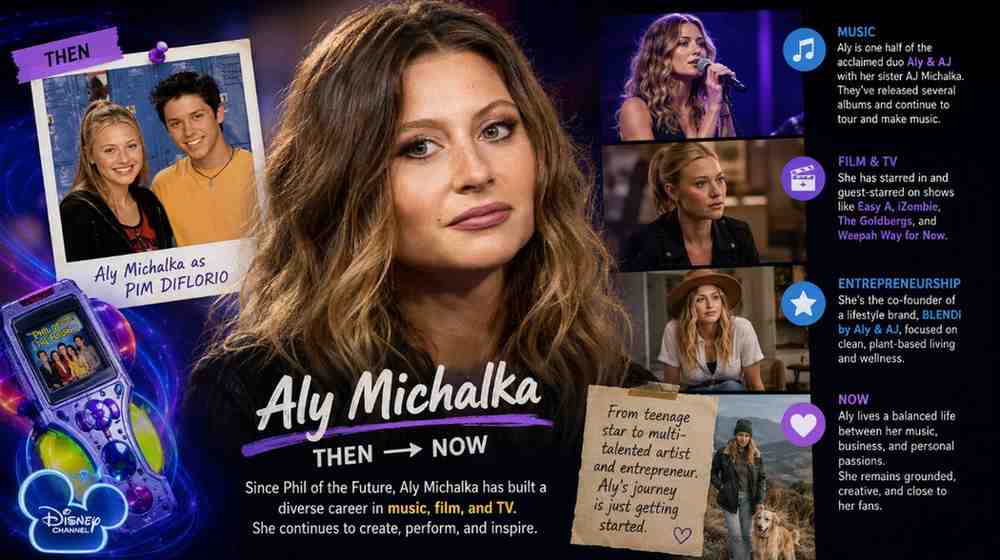
Aly Michalka’s post-Phil story became one of the more interesting trajectories in early 2000s Disney alumni history. She and her sister AJ continued making music as Aly and AJ through the late 2000s and then experienced a genuine cultural revival in the early 2020s when their 2007 song “Potential Breakup Song” went viral on TikTok. An entirely new generation of listeners discovered the track and sent it back into cultural relevance about 15 years after its release.
On the acting side, she had a recurring role on iZombie from 2015 to 2019 and has continued taking on television projects. For more on what early 2000s Disney faces have been up to, the Brink cast update piece covers some of the same generation. As of 2024, Aly and AJ are still actively recording and performing.
The Real Reason Phil of the Future Was Cancelled
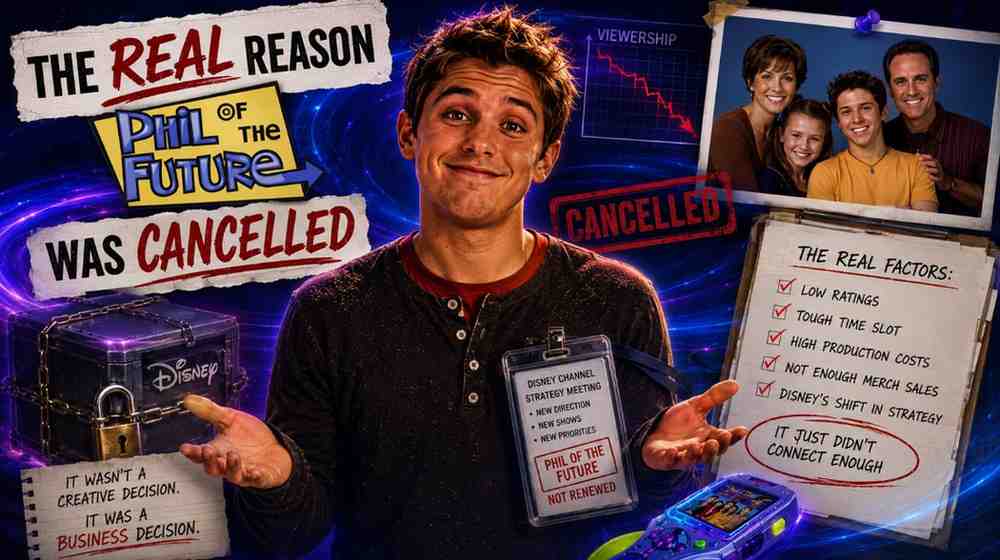
Pull all of it together and the picture is clear. Phil of the Future ran 43 solid episodes, held competitive ratings, and ended abruptly without a public explanation because Disney Channel was making a calculated business decision about its own identity.
The 65-episode rule cannot explain a show that stopped at 43. Low ratings cannot explain a cancellation the cast did not see coming and the network did not announce. What explains it is a network in the middle of a strategic transformation, choosing which productions fit the new model and which ones did not. Phil of the Future was a smart, well-crafted, character-driven sci-fi sitcom. It was also a show with no franchise infrastructure, no pop star at its center, and no obvious path to becoming the kind of multi-platform commercial property Disney was betting on in 2006.
The template was the problem, not the audience. Disney changed what it wanted to be, and Phil of the Future was built for what Disney had already decided to stop being.
FAQ
Why did Phil of the Future end after only 2 seasons?
Disney Channel cancelled Phil of the Future after 43 episodes, stopping well short of the 65-episode threshold that ended many other Disney Channel shows of the era. The most supported explanation is a deliberate network strategy shift toward franchise-ready shows with music, merchandise, and licensing potential, like Hannah Montana and The Suite Life of Zack and Cody. Phil of the Future did not fit that model. The ratings were not failing. Disney redirected its investment toward productions that matched where the network was heading.
Did Phil of the Future have low ratings?
No. Phil of the Future launched with strong viewership for Disney Channel’s Friday night block in 2004 and held competitive ratings through both seasons. The cancellation was not a response to audience decline. It reflected a resource and strategy decision at the network level. Disney was building franchise infrastructure around new shows, and Phil of the Future did not have the commercial scalability those new shows offered.
Was there ever going to be a Season 3 of Phil of the Future?
No Season 3 was officially ordered or developed. The series finale’s structure, Phil’s family returning to the future while Keely stays behind with a promise to wait, reads as setup for more story rather than a planned conclusion. Raviv Ullman has confirmed publicly that the finale was not originally intended as the final episode. A Season 3 would likely have explored the separation and Phil’s choice between his future and his present, but no documented scripts or pitches have surfaced.
Did the Back to the Future copyright cause Phil of the Future to get cancelled?
This theory has circulated for years and has some basis. The holders of the Back to the Future IP have historically been protective of time-travel-adjacent storytelling, and the series finale was literally titled “Back to the Future (Not the Movie),” which suggests the creative team was managing that proximity carefully. Whether IP concerns directly contributed to the cancellation or simply limited what a Season 3 could have explored is not confirmed. The copyright situation appears to have been a creative constraint rather than a documented cause of cancellation.
What did Raviv Ullman say about Phil of the Future being cancelled?
Raviv Ullman has spoken openly about the show’s ending in fan interactions and interviews over the years. His clearest statement is that the series finale was not originally designed to be a finale. That confirms what the episode itself suggests: the writers were informed late that there would be no Season 3 and adjusted the existing scripts to provide some closure. Ullman has consistently described the show with affection and acknowledged that the ending felt abrupt.
Why did Disney Channel change so much in 2006?
Disney Channel was executing a deliberate pivot toward shows that could function as multi-platform franchise properties. Hannah Montana, which premiered in March 2006, was the clearest example: a TV show built to support albums, concert tours, and merchandise lines simultaneously. This model generated commercial returns that dwarfed what a conventional sitcom like Phil of the Future could produce. Disney was making a calculated bet on a more commercially scalable format, and productions that did not fit that format were phased out to free up resources.
Is Phil of the Future available to stream anywhere?
Availability has varied over the years and by region. The show has appeared on Disney+ in some markets. Streaming rights for older Disney Channel content shift periodically, so current availability depends on your platform access and region. The show has maintained a presence in nostalgia and retrospective content online, which suggests ongoing fan interest even without consistent streaming placement.
The honest version of this story is not really about Phil of the Future failing. It is about a network deciding to become something different and clearing space to do it. The show that got cancelled was solid. The cast was good. The writing held up. What did not hold up was the fit between what the show was and what Disney Channel decided it needed to be in 2006.
If you grew up watching Phil and Keely try to navigate each other and the 21st century, the frustration of that ending is justified. It was not a creative conclusion. It was a business one.
The most useful thing to carry away from this is a more accurate framework for how TV cancellations actually work. Shows die when networks change direction, not always when audiences leave. Phil of the Future is a clean example of that dynamic, and it is worth knowing the difference.