Reacher Season 4 Subway Scene Explained: What Actually Happens
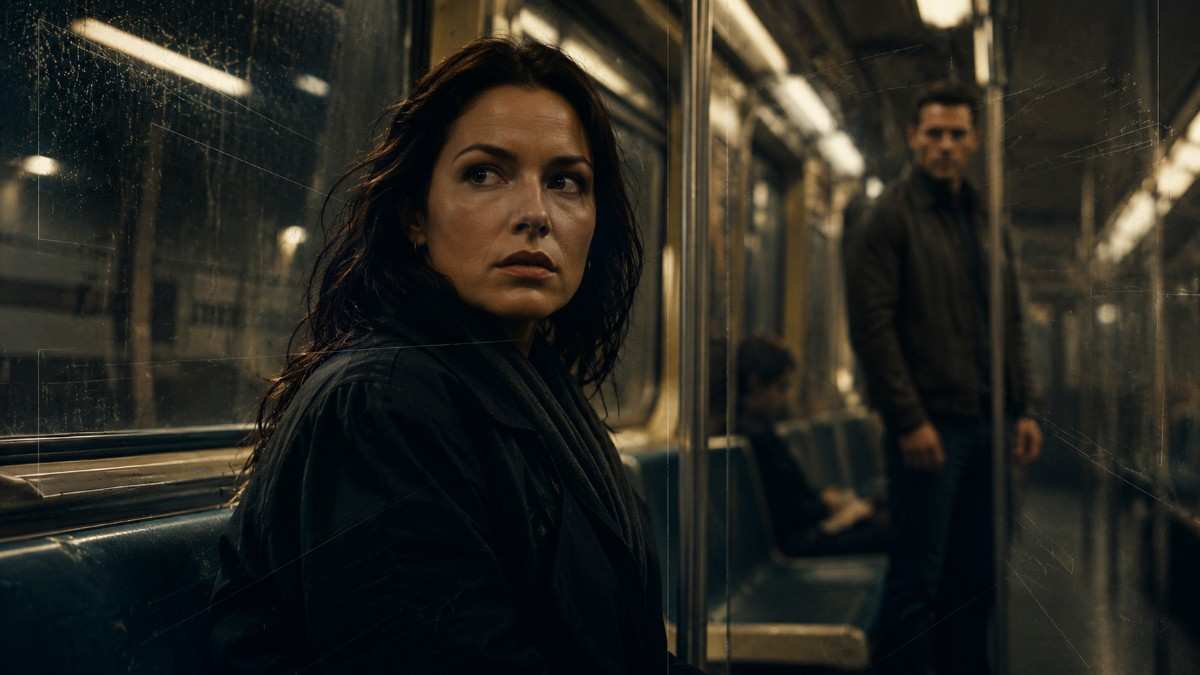
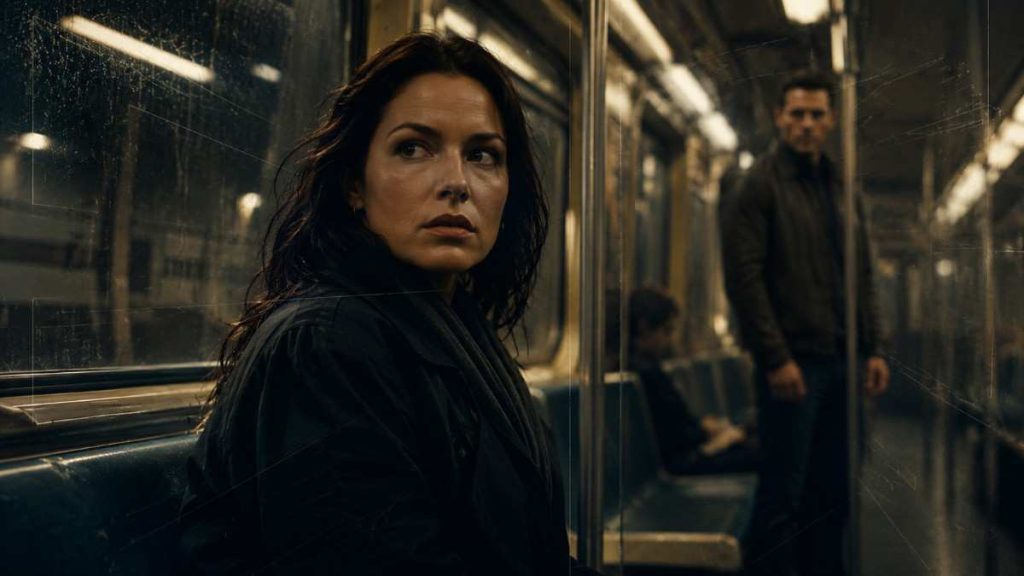
Reacher is riding a nearly empty New York City subway car sometime after 2 a.m. when he starts noticing a woman displaying several signs from a known behavioral checklist tied to suicide bombers. He moves toward her to defuse whatever is about to happen instead of getting off at the next stop like a normal person. She reacts to his approach, and the confrontation ends with her death, an outcome that becomes the inciting incident for the entire season.
Breaking the sequence down beat by beat helps explain why this lands the way it does.
- Time and setting: the car is nearly empty, it is well past midnight, and Reacher is essentially alone with one other passenger, which is exactly the kind of setup that lets a show slow down and let a single character carry the tension.
- What Reacher notices first: specific physical tells, not a vague “she looked off.” This is the same kind of profiling instinct Reacher’s military background trained into him, and it is the detail every recap glosses over.
- The confrontation: Reacher approaches calmly, the woman reacts badly to being approached, and the situation escalates fast.
- The aftermath: what Reacher does immediately afterward, including what he notices about her belongings, is what launches the plot forward instead of letting the scene end as a standalone tragedy.
This kind of cold open, where a book’s opening chapter gets lifted almost intact onto screen, is common across the current wave of crime dramas that try to hook viewers before explaining the mechanics of the mystery. Reacher just does it with less exposition than most, which is part of why so many viewers rewound the first five minutes at least once.
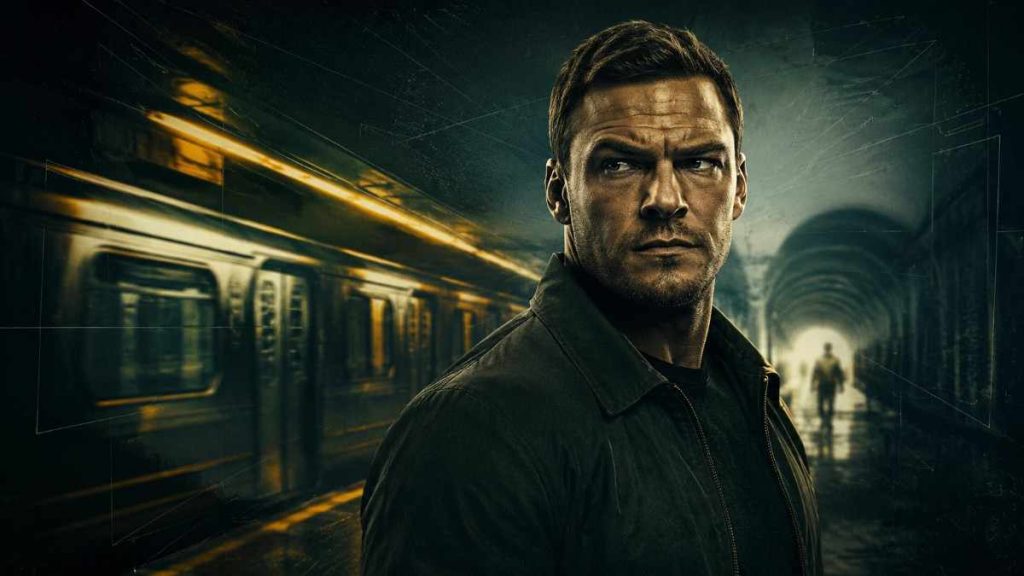
Who Is the Woman on the Subway in Reacher Season 4?
Her exact identity, name, and background have not been detailed in the officially confirmed marketing materials or the primary sources available at the time of this writing. What is confirmed is her function in the story: she is the character whose death sets the entire season’s conspiracy in motion, and the trailer’s own framing states her death connects to something larger rather than being a random act of violence.
That is a deliberately withheld detail, and it matters because it keeps the audience guessing right alongside Reacher. He does not know who she is either. He only knows what her behavior told him in the moments before things went wrong.
What was in her bag, and why does it matter later
The scene draws attention to what she is carrying and how she handles it in the moments before Reacher approaches. That object becomes the loose thread Reacher pulls on for the rest of the season, the same structural move the novel uses in its opening pages. Nothing about the object is explained on screen in the moment, which is deliberate. The show wants the audience carrying that same unanswered question into episode two.
Is she connected to a real agency or a fictional one in the show
Whether she is tied to a specific government agency has not been spelled out in confirmed materials reviewed for this piece. The trailer’s conspiracy framing strongly implies an institutional connection, but naming a specific agency at this stage would be reporting a rumor as fact, and that is not the goal here.
Why Did Reacher Get Involved? The Checklist He Used, Explained
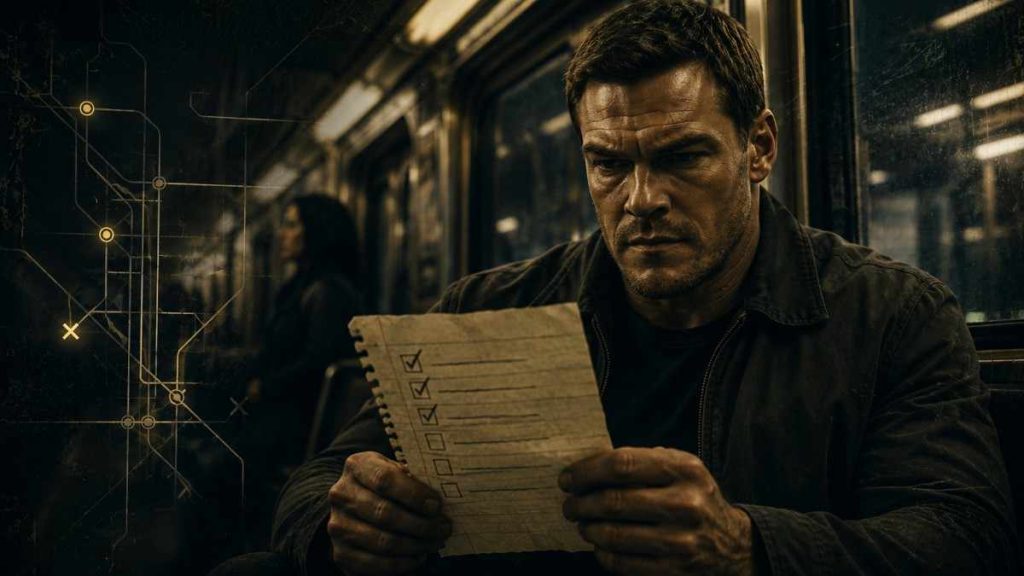
Reacher’s military and law enforcement background trained him to recognize a specific set of physical and behavioral tells associated with someone about to detonate a device, and the show has him mentally run through that checklist in real time as he watches her. This is the answer to the “why did Reacher get involved” question that keeps showing up in search results and Reddit threads.
A behavioral checklist, in this context, is a set of observable physical and situational cues that trained security professionals use to flag a person as a potential threat before anything happens. Reacher applies this like a diagnostic, not a hunch, which is part of what makes the character work as a former military police officer rather than a generic tough guy.
This checklist is lifted almost directly from “Gone Tomorrow,” where Reacher’s internal monologue walks the reader through the same reasoning in real time. The show cannot narrate a first-person book voice the same way a novel can, so it has to communicate that internal process visually instead of through voiceover, which is one of the trickiest adaptation problems this kind of scene creates.
| Behavioral Sign | What It Signals |
|---|---|
| Sweating or physical distress inconsistent with the temperature | Possible physiological stress response tied to fear or anticipation |
| Avoiding eye contact or fixating on a single point | Attempted disengagement from surroundings, often associated with someone preparing for something |
| Gripping a bag or object tightly and refusing to set it down | Concern over the item’s contents or placement |
| Clothing that seems mismatched for the season or situation | Potential concealment of something under the garment |
Reacher runs through each of these signs almost instantly, and the show trusts the audience to keep up without a diagram on screen. That pacing choice is part of why the scene feels tense rather than clinical, even though the underlying logic is closer to a checklist than a gut feeling.
Gone Tomorrow Subway Scene vs. Reacher Season 4: What Changed?
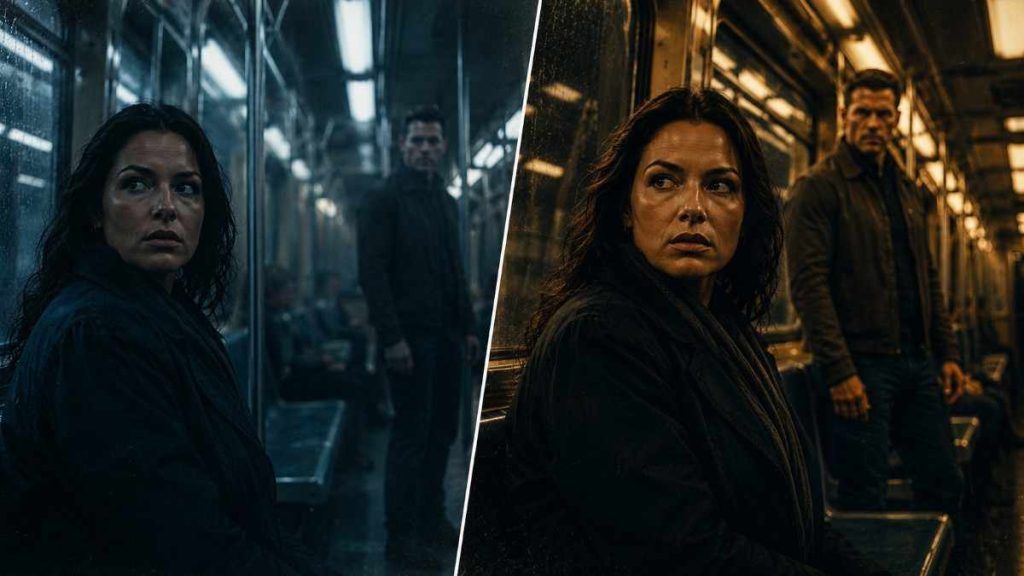
The show’s opening tracks the novel’s opening chapter closely, using the same subway setting, the same late-night timing, and the same behavioral checklist that drives Reacher toward the woman instead of away from her. Where the two versions differ is in how they deliver Reacher’s reasoning, since the book gets to hand the reader his internal monologue directly and the show has to translate that into visible behavior and pacing instead.
| Detail | In the Book (“Gone Tomorrow”) | In Season 4 |
|---|---|---|
| Setting | Late-night New York City subway car | Same setting, same city |
| Reacher’s reasoning | Delivered through first-person internal monologue | Delivered through visual cues and behavior, since TV cannot narrate the same way |
| Outcome | The confrontation ends in the woman’s death | The confrontation ends in the woman’s death |
| Source confirmation | Lee Child has publicly confirmed the season adapts this novel | Confirmed as the 13th novel adaptation ahead of the season’s release |
If you finish this scene and want to know whether the book is worth reading afterward, the honest verdict is that “Gone Tomorrow” rewards readers who want the internal monologue version of this exact sequence, while the show works better for anyone who wants the visual tension without four hundred pages of setup. Neither version is the wrong choice, they just serve different appetites.
Reacher is not the only current show playing this game of tight book fidelity with visible adjustments. Fans tracking Silo’s book-to-show changes have been doing the same kind of side-by-side comparison all season, since adaptation decisions like this one tend to snowball into bigger plot changes later.
Why Does the Subway Scene Matter for the Rest of Reacher Season 4?
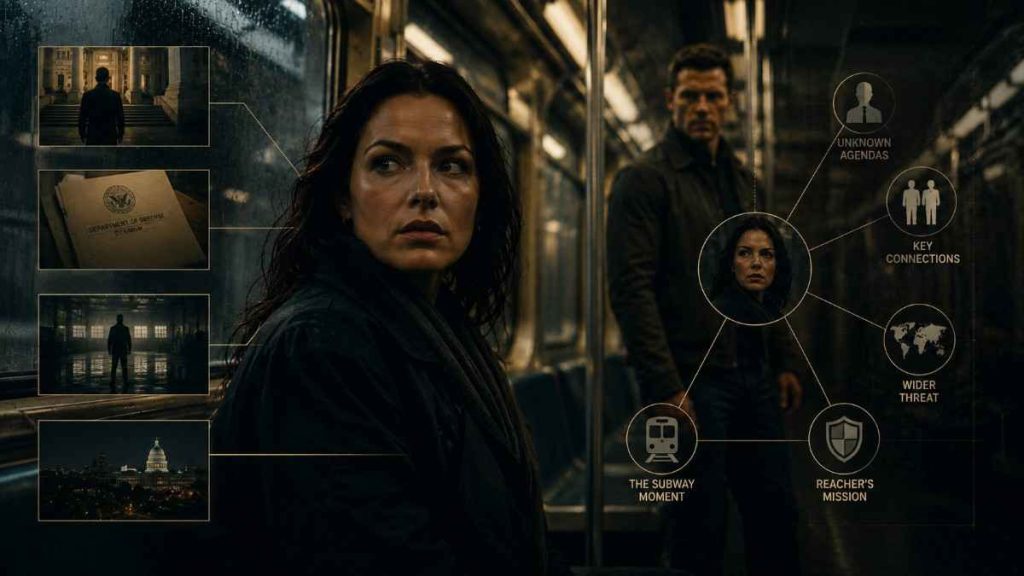
The woman’s death is not a standalone cold open. It is the event that hands Reacher the object, the question, or the loose thread that drives every episode that follows it. Treating this scene as just an action hook misses the entire point of why the show chose to open here instead of somewhere flashier.
What conspiracy does this scene set up
The trailer’s own framing states that her death connects to something larger than a random subway incident, which is about as direct a confirmation as a marketing team gives without spoiling the season outright. Whatever she was carrying or connected to becomes the thing Reacher spends the season chasing down.
What moral question does it raise for Reacher this season
Reacher approached a stranger to try to stop something bad from happening, and it still ended badly. That failure sits with him, and it raises the question of what Reacher owes to a stranger he could not save, a theme that runs through plenty of detective and thriller stories, the kind of moral weight classic mystery adaptations have leaned on for decades when a case gets personal fast.
People Also Ask: Quick Answers About Reacher Season 4’s Opening
Who was the woman on the train in Reacher Season 4?
Her name and full background have not been officially detailed in confirmed marketing materials at the time of this writing. What is confirmed is her narrative function: her death in the opening scene is the event that launches the season’s central conspiracy, and the trailer explicitly frames it as connected to something larger rather than random.
Why did Reacher get involved in the subway scene?
Reacher’s military and law enforcement training taught him to recognize physical and behavioral signs associated with someone preparing to detonate a device. He notices the woman displaying several of those signs and approaches to try to defuse the situation, running through the checklist mentally in real time rather than acting on a vague hunch.
Is the Reacher Season 4 subway scene in the books?
Yes. The scene closely follows the opening chapter of Lee Child’s 13th novel, “Gone Tomorrow,” which the show is adapting for the season. The subway setting, the late-night timing, and the behavioral checklist Reacher uses all come directly from that source material, though the show has to translate Reacher’s internal monologue into visible behavior since television cannot narrate a first-person book voice the same way.
What book is Reacher Season 4 based on?
Reacher Season 4 adapts “Gone Tomorrow,” the 13th novel in Lee Child’s Jack Reacher series. This has been confirmed both by Lee Child directly and by early press coverage of the season ahead of its release, and the subway opening is drawn straight from that book’s first chapter.
Are Reacher and Neagley in a relationship in Season 4?
This has not been confirmed in the sources reviewed for this piece. Any claims about a romantic relationship between the two characters circulating online should be treated as speculation until confirmed through official casting or press materials, since nothing in the verified marketing or book source material addresses it directly.
Watching for how the show handles Reacher’s internal reasoning without a voiceover is worth doing as the season continues, since that translation problem does not go away after episode one. If the subway scene set the tone by trusting visuals over narration, expect the rest of the season to keep testing how much of Reacher’s inner process a television show can show instead of tell.
The real takeaway is that this cold open earns its screen time by doing double duty: it hooks the viewer with tension and immediately plants the conspiracy and the moral dilemma that will follow Reacher through the season. That is a more disciplined piece of writing than “cold open with a death” usually gets credit for. Anyone deciding whether to read “Gone Tomorrow” after watching should know the book offers the same beats with Reacher’s full internal monologue intact, which is the one thing the show cannot fully replicate.