
Lizzie Borden Facts Monster Season 4 Gets Right and Wrong
The show gets the timeline right: Andrew and Abby Borden were killed on August 4, 1892, and Lizzie Borden was acquitted in June 1893 after roughly an hour of jury deliberation. Where the marketing already drifts is in the framing. The reported official synopsis describes Lizzie as someone who “kills her parents,” a phrase no Massachusetts jury ever endorsed.
That distinction matters because it sets the pattern for the entire season. Every fact a court actually established, the date, the deaths, the acquittal, sits in one category. Every fact the show has to invent to make a coherent narrative, motive, private conversation, interior guilt, sits in a completely different one. Keeping those two categories separate is the only honest way to watch this season.

When Does Monster Season 4 Come Out, and What Is It Actually About?
Monster: The Lizzie Borden Story is reported to premiere on Netflix on September 17, 2026, marking the anthology’s fourth installment and its first built around a woman. The season is being billed as the franchise’s oldest case yet, jumping from Jeffrey Dahmer and the Menendez brothers back to an 1892 courtroom in Massachusetts.
That jump matters more than it sounds. Every prior Monster season had a confession, a conviction, or overwhelming physical evidence to anchor the story. This one has an acquittal, which means the show is choosing its title for a woman the justice system never actually labeled a monster.
The reported synopsis already frames Lizzie in language considerably stronger than anything a jury was willing to sign off on. That framing is worth sitting with, because it previews exactly how far the show is willing to lean past the record before episode one even airs. It is also a preview of how quickly true crime cases resurfacing online tend to get simplified into a cleaner story than the record supports.

Who Was Lizzie Borden, and Why Does Her Name Still Show Up in Playground Rhymes?
Lizzie Borden was a 32-year-old unmarried woman living with her father and stepmother in Fall River, Massachusetts, in a household that outside observers described as tense and financially strained. She became a household name only after the murders and the trial that followed, not for anything she did before that summer.
Her name survives today mostly through a rhyme children have been chanting for generations, long after most of them forgot, or never learned, that she was found not guilty. That disconnect is part of why the case still generates search traffic more than a century later. People remember the punchline of the rhyme and assume the ending of the story matches it, when it does not.
The rhyme is folklore, not a verdict. It was written and circulated after the trial, as a piece of tabloid-era true crime culture, and it has never been treated as evidence by a court or a serious researcher.

What Actually Happened on August 4, 1892?
Andrew Borden and his second wife, Abby Borden, were both killed by axe blows inside their Fall River home on the morning of August 4, 1892. Lizzie Borden was in or around the house at the time and became the primary suspect almost immediately, in large part because no one else was placed at the scene.
Abby was killed first, in an upstairs guest room, and Andrew was killed roughly ninety minutes later on a downstairs sitting room sofa, based on the timeline investigators reconstructed from witness accounts and the condition of the bodies. No weapon was ever definitively matched to the crime, and no forced entry was found, which is part of why suspicion turned inward on the household rather than outward toward a stranger.
Those two details, no confirmed weapon and no forced entry, are the load-bearing facts of the entire case. Everything the prosecution argued and everything the defense countered had to work around them.
Was Lizzie Borden Convicted of Murdering Her Father and Stepmother?
No. Lizzie Borden was tried in June 1893 and acquitted after the jury deliberated for a little over an hour, a remarkably fast verdict for a capital case that drew national newspaper coverage. The court record shows a full trial happened, evidence was presented, and a jury of her peers found the prosecution’s case insufficient.
That acquittal is the single fact most casual true crime fans get wrong, and it is the one Monster has to reckon with in its marketing before the first episode even streams. The gap between the loudest cultural version of a case and its actual legal outcome shows up constantly in 2026 celebrity feuds ranked coverage too, where public perception and documented fact drift apart just as fast.
The case was never reopened, no one else was ever charged, and it remains officially unsolved by any court’s determination. That is a different status than “guilty,” no matter how the rhyme, or a Netflix logline, chooses to phrase it.
Why Was Lizzie Borden Acquitted Despite the Public Assuming She Did It?
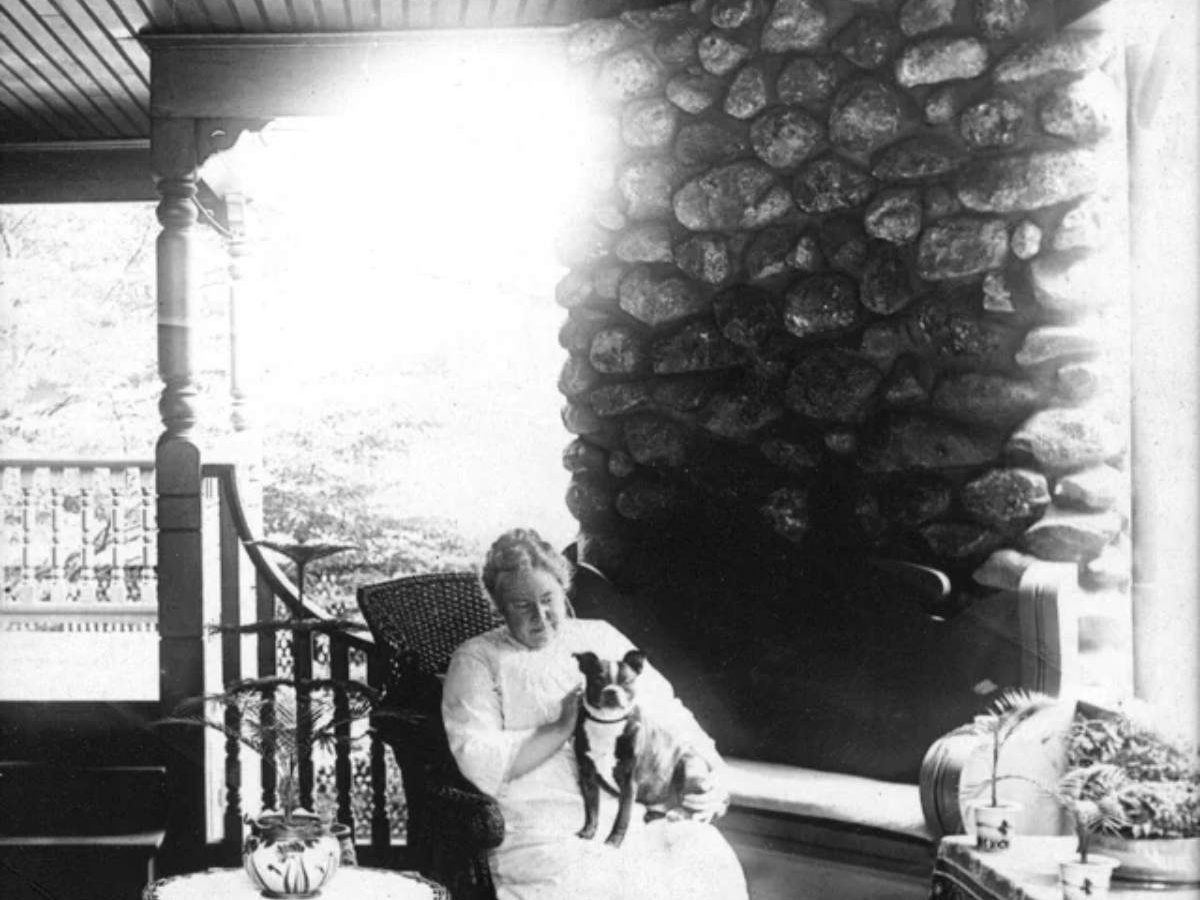
The jury acquitted Borden largely because the prosecution’s physical evidence never conclusively placed the axe, or any weapon, in her hands, and the era’s courtroom norms worked heavily in her favor. Victorian-era juries were culturally resistant to convicting a respectable, church-going woman of an act as violent as axe murder, and defense attorneys leaned hard into that resistance.
The defense also successfully argued that Borden’s blood-free clothing and lack of visible injury made the timeline the prosecution proposed physically implausible. A burned dress Borden claimed she destroyed for unrelated reasons became a major point of suspicion, but suspicion is not evidence, and the jury treated it that way.
None of this proves innocence. It proves the state’s burden was not met, which is a legal outcome, not a moral one. That distinction is the entire reason the case still gets argued about more than 130 years later, and it is the same distinction a Netflix logline has no obligation to preserve.

Does the “40 Whacks” Rhyme Match the Autopsy Record?
No. The rhyme claims Lizzie Borden gave her mother forty whacks and her father forty one, but the actual autopsy findings describe a far smaller number of blows to each victim than the rhyme suggests. The exaggerated count was almost certainly invented for rhythm and shock value once the case became tabloid fodder, not pulled from any coroner’s report.
This is the clearest example in the entire case of folklore outrunning fact, and it has shaped public assumption more than the trial transcript ever did. Most people who can recite the rhyme from memory have never read a single line of the actual court record.
A rhyme is not a source, and repetition is not verification. That single confusion is responsible for more people assuming Borden’s guilt than any piece of actual trial evidence.
Who Is Playing Lizzie Borden in Monster Season 4, and Who Else Is Cast?
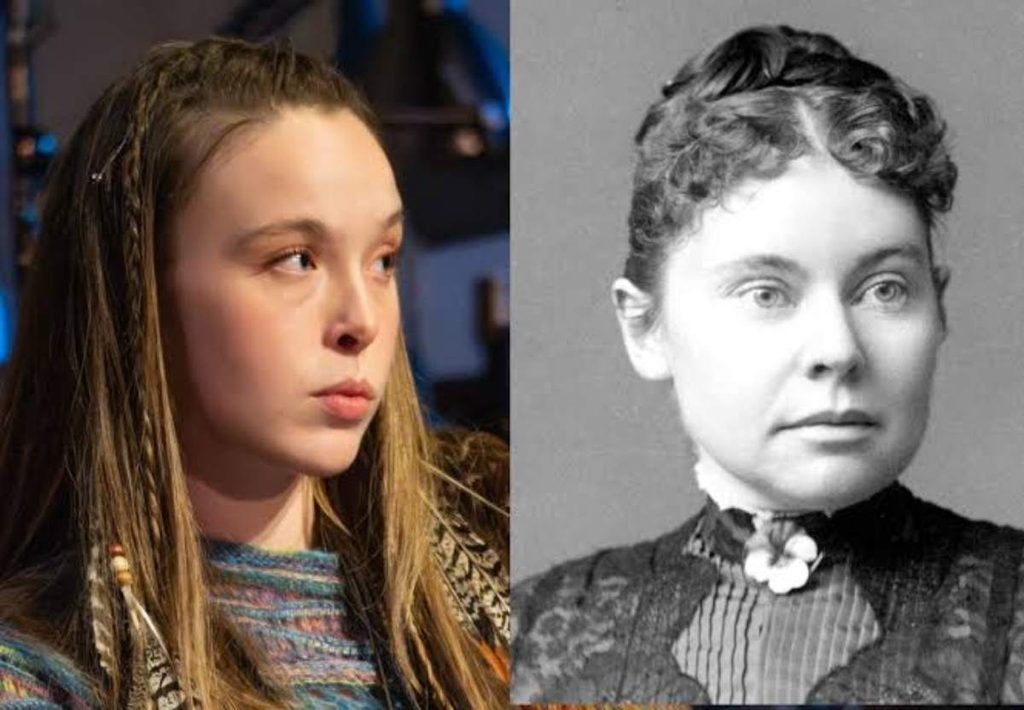
Ella Beatty is reported to star as Lizzie Borden, with a supporting cast that reportedly includes Rebecca Hall, Vicky Krieps, Charlie Hunnam, Billie Lourd, and Jessica Barden playing other figures connected to the case. That is a notably stacked lineup for a season built around a case with no confession and no conviction to dramatize toward.
The following table lays out the reported cast alongside their reported roles, based on the season’s marketing rollout.
| Actor | Reported Role |
|---|---|
| Ella Beatty | Lizzie Borden |
| Rebecca Hall | TBD (reported principal role) |
| Vicky Krieps | TBD (reported principal role) |
| Charlie Hunnam | TBD (reported principal role) |
| Billie Lourd | TBD (reported principal role) |
| Jessica Barden | TBD (reported principal role) |
A cast this deep signals the show intends to spend real screen time on the household dynamics around the Borden family, not just the murders themselves. That approach only works if the writers are willing to sit inside genuine ambiguity, rather than quietly picking a side and letting the performances sell it as fact.
Has Netflix’s Monster Anthology Sided With a Killer Before?
Yes, in a sense. The franchise’s Ed Gein Story season drew notable backlash for moments that felt like they were building sympathy for a man convicted of extreme violence, and that reaction is a useful preview of the tightrope Season 4 is about to walk. Viewers pushed back hard when a Monster season seemed to soften a subject the record treats as clearly guilty.
Lizzie Borden inverts that entire problem. Instead of managing sympathy for someone the record says did it, the show has to manage a title, Monster, that presumes guilt for someone the record says did not. If the Ed Gein backlash proved anything, it is that audiences notice when a dramatization leans harder than the facts support, in either direction.
That makes Season 4 a genuinely different kind of test for the franchise, and one worth watching against how cold cases solved in 2026 get covered, where new evidence actually closes the gap between rumor and record instead of widening it.
What Parts of Monster Season 4 Will Have to Be Invented, Since the Case Was Never Solved?
The show will have to invent motive, private conversations, and an interpretation of Lizzie’s guilt or innocence, because none of those things exist in the historical record. A jury’s verdict tells you what was legally proven. It does not tell you what happened behind closed doors in that Fall River house, and no surviving document does either.
Writers on true crime adaptations routinely fill those gaps with dramatized scenes presented as plausible reconstruction, and Monster has done this in every prior season. The difference here is that Lizzie Borden’s case has no confession, no forensic breakthrough, and no modern DNA re-examination to lean on, unlike several cases that recently got genuinely new answers.
Any scene depicting Lizzie actually swinging the axe is, by definition, fiction layered onto a case a court declined to resolve that way. Viewers should watch those scenes as dramatic interpretation, not as a corrected historical record.
Did Anyone Else Get Charged in the Borden Murders?
No. No other suspect was ever formally charged in the deaths of Andrew and Abby Borden, despite investigators floating alternate theories involving a hired hand, a disgruntled relative, and an unknown intruder. Each alternate theory drew public attention at various points but never produced enough evidence for prosecutors to act on.
| Alternate Theory | Status |
|---|---|
| Bridget Sullivan (the family’s maid) | Investigated, never charged |
| William Borden (rumored illegitimate son of Andrew) | Speculative, never charged |
| Unknown intruder | Theorized, no suspect identified |
| Lizzie Borden | Tried, acquitted |
That table is the entire case in one glance. One person went to trial, and the trial ended in acquittal. Everyone else stayed a theory, which is exactly the kind of unresolved gap true crime storytelling tends to fill with confidence the actual record never earned.
Why Does the Case Still Draw This Much Attention More Than a Century Later?
Part of the answer is the rhyme, which keeps the name circulating long after the legal outcome faded from common knowledge. Part of it is the household itself, a wealthy, church-going New England family with a stepmother, a strained inheritance, and no outside intruder ever placed at the scene. That combination reads like fiction even though every piece of it is documented fact.
The other part of the answer is timing. A case this old, this well-documented, and this legally unresolved is close to perfect material for a streaming series, because the historical record supplies real dates, real testimony, and real physical evidence, while the unresolved verdict supplies exactly the ambiguity a writer needs to build tension. Monster did not create that tension. It is simply the latest production to inherit it.

Frequently Asked Questions
Did Lizzie Borden actually kill her parents?
No court ever found her guilty. She was tried in 1893 and acquitted by a jury after roughly an hour of deliberation, and no one else was ever charged in the murders. The honest answer is that the case remains legally unsolved, regardless of what popular culture assumes.
Is the “forty whacks” rhyme historically accurate?
No. The rhyme’s count of forty and forty one blows does not match the actual autopsy findings, which describe considerably fewer wounds. The rhyme was almost certainly written for shock and rhythm after the trial became a media sensation, not pulled from any medical record.
When does Monster Season 4 come out on Netflix?
Monster: The Lizzie Borden Story is reported to premiere on Netflix on September 17, 2026. It is the fourth installment of the Monster anthology and the first to center on a female subject, with Ella Beatty reportedly starring as Lizzie Borden.
Why is Netflix calling a woman who was acquitted a “monster”?
The franchise’s title format is a branding choice, not a legal statement, and it has drawn criticism for exactly that reason with Lizzie Borden’s case. Because she was never convicted, any framing that presumes her guilt goes beyond what the historical record actually supports.
Who plays Lizzie Borden in the Netflix series?
Ella Beatty is reported to play Lizzie Borden, joined by a reported supporting cast that includes Rebecca Hall, Vicky Krieps, Charlie Hunnam, Billie Lourd, and Jessica Barden. Full role breakdowns have not been officially confirmed at the time of this writing.
Was anyone else ever suspected in the Borden murders?
Yes. Investigators looked at the family’s maid, a rumored illegitimate relative, and the possibility of an unknown intruder, but none of these theories produced enough evidence for formal charges. Lizzie Borden remains the only person ever tried in connection with the case.
The single fact worth carrying out of this entire case is that a jury looked at the evidence and said not proven, and that verdict has never been overturned, revisited, or contradicted by anyone else’s conviction. Every dramatized version of this story, including the one about to stream on Netflix, has to build its narrative on top of that gap rather than around it.
Watch Monster Season 4 with that gap in mind, and notice every scene that shows something no witness, document, or juror ever actually confirmed. That is the moment the show stops being history and starts being a screenwriter’s best guess, which is a perfectly fine thing for entertainment to be, as long as viewers know the difference.