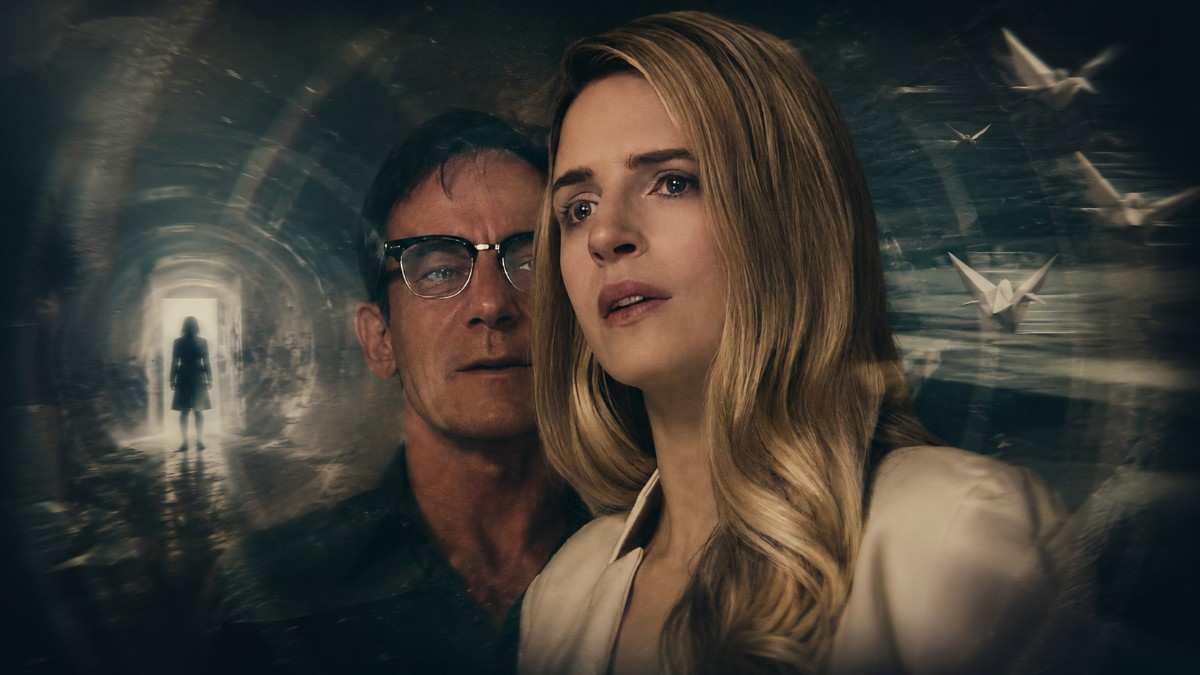
Jason Isaacs Just Made a Public Promise About The OA, and He Knows the Whole Plan
Jason Isaacs knows things. That is the first thing to understand here. He was told the full Season 3 plot by Marling and Batmanglij, a fact he confirmed in interviews, and he has described what he heard as escalating “well beyond” what Part 2 attempted. The cliffhanger was already among the most formally ambitious things premium television had produced. Whatever comes after it was apparently more so. The OA ran for two seasons before cancellation, out of a five-season story Marling and Batmanglij had planned from the start.
At Fan Expo Denver in 2025, Isaacs stood in front of a room full of fans and said, on the record, that the story of The OA will be finished “somehow.” That word choice is doing real work. Isaacs is not someone who throws fans empty comfort on this topic. He has been careful and consistent across years of convention appearances and interviews, which makes the directness of that 2025 statement worth paying attention to.
In a Vice interview from the post-cancellation period, he described the Season 3 plan as “wilder than the cliffhanger,” then stopped himself before saying more. That restraint is telling. He knows the plan well enough to be excited by it, and he knows the creative team has asked the cast not to spoil a story they still intend to tell.
Marling and Batmanglij have used softer language. The “dormant seeds” framing, which Marling offered in a 2024 context, describes something alive but not yet growing. It is a careful metaphor from someone who understands that what she says publicly affects what she can do professionally.
The fact that Isaacs is still making public statements six years after cancellation is not fan service alone. It is a signal that the people who built this show have not moved on from it in any meaningful sense.
The Season 2 Cliffhanger, Explained for People Who Need a Refresher
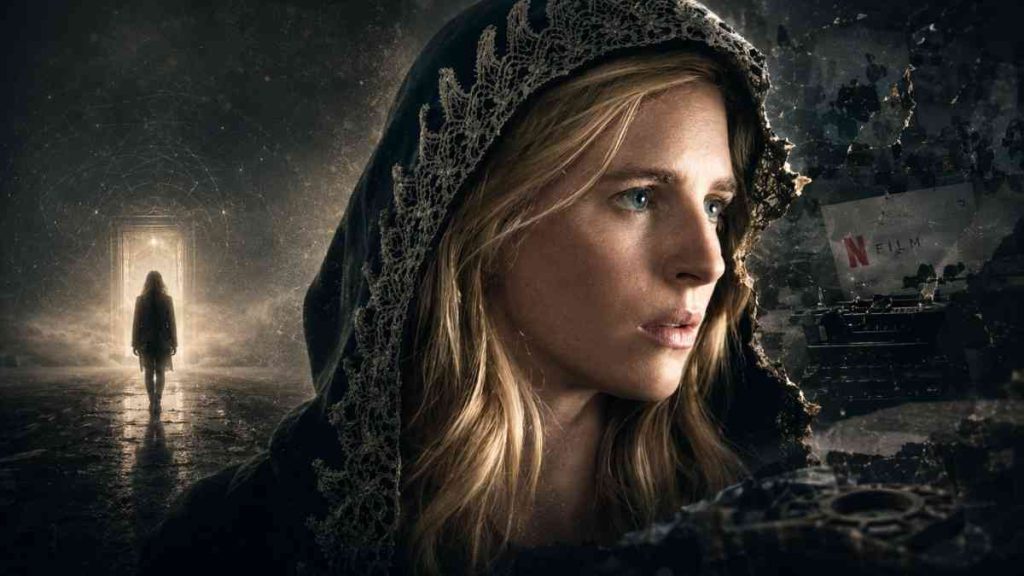
The Season 2 finale ends with OA and Hap completing the five movements. They jump. The dimension they land in is not another reality in the usual interdimensional sense. It is a film set. A Netflix show called “The OA” is being filmed there. The actress playing OA is named Brit Marling. The actor playing Hap is named Jason Isaacs.
OA, now standing inside this dimension, appears to recognize herself as a character in a fiction. Hap, now inhabiting the body of Isaacs, appears disoriented but present. The implication is significant: there is a layer of reality above all the ones the show has explored, an authorial level. OA may be ascending toward it. The “OA” acronym, which fans had long debated, suddenly gains a new possible meaning: Original Author. The show was arguably building toward a story about authorship, creation, and whether a character can achieve agency over her own narrative.
The blue shirt detail is worth noting here. Isaacs wore the same blue shirt from the Season 2 finale set in real-life interviews after the season aired. Fans noticed immediately. The debates about whether this was intentional ran for months across Reddit threads and fan forums. Isaacs has never confirmed or denied it was a deliberate choice, which is the only answer that keeps the meta-fiction layer intact.
The logical endpoint of the show’s internal architecture is genuinely strange. If our dimension is one of the layers the show was building toward, and the show posits that its characters can move between dimensions, then Netflix cancelling The OA in our dimension is, within the show’s own logic, a plot event. Many fans made this argument immediately after the cancellation announcement. Marling has never dismissed it.
The OA’s cliffhanger sits in similar territory to shows like Mindhunter’s unresolved finale, where Netflix pulled the plug on a critically adored series before the creators could close their story. The difference is that The OA’s final scene made the cancellation philosophically ambiguous in a way Mindhunter’s never could.
What Season 3 Was Actually Going to Be About
Season 3 was going to live inside the meta-dimension, not pass through it quickly. That is the key detail.
The Meta-Dimension Was the Setting, Not Just the Cliffhanger
The Season 2 finale did not end on the meta-dimension reveal as a teaser for a quick resolution. It ended there because Season 3 was designed to be set there. OA and Hap were going to exist in a world where they are explicitly fictional, where the rules of their reality are written by human beings, and where the mechanisms of storytelling are themselves part of the plot.
The “Original Author” reading of the OA acronym points toward this. If the show’s full title is a character description, then OA’s arc across all five seasons was always about becoming the author of her own story rather than a character in someone else’s. Season 3 was the season where that theme would stop being subtext and become the literal plot.
Isaacs has confirmed he knows the full Season 3 story and called it more ambitious than what viewers saw in Part 2. He has not disclosed specifics, which is informative on its own. The creative team has clearly communicated that this story is not dead, and releasing details would functionally kill it.
Why Marling and Batmanglij Won’t Release the Plan
The silence is not grief. It is strategy, and it is the correct strategy.
If Marling and Batmanglij released a complete Season 3 breakdown, no platform would greenlight a project whose story is already public knowledge. The property would shift from an unfinished mystery to a documented outline, and the creative and commercial case for revival would collapse.
The comparison to Firefly is instructive. Joss Whedon and various cast members eventually released details about planned storylines, including what would have happened with Shepherd Book’s backstory and the longer River arc. That information gave fans some closure. It also ended the revival conversation in any serious form. The OA team is watching that and making a different choice.
The deliberate silence keeps the property alive as a mystery. It preserves optionality. Every interview where Isaacs says “wilder than the cliffhanger” without elaborating is doing more work for a potential revival than a full plot release would. The show that no one knows the ending of is more valuable to a platform than the show whose ending is already on a Reddit thread.
The Five-Season Plan: This Was Always Supposed to Be One Long Story
Marling and Batmanglij had the full five-season arc mapped before Season 1 aired. This is not revisionist hindsight. They have said so directly in multiple interviews across different years, which rules out the possibility that the five-season claim was a post-hoc narrative constructed after the show became a hit.
One of the more striking structural revelations: certain scenes in Part 2 were written originally for Season 5. The architecture was not linear. They were seeding endgame material years in advance, which means attentive viewers watching Part 2 were seeing pieces of a final season without any way to recognize them as such.
This explains why Part 2 felt like such a significant tonal and formal departure from Part 1. Many critics read that departure as instability or pivot. It was neither. Each season was designed to function as a distinct genre while serving the same underlying structure. Part 1 was intimate and confessional. Part 2 was noir and pulp and philosophical in a different register. Seasons 3, 4, and 5 were presumably going to keep ascending in formal ambition, possibly reaching levels of reality that include the audience directly.
The show was built to end somewhere most television has never attempted. The cancellation did not cut a show that was still finding itself. It cut a show that knew exactly where it was going.
Why Netflix Cancelled The OA in 2019, and Why the Timing Was Particularly Bad
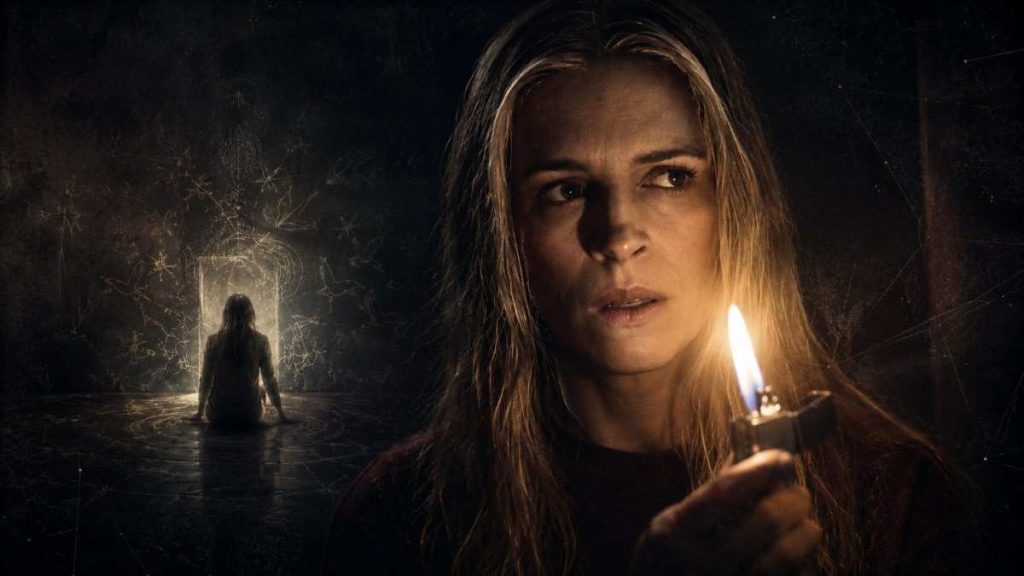
Netflix cancelled The OA on August 5, 2019, alongside several other critically respected but mid-sized-audience series in the same cycle, including Tuca & Bertie and Chambers. The pattern was clear: Netflix was tightening its portfolio around shows with broader completion rates and pulling back from prestige-but-niche properties that cost significant money to produce.
The OA was not cheap. Its visual ambitions, the interdimensional set design, the production scope of Part 2, and the creative demands of Marling and Batmanglij’s process all contributed to a production budget that the completion-rate viewership did not straightforwardly justify by Netflix’s metrics. Reed Hastings addressed the broader strategic logic in earnings calls during this period without naming specific titles. The OA fit the profile of the casualty.
The full story of that decision, including what Netflix’s own executives said afterward and why the fan campaign couldn’t change it, is covered in Why Netflix Cancelled The OA.”
Netflix Offered Them a Movie, They Said No, and That Was the Right Call
After the cancellation, Netflix offered Marling and Batmanglij a single feature film to conclude the remaining story. The offer was a compression: take Seasons 3, 4, and 5 and fit them into approximately two hours.
They declined. The reason is structural. The OA’s architecture requires time not because Marling and Batmanglij are slow storytellers, but because each season is designed to function as a distinct layer of reality. The interdimensional travel mechanics are not just plot devices; they are the formal logic of the show. A film would require collapsing multiple dimensional layers into a single narrative plane, which would produce something unrecognizable as the show fans were promised.
The Deadwood comparison is worth making here. HBO offered David Milch a film to close Deadwood, and he accepted. The resulting movie is good. It is also clearly compressed in ways that longtime viewers can feel throughout. Characters who needed space get moments. Storylines that needed seasons get scenes. The film satisfies in the way a summary satisfies. The OA team saw that outcome and judged it insufficient.
The refusal also communicates something about confidence. A creative team uncertain about their remaining material might take a film deal. A team that knows exactly what they built and what its requirements are does not trade down.
Can The OA Actually Come Back? The Honest Answer
The honest answer is: it is possible but unlikely, and the reason has nothing to do with streaming economics or whether Isaacs is available.
The Real Obstacle Is Rights, Not Interest
Marling and Batmanglij do not own The OA. Netflix does. This is the detail that most revival conversations skip past or understate. The creative team can express every degree of willingness imaginable, Isaacs can make public promises at every fan convention in the country, and none of it moves the property forward without Netflix choosing to act on its own asset.
Netflix would need to decide that the cost of production is justified by projected viewership in a 2026 streaming environment that looks nothing like 2019. The streaming economics argument actually runs slightly more favorably now than it did at cancellation: the prestige-niche market has proven more commercially resilient than Netflix’s 2019 metrics anticipated, and the platform has reversed several high-profile cancellations in response to sustained fan pressure and library value. Still, none of those reversals involved a property this far past its original run.
What a Realistic Revival Path Looks Like
The most plausible scenario is not Netflix greenlighting Season 3 unprompted. The most plausible scenario involves a triggering event that changes the calculus: a large catalog viewership spike, a viral cultural moment, a co-production offer from another platform willing to share rights, or a format negotiation where Marling and Batmanglij agree to a structure that fits Netflix’s current budget appetite.
The Twin Peaks comparison is emotionally satisfying and structurally relevant. David Lynch and Mark Frost revived Twin Peaks on Showtime twenty-five years after cancellation, with a Season 3 that was arguably more formally ambitious than the original series. The conditions that made that possible were specific: both Lynch and Frost retained significant creative leverage, Showtime was willing to fund a prestige project that served the platform’s brand, and the cultural appetite for the revival had been building for decades. The OA has a version of most those conditions, except the rights structure. That gap is the honest obstacle.
Until Netflix either sells the rights, co-licenses them, or chooses to fund the revival internally, the property stays dormant regardless of how committed the cast and creators remain.
The fan campaign is still active. The creative team is still talking. Isaacs is still making public promises. None of that is nothing. Jericho was cancelled in 2007 and reversed in 2008 after a fan campaign sent CBS more than 40,000 pounds of peanuts in a coordinated protest. Lucifer moved from Fox to Netflix and ran for three additional seasons after cancellation. These precedents exist. They are not miracles. They are the result of sustained pressure meeting a moment where a platform’s interests aligned. The OA’s version of that alignment has not arrived yet. Whether it does depends almost entirely on what Netflix decides to do with an asset it owns and has not used in six years.
FAQ
What was The OA Season 3 going to be about?
Season 3 was going to be set in the meta-dimension introduced at the end of Part 2, where OA and Hap exist as characters in a Netflix show called “The OA.” Rather than passing through this dimension quickly, the season was designed to live inside it, exploring what it means for a character to be aware of her own fictionality. Isaacs has confirmed he knows the full Season 3 plan and described it as more ambitious than Part 2. The creative team has not publicly released plot specifics, which appears to be a deliberate strategy to preserve revival viability.
Does The OA Season 3 have a release date?
No. There is no confirmed release date for The OA Season 3, because no platform has greenlit it. Netflix has not reopened the project, and neither Marling nor Batmanglij has announced a deal elsewhere. Any date circulating online is speculation, not an official announcement.
Season 3 was going to be set in the meta-dimension introduced at the end of Part 2, where OA and Hap exist as characters in a Netflix show called “The OA.” Rather than passing through this dimension quickly, the season was designed to live inside it, exploring what it means for a character to be aware of her own fictionality. Isaacs has confirmed he knows the full Season 3 plan and described it as more ambitious than Part 2. The creative team has not publicly released plot specifics, which appears to be a deliberate strategy to preserve revival viability.
Does The OA Season 3 have a release date?
No. There is no confirmed release date for The OA Season 3, because no platform has greenlit it. Netflix has not reopened the project, and neither Marling nor Batmanglij has announced a deal elsewhere. Any date circulating online is speculation, not an official announcement.
Season 3 was going to be set in the meta-dimension introduced at the end of Part 2, where OA and Hap exist as characters in a Netflix show called “The OA.” Rather than passing through this dimension quickly, the season was designed to live inside it, exploring what it means for a character to be aware of her own fictionality. Isaacs has confirmed he knows the full Season 3 plan and described it as more ambitious than Part 2. The creative team has not publicly released plot specifics, which appears to be a deliberate strategy to preserve revival viability.
Does The OA Season 3 have a release date?
No. There is no confirmed release date for The OA Season 3, because no platform has greenlit it. Netflix has not reopened the project, and neither Marling nor Batmanglij has announced a deal elsewhere. Any date circulating online is speculation, not an official announcement.
Season 3 was going to be set in the meta-dimension introduced at the end of Part 2, where OA and Hap exist as characters in a Netflix show called “The OA.” Rather than passing through this dimension quickly, the season was designed to live inside it, exploring what it means for a character to be aware of her own fictionality. Isaacs has confirmed he knows the full Season 3 plan and described it as more ambitious than Part 2. The creative team has not publicly released plot specifics, which appears to be a deliberate strategy to preserve revival viability.
Does The OA Season 3 have a release date?
No. There is no confirmed release date for The OA Season 3, because no platform has greenlit it. Netflix has not reopened the project, and neither Marling nor Batmanglij has announced a deal elsewhere. Any date circulating online is speculation, not an official announcement.
Is there an episode list for The OA Season 3?
No. Season 3 was never filmed, so there is no episode count, episode 1, or episode guide to reference. Everything known about it comes from creator and cast interviews, not produced footage.
Why did Netflix cancel The OA if it had such a devoted fanbase?
Netflix’s cancellation decision in August 2019 came down to completion-rate viewership relative to production cost. The OA was expensive to make. Its audience was devoted but not broad by Netflix’s metrics. The platform was cutting mid-tier prestige shows in this period in favor of content with wider appeal. The devoted fanbase was visible and vocal, but Netflix’s internal numbers pointed in the other direction. The timing was unusually tight: Part 2 aired in March 2019, and cancellation came just five months later.
Why did Brit Marling and Zal Batmanglij refuse the Netflix movie offer?
They declined because compressing three seasons into a two-hour film would have required destroying the show’s interdimensional architecture. Each season of The OA was designed to function as a distinct layer of reality. Collapsing those layers into a single film would produce something structurally incompatible with what the show was built to be. The refusal signals that they have confidence in what the remaining seasons are supposed to be, and they are unwilling to trade a lesser version of the story for the certainty of closure.
Who owns the rights to The OA, and does that affect revival chances?
Netflix owns the rights to The OA. Marling and Batmanglij do not. This is the primary obstacle to revival. The creative team’s enthusiasm, the cast’s availability, and the fan demand are all secondary to whether Netflix decides to use an asset it has held dormant since 2019. A revival cannot happen through a competing platform without a rights deal, and Marling and Batmanglij cannot independently produce new episodes regardless of their willingness to do so.
Is the cancellation of The OA actually part of the show’s plot?
Within the show’s internal logic, it could be. The Season 2 finale places OA in a dimension where she exists as a character in a Netflix show called “The OA,” implying that our dimension is one of the layers in the show’s cosmology. If that reading holds, Netflix executives cancelling The OA in our reality are, by the show’s own rules, characters making a decision inside the fiction. Marling has never directly dismissed this interpretation. Whether the creators intended it or the audience constructed it, the ambiguity is real, and the show’s architecture makes it genuinely unresolvable.
What did Jason Isaacs say about The OA at Fan Expo Denver 2025?
At Fan Expo Denver in 2025, Isaacs told fans that the story of The OA will be finished “somehow.” He made the statement publicly and on the record. This is consistent with his pattern across years of convention appearances: more direct than Marling’s “dormant seeds” framing, more committed than standard fan-service remarks from cast members of cancelled shows. Isaacs has previously said that what he heard about Season 3 was “wilder than the cliffhanger,” which he described as among the most ambitious things he had encountered in television.
Could The OA come back on a different streaming platform?
It is theoretically possible but would require a rights deal with Netflix, which owns the property. There is no public indication that Netflix has entertained selling or co-licensing the rights. Lucifer’s move from Fox to Netflix is the closest precedent in structure: a cancelled show finding new life on a competing platform after a rights negotiation. That deal worked because both parties saw benefit in it. For The OA, the question is whether any platform would offer terms compelling enough for Netflix to share or sell a property it has held without using for six years.
What would it actually take for The OA to get a Season 3?
A realistic revival path requires at least one of the following: a large spike in library viewership that changes Netflix’s internal calculus on the property’s value, a co-production offer from another platform willing to share costs and rights, or a format negotiation where Marling and Batmanglij agree to a structure Netflix’s current budget appetite can accommodate. A sustained fan campaign matters only if it coincides with one of those triggering conditions. The creative team is willing, the cast is available, and Isaacs is actively vocal. The variable is Netflix.
What Six Years of Waiting Has Actually Revealed
The most important insight from everything above is not about the plot of Season 3. It is about the structure of the silence around it. Marling and Batmanglij have not talked about Season 3 in detail because talking about it would end it. The less the public knows, the more the property retains its value as an unfinished mystery. Every “dormant seeds” quote, every Isaacs convention appearance, every carefully noncommittal answer in a press interview is the creative team doing the only thing they can do with an asset they do not own: keeping it alive in the cultural imagination while waiting for the rights holder to move.
If you want to do something useful with that information, the action is straightforward. The fan campaign community is still active, the petition infrastructure still exists, and the most effective advocacy in cases like this has always been viewership. Rewatching both parts of The OA on Netflix, and getting other people to do the same, is the mechanism that changes the library metric that changes Netflix’s internal calculus. It is not glamorous. It is how Jericho got a second season.
The show that ends with OA recognizing herself as a character in a fiction, written by authors who exist in a layer of reality above her own, is now itself a character in a story whose authors have not yet decided to write the next chapter. Whether they do is genuinely unknown. What is known is that the people who built it have not stopped believing it should exist.