

The Preachiness You Braced For Mostly Doesn’t Show Up
Most vegans in long-term relationships bring up veganism far less than their non-vegan partners expected.
The “preachy vegan” archetype that lives rent-free in everyone’s head is a real phenomenon, but it’s concentrated almost entirely in two places: the internet and people who went vegan last month. In actual day-to-day relationships, the topic surfaces when logistics require it, like choosing where to eat or checking a menu, and otherwise stays quiet.
The Vegan Society has noted in their relationship-focused resources that many long-term vegans actively choose not to lead with their ethics in new relationships because they’ve learned it creates friction before trust is built. They’ve been through enough reactions to know that the conversation lands differently once someone knows them as a person first.
People who’ve been vegan for five-plus years tend to have made a pragmatic peace with living in a non-vegan world. They’re not constantly narrating it. The ones who are vocal are almost always recent converts, still in the phase where the information feels urgent and brand new, like someone who just discovered a documentary they can’t stop referencing.
If your first date involved a ten-minute monologue about factory farming, that’s information about that specific person, not about vegans as a category. Think of it the way you’d think about any other personality variable.

The Cooking Gets Surprisingly Good
Vegan partners who’ve been doing this for more than a year have typically become genuinely skilled cooks, and their non-vegan partners benefit from this constantly.
The reason is simple: eating out as a vegan is harder, more limited, and more expensive than eating at home. So vegans cook. A lot. And because plant-based cooking without meat as a crutch requires actual technique, they develop it. More spices. More layered flavors. More attention to texture. The kind of cooking where you actually taste each component instead of everything tasting like whatever protein is in the center of the plate.
What Non-Vegan Partners Actually Notice
- Meals at home become more varied. Ethiopian lentil dishes. South Indian coconut curries. Lebanese mezze. Cuisines with deep vegan traditions that many non-vegans have never explored.
- Processed food consumption tends to drop. Not by design, not from pressure, but because the household baseline shifts when one person cooks from scratch regularly.
- The ingredient knowledge alone is an education. You learn what nutritional yeast actually does to a sauce. You discover that cashews blended with lemon and garlic make something that genuinely resembles parmesan.
The one negotiation that comes up: if you’re also a serious cook and your cooking is meat-heavy, sharing a kitchen requires some early conversation. Two strong cooking identities in one kitchen need a little choreography. That’s true of any couple with real culinary opinions, vegan dynamics or not.
Going Out to Eat Is Less Complicated Than It Was Five Years Ago
The restaurant problem is real, but it’s much more manageable in 2025 than the stereotype assumes.
A report from the Good Food Institute tracking plant-based menu availability found that plant-based options appeared at well over 60% of U.S. full-service restaurants by the early 2020s, compared to roughly a quarter of them in 2018. That’s a meaningful shift. Major chains from Olive Garden to Cheesecake Factory now have dedicated vegan sections or clearly marked plant-based dishes. Even fast food, for better or worse, has gotten into it.
Where It Still Gets Complicated
- Local diners with short, meat-forward menus
- Traditional steakhouses where “sides only” becomes the default move
- Regional BBQ spots where the sides are cooked in animal fat and the kitchen doesn’t know the difference
- Family-style restaurants where nothing is labeled and the server gives you the “I think the pasta is vegetarian?” answer
The practical skill non-vegan partners develop is fast: scan a menu, identify what’s modifiable, ask one question if needed. Most vegans have already done this research before suggesting a place. By the time you’re sitting down, they’ve usually scoped the menu in advance.
Checking a restaurant’s menu online before you leave takes two minutes and eliminates most of the friction. It becomes automatic.
If you want a broader picture of what this actually looks like in practice, the guide on dating a vegan covers the day-to-day logistics in more depth.
They Probably Have Opinions About More Than Just Food
Here’s the one that catches people off guard most consistently: veganism rooted in ethics doesn’t stop at the plate.
You expected the conversation to be about restaurant menus. You didn’t expect to feel mildly self-conscious about the leather jacket you’ve owned for four years. Or to wonder whether the candle you bought has beeswax in it. Or to Google whether a particular brand of cosmetics tests on animals at two in the afternoon on a Wednesday.
Ethics-based veganism is a value system, not just a diet. And value systems are integrated. A person who restructured their entire relationship with food around the idea that animals shouldn’t suffer for human convenience didn’t draw a hard line at dinner and nowhere else. That would be logically inconsistent, and most committed vegans are anything but inconsistent.
Two Types of Vegan Partners (And Why It Matters)
- Ethics-motivated vegans went vegan because of how they think about animals and industry. They’re more likely to care about leather, wool, cruelty-free cosmetics, and brand ethics. They’re also more likely to have strong opinions that extend into other life areas.
- Health-motivated vegans went vegan because of how they feel in their body. Their veganism is a dietary practice, not a worldview. Dating them is a different experience. The lifestyle questions largely don’t come up.
Knowing which one you’re dealing with tells you more about what the relationship will actually involve than any other single variable.
The surprise for most people isn’t that this creates constant conflict. It’s the realization that the person’s values are more coherent and consistent than they assumed, and that consistency can actually be attractive. Someone who lives what they believe is a specific kind of person.

Label-Reading Becomes a Shared Sport
The first time your vegan partner stops in the cereal aisle and reads the back of a box for 45 seconds, it seems a little excessive. By the third month, you’re doing it too.
This is one of the most consistently reported neutral surprises from non-vegan partners, and it’s more interesting than it sounds.
Hidden non-vegan ingredients show up in places that have absolutely no obvious reason to contain animal products. A few that tend to genuinely shock people:
- Gelatin in gummy vitamins and some yogurts
- Casein (a milk protein) in some protein bars that otherwise appear vegan
- Isinglass, a clarifying agent derived from fish bladders, used in certain beers and wines
- L-cysteine, a dough conditioner sometimes made from poultry feathers, in some commercial bread products
- Carmine, a red dye from crushed beetles, in certain red-colored candies and juices
None of this requires you to care about veganism to find it interesting or slightly alarming. Most non-vegan partners describe the label-reading habit as genuinely educational. You learn more about how processed food is made from three months of grocery shopping with a vegan than you would from reading most food journalism.
There’s also something a little funny about the moment you discover your favorite chips contain milk powder and feel briefly betrayed by a snack food. That moment arrives for almost everyone.

The “Kissed After Eating Meat” Situation Is Real — But Rarer Than You Think
Yes, this is a real thing. No, it’s not universal. The actual range of how vegans feel about this is much wider than the viral posts suggest.
The concern surfaces regularly in online vegan spaces, but the community is genuinely split. Roughly half of vegans say it doesn’t bother them at all. A meaningful minority say they prefer their partner to have brushed their teeth or waited a little while after eating meat. A smaller subset have it as a firm boundary. Survey-style Reddit threads on r/vegan with thousands of responses have consistently shown this distribution.
The real psychological layer isn’t about the physical act. It’s about the emotional experience of being closely associated with something the vegan finds genuinely troubling. That’s a more honest framing of why it matters to some people, and it’s also why it doesn’t matter to others who’ve mentally separated their partner’s choices from their own.
Couples who’ve been together for any real length of time work this out. It becomes a known variable, not a recurring fight. Most people who report this as a problem say so in the context of a new relationship where expectations haven’t been communicated yet, not as an ongoing issue in an established one.

Holidays and Family Dinners Require a Game Plan
Thanksgiving, Christmas, family BBQs, Easter, the Fourth of July at someone’s parents’ house. These are the moments most couples identify when asked about genuine friction.
The challenge isn’t just about food options. It’s social. You have a vegan partner at a table full of people who don’t share their values and may have strong opinions about that. You have a non-vegan partner managing family members who think veganism is a phase, a diet trend, or a passive judgment against the cook who spent eight hours on a ham.
What Actually Works
- Talk about it before you arrive, not during. Agree on what the plan is.
- Decide in advance who’s responsible for making sure the vegan partner has something substantial to eat, not just bread and salad.
- Set expectations with the host early. A simple “she’s vegan, could you let us know what you’re making so we can bring a dish?” removes most of the surprise.
- Don’t make the vegan partner responsible for educating the family at the dinner table. That’s a setup for a bad evening.
The couples who handle this best treat it like any other logistics problem: plan ahead, communicate early, and don’t assign emotional weight to something that’s mostly solvable with a phone call.
If you’re thinking about the longer arc of how these dynamics play out, the post on vegan and non-vegan relationships looks at this in more depth.

Gifts Get Complicated in Ways You Didn’t See Coming
Nobody thinks about this until the first birthday arrives and they’re standing in a store realizing their default gift ideas have all suddenly become wrong.
Standard gifts contain animal products more often than most people realize:
- Leather wallets, belts, card holders
- Wool scarves, cashmere sweaters
- Silk ties and accessories
- Beeswax candles (which are different from soy or coconut wax candles)
- Most milk chocolate and many truffles
- Down-filled blankets, pillows, or vests
- Many perfumes and colognes from brands that test on animals
The first gift-giving occasion in a new relationship with a vegan is legitimately surprising. Not because the options disappear, but because the defaults do.
Once you know the constraints, the actual range of options is still broad. Experience gifts work well across the board: concerts, cooking classes, trips, reservations at somewhere interesting. Vegan chocolates are widely available and often excellent (look at what brands like Hu or Compartes make). Cruelty-free skincare and cosmetics are an entire industry now. Cookbooks from notable vegan chefs like Isa Chandra Moskowitz or Bryant Terry make good presents and tend to get used.
Several non-vegan partners describe this, without any irony, as making them better gift-givers overall. Removing the generic defaults forces actual thought. The result is usually more personal.
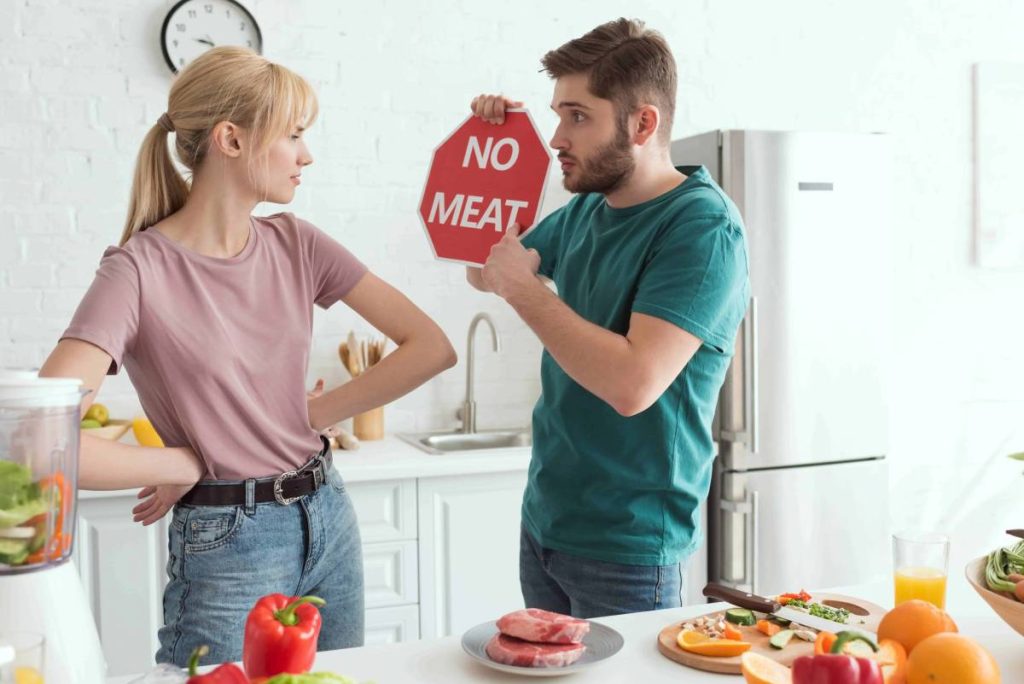
Many Vegans Are More Flexible in Practice Than They Appear Online
The version of veganism that dominates online discourse is ideologically strict and somewhat exhausting. The version that exists in actual relationships is usually more pragmatic.
Most vegans, especially those who’ve been doing it for years, have developed a personal hierarchy of priorities. They’re firm on certain things, like what they personally eat and which products they buy. They’re looser on others, like whether their partner orders the steak, or whether a restaurant’s kitchen might have touched something with butter.
Long-term vegans have made peace with living in a world that isn’t vegan. They eat at regular restaurants. They don’t interrogate every sauce. They’ve accepted that their partner is their own person with their own choices, not a project.
A 2023 survey by Ipsos for Veganuary found that the majority of vegans in relationships with non-vegans said they had never pressured their partner to change their diet. The expectation of constant pressure is largely a myth, built from the most vocal edge of a very diverse group.
This isn’t true of every vegan. Some do want a vegan partner, and that’s a legitimate preference. But for most people dating someone vegan, the experience is closer to “they live their values and let me live mine” than to any conversion program.

The Values Question Eventually Comes Up, and That’s Okay
Food logistics are solvable. The values question takes more conversation.
When one person in a relationship has restructured their life around a specific ethical position and the other hasn’t, that difference eventually surfaces. Not necessarily as a fight. More like a moment where you both realize you’re standing in slightly different places on something that matters.
This is the part that dating advice articles skip because it’s less tidy than a restaurant tip. If your vegan partner went vegan because they believe causing unnecessary animal suffering is wrong, and you don’t share that belief, that’s a values conversation worth having. Not on the first date. But eventually.
The couples who handle this well don’t require agreement. They require understanding. They both need to know what the other person believes, why they believe it, and whether the gap is workable.
Most gaps are workable. People with meaningfully different values build great relationships every day. The ones who struggle are the ones who avoid the conversation entirely and assume the food stuff is the whole story. It isn’t.
The Stereotype Was Built From the Loudest 10 Percent
Everything most people assume about dating a vegan comes from the most visible, most vocal minority of a diverse group. The viral content. The documentary converts. The person at the party. That 10% is real, but they’re not representative.
The other 90% are people who’ve integrated a significant lifestyle choice into a normal life, who’ve made the same compromises you’ve made in other areas, and who’ve mostly stopped needing to talk about it because they’ve moved on to the rest of their personality.
Some of the surprises in this piece are genuinely challenging. Holidays require planning. Gifts require thought. Values differences require actual conversation. But none of those things are unique to vegan relationships. They’re just relationship things, flavored slightly differently.

FAQ
What do most people get wrong about dating a vegan?
The biggest misconception is that dating a vegan means constant pressure to change your diet or regular lectures about animal agriculture. In practice, most vegans in relationships with non-vegans don’t push their partner to change. Research from Ipsos and Veganuary found that the majority of vegans with non-vegan partners said they had never pressured their partner to go vegan. The experience most people report is that the topic comes up when logistics require it, and otherwise the relationship functions like any other.
Can a vegan and non-vegan relationship actually work long-term?
Yes, and many do. The food logistics, which most people treat as the central challenge, are largely manageable with communication and some advance planning. The more significant factor is values compatibility. If one partner holds strong ethical beliefs that the other neither understands nor respects, that tension tends to surface over time regardless of what either person eats. Couples who succeed don’t require agreement on veganism. They require genuine curiosity about why the other person believes what they believe.
Do vegans care if you eat meat in front of them?
Most vegans in established relationships have made peace with their partner eating meat. It varies by individual and tends to be influenced by whether their veganism is ethics-based or health-based. Ethics-based vegans may find it uncomfortable, particularly early in a relationship, but most describe learning to separate their partner’s choices from their own over time. The discomfort, when it exists, is usually about the values association rather than the physical act of watching someone eat.
Is the “won’t kiss you after eating meat” thing actually common?
It’s real but far from universal. Community surveys on platforms like Reddit’s r/vegan consistently show the vegan community is split on this, with roughly half saying it doesn’t bother them and a smaller portion having it as a genuine preference or firm boundary. Couples in longer relationships almost always work this out naturally. It comes up most as an issue in newer relationships where neither person has communicated their expectations yet.
What should I know about buying gifts for a vegan partner?
The main thing to know is that many standard gift categories contain animal products by default: leather accessories, wool items, beeswax candles, milk chocolate, down-filled products, and many perfumes from brands that test on animals. Experience gifts sidestep this entirely. For physical gifts, vegan chocolates, cruelty-free skincare, and plant-based cookbooks are reliable options. Several people describe working within these constraints as making them more intentional gift-givers overall, which isn’t a bad side effect.
How do vegan and non-vegan couples handle Thanksgiving and holidays?
The couples who handle it best treat it as a logistics problem, not an identity conflict. That means talking before arriving about who’s responsible for making sure the vegan partner has something to eat, giving the host advance notice so accommodations can be made, and not putting the vegan partner in the position of explaining their choices to skeptical relatives at the dinner table. A dish brought from home, a call made in advance, and clear expectations set early remove most of the friction.
Will dating a vegan gradually change what I eat?
Probably somewhat, but usually through proximity rather than pressure. Non-vegan partners consistently report eating more varied food at home, less processed food overall, and discovering cuisines they hadn’t tried before. This happens because the household cooking baseline shifts when one person cooks from scratch regularly. It’s not conversion. It’s just what happens when you share a kitchen and meals with someone whose cooking repertoire is different from yours.
The One Thing Worth Taking Away
The surprise that matters most isn’t about a specific food or a kissing policy or a complicated Thanksgiving. It’s the realization that the person you’re dating has integrated their values into their actual life, consistently and practically, and that’s a rarer quality than most people expect to find.
The logistics are learnable. The restaurant thing gets easier. The gift thing gets creative. The holiday thing gets planned. None of that is especially hard once you decide it’s worth figuring out.
The one thing worth doing early is having the real conversation. Not about restaurants. About values. What they believe, why they believe it, and where you actually stand. That conversation, done without defensiveness on either side, tells you more about whether this works than any restaurant list or ingredient label ever will.
If you’re thinking about what this looks like beyond the early surprises, the piece on dating a vegan gets into the day-to-day reality in more practical terms.