
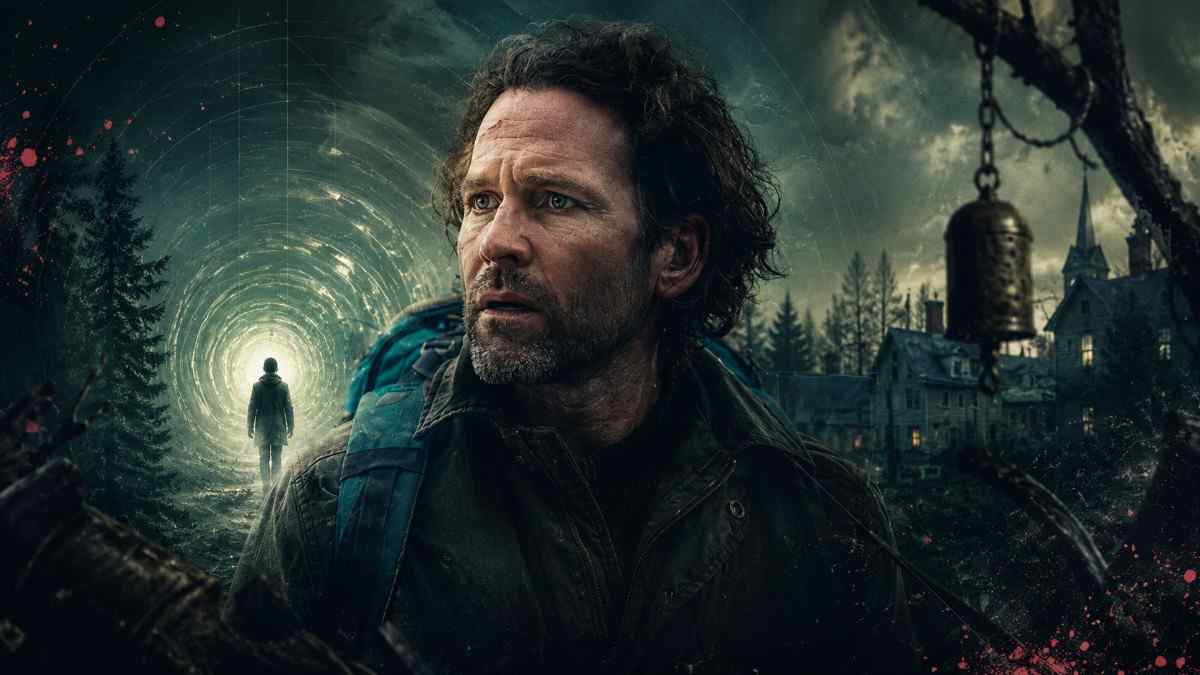
TL;DR
- Jim Matthews died in the Season 3 finale when the Man in Yellow tore out his throat in the woods outside the Township.
- Season 4 Episode 2 confirmed the death a second time with Jim’s hanging body discovered in a barn, removing any ambiguity the season opener briefly created.
- Eion Bailey is credited for five more Season 4 episodes, but the show’s own precedent points to flashbacks and spirit appearances, not a resurrection.
- Julie is a Storywalker, which means she can visit past chapters of the story but cannot change what already happened. Ethan stated this rule explicitly in Season 3 Episode 9.
- Ethan’s post-death encounters with Jim appear to be spirit visitations, and Jim’s spirit is directing him toward the Lake of Tears.
- The Father Khatri template (died in Season 2, kept appearing in visions through Season 3) is the most likely model for how Jim shows up going forwar
Does Jim Ever Come Back in FROM Season 4?
No. Jim Matthews does not return to the story as a living character at any point in Season 4. He appears again, but only in three specific forms the show has already established for its dead: flashback scenes from before his death, time-travel window appearances where Julie’s Storywalker ability lets her enter a chapter of the story where Jim is still alive, and spirit visitations where Jim’s presence guides Ethan without being physically alive in the present timeline. Eion Bailey’s five remaining Season 4 credits come from these three categories, not from Jim surviving.
The one limitation worth stating plainly: none of this is a resurrection. Julie’s rules, laid out by Ethan in Season 3 Episode 9, allow her to visit a chapter but not change it, so any scene where Jim appears alive is happening inside a past chapter of the story, not the present one.
You watched the Season 3 finale, saw Jim go down in those woods, and told yourself it probably wasn’t permanent. Then Season 4 opened with a bloody bag that made you wonder if the show was running a fake-out. Then Episode 2 put a hanging body in a barn and made that wondering feel foolish. Then you checked the credits and found Eion Bailey’s name attached to five more episodes, and the wondering started all over again
Here is the answer: Jim Matthews is dead. The show confirmed it once in the Season 3 finale and confirmed it a second time before Season 4 Episode 2 ends. What the five remaining Bailey credits mean, whether Julie’s Storywalker powers change any of it, and what Ethan is actually seeing when Jim appears after death are the real questions. This piece maps all of it against the rules the show itself established, so you can stop hoping for a resurrection that the show’s own mechanics have already ruled out.
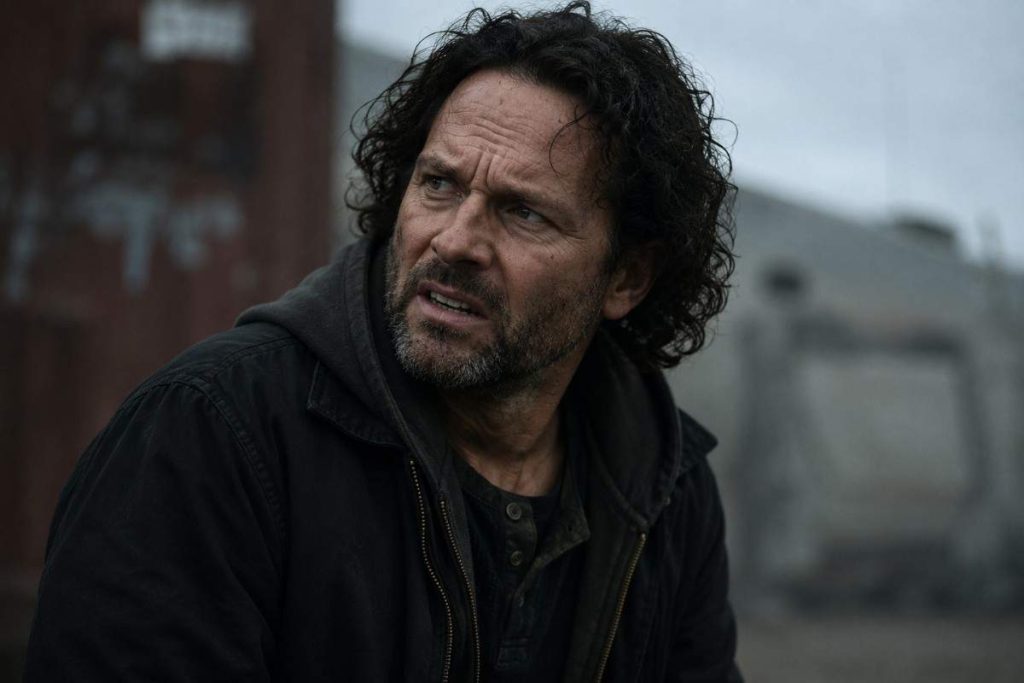
How Jim Died in the FROM Season 3 Finale
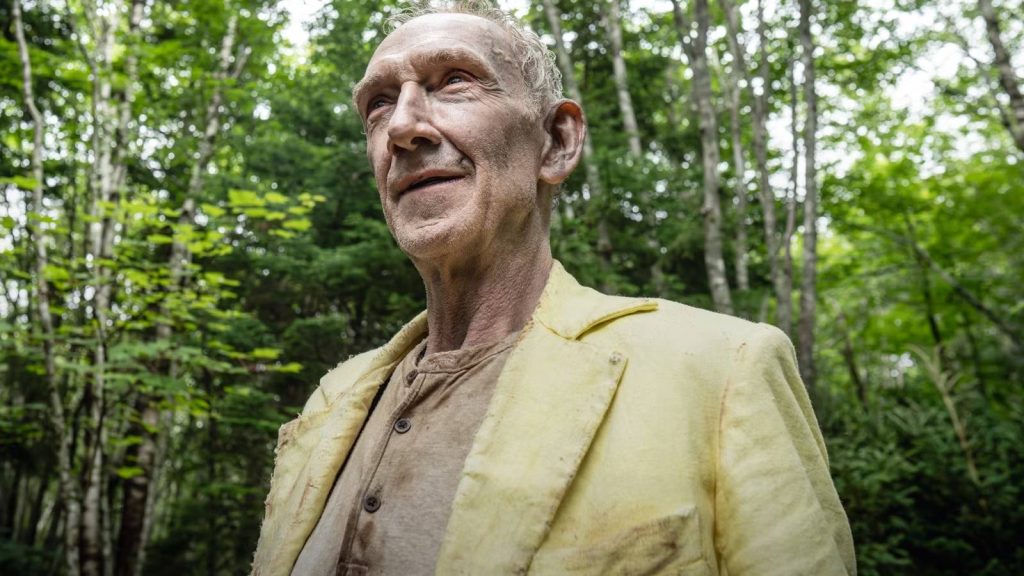
The Man in Yellow found Jim in the woods outside the Township and tore out his throat. Jim’s final act was staggering back toward the group long enough to deliver a last warning before he collapsed. That is the death scene. It is not ambiguous, it is not off-screen, and the show frames it as a direct consequence of Tabitha’s season-long pursuit of the Township’s secrets. Creator John Griffin has said Jim’s death was designed to mark ‘the end of the beginning’ for the show, closing out the mystery-setup phase before the final season.
The Yellow Suit Man’s line “knowledge comes at a cost” is the thematic frame around everything that happened to Jim. Tabitha spent Season 3 digging, pulling at the Town’s hidden architecture, pushing past every warning the place sent her. The Township extracted payment in the form of her husband. This follows the show’s consistent internal logic: the Township punishes people who get too close to its mechanics, and it charges the people closest to whoever did the digging.
One detail almost no one has written about properly: a drawing from Season 1 Episode 5 appeared to show Jim’s death long before it happened. The show foreshadowed this specific outcome in Season 1. That reframes the death entirely. It was never a shocking twist. It was a conclusion the show had been building toward since the first season, which means the writers were not making an impulsive storytelling choice they might reverse. Jim’s death was structural, not reactive.
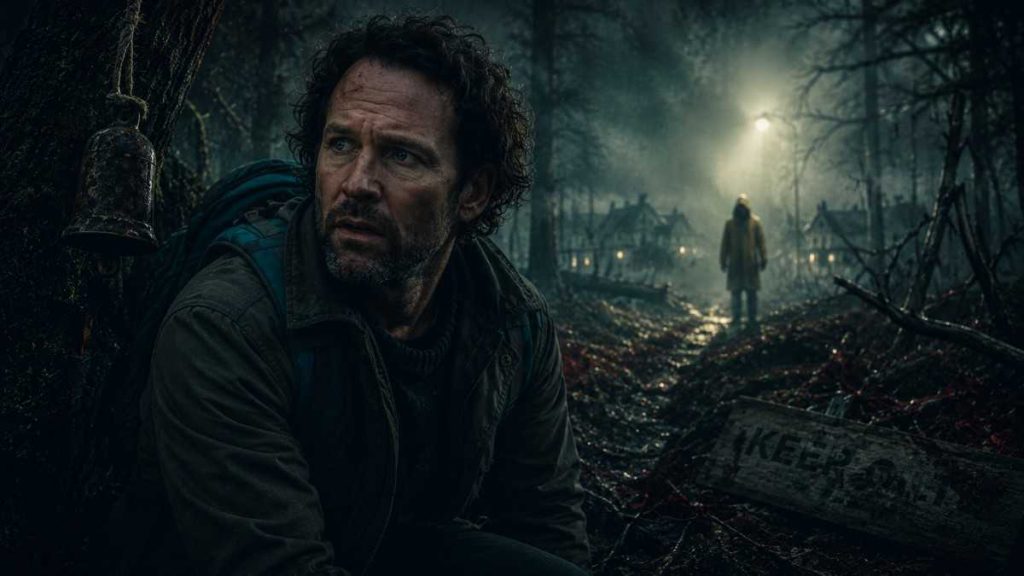
Season 4 Confirmed It Twice: The Bloody Bag and the Barn
The Season 4 Episode 1 Misdirect
Season 4 opened with a bloody bag that gave some viewers genuine pause. The Reddit threads filled up fast: “Jim isn’t dead yet, he’s still at the bottle tree.” The theory had enough visual ambiguity to breathe for about one episode.
The show was playing with expectations, not planting real uncertainty. The bag created momentary doubt. That is a craft choice, not a plot opening. FROM has used this kind of deliberate misdirection before, letting audiences sit with a false hope before closing the door firmly. Episode 1 was the false hope. Episode 2 was the door closing.
The Season 4 Episode 2 Barn Scene
The hanging body in the barn is the confirmation. Jim Matthews is dead in the present timeline. The show does not leave this open. Fellow survivors are the ones who discover the body the next morning, confirming what the bloody bag in Episode 1 had only implied.
Worth noting: Sophia’s “father” (the man the Township constructed as her parental figure) is also found dead in the same episode. The Township disposes of its constructed figures when they stop being useful, and the show placing Jim’s confirmed death and this parallel disposal in the same episode is not accidental. Both deaths establish the same rule: the Township builds things and people to serve a function, and when that function is complete, they are removed.
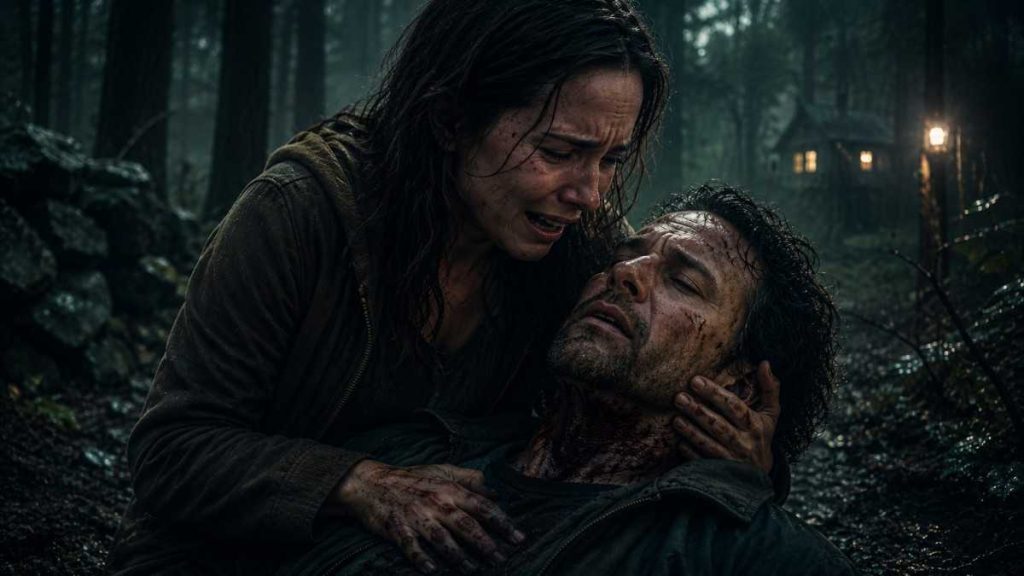
Why Fans Thought Jim Might Survive
Three reasons drove the survival theories, and all three are worth taking seriously before dismantling them.
Eion Bailey’s five-episode credit is the most straightforward source of hope. Industry logic says credited actors appear as their characters. In most shows, five credits equals five episodes of screen time as a living person. FROM has already demonstrated that this logic does not apply in the conventional sense, but that precedent is not something casual viewers track consciously.
Julie’s Storywalker powers are the most emotionally compelling fuel for the survival theory. If Julie can move through time, the reasoning goes, she could visit the moment before Jim’s death and warn him. Or pull him out of that chapter entirely. The theory is emotionally coherent even if the show’s rules contradict it, and FROM has been deliberately dangling this possibility without resolving it.
Ethan keeps seeing Jim after his death. Post-death visual presence reads, in most shows, as ambiguity about whether the character is actually gone. Seeing someone on screen usually means they are present in some meaningful way. FROM does not use this logic, but the audience reasonably imports it from every other show they have watched.
The Storywalker Rules: Visit, Not Change
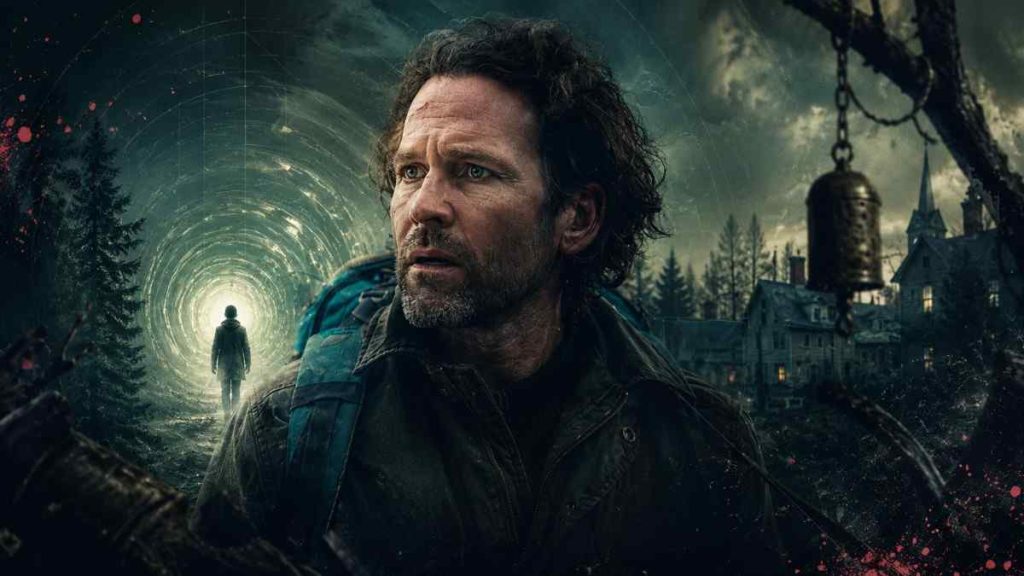
The mechanical heart of this whole question comes down to what Julie’s powers actually allow. Ethan laid the rules out explicitly in Season 3 Episode 9: Julie is a Storywalker. She can move between chapters of the story. She cannot change the chapters.
Whatever happened, happened. If that phrasing sounds familiar, it should. FROM is using the same time-travel rule structure that Lost built its time-travel mechanics around, and the show is not hiding this influence. In Lost, Daniel Faraday spent seasons explaining why you cannot change the past before the show tested that rule at every angle. FROM established the same ceiling on Julie’s powers, and it did so before the most emotionally devastating event of the series so far. That sequencing is deliberate. The show needed audiences to understand the rules before Jim died so the death would feel permanent.
What Julie’s powers do allow is worth being specific about. She can witness past events. She can be present in chapters she was not originally part of. She may be able to pass information across time even if she cannot change outcomes. The invisible-Julie theory (that an older, future version of Julie has already been present in earlier seasons guiding her family) is consistent with this reading. Visiting the chapter where Jim dies is possible. Extracting him from it is not.
The Man in Yellow enforces knowledge as a currency in this world. Every time a character pushes against the Township’s mechanics, a cost appears. Storywalker powers are not exempt from that economy.
What Ethan Is Actually Seeing: Spirit, Vision, or Something Else
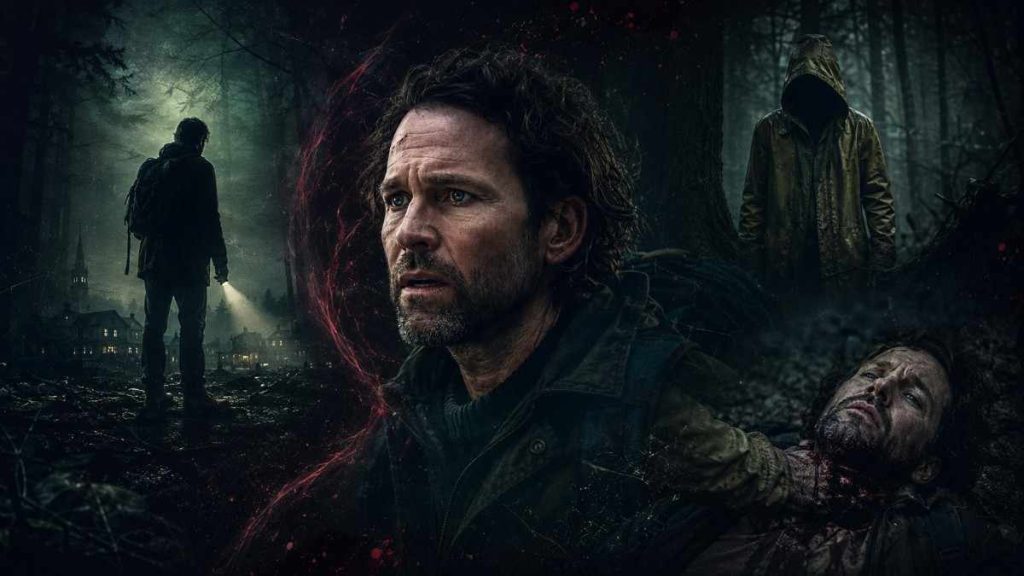
Ethan’s post-death encounters with Jim in Season 4 Episode 2 are not ambiguous teases about Jim’s survival. They are the show operating inside its own established framework for how deceased characters continue to function in the story.
The Father Khatri parallel is the key to reading these scenes correctly. Father Khatri died in Season 2. He kept appearing to characters in visions and spirit form through Season 3. His continued presence was not the show hedging on whether he was really dead. It was the show using his spirit as a delivery vehicle for information and emotional weight. The Township, or whatever force governs its deeper operations, allows the dead to communicate with the living under specific conditions.
Jim’s spirit in Season 4 is doing something concrete. He is directing Ethan toward the Lake of Tears. This is not a grief hallucination the show is asking us to diagnose as a symptom of trauma. Jim is acting with purpose in these encounters, which means the show is treating his post-death presence as functionally real within the Township’s rules, not as a psychological event happening inside Ethan’s head.
The FROM spirit appearance framework works consistently: dead characters appear when they have information the living need and when the Township’s conditions allow that communication. Jim’s spirit directing Ethan toward the Lake of Tears fits this pattern precisely.
What Eion Bailey’s 5 Remaining Episodes Actually Mean
Three types of appearances map to the show’s established precedent, and Bailey’s credits likely spread across all three.
Flashbacks are the simplest structural explanation. Julie or Ethan’s Storywalker access to past chapters generates full scenes set before Jim’s death. These would be real Eion Bailey scenes with real screen time, not quick cameos, and could account for multiple episode credits without Jim being alive in the present timeline.
Time-travel window appearances are different from flashbacks in a meaningful way. If Julie visits the chapter in which Jim is still alive, a scene set in the past of the Township’s timeline, Bailey appears as Jim in that episode without Jim surviving in the present. The scene is interactive rather than remembered. Jim could speak, react, and exist fully in those sequences while remaining dead in Season 4’s present. This type of appearance fits the season’s central mechanic (Julie’s Storywalker mobility is the main engine of Season 4) and would be the most emotionally significant use of Bailey’s remaining credits.
Spirit visitations follow the Father Khatri model directly. Jim’s spirit appears to Ethan and possibly others as the season advances, guiding them toward the Lake of Tears. These scenes carry real narrative weight and could account for several credits across multiple episodes.
The most likely answer is a combination of all three, with time-travel window appearances carrying the most screen time. None of these scenarios equal Jim being alive in Season 4’s present. The show has five episodes worth of Jim Matthews story to tell. It is just not the story some fans are hoping for.
Can Julie Still Save Jim? The Theory and the Evidence Against It
Address the theory fairly, because it deserves a fair hearing. The argument runs like this: Storywalker rules say Julie can visit but not change chapters, but who exactly enforces that rule? Ethan told her. Ethan has been wrong about Township mechanics before. If the invisible-Julie theory holds (an older, future Julie has already been present in earlier seasons), that implies her powers develop beyond what Ethan currently understands. There is a version of FROM where Julie’s whole arc ends with her breaking the rule rather than following it. That version of the show is emotionally satisfying and thematically coherent.
The evidence against it is layered. Every piece of information the show has given about Township mechanics reinforces that the rules are rigid and punishing. The Township does not allow interference without extracting a cost that tends to be worse than whatever the interference was trying to fix. More pointedly: the show has not framed Jim’s death as a mistake to be corrected. It framed it as an inevitable payment for Tabitha’s pursuit of the Township’s secrets. Reversing the payment would collapse the season’s entire thematic architecture. It would mean Tabitha’s choices had no permanent consequence, which contradicts everything FROM has established about how this world works.
The honest answer is that the theory is unconfirmed but structurally unlikely. FROM can hold this ambiguous for as long as it wants. Ambiguity about whether Julie could theoretically break the rules is not the same as the show intending to follow through on it.
The Lake of Tears: What Jim’s Spirit Wants Ethan to Find
Jim’s post-death presence is not emotional texture added to make his absence feel poignant. His spirit is sending Ethan somewhere specific, and that destination is the real thread Season 4 is pulling.
The Lake of Tears connects to Anghkooey mythology and to the Township’s deeper origin story. Jim’s death positioned the Matthews family precisely: Ethan with his Storywalker sensitivity, Julie with her cross-chapter mobility, Tabitha with her knowledge of what the digging cost. Jim’s spirit appears to understand this positioning and is using it. He is not haunting Ethan out of attachment. He is pointing Ethan toward the next layer of the Township’s mystery because Ethan is the one currently capable of receiving that direction.
What the Lake of Tears actually contains and what it means for the Township’s origin is mapped in full, episode by episode, in the site’s dedicated Lake of Tears breakdown
Frequently Asked Questions
Is Jim dead in FROM Season 4?
Yes. Jim Matthews is confirmed dead in FROM Season 4. The Season 3 finale showed the Man in Yellow tearing out his throat in the woods outside the Township. Season 4 Episode 2 provided a second confirmation when Jim’s hanging body was discovered in a barn. The show eliminated the brief ambiguity created by the bloody bag scene in Season 4 Episode 1. As of Episode 2, Jim’s death is not a narrative question the show is keeping open. His presence in remaining episodes will come through flashbacks, time-travel window appearances, and spirit visitations, not as a living character in the present timeline.
Did Jim really die at the end of FROM Season 3?
Yes. Jim died at the end of the Season 3 finale. The Man in Yellow found him in the woods and tore out his throat. The death was foreshadowed by a drawing in Season 1 Episode 5 that appeared to depict this exact outcome, which means it was a planned structural event rather than a shock decision. The show framed the death as a direct consequence of Tabitha digging into the Township’s secrets: knowledge comes at a cost, and the Township charged Tabitha the price of her husband.
Can Julie use her Storywalker powers to save Jim in FROM?
Based on the rules the show has established, no. Ethan explained in Season 3 Episode 9 that Storywalkers can visit past chapters but cannot change them. Whatever happened, happened. Julie can be present in the chapter where Jim died. She cannot extract him from it. The show established this ceiling on her powers before Jim’s death, specifically to prevent audiences from treating her time-travel ability as a resurrection mechanism. While the invisible-Julie theory suggests her powers may develop beyond what Ethan currently understands, the show has framed Jim’s death as a permanent structural payment, not a correctable mistake.
Why is Eion Bailey still credited in FROM Season 4 if Jim is dead?
Bailey’s remaining credits most likely reflect three types of appearances: flashback scenes set before Jim’s death, time-travel window appearances where Julie visits a past chapter in which Jim is still alive, and spirit visitations following the Father Khatri model. Father Khatri died in Season 2 and continued appearing in visions through Season 3. FROM has already established that dead characters can maintain meaningful screen presence without being alive in the present timeline. Five episode credits does not equal five episodes of Jim being alive. It equals five episodes worth of story the show still has to tell through him.
What is the Lake of Tears in FROM, and what does it have to do with Jim?
The Lake of Tears connects to the Anghkooey mythology woven through the Township’s deeper history. In Season 4, Jim’s spirit appears to Ethan specifically to direct him toward the Lake of Tears, suggesting it holds information critical to understanding what the Township is and how it operates. Jim’s death positioned the Matthews family in a specific configuration: Ethan with Storywalker sensitivity, Julie with cross-chapter mobility, Tabitha with her knowledge of the secrets she uncovered. Jim’s spirit seems to be leveraging that configuration to push the story toward the Township’s next layer of mystery. The Lake of Tears appears to be where that mystery lives.
What is the difference between a flashback and a time-travel window appearance in FROM?
A flashback is a remembered or narrated scene from the past, typically not interactive. A time-travel window appearance is different: it occurs when Julie, as a Storywalker, physically enters a past chapter of the story. In that scenario, Jim would appear alive and interactive within that chapter’s timeframe without being alive in Season 4’s present. The scene functions in real time within the past chapter even though Jim remains dead in the present. This distinction matters because time-travel window appearances can carry the emotional weight of a genuine Jim scene without implying any kind of resurrection. Both types are possible within the show’s established rules.
Jim Matthews is dead. The show told you twice, and the second time it made sure there was no comfortable ambiguity to retreat into. The question was never really whether he survived. The question is what the show does with his death, and FROM has been answering that question consistently since Father Khatri: dead does not mean absent, and absent does not mean done.
Watch what Jim’s spirit sends Ethan toward. The Lake of Tears is where Season 4’s real argument lives, and Jim’s death is the price the show paid to get there. Every appearance Bailey makes in these remaining five episodes is the show cashing in that payment for something larger than one character’s survival.
The Township has been building to something since that Season 1 drawing showed exactly how Jim’s story ended. The family is now positioned exactly where the Town needs them. What happens at the Lake of Tears is the next piece of that structure, and it is going to cost someone else something significant to find out.