
TL;DR
- Robby tells baby Jane Doe in the Season 2 finale that he was abandoned when he was 8 years old — this is the show’s single confirmed data point about his childhood
- He was raised by his grandparents after his mother left; Season 1 plants this detail quietly, without drama
- The show does NOT confirm why his mother left, whether she is still alive, or who his father is
- Earlier Season 2 episodes (Episode 3 and Episode 11) seeded the wound through patient cases before most viewers recognized the pattern
- Noah Wyle and showrunner Scott Gemmill have both signaled that Season 3 will explore Robby’s backstory more directly
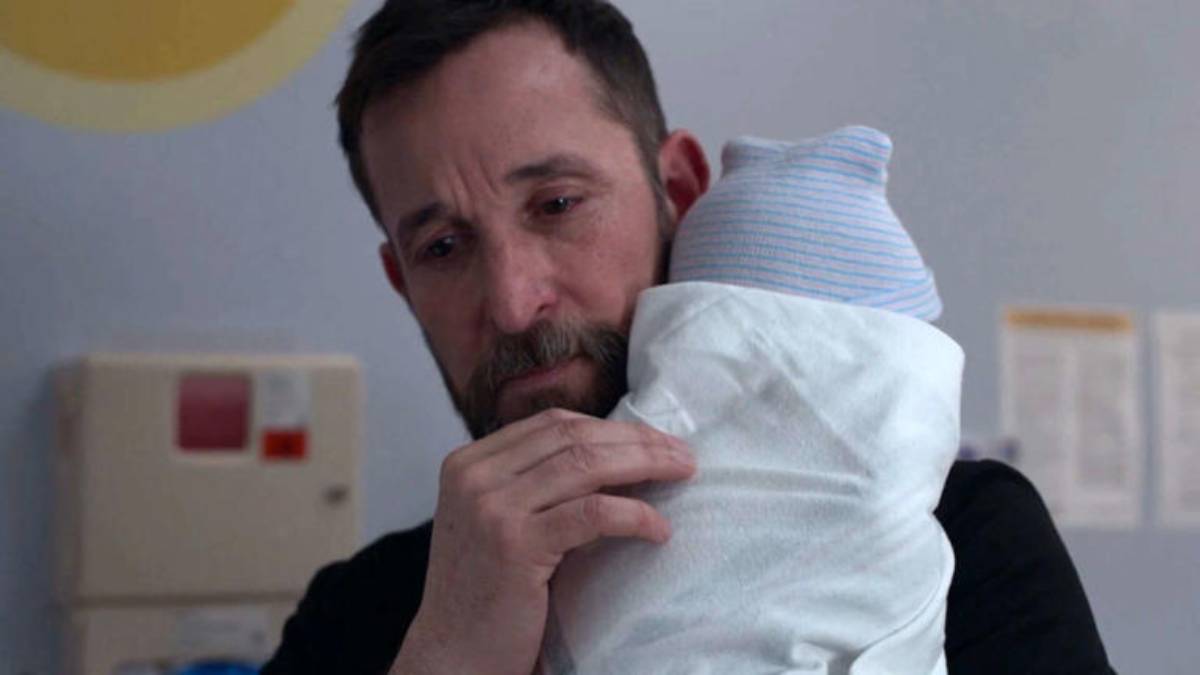
You caught that line. Robby, alone in the nursery at the end of a shift that almost broke him, holding an infant nobody came for, quietly telling her he got abandoned too — when he was 8. It landed like a gut punch and then the episode ended. If you went looking for the full story afterward, you probably found a few recap posts with half the picture, some AI summaries that gave you the surface version, and a lot of unanswered questions.
Most coverage of this moment treats it as a sudden reveal. Read it that way and it feels dramatic but thin. What it actually is is a payoff, the last piece of a trail the show has been laying since Season 1, through two patient callbacks most viewers didn’t register as connected, through a confrontation with Dana that finally put words to something Robby had never said out loud.
This piece maps that full trail, from the first breadcrumb to the finale nursery scene. It also draws a clear line between what the show has actually confirmed and what it has only implied, because the SERP blurs that distinction badly. By the end, you will have the complete picture of Robby’s backstory, a precise sense of what remains unanswered, and an understanding of why this particular wound explains almost everything about who he is.
What the Show Has Actually Confirmed (And What It Hasn’t)
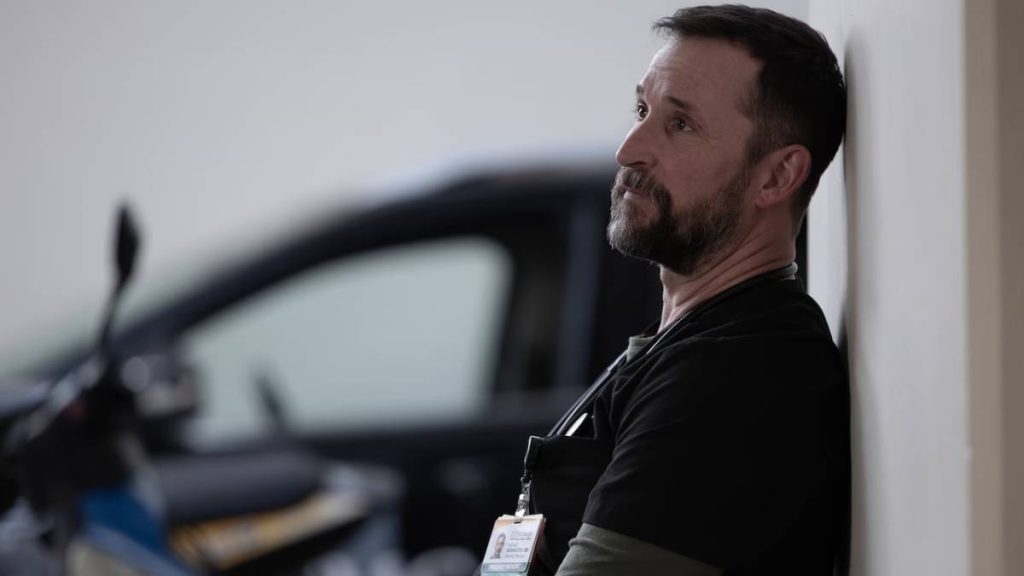
The only confirmed detail about Robby’s childhood abandonment is the age: he was around 8 years old when it happened. That comes directly from his words in the Season 2 finale, spoken to baby Jane Doe. That is it. That is the entire confirmed data set about the timing.
Season 1 gives us one more confirmed piece: Robby was raised by his grandparents. The show drops this without turning it into a scene, it surfaces as background texture, including a reference to Rodef Shalom that places the family within a Jewish religious tradition. You were not supposed to flag it as important when you first heard it. That was intentional.
Here is what is NOT confirmed anywhere in two seasons:
- Why his mother left. The show never explains her reasons, her circumstances, or whether she had a choice in any meaningful sense.
- Whether she is still alive. This is completely open.
- Who his father is. The show has not introduced a paternal figure, referenced one, or implied one was ever present.
- The exact circumstances of the abandonment. Did she drop him at his grandparents’ door? Was there a crisis? A slow fade? The show is deliberately silent.
This matters because a lot of fan posts and recap summaries treat “his mother abandoned him” as fully confirmed backstory and then add speculation about her motivations as if it were also confirmed. The show is much more precise and much more withholding than that. The “age 8” line is the show’s most specific statement. Everything else is inference from behavior and implication.
Season 1 Set the Foundation — Most Viewers Didn’t Notice
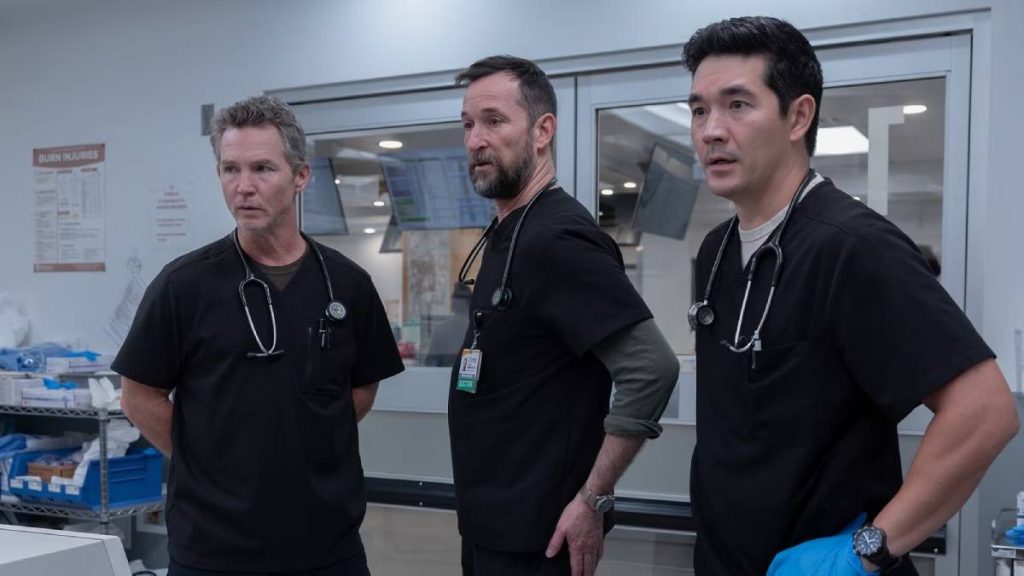
The grandparents detail in Season 1 does not arrive with any fanfare. There is no dramatic music. Nobody stops to explain what it means that Robby was not raised by his parents. The information exists in the scene and then the scene moves on.
Good character writing plants before it pays off. Season 1 is doing exactly that. The Rodef Shalom reference tells you something specific: Robby was raised in a structured, faith-based home that was not his nuclear family. That environment, a grandparents’ household built around religious practice and community, tends to produce a particular kind of person. Someone who understands duty, who internalizes discipline, who can follow a framework even when the framework does not explain itself.
It also tends to produce someone with a complicated relationship to the word “family.” Because the family that raised him was not the family he started with. The people who showed up were not the person who left. Robby absorbed all of that and then built his entire adult identity around showing up for strangers in crisis, which makes a certain amount of sense when you trace it back here.
At the time you watched Season 1, this read as character flavor. On a rewatch, knowing where the show ends up, the grandparents detail is the first time the show tells you who Robby really is. Everything else builds on it.
Episode 3 and Episode 11 — The Callbacks Most People Missed
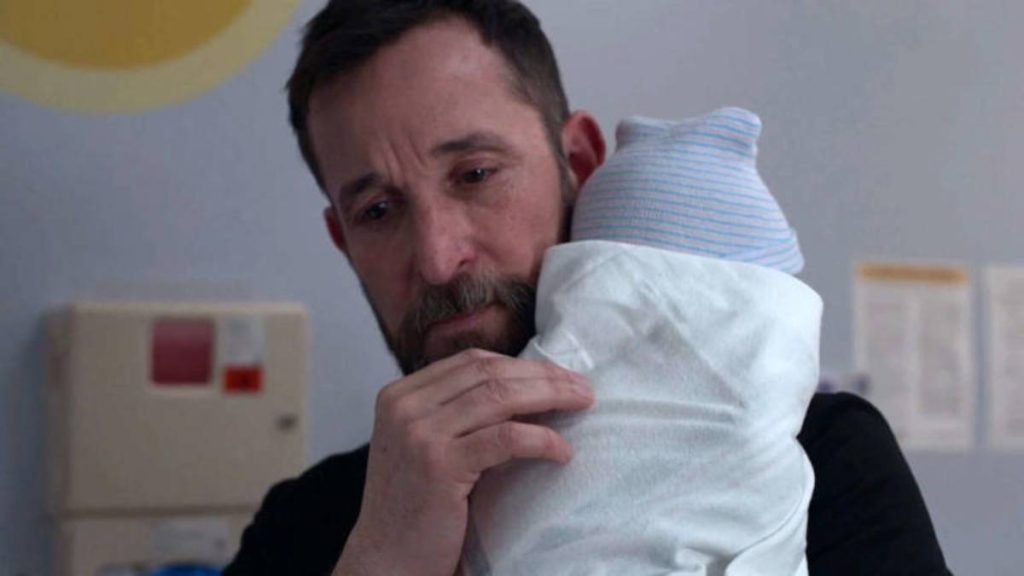
This is where the show gets genuinely sophisticated, and where most viewers, and most recaps completely miss the throughline. Robby’s abandonment wound does not sit dormant until Episode 13. It gets activated twice before he ever says anything about it out loud.
The Yana Kovalenko Scene (Episode 3)
Yana Kovalenko is a patient in Episode 3 whose situation involves a child in circumstances of parental absence. On a surface read, Robby’s response to this case looks like exceptional compassion. He goes deeper than the clinical moment requires. He stays present in a way that goes past professional investment.
Wyle has noted in interviews that this scene was written as the first deliberate activation of Robby’s wound the earliest moment in Season 2 where his personal history bleeds into his professional response. The patient’s situation mirrors, in some structural way, the shape of what happened to Robby at 8. He does not say this. He probably does not even consciously recognize it. But his response is disproportionate to the role, and that disproportionate response is the show’s fingerprint on the connection.
The pattern being established here: Robby does not just treat patients who remind him of his younger self. He over-invests in them. He stays longer, pushes harder, carries the case home in some internal way that the other doctors don’t. The ER keeps handing him mirrors and he keeps refusing to look at what they’re reflecting.
The Traffic Mom Scene (Episode 11)
Episode 11 gives us a second seeding through a mother in a trauma situation. Again, Robby’s emotional response carries weight that the immediate clinical moment doesn’t fully account for. Wyle has pointed to this scene as a second deliberate callback, the writers using the ER’s patient population as a controlled way of surfacing Robby’s history without having him speak it.
By Episode 11, a careful viewer can feel the pressure building even if they can’t name what is causing it. Robby keeps encountering the shape of his own story in other people’s emergencies. A child with an absent parent. A mother in crisis. An infant with no family.
The ER is not just Robby’s career. It is the place where he keeps re-encountering the thing he has never processed. He chose the setting unconsciously, and then the setting keeps confirming the choice. Every shift is another chance to save someone who is in the position he was in. He does not have the language for this yet. Episodes 3 and 11 are the show warming the wound up before Episode 13 finally opens it.
What Episode 13 Actually Says — The Dana Confrontation
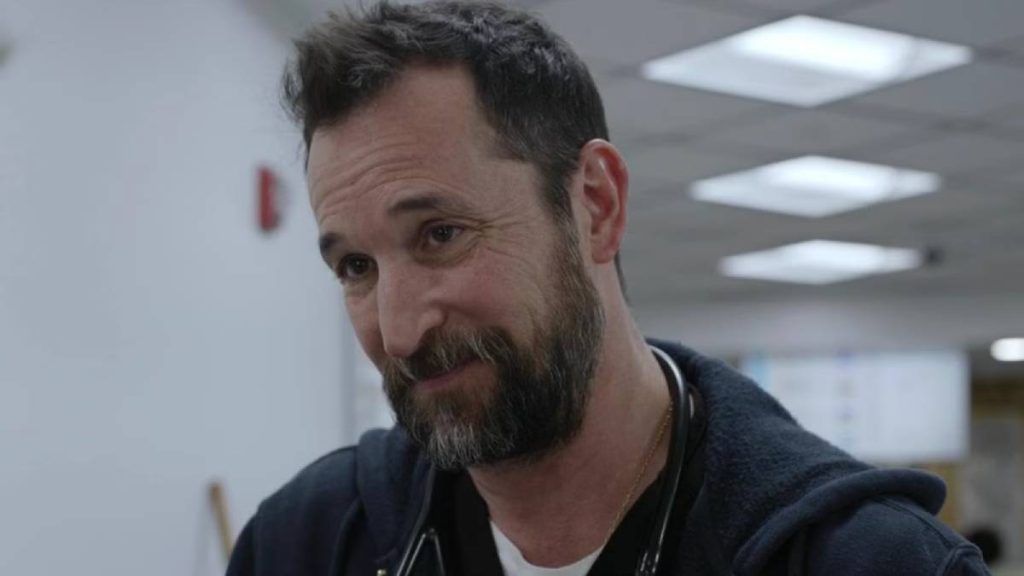
Episode 13 is the first time the abandonment becomes spoken rather than implied. Not to a patient, not in therapy, not in any context designed to be safe, but during a confrontation with Dr. Dana.
Robby tells her, in substance, that he already had a mother who left and he does not need another one. That is the line. That is the show putting the abandonment into direct dialogue for the first time.
To understand why this scene hits the way it does, you have to understand what the Dana dynamic represents. Dana is an older protective figure who has, over the course of the series, taken on a functionally maternal role in Robby’s professional life. She advocates for him, worries about him, pushes back on his self-destructive tendencies. From the outside, this looks like mentorship. From Robby’s internal architecture, it looks like a setup.
Robby’s rejection of Dana is not ingratitude. It is a defense mechanism built over decades. Getting close to mother figures is the specific wound. He did not choose to develop this pattern. A child cannot consent to the defensive structures they build around a core injury. But the pattern runs deep enough that when Dana’s care starts to feel like need, like she needs him to be okay in a way that echoes the weight of adult expectations placed on a child who got left, he blows it up.
The line lands differently once you have seen Episodes 3 and 11. Robby is not performing vulnerability in this scene. He is shutting it down, which is what people with this kind of early wound characteristically do when the door to the actual feeling gets opened. He slams it. Then he walks away.
The Finale Scene With Baby Jane Doe — Why It Hits Differently
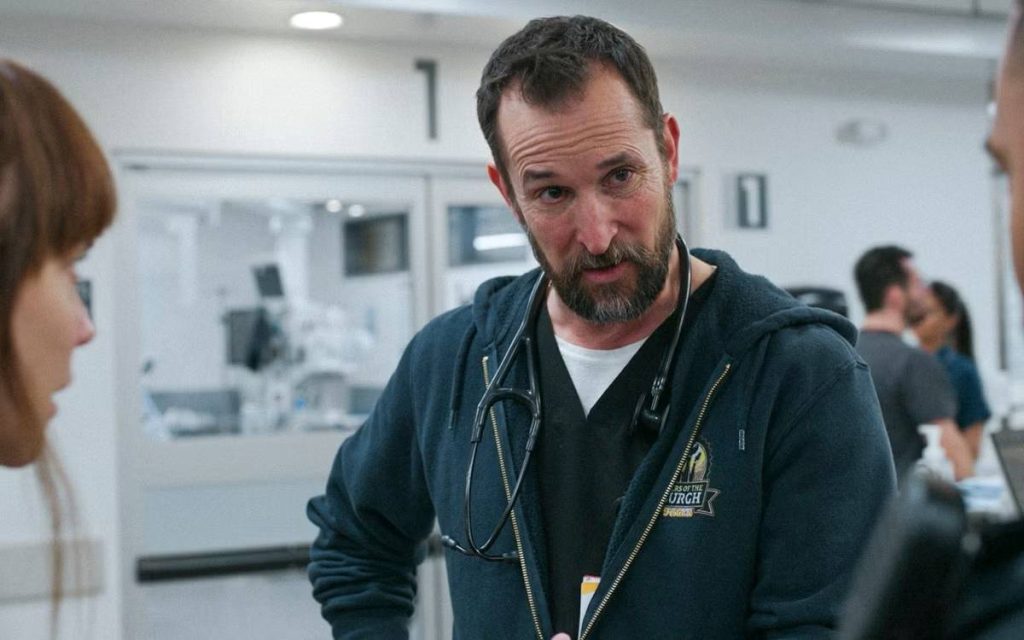
Baby Jane Doe is the show’s most literal mirror for Robby’s origin: an infant abandoned in the ED, no family, no name, no one coming. The show does not underline this. It does not need to.
Robby retreats to the nursery alone, away from the shift, away from the professional identity that has kept him functional for decades. He picks her up. He tells her he got abandoned too, when he was 8. He tells her he got through it.
This is the first time in either season that Robby says anything close to this to anyone. The baby cannot respond, cannot judge him, cannot leave him, and cannot need anything from him in return — and that is precisely why he can be honest with her. Wyle has described this as Robby’s long-dormant wound finally finding a context where it can be acknowledged without risk. Every human relationship in his life carries the implicit threat of the original abandonment. The baby carries none of that.
There is a thread running through the finale about whether Robby wants to continue living. He expresses something close to uncertainty about his own life, which the show handles with clinical seriousness and does not resolve quickly or cleanly. The baby Jane Doe scene is the show’s answer to that thread, not a neat bow, but a reason. What pulls him back is not a person he loves or a professional success. It is a nameless infant in the same position he was in at 8. He survived it. He can tell her she will too.
The scene works because the show earned it across two seasons. If you watched it without Episodes 3, 11, and 13 loaded into your memory, it was devastating. If you watched it with all of that context, it was something else: a long story finally arriving somewhere true.
Why Robby Became a Doctor — And Why That Matters
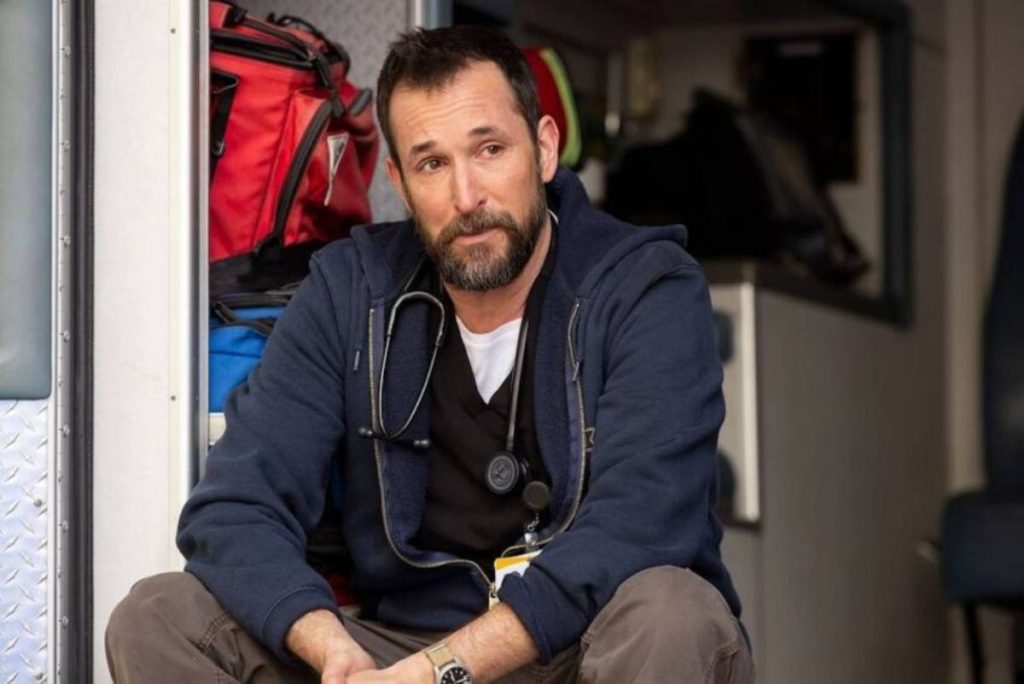
Children who experience early parental abandonment often orient toward caregiving roles as adults. This is not a conscious career calculation. It is a psychological structure that forms around unresolved helplessness. The child who could not control whether a parent stayed will sometimes spend their adult life engineering situations where they are the person who stays, who shows up, who does not leave.
Robby cannot save the child he was. But he can, every day, save children who are in versions of that position. The ER is the place where abandoned people arrive. It is also, if you are Robby, the place where you get to be the person who shows up. For twenty-plus years, this arrangement has functioned. It has given him purpose, identity, and a way of managing a wound he has never named.
The problem with this kind of structure is that it requires constant maintenance. Robby’s depression is not a bad reaction to a hard year. It is a decades-long weight that has finally become visible because the maintenance is getting harder. He is running out of shifts to hide inside. The work used to absorb the pain; now it just re-exposes it.
His sabbatical reads like self-care from the outside. From the inside, it is escape. He has no stated plan for what he will do with the wound once he is no longer surrounded by the patients who externalize it. He is leaving the place that keeps triggering him without having any idea what to do with the trigger.
Robby’s identity is so completely fused with the work that the sabbatical is not a break, it is a structural crisis. Who is he if he is not the doctor who stays? He does not know. That is part of what the finale is actually about.
His inability to maintain relationships fits the same template. Every person who gets close enough to matter becomes a potential version of the person who left. Dana, romantic partners, colleagues who push past professional distance, each of them eventually encounters the wall. Not because Robby does not want connection, but because wanting connection is the exact thing that got him hurt.
What Season 3 Is Likely to Explore
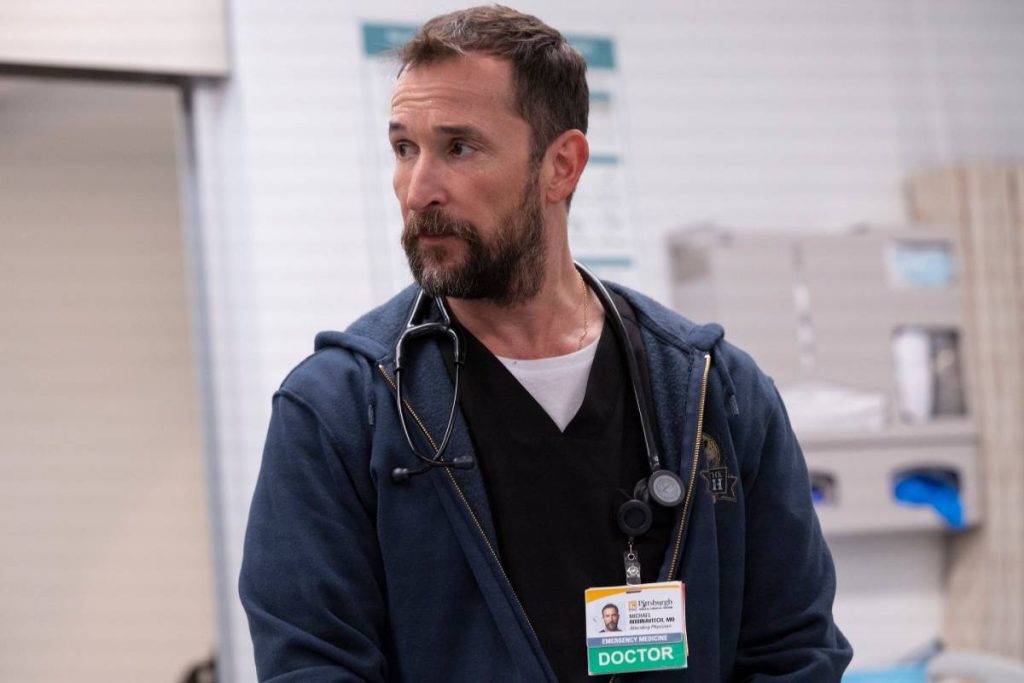
Season 3 is expected to go deeper into Robby’s backstory, both Gemmill and Wyle have confirmed this in separate conversations, framing the Season 2 finale as a surfacing rather than a resolution. The wound has been named. It has not been addressed.
The open questions the show is holding:
- What happened to Robby’s mother? Is she alive? Has she ever tried to make contact? Does Robby know? Does he want to know?
- Who is his father? The show has not even gestured toward a paternal figure.
- Are his grandparents still living? If so, what does that relationship look like now?
- What does the sabbatical actually produce? Avoidance runs out eventually.
The baby Jane Doe question is the one viewers are most loudly asking. Whether Robby pursues some form of guardianship or ongoing connection with her is completely unresolved as of the finale. It would represent the most direct confrontation with his origin story the show has attempted — not processing the wound in therapy or in dialogue, but taking in a child who is in the position he was in and choosing to stay. That would be new territory for him.
Wyle has framed the wound as the original injury that everything else is built on top of the thing that was there before the career, before the depression, before any of the relationships that didn’t hold. Gemmill’s comments suggest the show is not interested in resolving it quickly. This is not a storyline. It is a structural feature of the character.
If you want to know whether Robby even makes it to Season 3, the does Dr. Robby die at the end of The Pitt breakdown covers everything the finale confirms and leaves open about his survival.
FAQ
What does Dr. Robby suffer from?
The Pitt depicts Robby as living with clinical depression alongside unaddressed childhood trauma from being abandoned around age 8. The show treats these as connected rather than separate conditions — the trauma as the foundation, the depression as its long-term expression in an adult who has spent decades using work as a management tool. By Season 2, the management has broken down. He admits to uncertainty about whether he wants to be alive, which the show treats with seriousness and does not resolve in a single scene.
Why was Dr. Robby abandoned?
The show does not explain why his mother left. The “I got abandoned too when I was 8” line from the Season 2 finale is the most specific information the show has given. Her reasons, her circumstances, and whether she ever attempted contact afterward are all deliberately unconfirmed. Some recaps treat “his mother abandoned him” as full backstory, but the show is intentionally withholding about her motivations, which means anything beyond the age-8 detail is speculation.
Who raised Dr. Robby after his mother left?
His grandparents raised him. This is confirmed in Season 1, including a detail about attending Rodef Shalom that places them as Jewish and practicing. No further information about the grandparents is confirmed in either season — whether they are still alive, what Robby’s current relationship with them looks like, or what circumstances led to him being placed with them rather than anyone else.
Is Dr. Robby’s sabbatical about mental health or is it something else?
Both, and they are connected. Robby leaves as someone whose depression has become unmanageable within the structure of his work. But the sabbatical is framed more as escape than treatment — he has no stated plan for addressing the underlying wound, no therapy we know of, no confrontation with his history in progress. He is removing himself from the environment that keeps triggering the original injury without yet having any idea what to do with it once the trigger is gone.
Will Season 3 explain what happened to Robby’s mother?
Showrunner Scott Gemmill and Noah Wyle have both confirmed that Season 3 will explore Robby’s backstory more directly. Wyle has described the wound as the original injury everything else is built on top of, and the Season 2 finale as a surfacing rather than a resolution. Whether the show explains the mother’s specific circumstances or leaves some ambiguity intact is unknown. Gemmill has suggested the show is not rushing to resolve it — the wound is treated as a structural character feature, not a storyline to be closed.
Does Dr. Robby have suicidal thoughts in The Pitt?
The show depicts Robby expressing something close to uncertainty about whether he wants to continue living, particularly in the Season 2 finale. This is handled with clinical seriousness rather than as a dramatic plot device. The show does not label it explicitly or resolve it quickly. The baby Jane Doe scene functions as the narrative response to that thread — the thing that anchors him back is not a person or a professional achievement, but an abandoned infant who is in the position he was once in.
Why does Dr. Robby push people away who care about him?
His response to people who get close and take on a caregiving or protective role — like Dana — is rooted in the original abandonment. Every relationship that starts to feel like it could matter also carries, for Robby, the implicit threat of what happened at 8. His defensive pattern is not a character flaw he chose. It is a structure that formed around an early wound. He does not push people away because he does not want connection. He pushes them away because wanting connection is the thing that got him hurt first.
The One Thing That Explains Everything
Every confusing thing about Dr. Robby, why he is brilliant and depressed, why he stays at the hospital but cannot stay in relationships, why he can hold a stranger’s hand through a death but cannot let Dana worry about him, why the sabbatical is not relief but dread, traces back to a single point: a child who got left at 8 and built an entire life around never being in that position again.
The nursery scene with baby Jane Doe is not just the most emotionally honest moment of the finale. It is the show telling you what all of it has been about. Robby could not tell a person. He could not say it in therapy or a fight or a goodbye. He said it to an infant who could not process it, could not judge it, and could not leave. That is the shape of his wound: truth is only safe when it cannot be used against you.
Season 3 has an enormous amount of story to work with. The mother’s whereabouts, the grandparents, the baby Jane Doe question, what the sabbatical forces him to actually confront. Wyle and Gemmill have both indicated the show intends to go there. The foundation is built. What comes next is whether Robby can do the thing he has spent his whole adult life helping other people do face the thing that is actually wrong and stay in the room with it.