What So Weird Actually Was (And Why It Never Quite Fit Disney Channel)
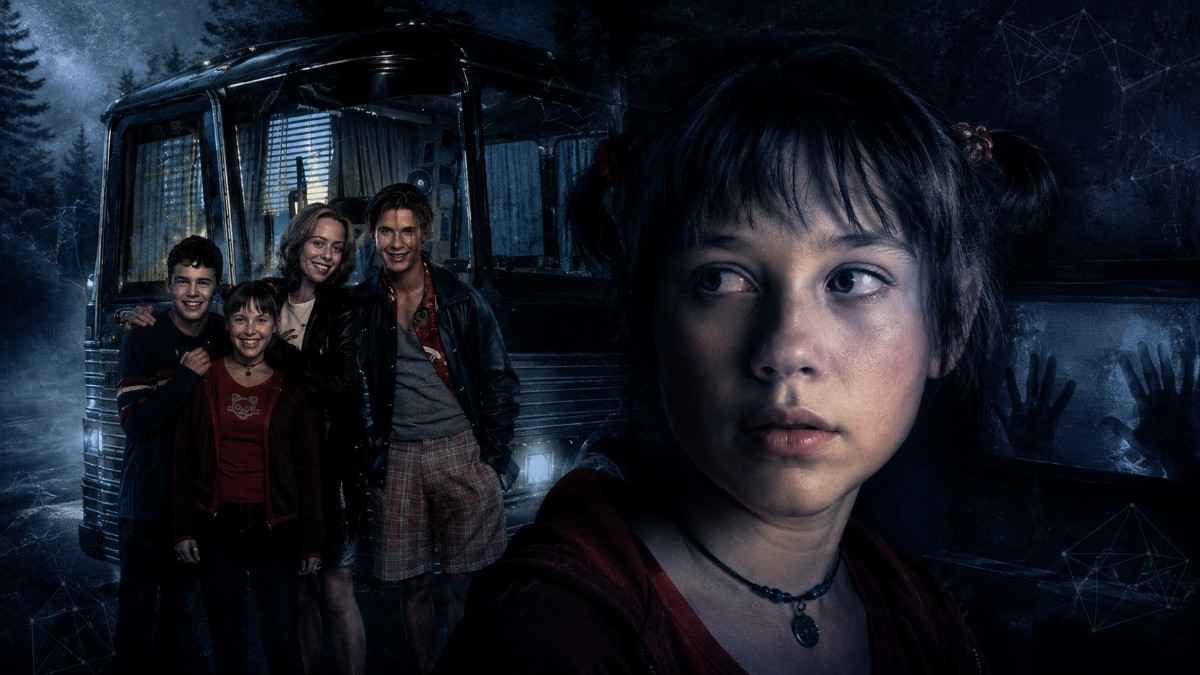
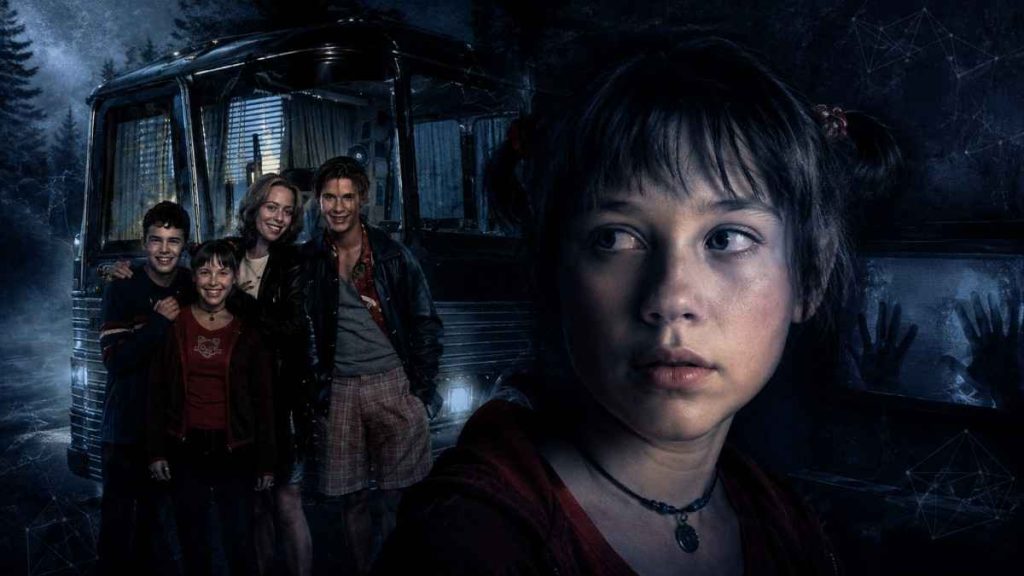
So Weird premiered on January 18, 1999, created by Jon Cooksey and Ali Marie Matheson. The premise sounds straightforward on paper: Fi Phillips, played by Cara DeLizia, is the teenage daughter of rock musician Molly Phillips. She travels on her mother’s tour bus, investigates paranormal events at each stop, and maintains a website documenting her findings.
The execution was something else entirely.
The show’s real subject was grief. Fi’s father, Jack Phillips, was dead before the series began. His absence was not backstory. It was the engine of the entire show. Fi investigated the paranormal because she was looking for proof that consciousness survives death. She wanted her father back, and she was willing to chase demons, possession cases, wendigos, and death omens to find evidence that he still existed somewhere.
That is not a premise you typically find on a network that spent most of its schedule airing cheerful sitcoms about middle school. The tone comparisons to The X-Files, which was in its cultural peak during So Weird’s run, were not accidental. The show was aiming at something closer to a mythology-driven supernatural procedural than to anything else Disney Channel had aired.
Individual episodes dealt with genuinely unsettling material. One episode featured Fi confronting what appeared to be her father’s ghost. Others involved demonic possession and entities explicitly designed to frighten. The show was not softening these concepts for younger audiences. It was presenting them as real, present, and unresolved.
For readers who want a broader sense of why old Disney Channel shows feel different from what came after, So Weird is one of the clearest examples. It aired during a brief window when the network was willing to experiment with tone before settling into the louder, glossier model that defined its 2000s identity.
The show was not hiding what it was. Season 1 established the mythology clearly. Season 2 deepened it. By the end of season 2, So Weird had built a coherent paranormal world with ongoing threads, recurring lore, and a protagonist whose emotional arc was inseparable from the supernatural events around her.
Did Disney Cancel So Weird Because It Was Too Dark?
Not exactly, and the difference matters. So Weird was not pulled off air after an executive decided the content was inappropriate. It was not cancelled mid-run. What happened was more institutional and more consequential for the show’s identity.
Disney intervened in the planned direction of season 3. According to documented fan community research and recap reporting from The Screened Word, Disney expressed discomfort with where the show’s mythology was heading and pushed for the final season to adopt a lighter, more episodic format. The original plan for season 3 involved continuing and resolving Fi’s paranormal arc. Disney rejected that direction.
The accurate framing is this: So Weird was not cancelled because of its darkness. It was reformatted because of its darkness, which made the show something it was never designed to be, which created the conditions that ended it.
Was So Weird Too Scary for Disney Channel?
Disney Channel in the late 1990s was in transition. The network was moving toward the comedy-dominant, high-gloss model that would peak with Hannah Montana and That’s So Raven in the mid-2000s. So Weird, alongside the 1999 Disney Channel Original Movie Don’t Look Under the Bed, represented a short window when the network was willing to produce genuinely dark children’s content.
Don’t Look Under the Bed was eventually pulled from rotation and became one of the harder-to-find Disney Channel originals. So Weird was not treated identically, but the institutional discomfort was real and had structural consequences for both properties.
The difference is that So Weird was an ongoing series, not a one-time movie. Reformatting it required changing the show’s premise, replacing its protagonist, and abandoning the mythology that had defined two full seasons. The network did not simply decide not to air certain episodes. It decided to remake what the show was.
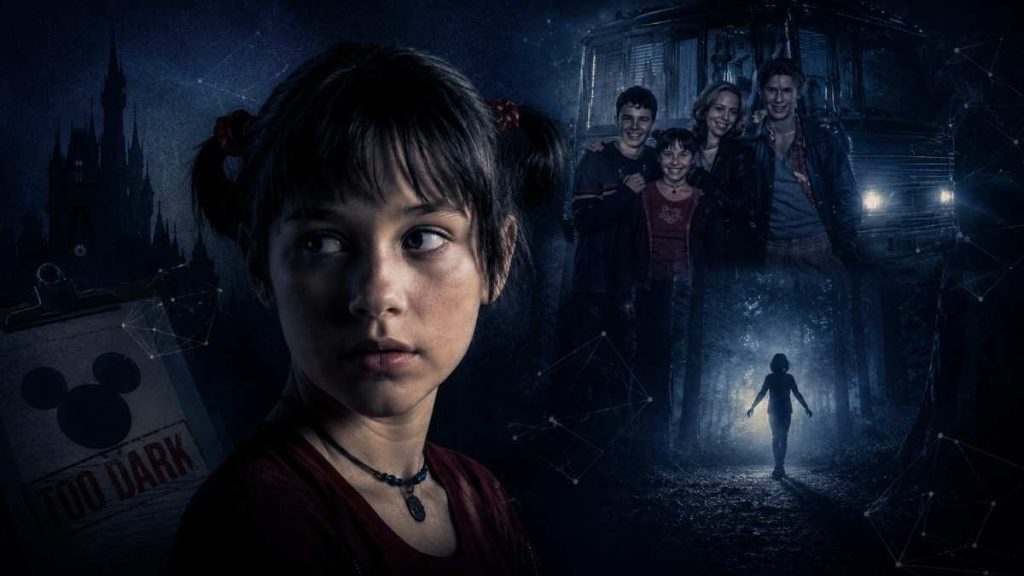
Why Did Fiona (Fi) Leave So Weird?
The official story, as maintained by the Disney Fandom wiki and repeated in most summaries, is that Cara DeLizia chose to leave So Weird to pursue projects outside the network. The framing is that this was a voluntary career decision, and that Disney then adapted by introducing a new character.
That story is incomplete.
In 2025, posts in the active r/SoWeird Reddit community referenced DeLizia herself addressing why she left, and the picture that emerged was more layered than a simple career pivot. DeLizia was a teenager during production. The context around a teenage actress’s creative satisfaction, contract situation, and relationship with a show that was actively being changed around her is not reducible to “she wanted adult roles.”
What the fan community had documented for years, and what DeLizia’s more recent comments appear to support, is that her departure was connected to the show’s creative direction change. The show she had signed on for was being altered in ways that affected the viability of her continued presence. Whether DeLizia chose to leave or was eased out is a distinction the official record has never fully resolved. What is clear is that the departure was not a clean, unilateral decision made in isolation from what Disney was already doing to the show.
This matters for understanding the cancellation story because the popular timeline gets the causality backwards. Most summaries present DeLizia’s departure as the trigger that forced Disney’s hand. The more accurate reading is that Disney’s creative intervention came first, and DeLizia’s exit followed from it.
What Happened to Clu in So Weird?
Clu, played by Eric Lively, was a central supporting character through seasons 1 and 2. His phaseout mirrors the broader pattern of the show shedding its original mythology. In the season 2 episode “Mutiny,” Clu’s storyline moved him toward college, which functioned as an in-story mechanism to reduce his presence. He appeared in fewer season 2 episodes after that point and made only a voice cameo in “Werewolf.” He did not return for season 3 at all.
The quiet removal of Clu is worth noting because it shows the season 3 reset was not limited to replacing Fi. The supporting cast built around Fi’s specific mythology was systematically phased out. By the time season 3 aired, the connective tissue of the original show was almost entirely gone.
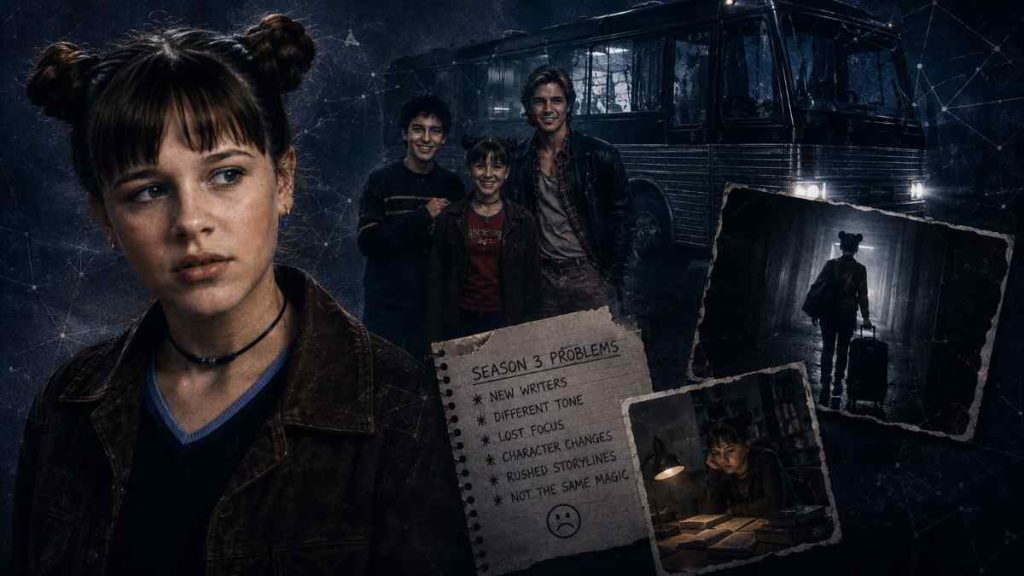
What Went Wrong With So Weird Season 3
Season 3’s failure was structural before a single episode aired. Alexz Johnson, who joined the show as new character Annie Thelen, was a capable actress who went on to earn her own dedicated following through her later work on Instant Star. The problem was never the performer.
The problem was that So Weird’s premise was inseparable from Fi Phillips. The show’s mythology existed because of one specific character’s grief and psychological state. Fi investigated the paranormal because her father was dead and she could not stop. Every creature, entity, and supernatural event in the show’s first two seasons connected back to that emotional core. Strip that away and you do not have a lighter version of the same show. You have a different show wearing the same title.
Annie Thelen had no equivalent driving motivation. Without an ongoing arc generating narrative momentum, season 3 defaulted to lighter standalone episodes. The paranormal elements that remained felt decorative rather than essential. Fan community analysis consistently documents audience disengagement across the season, though Disney did not release official viewership numbers.
What Was the Original Plan for Season 3?
According to documented accounts from The Screened Word’s recap of the show’s creative history, the intended season 3 would have continued developing and eventually resolved Fi’s paranormal mythology arc. The story that the writers planned to tell required continuity with everything that came before. Disney’s intervention replaced that arc entirely.
The season 3 that aired was not a modified version of the planned season 3. It was a fundamentally different show built from different premises. Fans who felt betrayed by season 3 were not being precious about change for its own sake. They were responding to a real discontinuity. The show they expected was never produced, and the audience could feel the difference even if they could not always articulate why.
So Was So Weird Actually Cancelled?
Technically, no. So Weird aired all three of its seasons without mid-run termination. Disney did not pull it off air or announce a cancellation. Every produced episode reached its audience. The show ended because Disney chose not to order a fourth season after season 3’s performance, which is a standard outcome rather than a dramatic execution.
The honest answer is more precise than yes or no: the show that fans knew as So Weird was cancelled in everything but name when Disney reformatted season 3. What continued under the title after DeLizia’s departure was a lighter paranormal show for kids, competently made, with no ongoing mythology and no structural reason to exist beyond its episode-by-episode entertainment value. That version then ended after one more year because it had already lost what made the original worth watching.
For contrast, shows covered in pieces about cancelled Nickelodeon series without finales were cut without resolution mid-story. So Weird at least aired all of its episodes. The tragedy is different: not an abrupt ending, but a slow replacement of what the show was with something it was never meant to be.
The combination that killed So Weird was specific and compounding. Disney’s discomfort with the show’s direction led to a mandate for lighter content. That mandate made the show’s original protagonist untenable in her original form. DeLizia’s departure removed the last structural pillar. The replacement lead, without a mythology to carry, could not give the audience a reason to stay. Season 3 underperformed and season 4 was never ordered.
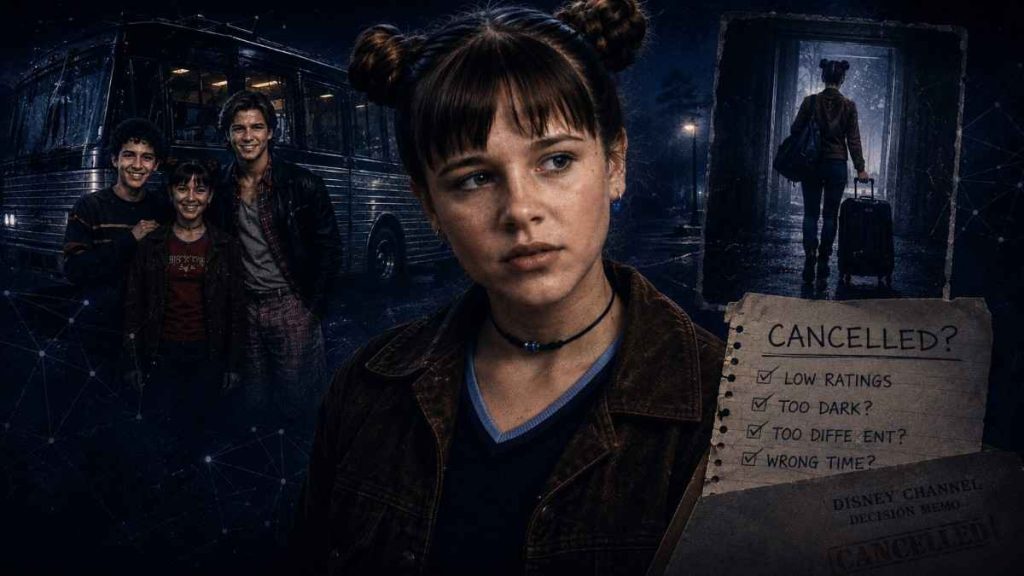
Why So Weird Still Has a Cult Following in 2025
The r/SoWeird subreddit is active in 2025, more than two decades after the show’s finale. CBR published a piece in 2024 arguing the show still deserves a real conclusion. The demand is real and documented.
Unresolved mythology creates the most durable fandoms. The story is still open in the audience’s imagination because it was never allowed to close on its own terms. Fi’s arc was interrupted. Jack Phillips’s story was never resolved. The world the show built in seasons 1 and 2 was abandoned rather than completed, and fans have been carrying the weight of that unfinished business ever since.
So Weird was also ahead of its target demographic in a way that becomes more obvious with distance. A show about a teenager processing parental death through paranormal investigation, with a genuine mythology arc and consistent emotional stakes, would find a substantial audience today in an era of prestige teen content. Stranger Things, The Haunting of Hill House, and Wednesday all share DNA with what So Weird was attempting in 1999.
DeLizia’s 2025 comments reignited fan discussion precisely because the audience never fully accepted the official closure narrative. They were not wrong to be skeptical. The show they watched in seasons 1 and 2 was replaced, not concluded. So Weird is not currently available on Disney Plus, an absence rooted in music licensing complications that commonly affect shows built around original songs. The broader pattern of Disney Channel content not on Disney Plus has made it harder for new audiences to discover the show at all. No reboot is currently in development, but the audience is there, still waiting for the ending that season 3 was never going to give them.
FAQ
Why did Cara DeLizia leave So Weird?
The explanation Disney circulated for years was that DeLizia left to pursue projects outside the network, framing it as a voluntary career decision. DeLizia’s own comments in 2025 suggest that explanation was incomplete. Her departure appears to have been connected to Disney’s decision to reformat the show before season 3, which changed the creative direction in ways that affected her continued involvement. The full context of her exit has never been officially documented in detail, and the departure was not as simple as a clean career pivot.
Was So Weird cancelled because it was too dark for Disney Channel?
Not in the traditional sense. Disney did not cancel So Weird mid-run because of its content. The show aired all three seasons. What Disney did was intervene before season 3 to mandate a lighter, more episodic format, abandoning the mythology arc the writers had planned. That reformatting made the show unsustainable as what it originally was, which contributed to the conditions that ended it after season 3. The darkness did not trigger a cancellation. It triggered a creative overhaul that functionally ended the show before it officially concluded.
Why was season 3 of So Weird so different?
Season 3 replaced lead character Fi Phillips with a new character named Annie Thelen, played by Alexz Johnson, and shifted away from the ongoing paranormal mythology that had defined seasons 1 and 2. Disney had pushed for a lighter, more episodic format before season 3 began. The original plan for season 3 involved continuing Fi’s arc and her search for answers about her father’s death. Without Fi’s mythology providing narrative momentum, season 3 defaulted to standalone episodes with no ongoing arc, which disconnected it structurally from the show that had built the audience.
Is So Weird on Disney Plus?
As of 2025, So Weird is not available on Disney Plus. The absence is tied to music licensing complications, a common obstacle for shows that featured original songs throughout their run. Clearing those rights for a streaming platform is expensive and often not prioritized for older catalog titles. This is a separate issue from the show’s cancellation and has more to do with rights logistics than any deliberate decision to keep the show unavailable.
What happened to the cast of So Weird after the show ended?
Cara DeLizia largely stepped back from major on-screen projects after So Weird. Alexz Johnson went on to star in the Canadian series Instant Star, which earned her a significant fanbase of her own. Eric Lively, who played Clu, continued working in television and film. Mackenzie Phillips, who played Molly, had an established career before So Weird and continued working after. The show did not launch any cast members to Disney-level stardom in the way contemporaneous shows did, which reflects how thoroughly it was sidelined before it ended.
Could So Weird have survived if Fi stayed?
Not without Disney’s cooperation. Even if DeLizia had stayed, the network had already decided to reformat the show away from its mythology arc. A version of season 3 with DeLizia present but with Disney still mandating lighter episodic content would have produced a different show than seasons 1 and 2. The real problem was the creative intervention, not the casting change. DeLizia’s departure made the break more visible and more complete, but the decision to dismantle the mythology had already been made before her exit.
Why do people still care about So Weird in 2025?
The show’s mythology was never resolved. Fi’s arc, built around grief and an ongoing paranormal investigation with accumulating stakes, was abandoned mid-story when season 3 reset the premise. Unresolved story arcs generate lasting fandoms because the audience’s imagination has to fill the gap. The r/SoWeird subreddit remains active, and DeLizia’s 2025 comments reignited discussion across fan communities. The show was also genuinely unusual for children’s television and would fit naturally into the current landscape of prestige teen supernatural content, which makes its absence feel more acute rather than less.
The Show That Ended Before It Ended
The popular version of So Weird’s story puts the blame on Cara DeLizia’s departure. She left, the show had to adapt, the adaptation failed, the show ended. That version is satisfying because it has a clear cause and a clear effect.
The real version is less clean. Disney had already decided what it wanted season 3 to be before DeLizia left. The show’s mythology was being dismantled from above. The original season 3 plan was rejected. DeLizia’s exit was downstream of those decisions, not the origin of them. By the time Annie Thelen appeared on screen, the show that built the audience had already been cancelled in the room where creative decisions get made.
What that means for anyone who bounced off season 3 as a kid and always felt like they were missing something: you were not imagining it. There was a version of So Weird that was supposed to exist and did not. The season 3 you watched was the result of a network deciding that a mythology-driven show about grief and paranormal investigation was not the product it wanted anymore. That decision was made before a frame of season 3 was filmed.
The show is worth finding if you have not revisited it as an adult. Seasons 1 and 2 hold up as genuinely unusual television for their era. The mythology is incomplete, but it is real, and it earns the feelings the fandom has never fully let go of.