Why Nickelodeon Shows From the 2000s Kept Ending Without a Goodbye
The short answer is that Nickelodeon operated on an informal episode-count ceiling, and most shows hit cancellation territory before their writers finished the story.
Fan communities have referred to this as the “60-episode rule” for years, though Nickelodeon never put it in writing publicly. The practical effect was consistent: once a show reached somewhere between 52 and 65 episodes, renewal became unlikely regardless of how the ratings looked. The show had served its commercial purpose in the rotation. A new show could take its slot.
Network scheduling priorities made this worse in the mid-2000s. Nick was rotating new programming into peak time slots at an aggressive pace. A show performing adequately but not spectacularly could be dropped simply to make room. There was no need to produce a goodbye episode. The slot just got reassigned.
Animated shows were especially exposed to this. Animation production timelines are long. A cancellation decision often arrived after writers had already started work on the next season. Story threads that were mid-development had nowhere to go. The episodes already in production aired. Everything after that disappeared.
The contrast with Disney is real. Disney Channel in this era had a habit of building closing events around series finales, which is part of the way Hannah Montana’s ending was handled as a cultural moment. Nickelodeon, during the same window, rarely did any of that. Shows stopped appearing in the schedule with no announcement and no ceremony.
This was not unique to Nickelodeon. The same pattern hit Phil of the Future on Disney, which shows the problem existed across the industry. Nick was just more consistent about it, and the volume of shows it happened to during one decade makes the pattern visible in a way it is not elsewhere.
The Three Categories: How to Read This List
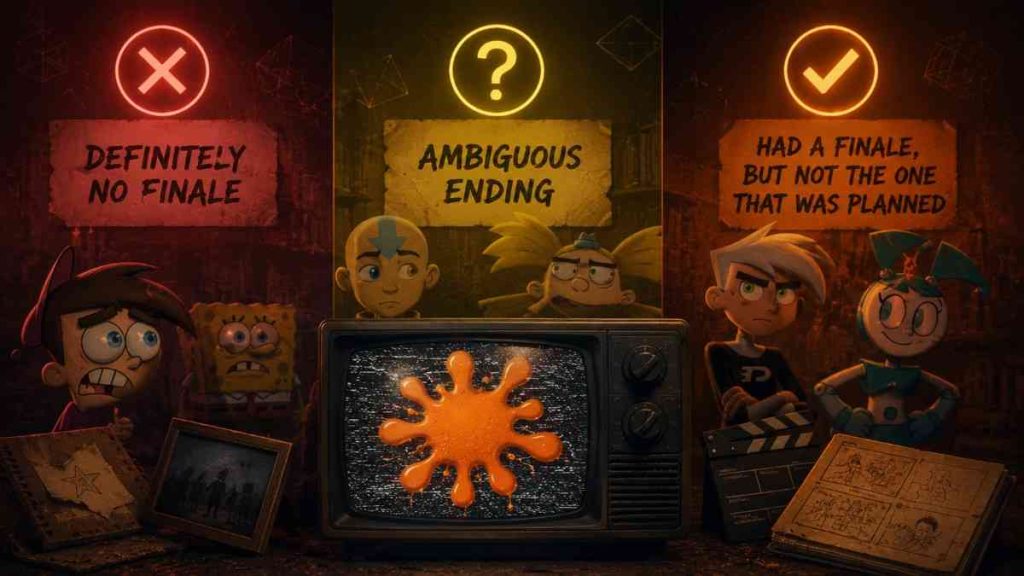
Before getting into the individual shows, it helps to know what you are looking at. Not every cancelled show without a finale is the same kind of cancelled.
Category 1: Definitely No Finale
These shows ended mid-arc with no attempt at a closing episode. The last episode was a regular installment written as though the next episode was coming. No storyline resolution, no character send-offs, no awareness that this was the end.
Category 2: Ambiguous Ending
These shows have a final episode that could function as a conclusion if you want it to. But it was not written as one, and major arcs were left open. The reader can decide how much closure they want to assign to it.
Category 3: Had a Finale, But Not the One That Was Planned
These shows got a closing episode after cancellation was confirmed. The episode exists. But it was rushed, truncated, or clearly missing the arc the creators had in mind. A finale happened. It just was not the right one.
Category 1: Nickelodeon Shows That Just Stopped
These are the cleanest cases. The show ended. Nobody was told. The last episode was written as a regular installment because the writers did not know it was the last one.
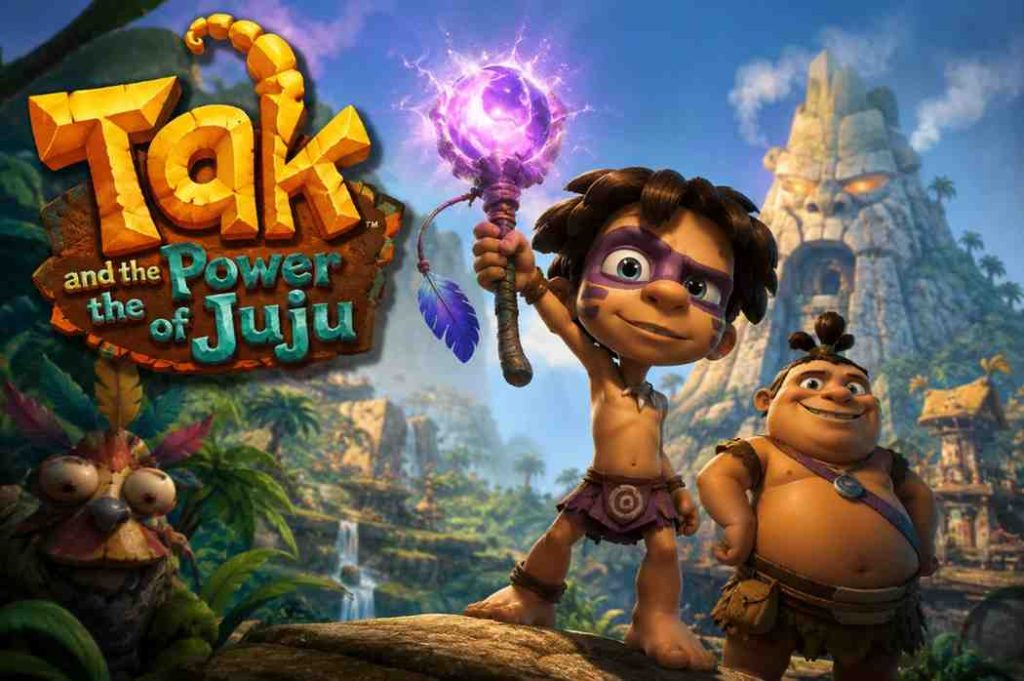
Tak and the Power of Juju (2007–2009)
Tak ran for one season of 20 episodes and was tied to a THQ video game franchise from the start. That commercial relationship was the show’s foundation and its liability. When the Tak games underperformed and THQ’s broader relationship with Nickelodeon cooled, the show lost its commercial rationale almost immediately.
The last episode was “Tlaloc’s Day Off,” the 20th episode of the first and only season. The ongoing dynamic between Tak and Lok was unresolved. The show’s central conflict with Tlaloc had no conclusion. The episode ended the way any mid-season episode would end.
No creator statements about planned future arcs are on record. The THQ game franchise itself was cancelled in 2009, which closed any realistic revival conversation for good.
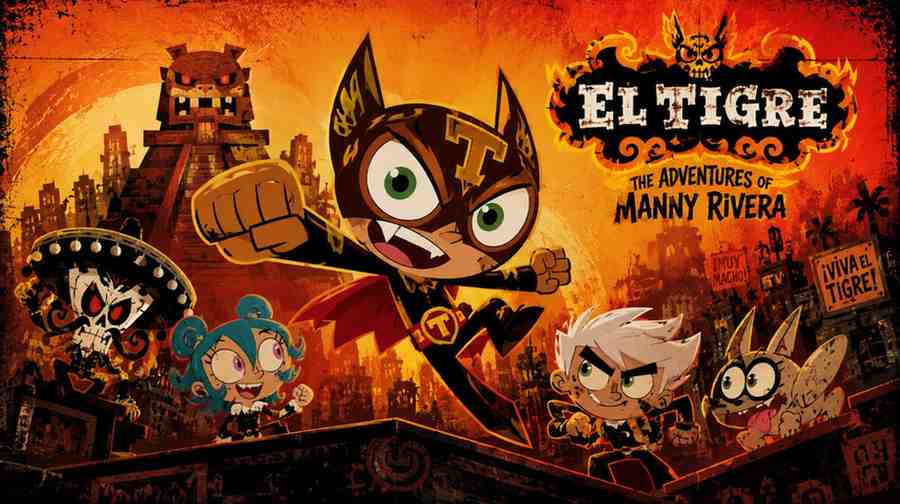
El Tigre: The Adventures of Manny Rivera (2007–2008)
El Tigre is the cancellation that still comes up in animation conversations because of who made it and what it was trying to do. Created by Jorge R. Gutierrez and Sandra Equihua, the show ran 26 episodes across one season. Gutierrez and Equihua went on to direct The Book of Life, so the talent was never in question.
The show received two Annie Award nominations and had a dedicated audience. Nick moved it around the schedule repeatedly through its run. The ratings dropped because of the scheduling instability, and then Nick used those ratings as the cancellation justification.
The entire premise of El Tigre was whether Manny Rivera would choose to be a hero or villain. That question was never answered. The last episode, “Fool’s Gold / Luchadores of the Lost World,” ended without resolving the show’s central moral arc. Gutierrez has said publicly that Season 2 would have explored his grandmother’s backstory and given Manny a definitive moral choice. That story does not exist anywhere.
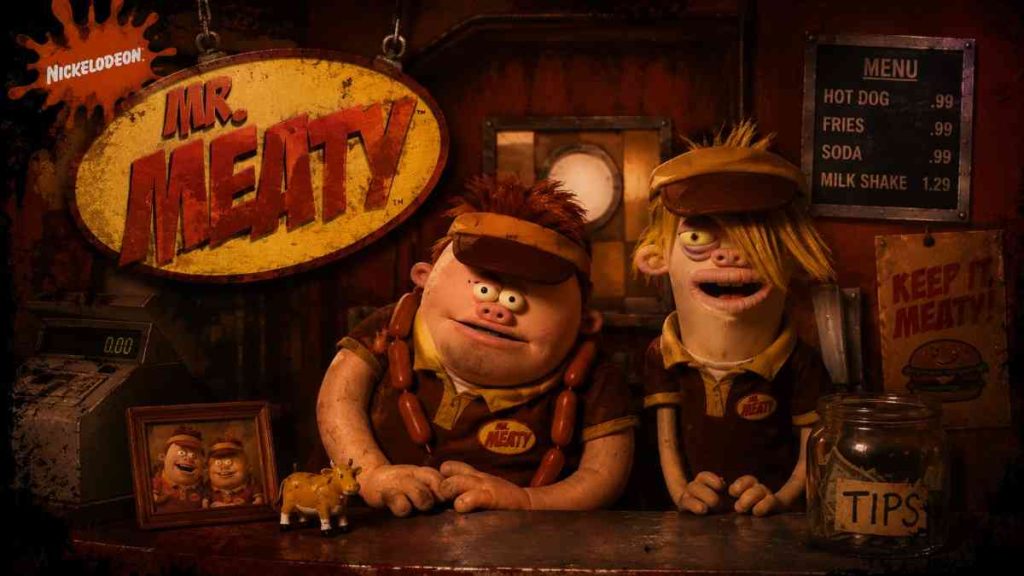
Mr. Meaty (2005–2009)
Mr. Meaty is the show people either remember vividly or have never heard of, with very little middle ground. A Canadian puppet comedy produced by Jamie Shannon and Jason Hopley, it was set inside a shopping mall food court and was deliberately unsettling in a way that was the entire artistic point. It ran 26 episodes across two seasons and built a cult following that has never fully gone away.
The last episode was “Sell Out / The Legend of Kid Rot.” No resolution on the characters’ ongoing ambitions. No conclusion to the mall’s escalating strangeness. The show just stopped. Shannon and Hopley made no public statements about planned future directions, and the cult following that exists now online still talks about the show as though it is unfinished, because it is.
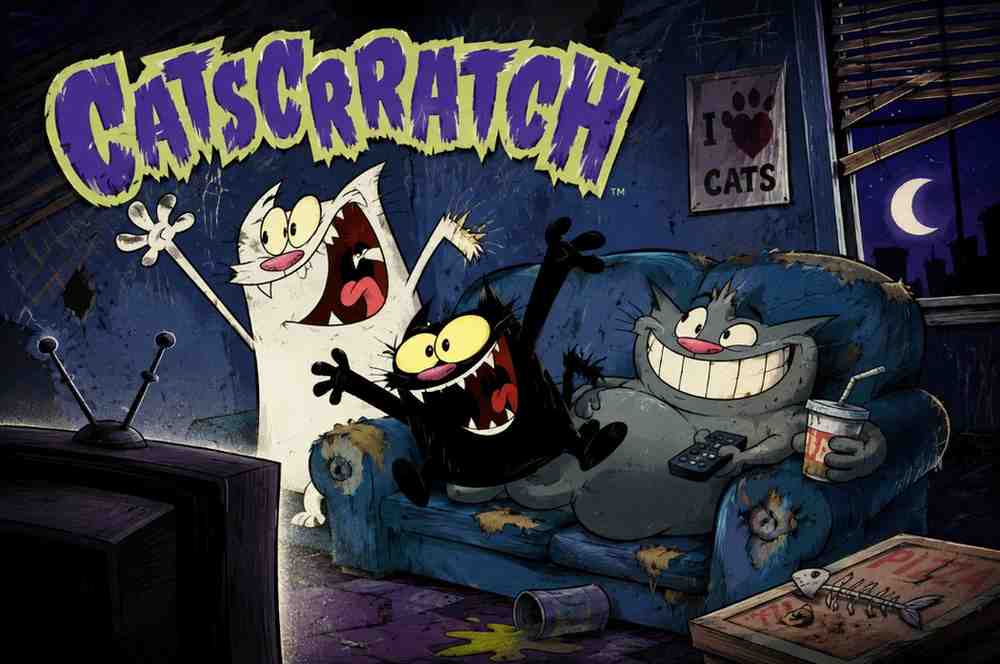
Catscratch (2005–2007)
Based on Doug TenNapel’s graphic novel Gear, Catscratch ran 20 episodes across two seasons. TenNapel has spoken in various public forums about feeling the show was cancelled before it found its audience. The show followed three cats adjusting to life after inheriting a mansion, with Mr. Blik’s ambitions and ego driving most of the ongoing tension.
The last episode was “The Blik Identity / Requiem for a Drowned Clown.” Side characters introduced in the second half of the run were left with open threads. Mr. Blik’s development as a character was mid-trajectory when the show ended. TenNapel has indicated in interviews that he had a longer arc in mind for Mr. Blik’s growth. A third season was never produced.
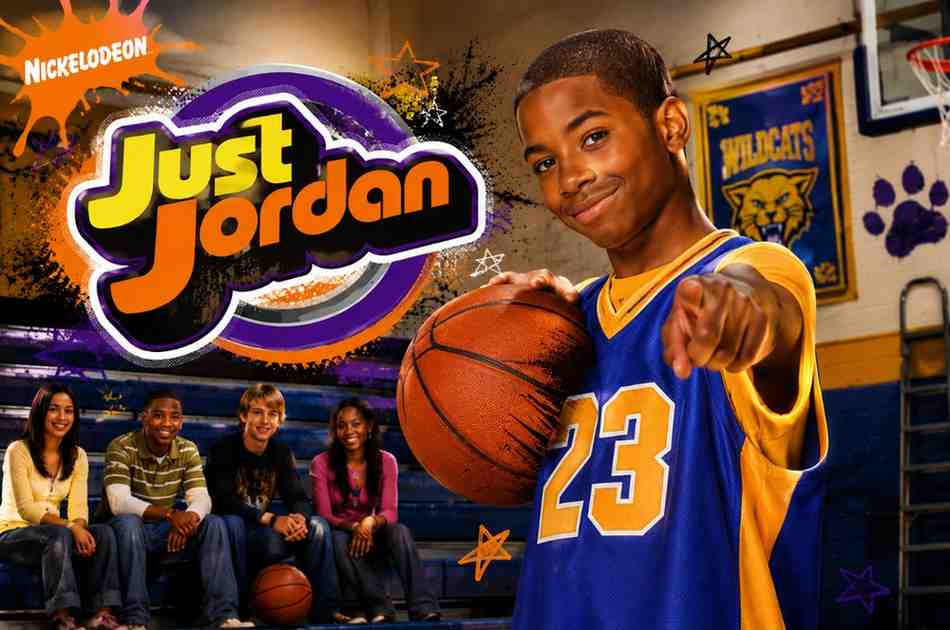
Just Jordan (2007–2008)
Just Jordan ran 20 episodes over two seasons and starred Lil JJ as a kid navigating the tension between his athletic ambitions and his creative side. It was part of Nick’s effort to build a stronger live-action lineup with Black lead characters during this period. The show was moved around the schedule repeatedly and never built a consistent audience in any one slot.
Romantic arcs were left unresolved. The show’s central question about who Jordan was going to become had no answer. No creator statements about a planned Season 3 are on record, and the cancellation was quiet enough that there was no public conversation about what the show was going to do next.
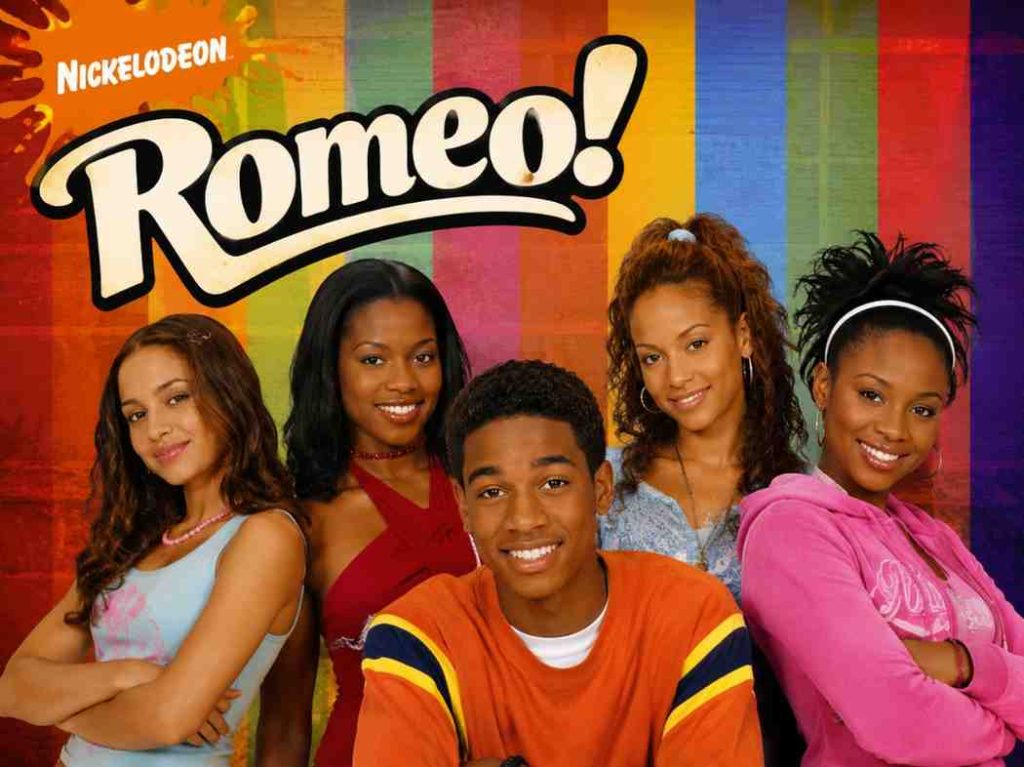
Romeo! (2003–2006)
Romeo! ran 53 episodes across three seasons. That number is not a coincidence. It put the show right at the edge of Nick’s informal renewal ceiling, and the network did not renew it. Starring Lil’ Romeo (Romeo Miller) alongside his real father Master P, the show had a genuine family dynamic at its center that gave it something most Nick live-action shows did not have.
Several romantic storylines were mid-development when the show ended. Romeo’s evolving relationship with his father had more story left in it. No finale was produced, and no public statements from the creative team about planned Season 4 arcs exist.
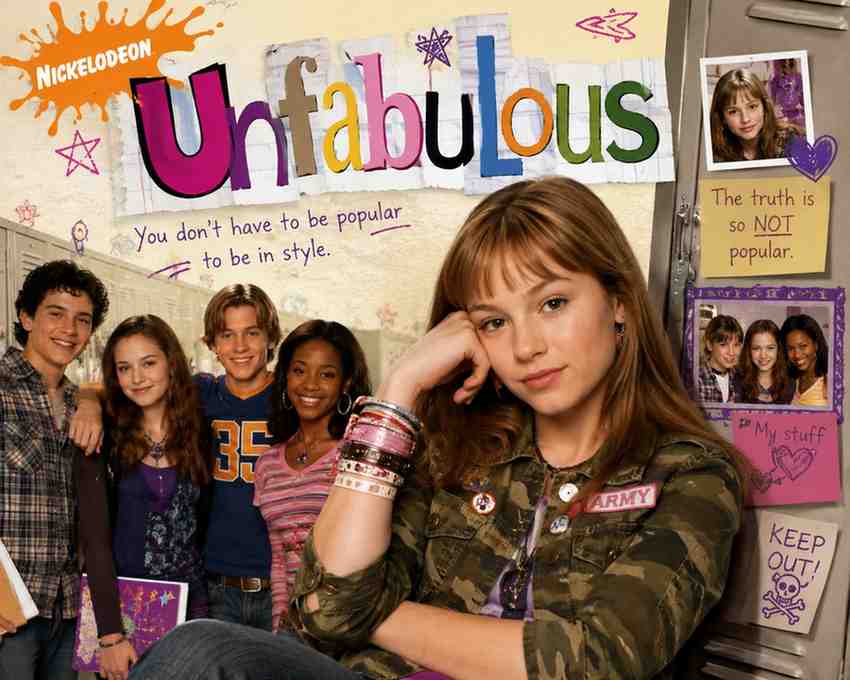
Unfabulous (2004–2007)
Unfabulous starred Emma Roberts as Addie Singer, a middle schooler who processed her feelings by writing songs. The show ran 40 episodes over three seasons and ended when Roberts was not asked back for a fourth season. No series finale was produced.
The last episode was “The Ex-Files,” the 13th episode of Season 3. Addie’s romantic arc with Jake was unresolved. Her friendships were mid-development. The episode ended as though another season was coming. Roberts moved on to film work and eventually to American Horror Story, and the show has no public record of creator statements about what Season 4 was going to cover.
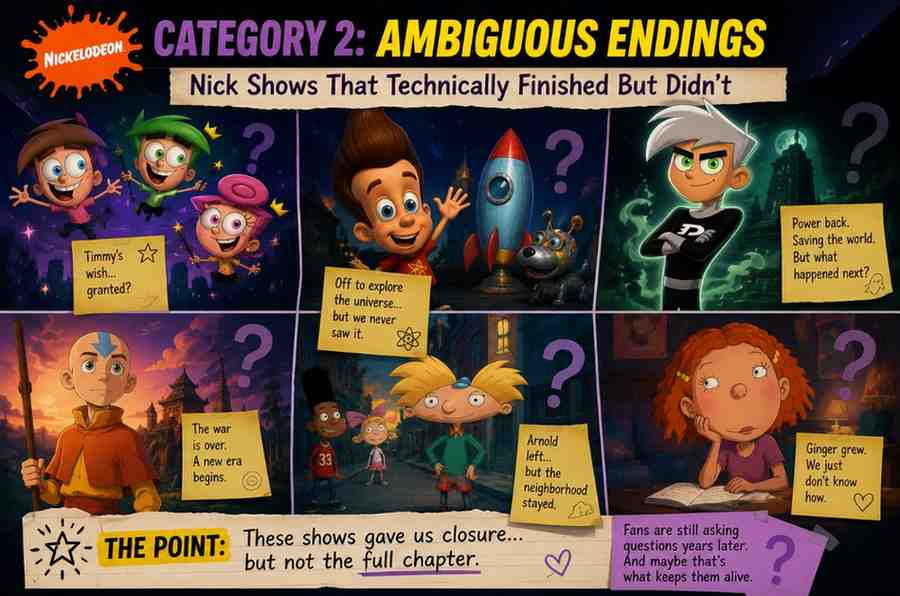
Category 2: Ambiguous Endings — Nick Shows That Technically Finished But Didn’t
These shows have a final episode. The question is whether that episode counts as a real ending.
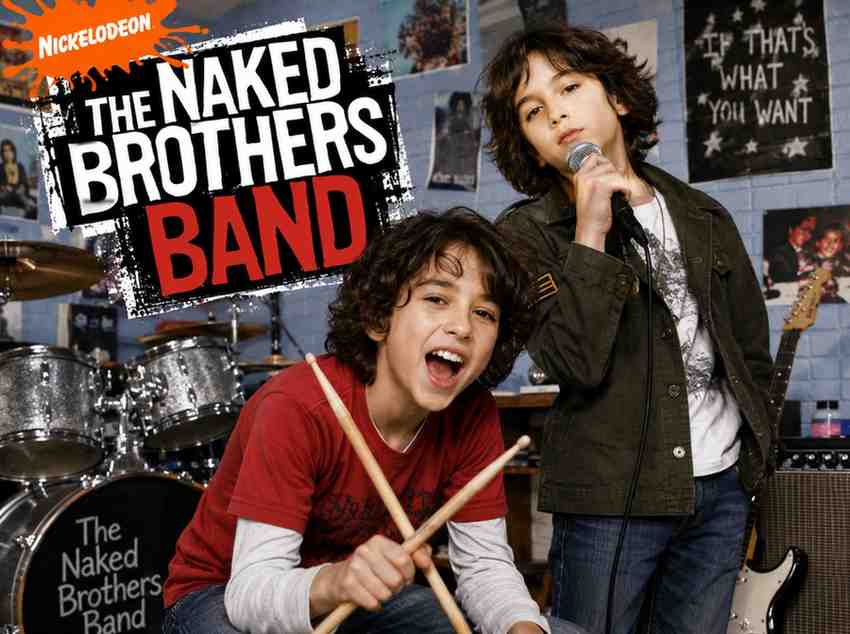
The Naked Brothers Band (2007–2009)
The Naked Brothers Band was a mockumentary built around real brothers Nat and Alex Wolff, created by their mother Polly Draper. It ran 25 episodes plus a movie and occupied a genuinely odd space on Nick’s schedule in a way that made it either charming or bewildering depending on the viewer. Draper has said the show was always meant to end when the boys grew up, and there is an argument this was a natural stopping point rather than a cancellation in the traditional sense.
What it left open was the long-term trajectory of the band’s ambitions and the Nat and Rosalina relationship, which had enough story weight built up that its non-resolution registered. The ending had some closing energy. It did not have a completed arc.
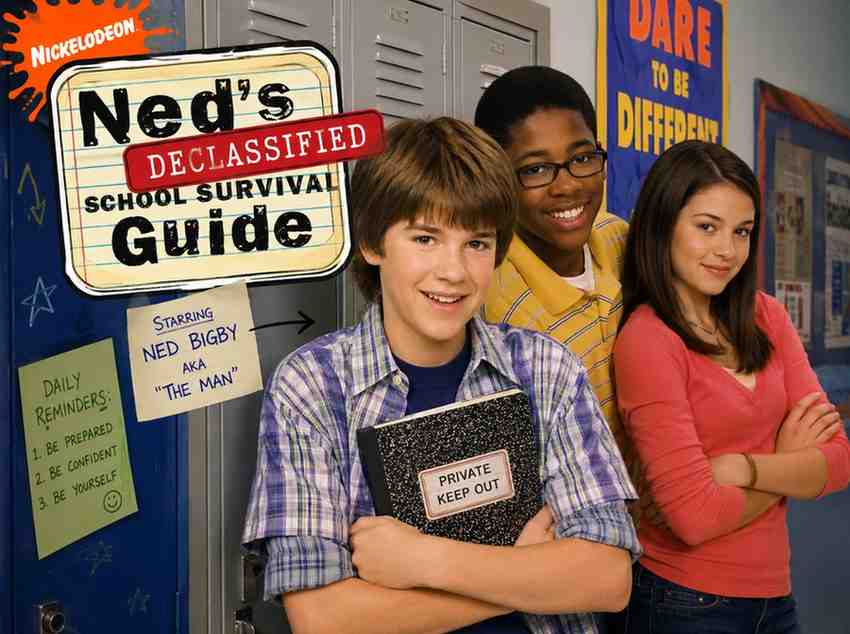
Ned’s Declassified School Survival Guide (2004–2007)
Ned’s Declassified ran 54 episodes across three seasons and is one of the better-handled ambiguous endings on this list, which is a compliment that comes with an asterisk. The last episode was “Field Trips / Dodgeball.” Ned and Moze kissed, and for the show’s primary will-they-won’t-they arc, that moment functions as a real resolution.
Cookie’s arc was not resolved. The show had been building toward a middle school graduation storyline, which was the natural narrative endpoint fans expected and which never aired. Call this one the best version of an ambiguous ending. It is not a great situation. It is just the least-bad outcome on a list full of harder stops.
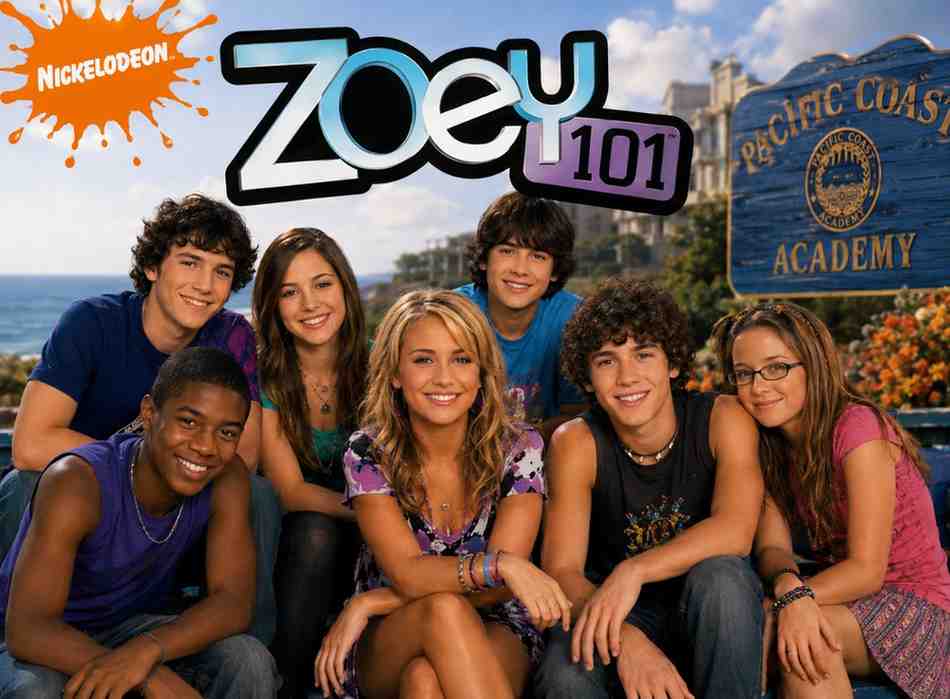
Zoey 101 (2005–2008)
Zoey 101 ran 61 episodes across four seasons. The final episode, “Chasing Zoey,” resolved the Zoey and Chase relationship and is frequently cited as a proper series conclusion. The debate about whether it counts is worth having.
“Chasing Zoey” was greenlit in a context that matters. Jamie Lynn Spears’ pregnancy became public in late 2007, and Nickelodeon quietly began winding down the show. The finale was produced in response to that situation, not as the creative team’s planned endpoint for the series. Multiple cast members have said the creative team did not have a full-closure plan when the final episode was greenlit. What aired was a controlled stop, not the planned finale.
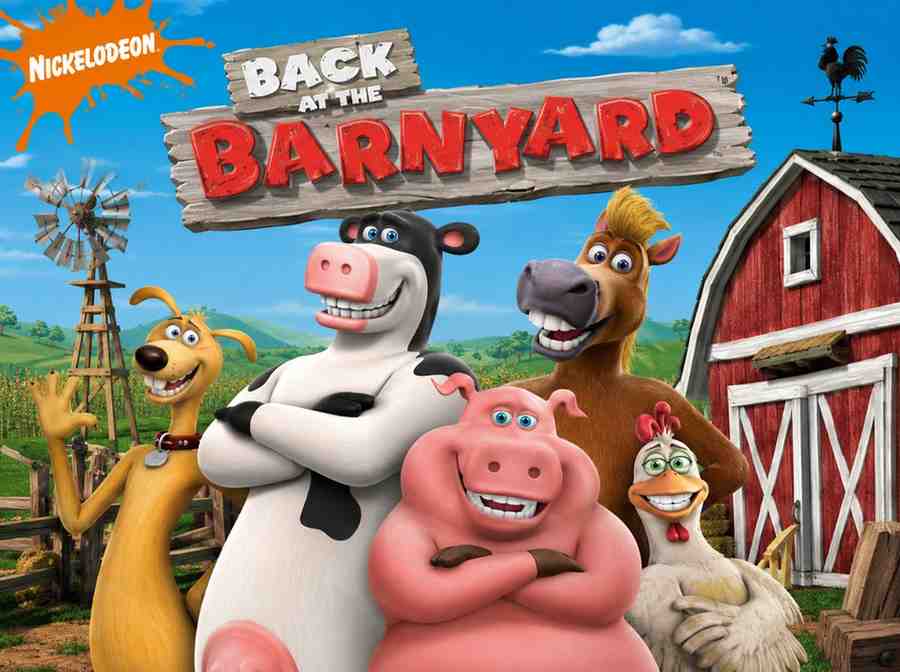
Back at the Barnyard (2007–2011)
Back at the Barnyard ran 52 episodes. The last episode was “Moo-Tallica / Cowman and Ratboy Forever.” The word “Forever” in that title feels like it wants to be a bow on the package, but it was not written that way. The show had been renewed and then quietly cancelled, and the last episode aired without any series-closing framing. Nothing in the episode indicates the writers knew it was the last one.
Category 3: Had a Finale, But Not the One That Was Planned
These shows got closing episodes. The episodes exist. They are just not the ones the creators were building toward.
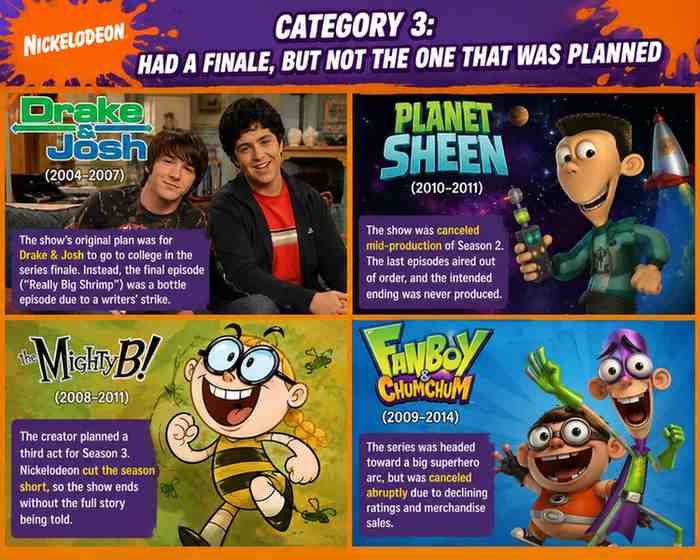
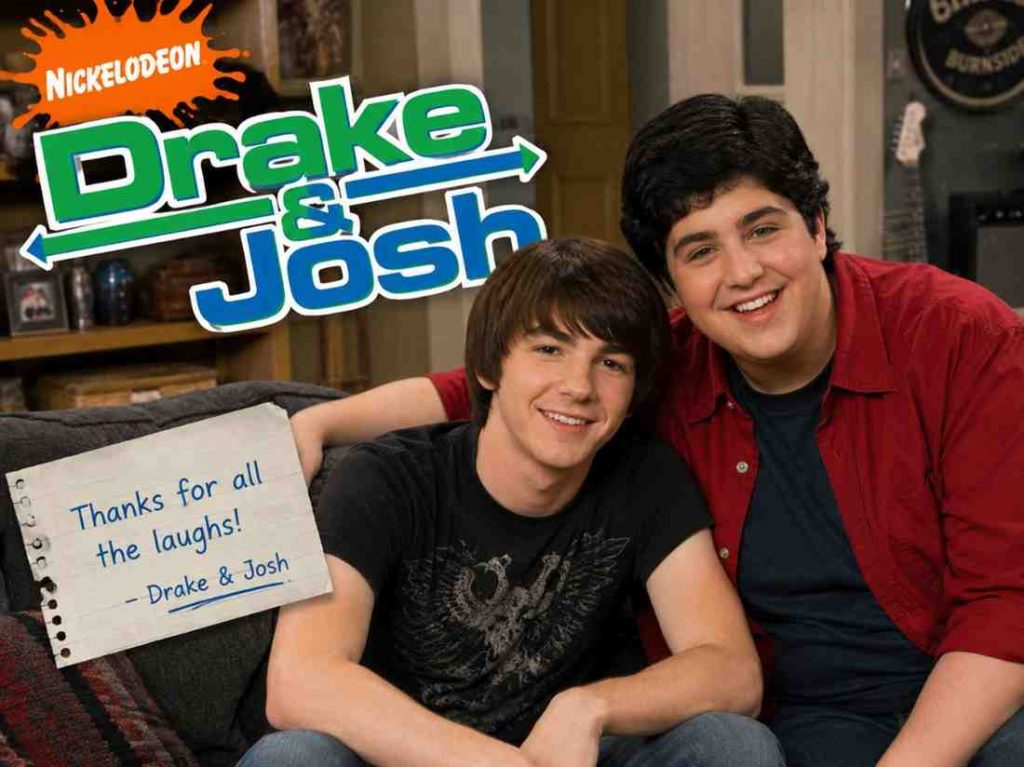
Drake and Josh (2004–2007)
Drake and Josh ran 57 episodes across four seasons and is one of the most beloved live-action Nick shows of the decade. The finale, “Really Big Shrimp,” was a two-part special that resolved Drake’s music career storyline and gave the characters a send-off. It functions as a conclusion and was made as a finale, which gives it more closure than most shows on this list got.
What fans have debated for years is how much story the show still had in it. Josh Peck and Drake Bell were both growing into their characters in ways that had more runway. The category placement here is about the gap between what was planned and what aired, not about the quality of the episode itself.
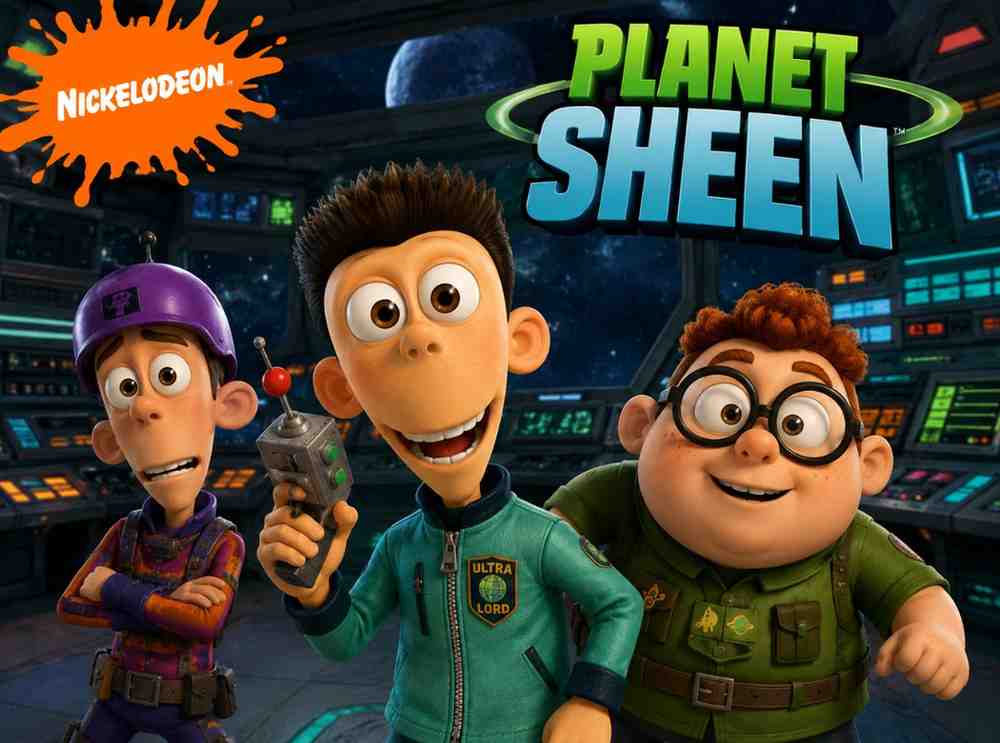
Planet Sheen (2010–2011)
Planet Sheen is a spin-off of Jimmy Neutron, following Sheen Esteveda after he crash-landed on an alien planet. It ran 26 episodes across one season. The show’s premise had a built-in endpoint: Sheen getting home. That endpoint was never reached.
The final episode aired without a resolution to Sheen’s situation. No return home. No closure on the alien relationships the show had spent a season building. Creator statements about planned future arcs are not on record, and the show’s mixed reception gave Nick limited commercial reason to continue it.
The Mighty B! (2008–2011)
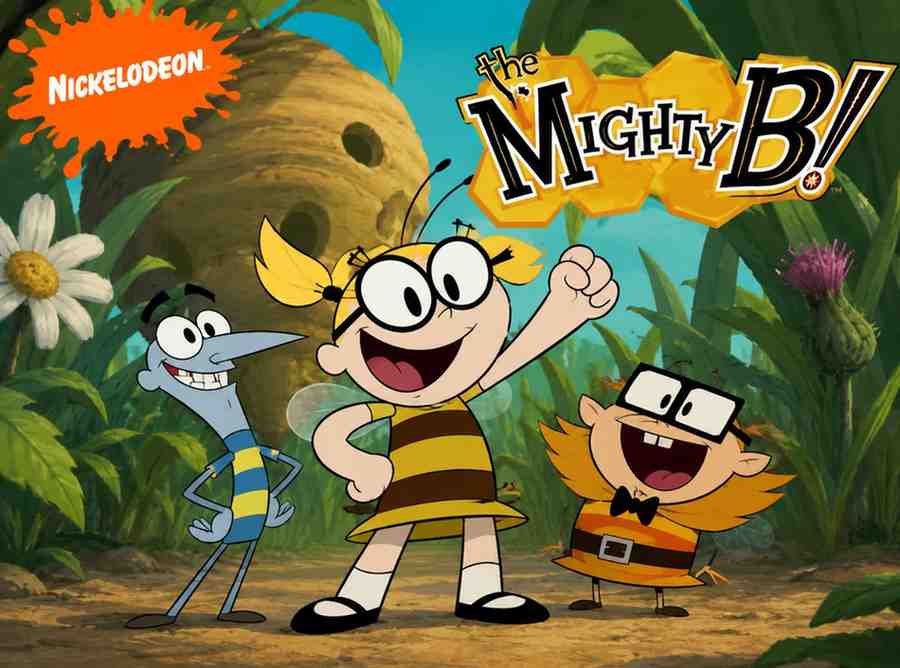
The Mighty B! ran 52 episodes across two seasons and followed Bessie Higgenbottom, a girl scout who believed that earning every badge would transform her into a superhero. That premise is one of the most genuinely specific long-form setups Nick animated during this period. The show was created by Amy Poehler, Cynthia True, and Erik Wiese, with Poehler voicing Bessie and serving as the creative engine behind the show’s sensibility.
As Parks and Recreation grew into a major commitment for Poehler, her availability for the show narrowed. The last episode resolved nothing about whether Bessie would ever become The Mighty B. That question was the whole show. Poehler has been asked about the show in various interviews, and the consistent answer is that the Parks and Recreation schedule made continuing The Mighty B difficult.
Fanboy and Chum Chum (2009–2014)
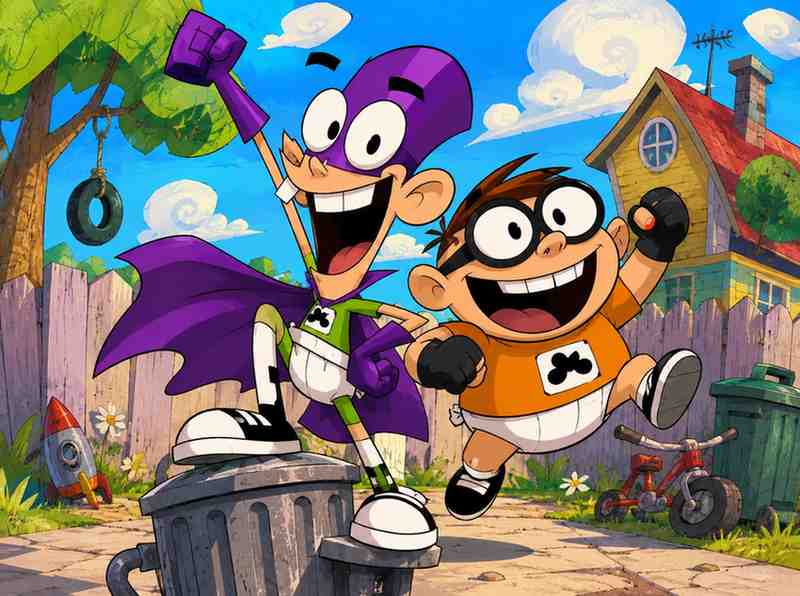
Fanboy and Chum Chum ran 52 episodes across two seasons. It occupies a different category from most shows on this list because the reaction to its cancellation was more complicated. Nick’s shift to CGI animation for the series generated significant negative response from both audiences and animators, and the fan community had a range of feelings about whether more episodes were wanted.
The last episode aired in 2014 without a series-closing frame. No character arcs were resolved because the show’s format did not build character arcs in the traditional sense. The finale situation here is less about unfinished story and more about a show ending without ceremony, which is consistent with how Nick handled this era’s exits.
Why Animated Shows Got Hit Hardest
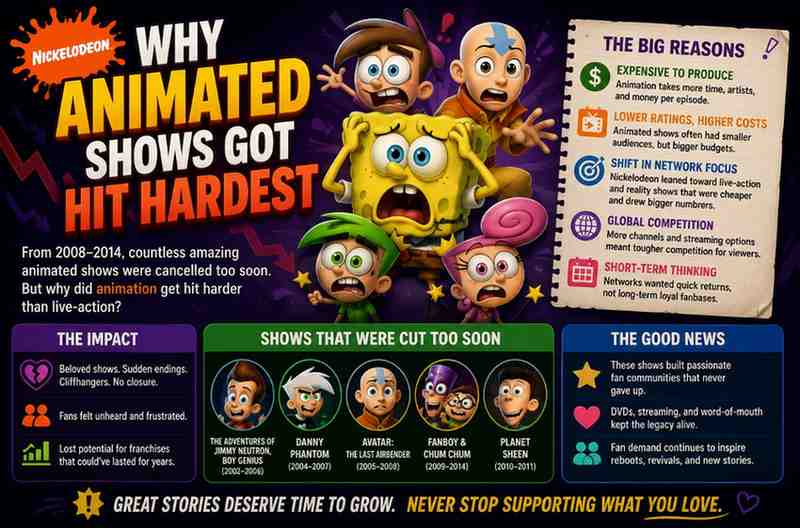
Across this list, animated shows make up a disproportionate share of the worst exits. That is not a coincidence.
Live-action shows can adjust mid-production. Animation cannot.
When a live-action show gets a cancellation signal, producers sometimes have enough runway to write a closing episode, or at minimum to adjust the final episodes already in production. Animation pipelines do not work that way. A cancellation decision lands on a show where the next 8 to 12 episodes are already written, sometimes partially produced, and none of them are written as endings.
The result is that every animated show cancelled without warning left behind episodes designed to open story threads, not close them. El Tigre, Tak, Catscratch, Mr. Meaty, Planet Sheen, The Mighty B: all of them ended on installment episodes because the writers were preparing for seasons that were never going to happen.
Nick’s scheduling approach in this era treated animated shows as interchangeable slot-fillers more readily than live-action shows. Live-action shows had stars with name recognition and press relationships. Animated shows had characters. When the decision to pull a show came down, the human cost of an animated cancellation was less visible, which made the decision easier.
The Shows That Deserved Better: A Reference List
For quick reference, here is the complete breakdown of shows covered in this piece, sorted by category.
Category 1: Definitely No Finale
- Tak and the Power of Juju (2007–2009)
- El Tigre: The Adventures of Manny Rivera (2007–2008)
- Mr. Meaty (2005–2009)
- Catscratch (2005–2007)
- Just Jordan (2007–2008)
- Romeo! (2003–2006)
- Unfabulous (2004–2007)
Category 2: Ambiguous Ending
- The Naked Brothers Band (2007–2009)
- Ned’s Declassified School Survival Guide (2004–2007)
- Zoey 101 (2005–2008)
- Back at the Barnyard (2007–2011)
Category 3: Had a Finale, But Not the One That Was Planned
- Drake and Josh (2004–2007)
- Planet Sheen (2010–2011)
- The Mighty B! (2008–2011)
- Fanboy and Chum Chum (2009–2014)
FAQ
Which Nickelodeon shows from the 2000s never got a proper series finale?
The clearest cases are El Tigre, Tak and the Power of Juju, Mr. Meaty, Catscratch, Just Jordan, Romeo!, and Unfabulous. These shows ended on regular installment episodes with no attempt at a closing arc. Ned’s Declassified, Zoey 101, and Back at the Barnyard fall into a murkier category where the last episode exists but was not written as a finale. Drake and Josh and The Mighty B got closing episodes that did not match the creative team’s original plans.
What was the Nickelodeon 60-episode rule?
It was never a formal written policy. Fan communities coined the term to describe an observable pattern: once a Nickelodeon show reached roughly 52 to 65 episodes, renewal became unlikely regardless of ratings performance. The practical effect was that most shows hit cancellation territory before their writers had finished the intended story. Romeo! ended at 53 episodes, Ned’s Declassified at 54, Back at the Barnyard at 52, and Fanboy and Chum Chum at 52, which is a cluster that is hard to dismiss as coincidence.
Did El Tigre’s creator ever talk about what Season 2 was going to be?
Yes. Jorge R. Gutierrez has said in public interviews that Season 2 would have explored the backstory of Manny’s grandmother and given Manny a definitive choice between hero and villain, which was the show’s unresolved central question. The show was cancelled after one season despite Annie Award nominations. Gutierrez went on to direct The Book of Life. The El Tigre story he planned was never told.
Did Ned’s Declassified have a real ending?
Partially. The final episode gave Ned and Moze a kiss, which resolves the show’s main romantic arc. That is a real narrative conclusion for that specific thread. Cookie’s arc was left unresolved, and a planned middle school graduation storyline never aired. Most fans remember the Ned and Moze moment and treat it as an ending. Whether that counts depends on how much of the show you were watching for the parts that did not get resolved.
Why did Nickelodeon cancel shows without giving them a finale?
The combination of an informal episode ceiling and aggressive slot rotation made finales structurally unlikely for most shows. Nick was prioritizing new programming in peak slots throughout the mid-2000s. A show performing adequately but not spectacularly could lose its slot to something new. Once the decision came down, there was no standard process for producing a closing episode. Shows in animation were especially vulnerable because cancellation decisions arrived after writing was already underway on future seasons, leaving those threads permanently open.
Was Zoey 101 actually cancelled or did it end on purpose?
It was a managed stop rather than either a true cancellation or a planned finale. Jamie Lynn Spears’ pregnancy became public in late 2007, and Nickelodeon moved to wind down the show quietly. The finale, “Chasing Zoey,” was produced in response to that situation. It resolved the Zoey and Chase relationship and functions as a conclusion. Multiple cast members have said the creative team did not have a clean exit plan when the episode was greenlit. The finale exists, but it was not the ending the show was originally building toward.
Which Nickelodeon animated show had the most unfinished story when it was cancelled?
El Tigre is the strongest case. The show’s entire premise was a moral question that was never answered. Manny Rivera was caught between heroism and villainy, and the creators had a planned arc for Season 2 that would have given him a definitive choice. The Mighty B! is the second-strongest case, because the show’s premise of Bessie becoming a superhero after earning every badge was the explicit narrative promise of the series, and that promise was never kept. Both shows had built-in endpoints their creators intended to reach and never did.
The Bigger Picture
The pattern across this list is not a coincidence, and it is not nostalgia making things look worse than they were. Nickelodeon between 2000 and 2010 operated a scheduling and renewal system that made the finale a rare outcome rather than a standard one. Most shows were not cancelled because they failed. They were cancelled because they reached a threshold, and reaching that threshold meant the slot had more value as real estate for something new than as a home for something existing.
The shows on this list were not casualties of bad ratings or creative collapse. They were casualties of a system that treated episode count as an expiration date and treated goodbye episodes as optional extras that nobody was going to produce if nobody demanded them. Nobody at Nickelodeon was obligated to tell El Tigre’s writers to wrap up Manny’s arc. Nobody told Unfabulous to give Addie a last song. The system did not require it, so it did not happen.
If you grew up watching these shows, the list is longer than you probably thought. That is the real finding here. This was not a few unlucky shows. It was a default outcome for most shows that landed in a specific episode range during a specific decade of Nick’s scheduling history. The shows deserved better. Most of them never got it.