
How Does It Starts With Us End? The Quick Answer
Lily ends up with Atlas, not Ryle. Ryle agrees to anger management and accepts a custody arrangement with supervised visitation, and the book ends with Lily and Atlas married. Consider this your spoiler warning.
The short version covers three separate resolutions: the romance between Lily and Atlas, the custody situation between Lily, Ryle, and Emerson, and a subplot involving Atlas’s family that a lot of recaps bury near the bottom. All three matter for understanding why the ending lands the way it does.

How Does It Starts With Us End for Atlas and Lily?
Yes, they end up together. Atlas and Lily reunite in Boston, work through the wreckage of Lily’s marriage to Ryle, and get married by the end of the book. Their reconnection starts almost by accident when their paths cross again in the city.
It builds from there through some genuinely awkward and very human moments, including a scene where Lily hides Atlas in a closet like she’s in a sitcom rerun instead of a grown adult with a business. The emotional core of their ending is the wedding vow scene, which references Finding Nemo, a callback that lands harder if you remember how central that movie was to their relationship in the earlier books.
Readers who wanted Lily to get, as one review from UD Review put it, an ending that felt genuinely deserved rather than just tidy, get exactly that. This isn’t a vague “they got back together” summary. It’s a documented sequence of specific plot beats that lead there.

How Does It Starts With Us End for Ryle and Lily?
No, Lily and Ryle’s romantic relationship is over for good. What remains is a co-parenting arrangement built around their daughter Emerson, not a rekindled relationship.
The custody resolution is specific. Ryle agrees to anger management, and his time with Emerson is supervised rather than unrestricted, at least at the point the book ends. That is a meaningful distinction from a lot of domestic drama endings, where the abusive partner either disappears entirely or gets a full redemption arc with no strings attached.
This book does neither. Ryle stays in the picture because he is Emerson’s father, but the terms are set by Lily’s safety and Emerson’s wellbeing, not by whether Ryle has grown enough to deserve a clean slate.

Was Ryle Punished? How It Starts With Us Ends for Him
Ryle is not punished in a legal sense. His consequence is behavioral and relational: mandatory anger management and supervised custody, not jail time or a formal legal proceeding shown on the page.
Some readers on Reddit have called this resolution unfinished, and it’s easy to see why if you’re expecting a courtroom scene or a dramatic confrontation. That’s not what this story is going for. The focus stays on Lily’s healing and her ability to set boundaries, not on delivering a satisfying punishment to Ryle for its own sake.
That choice is intentional. The book has always leaned toward the therapy and accountability framing of Ryle’s anger issues rather than treating him purely as a villain to be defeated.

Did Ryle Hit Lily in the Kitchen? What Actually Happens
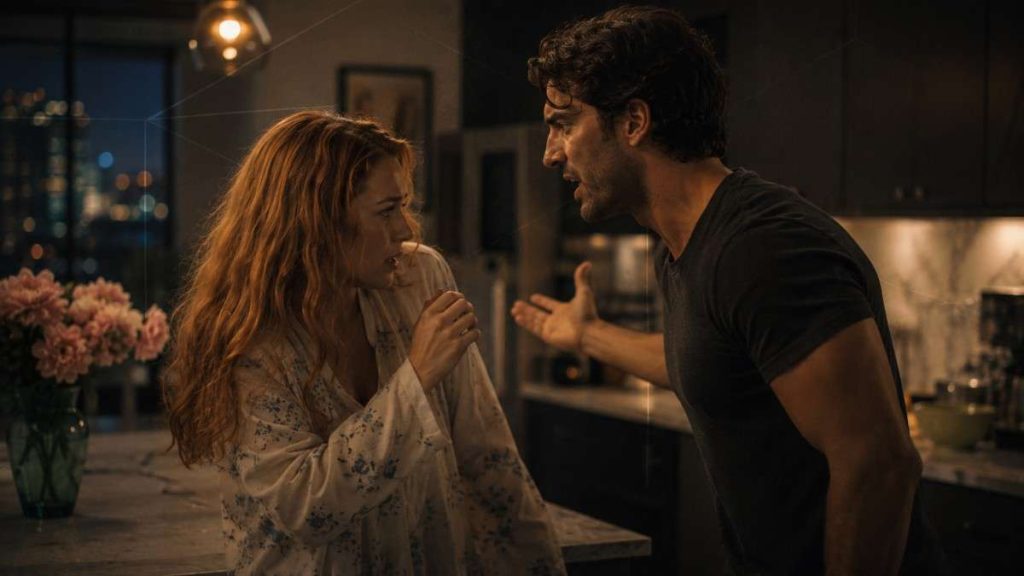
Yes, there is a kitchen scene in which Ryle assaults Lily, and it functions as the moment that pushes her permanently toward leaving him and moving toward a future with Atlas. This scene belongs to this book, the sequel, not the original novel where their relationship first turned violent.
A lot of casual recaps blur the two books together, which causes confusion about whether this is a repeat incident or new information. It’s new, and it’s the scene that removes any ambiguity for Lily about whether reconciliation with Ryle is possible. From that point forward, the plot moves toward custody terms and toward Atlas.
Who Is Responsible? Breaking Down the Blame
The book is explicit about some conflicts and intentionally ambiguous about others, and separating the two is the fastest way to actually understand what happened.
| Conflict Point | How the Book Frames It |
|---|---|
| Ryle’s jealousy and the kitchen assault | Clearly resolved as Ryle’s responsibility, no ambiguity |
| Sutton’s treatment of Josh | Clearly framed as abuse, resolved through Atlas gaining parental rights |
| Lily’s decision to keep engaging with Ryle at all | Left more open, tied to co-parenting necessity rather than a clean verdict |
Ryle’s assault is never framed as a misunderstanding or something Lily provoked. It’s presented as his failure, full stop. Sutton’s abuse of Josh gets the same clarity, and the resolution, Atlas taking on parental responsibility, treats it as serious enough to require a permanent change in who raises the kid.
Where the book gets less black and white is Lily’s ongoing contact with Ryle. Because they share a child, total separation isn’t really an option, and the story doesn’t pretend that arrangement is comfortable. That ambiguity is probably the most realistic part of the ending.
The Subplot Everyone Forgets: What Happens to Josh
Josh is revealed to be Atlas’s half brother, and he’s being abused by their mother Sutton. By the end of the book, Atlas has gained parental rights over Josh, effectively becoming his guardian.
This subplot gets skipped in a surprising number of recaps, probably because it runs alongside the Lily and Ryle drama. But it’s a real structural piece of the ending. It mirrors the book’s larger theme about breaking cycles of family harm, and it gives Atlas his own arc of stepping up.
If you only remember the Lily, Ryle, Atlas triangle from this book, you’re missing a chunk of what actually resolves in the final chapters.
How Does the Timeline Wrap Up? The Time Jumps, Explained
The book resolves through a series of time jumps rather than one continuous scene, moving forward in stages before landing on Atlas and Lily’s wedding. One widely cited fan review from Roosevelt Review frames the overall gap as roughly four years by the time the wedding takes place.
The documented jumps include an initial six month gap and a later jump of about a year and a half, both of which show up in the plot summary tracked on the book’s reference page. Reviews summarize the total elapsed time inconsistently, which is part of why the ending can feel confusing if you’re trying to map it out exactly. The safest way to think about it: the book moves in chunks, each one skipping past the healing parts to get you to the next milestone.
Is There an It Starts With Us Movie, and Does It Change the Ending?
There is no confirmed release date, cast, or greenlight for a movie adaptation as of this writing. What is confirmed is that Wayfarer Studios holds the film adaptation rights to both novels in this story.
Everything beyond that, casting rumors, release windows, plot changes, is unverified and should be treated as speculation. Until an official announcement drops, there’s no reliable answer to whether a film would change any part of the ending covered above.

How Was It Starts With Us Received? Reviews and Sales, By the Numbers
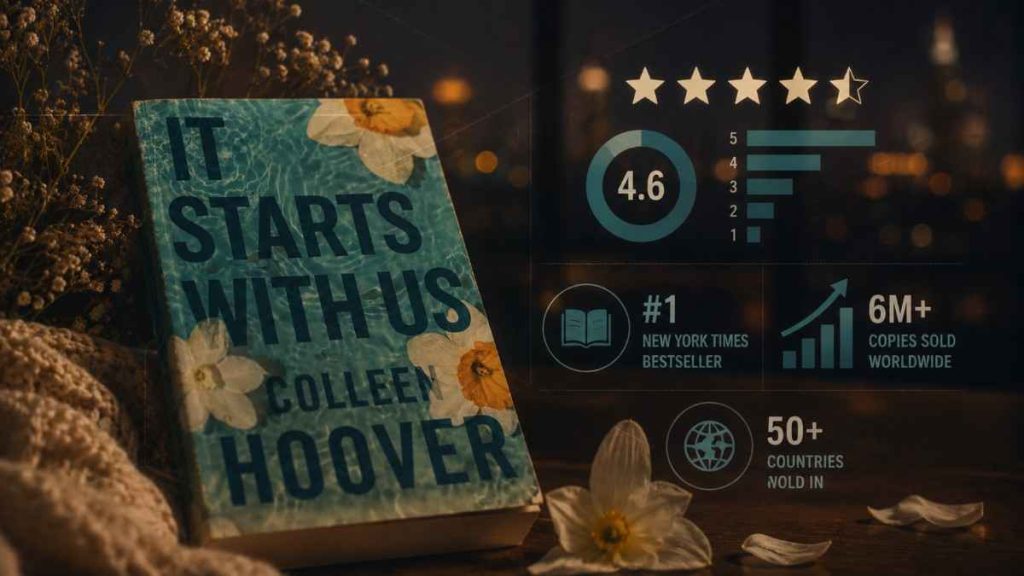
The book debuted at number one on the New York Times bestseller list the week of its release and reportedly sold around 800,000 copies on its first day out. It also landed on Publishers Weekly’s bestseller rankings in both 2022 and 2023, a rare multi year run for a single title.
| Outlet | Verdict (paraphrased) |
|---|---|
| Publishers Weekly | Praised the emotional payoff of Lily and Atlas’s arc |
| Kirkus Reviews | Noted the book delivers the closure fans wanted |
| The Daily Telegraph | Called out the pacing of the romance resolution |
| Metro | Highlighted the handling of the custody storyline |
What stands out beyond the sales numbers is how consistently reviewers point to the same two things: the Lily and Atlas payoff, and the more careful handling of Ryle’s arc compared to a simple villain wrap up.
It Starts With Us Ending FAQ
Do Atlas and Lily end up together in It Starts With Us?
Yes. Atlas and Lily reunite in Boston, work through the aftermath of Lily’s marriage to Ryle, and the book ends with their wedding. Their reconciliation is shown through multiple specific scenes, including the closet hiding incident and a wedding vow that references Finding Nemo.
Do Lily and Ryle end up together?
No. Their romantic relationship ends permanently. What remains is a co-parenting arrangement centered on their daughter Emerson, with Ryle agreeing to anger management and accepting supervised visitation rather than unrestricted access.
What happened to Ryle in It Starts With Us?
Ryle faces no legal punishment shown on the page. His consequences are behavioral: he commits to anger management and accepts supervised custody terms. Some readers find this ending underwhelming, but it’s consistent with the book’s ongoing focus on accountability rather than dramatic retribution.
Did Ryle hit Lily in the kitchen?
Yes, this happens in this specific book and serves as the moment that ends any chance of reconciliation between Lily and Ryle. It’s often confused with events from the first novel, but the kitchen scene belongs entirely to the sequel and directly pushes Lily toward her future with Atlas.
Is there a confirmed It Starts With Us movie release date?
No. Wayfarer Studios holds the adaptation rights to both novels, but no release date, cast, or production greenlight has been confirmed. Any release date or casting claims circulating online should be treated as unverified until an official announcement is made.
What happens to Atlas’s brother Josh?
Josh is revealed as Atlas’s half brother and is shown being abused by their mother, Sutton. By the book’s end, Atlas gains parental rights over Josh, becoming his guardian in a subplot that runs alongside the main Lily, Ryle, and Atlas storyline.
The ending works because it refuses to give everyone a clean resolution. Lily and Atlas get their happy ending, Ryle gets accountability instead of either villainy or forgiveness, and the Josh and Sutton subplot gets treated with the same seriousness as the main romance.
If you’re deciding whether to pick up the book knowing how it ends, the honest answer is that knowing the destination doesn’t ruin the read. The specific scenes, the vow at the wedding, the kitchen confrontation, the custody terms, are what make the ending land, not the surprise of who Lily picks.
For readers who came here from a completely different fandom rabbit hole, the same fact first approach applies to other messy book endings.