
Books Like The Catcher in the Rye: What Made the Original Work
Books like The Catcher in the Rye tend to succeed or fail based on which of three separable elements they replicate: Holden’s first-person voice, his psychological alienation, or the boarding school setting. A reader can love one of these without loving all three, which is exactly why generic “similar books” lists misfire so often. Knowing which bucket you fall into before you start browsing saves you from picking up a book that nails the setting but completely misses the voice that hooked you in the first place.
The Voice
Holden narrates in a run-on, sarcastic, deeply informal style that feels like a real teenager talking rather than a novelist performing teenage speech. He interrupts himself, repeats phrases like “if you want to know the truth,” and never quite finishes a thought before jumping to the next one. If you found yourself quoting his phrasing or laughing at how he described things, this is your bucket.

The Alienation
Holden is disconnected from nearly everyone in his life, his parents, his classmates, even the adults he seeks out for comfort, like his old teacher Mr. Antolini. The isolation isn’t dramatic or explained away by a single event. It’s constant, low-grade, and it colors every interaction in the book. If what stuck with you was the loneliness underneath the jokes, not the jokes themselves, you’re an alienation reader.
The Setting
Pencey Prep, the dorms, the cliques, the phony adults in positions of authority, all of it forms a closed world that Holden is actively fleeing by the time the novel starts. The setting isn’t just backdrop here. It’s the pressure cooker that pushes Holden toward the breakdown that drives the rest of the book. If the boarding school backdrop is what you keep picturing, that’s a distinct category on its own, separate from voice or alienation.

Books Like The Catcher in the Rye for the Voice (7 Picks)
Readers who connected with Holden’s sarcastic, conversational narration will get the closest match from books written in first person with a distinct, informal voice. Here are seven that deliver it, ranked roughly from closest match to most extreme variation on the same idea.
The Perks of Being a Wallflower — Stephen Chbosky (1999)
Told through letters from a socially anxious freshman named Charlie, this book trades Holden’s cynicism for sincerity but keeps the same intimate, confessional register. Charlie addresses an unnamed “friend” throughout, which creates the same one-on-one intimacy Holden’s direct address to the reader produces. Content note: sexual abuse, suicide, and drug use are addressed directly, so this leans toward older teens and adults.

Looking for Alaska — John Green (2005)
Miles Halter’s narration has the same restless, over-thinking quality as Holden’s, filtered through boarding school pranks and a doomed crush. The book splits into a “before” and “after” structure around a single event, which gives Miles’s voice a clear turning point that Holden’s narration never gets. Content note: smoking, drinking, and a major character death are central to the plot.

It’s Kind of a Funny Story — Ned Vizzini (2006)
Craig’s first-person account of checking himself into a psychiatric ward has Holden’s dark humor without the same detachment. Vizzini wrote the book after his own hospitalization, which is part of why Craig’s voice feels observed rather than performed. Content note: suicidal ideation and hospitalization are described in detail, based on the author’s own experience.

The Curious Incident of the Dog in the Night-Time — Mark Haddon (2003)
Christopher’s narration is more literal than Holden’s, but the same sense of being fundamentally out of step with everyone around him carries through the entire book. Christopher’s autistic perspective means the reader has to infer emotional context Christopher himself doesn’t register, which is a different mechanic than Holden’s voice but produces a similar reading experience. Content note: mild violence and family conflict, generally appropriate for younger teens.

A Clockwork Orange — Anthony Burgess (1962)
Alex narrates in his own invented slang called Nadsat, which is a much more extreme voice experiment than Holden’s, but the same “unreliable narrator explaining himself to you directly” structure is there. Readers who wanted more of Holden’s slang and less of his sincerity will find Alex’s voice pushes that instinct as far as it goes. Content note: graphic violence and adult content make this a poor fit for younger teens.

Trainspotting — Irvine Welsh (1993)
Written partly in Scottish dialect and partly in stream-of-consciousness rambling, this book takes Holden’s conversational voice and turns the volume way up. Multiple narrators trade off chapters, so the reader gets several versions of the same “talking directly to you” intimacy Holden establishes on page one. Content note: drug use, strong language, and addiction are the book’s central subject matter.

Eleanor & Park — Rainbow Rowell (2013)
The dual narration alternates between two teenagers, and both voices have Holden’s mix of sarcasm and vulnerability, just aimed at each other instead of the reader. The romance frame is the biggest departure from Catcher, but the interior monologue style will feel immediately familiar to anyone who liked how Holden talks around his own feelings. Content note: bullying and an abusive home situation are present but not graphic.

Books Like The Catcher in the Rye for the Alienation (7 Picks)
Readers who related to Holden’s disconnection from adults, peers, and his own grief will find the closest match in books centered on psychological isolation rather than plot or action. These seven lean into that feeling directly, and several go further into the darkness underneath it than Catcher ever does.
The Bell Jar — Sylvia Plath (1963)
Esther Greenwood’s descent into depression during a summer internship mirrors Holden’s spiral almost beat for beat, just from a young woman’s perspective in the 1950s. Both books use a single disorienting season, a New York internship for Esther and a few days of wandering for Holden, to trace a mental health crisis in close to real time. Content note: suicide attempts and a depiction of electroconvulsive therapy make this one for older readers.

Go Ask Alice — attributed to Beatrice Sparks (1971)
Framed as a real teenager’s diary, this book follows a downward spiral into drug use and isolation that echoes Holden’s alienation, though the tone is far more cautionary. The diary format gives the alienation a different texture than Holden’s narration, since the reader watches the isolation get worse entry by entry rather than hearing it recounted after the fact. Content note: drug use and references to sexual assault run throughout.
The content-note approach used throughout this section, flagging the exact thing a reader would want to know before starting rather than a blanket age rating, is the same one behind our Lynn Painter spice guide, since readers ask about content warnings just as often for romance as they do for classics like this one.

Speak — Laurie Halse Anderson (1999)
Melinda stops speaking almost entirely after a traumatic event, and the silence itself becomes the alienation, arguably more literal than Holden’s version. Where Holden talks constantly to cover his isolation, Melinda’s near-total silence makes the disconnection from her peers impossible to miss on the page. Content note: sexual assault is the book’s central subject, handled without graphic description but present throughout.

The Stranger — Albert Camus (1946 English translation)
Meursault’s flat affect and emotional distance from his own mother’s death take Holden’s detachment to a philosophical extreme. The novel strips out Holden’s humor entirely, so what remains is alienation in its purest, coldest form, useful for a reader who wants the theme without the warmth. Content note: violence occurs at the book’s midpoint and drives the entire plot.

Notes from Underground — Fyodor Dostoevsky (1864)
The unnamed narrator’s bitter, rambling monologue about his own uselessness is a direct ancestor of Holden’s voice, just angrier and older. Where Holden’s alienation still has room for tenderness, especially toward his sister Phoebe, the Underground Man’s isolation has curdled into something closer to contempt. Content note: no graphic content, though the psychological darkness is intense.

Fight Club — Chuck Palahniuk (1996)
The narrator’s alienation from consumer culture and his own identity plays out through violence rather than wandering New York streets, but the core loneliness is the same. The book pushes Holden’s disgust with “phonies” into a full-blown critique of adult institutions, jobs, furniture catalogs, and self-help culture among them. Content note: graphic violence throughout makes this an adult pick.

Less Than Zero — Bret Easton Ellis (1985)
Clay drifts through a wealthy, emotionally numb Los Angeles in prose as flat and disconnected as Holden’s is animated, which makes for an interesting contrast if you want the same theme from the opposite tone. Clay’s wealth removes any of the practical stakes Holden faces, which makes the emptiness feel even more pointed. Content note: drug use and sexual content are frequent and explicit, so this is strictly for adult readers.
Books Like The Catcher in the Rye for the School Setting (6 Picks)
Readers who were drawn to Pencey Prep itself, the dorms, the cliques, the adult authority figures, will get the closest match from novels set inside boarding schools or elite academic institutions. Here are six that live in that world, ranging from quiet tragedy to outright murder.
A Separate Peace — John Knowles (1959)
Set at a New England boarding school during World War II, this book trades Holden’s cynicism for quiet tragedy between two roommates. The war looms in the background the entire time, giving the school setting a sense of borrowed time that Pencey Prep never quite has. Content note: one major injury and death occur, but there is no graphic violence.

The Secret History — Donna Tartt (1992)
A small, elite group of classics students at a Vermont college spirals into murder, and the campus insularity feels like Pencey Prep turned up to a dangerous degree. The book opens by telling the reader a murder happened, then spends the rest of its length explaining how a closed academic world made it feel inevitable. Content note: murder, drug use, and adult content make this a pick for older readers, not a YA crossover.

Prep — Curtis Sittenfeld (2005)
Lee Fiora’s outsider status at an elite Massachusetts boarding school captures the same class anxiety Holden feels around Pencey’s wealthier students. The book spans all four years of high school, which lets the setting itself function almost like a character in a way Catcher’s few days at Pencey never has room for. Content note: mild sexual content, generally suitable for older teens and up.

The Chocolate War — Robert Cormier (1974)
A Catholic boys’ school becomes the setting for a chilling story about conformity and bullying, frequently taught alongside Catcher in high school classrooms and just as frequently challenged. The school’s chocolate sale fundraiser sounds trivial on paper, but the book uses it to show exactly how institutional power crushes one kid who refuses to go along with it. Content note: bullying and psychological cruelty are the book’s central themes.
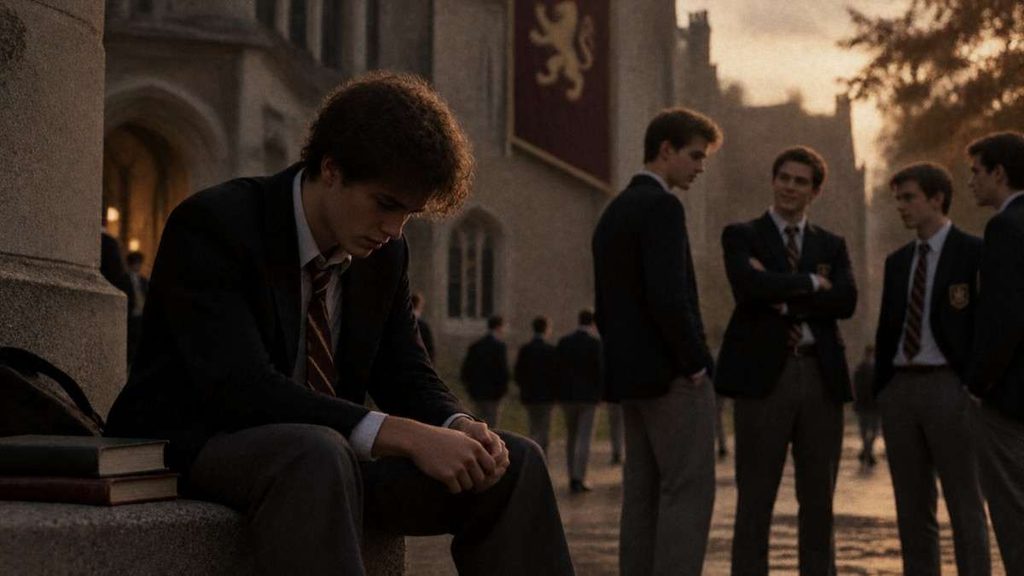
Old School — Tobias Wolff (2003)
An unnamed narrator at a New England prep school obsesses over literary ambition in a story that shares Catcher’s mid-century setting almost exactly. The school’s literary contest, judged by visiting authors including a thinly veiled Ernest Hemingway, gives the setting a specific obsession that Pencey Prep lacks entirely. Content note: no significant content warnings apply.

Never Let Me Go — Kazuo Ishiguro (2005)
Hailsham looks like a normal English boarding school on the surface, but the slow reveal of what it actually is turns the setting itself into the book’s central mystery. The school setting here does double duty as both backdrop and plot mechanism, which makes it the most structurally unusual pick on this list. Content note: the underlying premise is disturbing in concept rather than graphic in depiction.

Books Like The Catcher in the Rye Compared by Age Band and Content Note
Content notes and recommended ages vary widely across this list, ranging from books suitable for a 14 year old to ones that belong strictly in adult fiction. Use this table to cross-reference before picking a finalist, especially if you’re choosing for a teenage reader rather than yourself.
| Title | Category | Age Band | Primary Content Note |
|---|---|---|---|
| The Perks of Being a Wallflower | Voice | 15+ | Sexual abuse, suicide |
| Looking for Alaska | Voice | 14+ | Character death, substance use |
| It’s Kind of a Funny Story | Voice | 14+ | Suicidal ideation |
| The Curious Incident of the Dog in the Night-Time | Voice | 12+ | Mild violence |
| A Clockwork Orange | Voice | 18+ | Graphic violence |
| Trainspotting | Voice | 18+ | Drug use, addiction |
| Eleanor & Park | Voice | 13+ | Bullying, abusive home |
| The Bell Jar | Alienation | 16+ | Suicide, ECT depiction |
| Go Ask Alice | Alienation | 15+ | Drug use, sexual assault reference |
| Speak | Alienation | 14+ | Sexual assault |
| The Stranger | Alienation | 16+ | Violence |
| Notes from Underground | Alienation | 16+ | Psychological darkness |
| Fight Club | Alienation | 18+ | Graphic violence |
| Less Than Zero | Alienation | 18+ | Drug use, sexual content |
| A Separate Peace | School Setting | 13+ | Injury, death |
| The Secret History | School Setting | 18+ | Murder, drug use |
| Prep | School Setting | 15+ | Mild sexual content |
| The Chocolate War | School Setting | 13+ | Bullying |
| Old School | School Setting | 13+ | None significant |
| Never Let Me Go | School Setting | 14+ | Disturbing premise |
What Books Like The Catcher in the Rye Are Newer Than the Classics?
Looking for Alaska, Eleanor & Park, and Speak are the most-read contemporary picks that replicate Holden’s voice or alienation without the 1950s setting getting in the way. All three swap out the mid-century New York backdrop for something a current reader recognizes immediately, whether that’s a modern boarding school or a suburban high school hallway. Prep and Never Let Me Go, both published in the 2000s, do the same for readers who wanted the school setting specifically without the Pencey Prep time period attached to it.
If you want the ranked, sorted approach applied to a completely different author’s catalog, our Colleen Hoover ranking uses the same logic of matching specific books to specific reader preferences rather than treating an author’s whole output as one interchangeable pile.
Are There Really Books Like The Catcher in the Rye, or Is Holden One of a Kind?
No single book replicates all three of Catcher’s elements at once, which is exactly why this list is split by element instead of offering one “closest match.” Holden’s specific combination of that voice, that level of alienation, and that exact boarding school setting has not been reproduced wholesale by any other novel, and treating any one title as “basically Catcher in the Rye” oversells it.
What you can do instead is pick the element that mattered most to you and get a genuinely strong match on that specific front. A reader chasing the voice will be happiest with Perks of Being a Wallflower or Looking for Alaska. A reader chasing the alienation will get more out of The Bell Jar or Notes from Underground. A reader chasing the setting itself should start with A Separate Peace or The Secret History, depending on whether quiet tragedy or outright suspense sounds more appealing. Treating those as separate questions, rather than one impossible search for “the next Catcher,” is what actually gets you to a book you’ll finish and remember.
FAQ
What should I read after The Catcher in the Rye if I loved Holden’s voice specifically?
The Perks of Being a Wallflower and Looking for Alaska are the two closest matches for Holden’s conversational, sarcastic first-person narration. Both books use a young narrator processing loss and social confusion in real time, similar to how Holden processes his brother’s death and his expulsion from Pencey. If you want something more extreme, A Clockwork Orange pushes the voice experiment much further, though it comes with a much harder content warning.
Are books like The Catcher in the Rye appropriate for teens, or are they mostly adult content?
It depends entirely on which title, since this list spans everything from books shelved as YA to books shelved as literary adult fiction. Speak, Looking for Alaska, and A Separate Peace are commonly taught in high school classrooms. The Secret History, Less Than Zero, and A Clockwork Orange contain graphic content and are better suited to adult readers or mature older teens.
Is The Catcher in the Rye considered LGBTQ literature?
Holden’s sexuality is not explicitly addressed anywhere in the text, and the novel is not typically categorized as LGBTQ fiction. Some literary criticism has explored ambiguity in a handful of Holden’s interactions, but this remains a minor thread in academic discussion rather than a widely accepted reading of the book. Readers looking for that content should treat this as a scholarly side note, not a defining feature of the story.
What is considered the saddest book similar to The Catcher in the Rye?
The Bell Jar is generally the pick readers describe as the heaviest emotional read on this list. Sylvia Plath’s depiction of Esther Greenwood’s depression and hospitalization goes further into psychological darkness than Catcher ever does, including a direct depiction of electroconvulsive therapy. It belongs firmly in the alienation category and is best suited to older teens and adults.
Where should I start if I want a literary book like The Catcher in the Rye instead of a YA one?
The school-setting and alienation categories skew more toward adult literary fiction than the voice category does. The Secret History, Notes from Underground, and The Stranger are the three strongest starting points if you want prose that reads as literary rather than YA. All three carry heavier content notes than the YA titles on this list, so check the table above before picking one.
The Bottom Line on Books Like The Catcher in the Rye
The real takeaway here is that “books like The Catcher in the Rye” was always the wrong question to ask, because Catcher isn’t one thing, it’s three things stitched together. Once you know whether you’re chasing the voice, the alienation, or the setting, the search gets a lot shorter and a lot more accurate.
Start with whichever category matched your reaction the strongest, pick two titles from that section, and check the content notes before you commit. That’s a faster path to your next favorite book than another round of generic “readers also enjoyed” scrolling.