
Is The Woman in Cabin 10 a True Story? The Direct Answer
No. The Woman in Cabin 10 is a work of fiction, first published as a novel by Ruth Ware in 2016, with a Netflix film adaptation following in 2025. It is not based on a documented missing persons case or a specific real crime.
There’s a difference between “inspired by a real experience” and “based on true events,” and most search results conflate the two. Ware has described drawing on her own unsettling experience on a cruise ship, plus a real pattern she noticed in how the media covers women reporting crimes. That is not the same as the plot being ripped from a headline.
So if you came here expecting a true crime deep dive with named victims and court records, that’s not what this is. What it is turns out to be more useful for understanding why the story hits as hard as it does.
The Woman in Cabin 10 True Story: What Actually Inspired Ruth Ware
Ware’s inspiration came from her own trip on a small cruise ship, where the tight quarters and isolation from the outside world stuck with her long after the vacation ended. She has described the specific unease of being surrounded by water with no easy way to leave, which became the backbone of the novel’s setting.
The bigger influence, though, is timing. Ware has pointed to the media climate around 2014 and 2015, when public conversations kept circling back to whose accounts of assault or crime got taken seriously and whose didn’t. According to reporting from Marie Claire Australia in 2025, Ware has directly stated that young, intoxicated women are treated as the least credible witnesses, regardless of what they actually saw.
That is the actual engine of the plot. Lo Blacklock is not just a journalist who witnesses something disturbing. She is a woman whose testimony gets picked apart specifically because of her age, her drinking, and the assumptions people make about both.
This is the detail most recap sites skip. The Woman in Cabin 10 isn’t really a mystery about who committed a murder. It’s a psychological study of credibility bias dressed up as a locked room thriller.
Was The Woman in Cabin 10 Inspired by Agatha Christie?
Yes, partially. Ware has cited Murder on the Orient Express as a direct influence on the book’s structure. The shared setup is unmistakable: a group of travelers trapped together, a closed environment with no easy exit, and a limited pool of suspects who all had access and motive.
Where Ware updates the formula is the legal gray zone. A cruise ship traveling through international waters creates genuine ambiguity about which country’s laws even apply to a crime committed onboard, and that detail gives the modern version a wrinkle Christie’s train never had.
If that kind of trapped-cast, whodunit structure is your thing, the appeal isn’t unique to this one story. Readers who liked how Cabin 10 handles a small cast of suspects in a contained setting tend to enjoy other adaptations built on the same bones.
Is The Woman in Cabin 10 Based on the Amy Bradley Case?
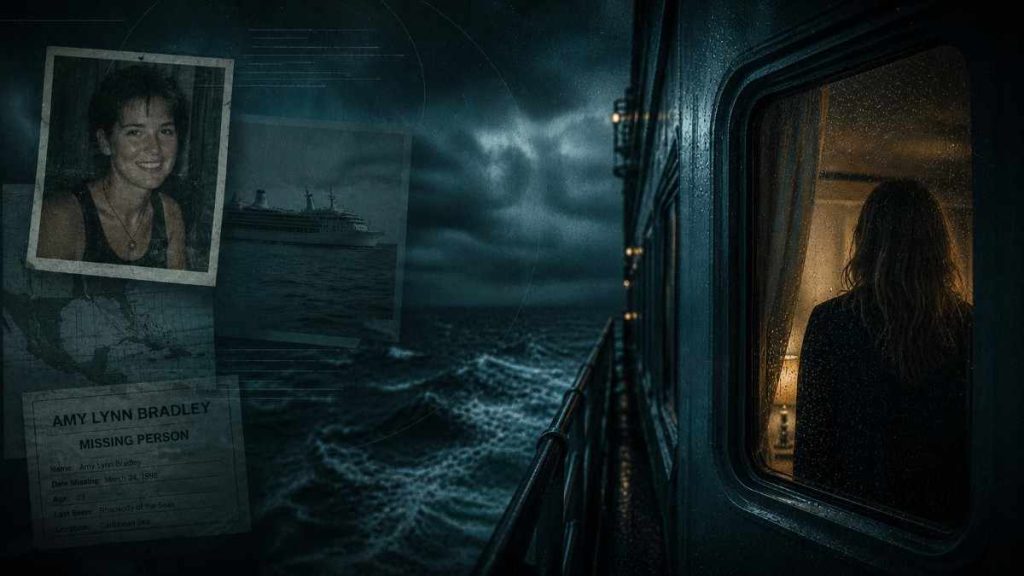
No confirmed connection exists. Amy Bradley disappeared from a cruise ship in 1998 in a case that remains unsolved, and the surface similarity to Cabin 10’s premise, a woman vanishing at sea with unanswered questions, is why the comparison keeps coming up online.
But similarity is not the same as source material. Ware has never mentioned the Bradley case in interviews about the book’s origin, and nothing in her documented statements ties the two together. The comparison appears to be reader-generated pattern matching, not something Ware has confirmed.
It’s an understandable guess. A real missing woman, a cruise ship, decades of unanswered questions sound exactly like something a thriller writer would fictionalize. It just isn’t what happened here.
Woman in Cabin 10 True Story Facts vs. Speculation
Here’s the full picture in one place, since most searches on this topic involve checking three or four separate claims across different articles.
| Claim | Status |
|---|---|
| Based on 2016 Ruth Ware novel | Confirmed |
| Inspired by Ware’s own cruise trip | Confirmed |
| Inspired by fear of not being believed | Confirmed, in Ware’s own words |
| Influenced by Agatha Christie’s Orient Express | Confirmed |
| Based on Amy Bradley disappearance | Not confirmed, coincidental only |
| Based on a specific real murder case | No |
What Happened to Anne in The Woman in Cabin 10?
Spoiler warning: this section reveals a major plot twist.
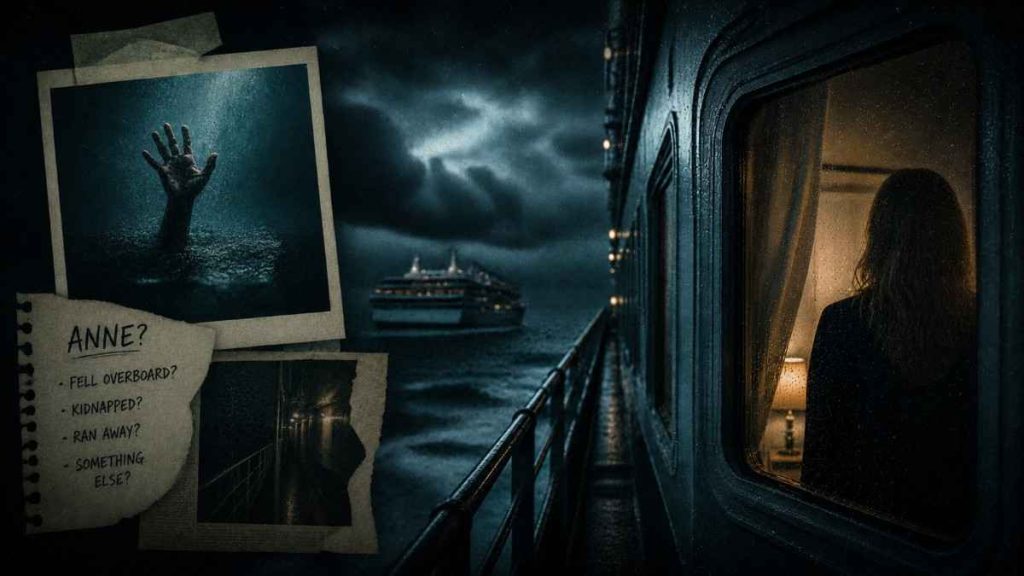
Anne, the woman Lo initially believes she saw thrown overboard, was in fact murdered by Richard, who pushed her from the ship. Carrie, another character on board, was recruited to impersonate Anne afterward, which is exactly why Lo’s account gets dismissed. The woman she thinks she’s looking for still appears to be alive and accounted for.
That swap is the mechanic behind the entire “who actually died” confusion that drives searches on this movie. Lo isn’t wrong about what she saw. She’s just up against a fabricated cover story built to make her look unreliable.
Book vs. Film: What The Woman in Cabin 10 Changes From the Novel
The film keeps the core mystery intact but adjusts several details, and one change in particular has stirred up conversation among viewers who read the book first. In the novel, Lo’s heavy drinking the night before witnessing the incident is used explicitly as a reason nobody believes her account. Viewer discussion on Reddit has pointed out that the film softens this credibility angle rather than keeping it as blunt as the book does.
| Detail | Book (2016) | Film (2025) |
|---|---|---|
| Lo’s drinking as a credibility factor | Central plot device, explicitly undermines her account | Softened or restructured, per viewer discussion |
| Lead actress | N/A (novel) | Keira Knightley cast as Lo Blacklock |
| Setting | Small luxury cruise ship | Luxury superyacht, per cast and press coverage |
| Anne/Carrie swap mechanic | Present in original plot | Confirmed to carry over into the film’s ending |
If you read the novel years ago and are trying to decide whether the movie is worth your time, the drinking detail is the one adjustment that changes how sympathetic and reliable Lo feels to a new audience.
Why the “Woman Overboard” Premise Feels So Believable
The premise works because it taps into a documented pattern in how eyewitness accounts get scrutinized, not because it’s copying one specific case. Women who report crimes while intoxicated, young, or without corroborating witnesses have long been treated with more skepticism than the situation warrants, and that dynamic shows up across real reporting on assault and disappearance cases far beyond any single cruise ship story.
Ware isn’t claiming her book documents a real cover-up. She’s dramatizing a bias readers already recognize from actual news cycles, which is why the story feels uncomfortably plausible even though no specific real event matches it.
What to Watch or Read Next If You Liked The Woman in Cabin 10
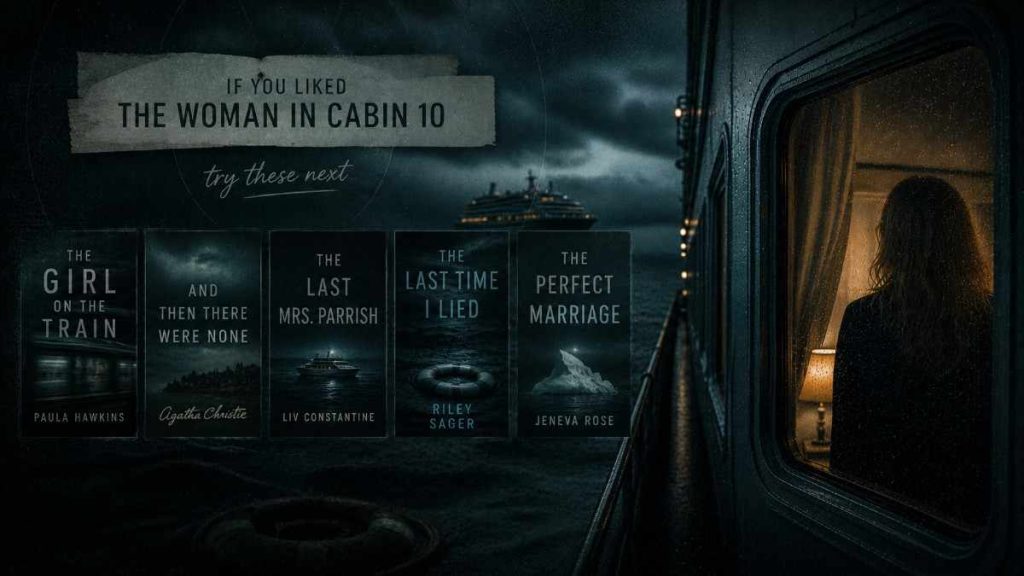
If you’re still chasing a specific detail this piece didn’t fully resolve, whether it’s a cast question or an ending nuance, it’s worth checking a dedicated ending breakdown. For a wider watchlist built on the same trapped-suspects formula, a mystery shows roundup covers several adaptations with the same DNA as Cabin 10.
And if the Christie influence is what hooked you, a Christie adaptations ranking is a natural next stop for anyone who wants more of that closed-room, limited-suspects structure without the modern cruise ship dressing.
FAQ
Is The Woman in Cabin 10 a true story?
No. It’s a fictional thriller, originally a 2016 novel by Ruth Ware and later a 2025 Netflix film. It is not based on a documented true crime case or a specific real disappearance. Ware has said the premise came from her own unsettling cruise trip and from noticing how women’s accounts of crimes get doubted, but no real crime matches the plot directly.
What happened to the real Anne in The Woman in Cabin 10?
There is no real Anne. Within the fictional story, Anne is murdered by Richard, who pushes her overboard, and Carrie is later recruited to impersonate her so Lo’s account of witnessing the crime looks unreliable. This is a plot device, not a reference to any actual person or case.
Is The Woman in Cabin 10 based on Agatha Christie?
Partially, yes. Ruth Ware has directly cited Murder on the Orient Express as an influence on the book’s structure, particularly the trapped travelers, closed setting, and limited suspect pool. Ware added a modern twist by setting the story on a cruise ship, which creates legal ambiguity around whose laws apply to a crime in international waters.
Is The Woman in Cabin 10 based on the Amy Bradley case?
No confirmed connection exists. Amy Bradley disappeared from a cruise ship in 1998 in a case that remains unsolved, and the surface similarities to Cabin 10 are why the comparison keeps surfacing online. Ware has never referenced the Bradley case in any documented interview about the book’s origin, so the link is speculative, not confirmed.
When was The Woman in Cabin 10 book and movie released?
The novel by Ruth Ware was published in 2016. The Netflix film adaptation, starring Keira Knightley as Lo Blacklock, was released in 2025. The film adapts the same core mystery as the book but makes some adjustments to plot details, including how Lo’s credibility is challenged throughout the story.
The Bottom Line
The Woman in Cabin 10 isn’t hiding a true crime case behind a Netflix thriller. It’s doing something more useful: taking a documented pattern, the way women’s accounts of crimes get dismissed based on age, drinking, or lack of corroboration, and building a locked-room mystery around it. That’s why the story feels so uncomfortably plausible even though no specific real disappearance matches it.
If you’re deciding whether to read the book after watching the film, the credibility-bias angle is sharper and more explicit on the page, particularly around Lo’s drinking the night of the incident. That single difference changes how the entire mystery lands.