
TL;DR
- Ruby Franke is incarcerated at Utah State Correctional Facility in Salt Lake City as of 2026, and no release has occurred.
- Her sentence is four consecutive 1-to-15-year terms, meaning a minimum of 4 years and a maximum of 30 years under Utah’s indeterminate sentencing system.
- Her first parole hearing is scheduled for December 2026. That hearing is a decision point, not a release date. Three outcomes are possible, and early release at a first hearing for a high-profile child abuse case is rare.
- Co-conspirator Jodi Hildebrandt received an identical sentence, is housed at the same facility in a separate section, and faces her own December 2026 parole hearing.
- Kevin Franke filed for divorce in November 2023; it was finalized in March 2025. He was not charged with any crime.
- Eldest daughter Shari Franke published a memoir about her experience, and both she and her brother Chad have testified before Utah lawmakers pushing for stronger child welfare protections.
Ruby Franke is sitting in a Utah prison right now, and most people who search her name think they already know what that means. They know she got “up to 30 years.” They know there is a parole hearing coming in December 2026. They assume that hearing is the moment she might walk out.
That assumption is wrong in almost every important detail.
The “30 years” is a ceiling, not a sentence. The December 2026 hearing is not a release date. And the Utah Board of Pardons and Parole, which most coverage barely mentions, is actually the body that controls everything from here. The judge handed down a range. The Board decides where inside that range Ruby Franke ends up.
This piece covers her current location, what her sentence actually means in legal terms, what the three possible outcomes of December 2026 are, where Kevin and the kids stand now, the civil lawsuit almost no one is reporting on, and what the documentary coverage got right and wrong. By the end, you will have a clear and accurate picture of where this case stands, not just the headline number.
Where Is Ruby Franke Now? Her Current Prison Location
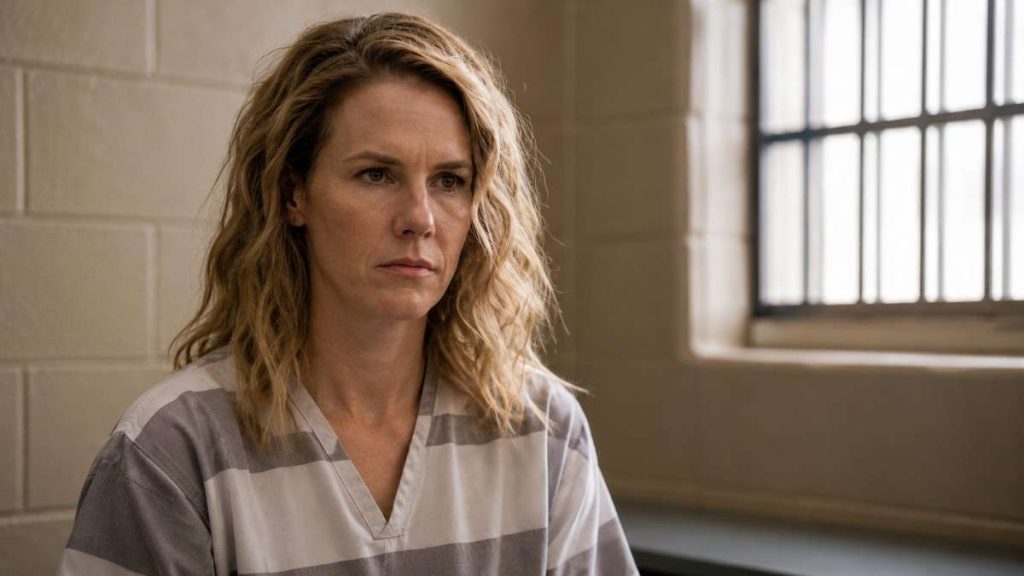
Ruby Franke is held at Utah State Correctional Facility in Salt Lake City. That facility opened in 2022 and replaced the old Utah State Prison in Draper, which had been operating for decades in increasingly deteriorated conditions. The new Salt Lake City site is the primary women’s correctional facility in Utah.
The Utah Department of Corrections inmate locator confirms her placement there. She has been at that facility since her sentencing in February 2024, and no transfer or release has occurred as of 2026.
What About Jodi Hildebrandt?
Jodi Hildebrandt is also housed at Utah State Correctional Facility. The two women are not together. They are kept in separate sections of the facility, which matters because their relationship and Hildebrandt’s influence over Franke were central to the prosecution’s case. The separation is standard procedure when co-defendants are incarcerated at the same institution.
No public visitation records are available, and the Utah DOC does not publish contact details for individual inmates beyond the locator tool.
Ruby Franke’s Prison Sentence Explained — What “Up to 30 Years” Really Means
The sentence Ruby Franke received is four counts of aggravated child abuse, each carrying a 1-to-15-year term under Utah law. The judge ordered those four terms to run consecutively, meaning back to back rather than simultaneously.
That math produces a range of 4 to 60 years on paper. In practice, Utah caps the maximum at 30 years for this type of sentencing structure. The floor is four years, one year minimum per count served one after another.
Utah’s Indeterminate Sentencing System
Utah uses an indeterminate sentencing model, which means the judge’s role ends at setting the range. The Utah Board of Pardons and Parole holds sole authority to determine when, or whether, a person is actually released within that range.
This is the detail that most coverage skips entirely. The February 20, 2024 sentencing date is not the start of a countdown toward a fixed exit date. It is the moment when the Board’s authority over Franke begins. The Board reviews her case, evaluates a defined set of factors, and issues a binding decision on her release window.
The “30 years” figure you see in headlines is the legal ceiling. It represents the longest she can be held. The “4 years” minimum represents the shortest. Where she falls between those numbers is entirely up to the Board, not the sentencing judge.
Why Consecutive Terms Matter
When sentences run concurrently, a person serves only the length of the longest single term. Franke’s sentences running consecutively is what made the judge’s decision significant. A concurrent structure would have produced a maximum of 15 years for the same four counts. The consecutive order doubled that ceiling and made the Board’s eventual decision far more consequential.

The December 2026 Parole Hearing — What Could Actually Happen
The Utah Board of Pardons and Parole will hold its first formal hearing in Franke’s case in December 2026. By that date, she will have been incarcerated for over three years, counting from her August 2023 arrest. Time served from the arrest date counts toward her sentence.
That hearing is the first formal review point. It is NOT a scheduled release. Here is what can actually come out of it.
The Three Possible Outcomes
Outcome 1: The Board sets a parole date.
The Board determines she meets the criteria for release and schedules a specific future date when she will be released under supervision. That date could be near-term or years away. Release under parole comes with conditions, reporting requirements, and the possibility of return to custody for violations.
Outcome 2: The Board schedules a rehearing.
The Board determines she is not ready for release but does not order the maximum sentence. The case is revisited at a future date, typically within one to two years. This is the most common outcome in high-profile cases at the first hearing.
Outcome 3: The Board orders the full sentence.
The Board determines the severity of the crimes warrants serving the maximum. Franke would remain incarcerated until the ceiling of her term, with credit for time already served from August 2023.
What the Board Actually Considers
The Utah Board of Pardons reviews a specific set of factors at each hearing:
- Institutional behavior since sentencing
- Evidence of rehabilitation and programming completed inside the facility
- Risk assessment scores based on standardized evaluation tools
- Victim impact statements submitted by affected parties
- The nature and severity of the original crimes
Shari Franke and other family members have the legal right to submit victim impact statements for this hearing. Shari has already demonstrated willingness to speak publicly about the abuse. Her voice at the December 2026 hearing could carry significant weight.
Legal analysts who cover Utah parole broadly note that high-profile child abuse cases involving multiple child victims rarely result in early release at the first hearing. That is not a guarantee of outcome. It is a pattern based on how the Board weighs risk and severity in cases of this type.
Hildebrandt’s parole hearing falls in the same month, given the identical sentence and the shared timeline from their simultaneous arrest and sentencing.

How Ruby Franke Went from YouTube Mom to Convicted Child Abuser — The Timeline
The broad strokes are familiar to anyone who has watched a documentary about this case, but the specific sequence matters for understanding how the legal situation developed.
8 Passengers launched around 2015 and grew to more than 2 million subscribers on YouTube. The channel presented the Franke family as a wholesome, faith-centered household with six children. The format leaned heavily into parenting content and family life documentation.
Around 2022, Franke entered a deepening professional and personal partnership with Jodi Hildebrandt, a licensed counselor who ran a program called ConneXions. Prosecutors later described ConneXions as a high-control belief system that distorted Franke’s perception of her children’s needs and normalized abusive treatment as spiritual discipline.
The Escape and the Arrests
On August 30, 2023, Franke’s 12-year-old son escaped from Hildebrandt’s home in Ivins, Utah. He knocked on a neighbor’s door and asked for help. He showed signs of severe physical abuse, including rope burns on his wrists and malnourishment. Law enforcement responded and arrested both women that same day. A second child was found at Hildebrandt’s property in similar condition.
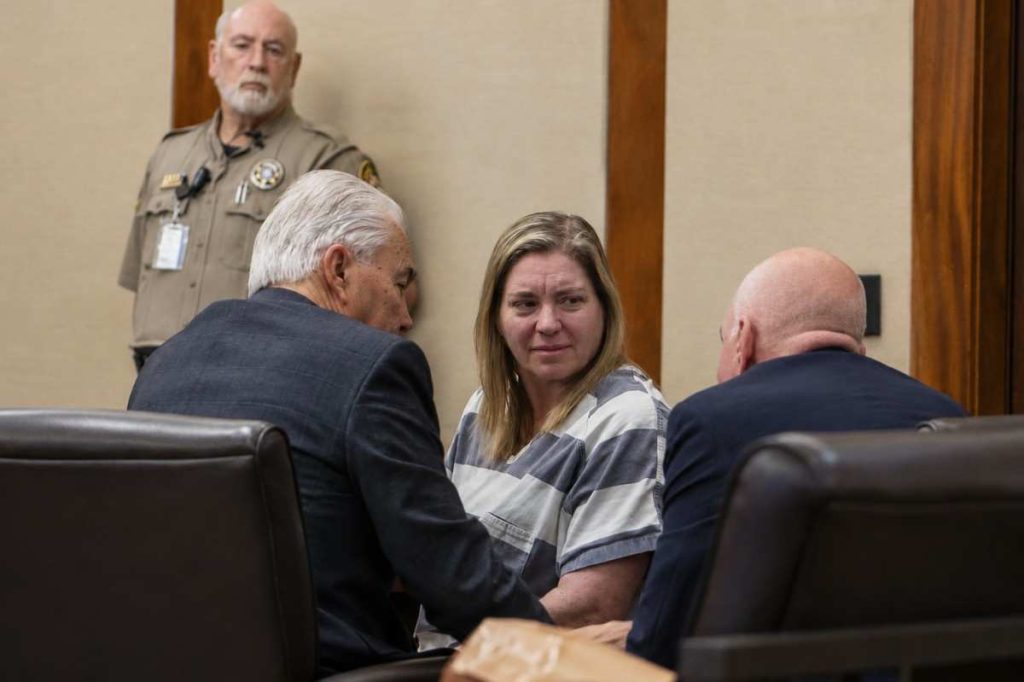
Both women were charged with multiple counts of aggravated child abuse. In December 2023, both entered guilty pleas to four counts each. On February 20, 2024, a Utah judge sentenced each of them to four consecutive 1-to-15-year terms. Franke addressed the court at sentencing and expressed remorse, though victim advocates and family members noted the harm caused extended far beyond what a statement could address.
The Documentary Wave
The case became the subject of major streaming coverage in the years following sentencing. Hulu released Devil in the Family: The Fall of Ruby Franke in February 2025, drawing on real footage and interviews to reconstruct how the family’s public image diverged from the private reality. Netflix followed with Evil Influencer: The Jodi Hildebrandt Story, directed by Skye Borgman, who has made a career documenting cases where digital identity and real harm intersect. Borgman’s reporting noted that Franke had reportedly distanced herself from Hildebrandt since incarceration.
ConneXions is no longer operating.
The 8 Passengers YouTube channel has been removed. For anyone curious about how social media platforms can become vectors for obscuring abuse in plain sight, the Esther Estepa TikTok case is a sobering parallel, a different crime but the same basic dynamic of a digital persona masking a private horror.
Kevin Franke’s Divorce and Where the Family Stands Now
Kevin Franke filed for divorce in November 2023, shortly after Ruby’s arrest. He was not charged with any crime. His divorce from Ruby was finalized in March 2025.
Kevin has been public in his response to the case, and notably, he has channeled that response into legislative action. He has spoken directly to Utah lawmakers and supported efforts to strengthen child welfare reporting requirements in the state following what happened to his children.
Kevin has custody of the children. Director Skye Borgman, in press coverage of Evil Influencer, described the family as trying to rebuild a version of normal life, which is about as much as can be said without projecting onto a healing process that belongs to them.
Minor children are not named here. Their privacy has to be respected at a level the family’s original channel never managed.
For readers interested in how cases involving high-profile relationships unravel when criminal charges enter the picture, the Moriah Wilson case details covers different but related territory around how personal relationships and public exposure collide in true crime coverage.
Shari Franke’s Memoir and the Children Speaking Out
Shari Franke is Ruby and Kevin’s eldest daughter and is an adult. She has been one of the most public voices from within the family about what life inside the household actually looked like, the gap between the curated channel content and the daily reality.
Shari published a memoir documenting her experience growing up under her mother’s parenting approach and the harm that the ConneXions influence brought into the family. The book is a first-person account and gives readers something no documentary footage can fully capture: the internal experience of a child who was simultaneously a content subject and a person living with real consequences.
Her brother Chad Franke has also stepped forward publicly, and both Shari and Chad have testified before Utah lawmakers pushing for stronger child welfare protections. That testimony was covered by local outlet 2News Utah and represents a meaningful shift: the children who were harmed by a system that failed to intervene are now actively working to change that system.
Their willingness to speak publicly also means they have standing to submit statements to the Utah Board of Pardons and Parole ahead of the December 2026 hearing. Whether they choose to do so is their decision. Given what they have already demonstrated publicly, that involvement would not be surprising.

Jodi Hildebrandt Now — Same Sentence, Same Prison, Same Hearing Month
Jodi Hildebrandt received an identical sentence to Franke: four consecutive 1-to-15-year terms, with the same 4-to-30-year effective range under Utah law. She is housed at Utah State Correctional Facility in Salt Lake City, separated from Franke within the facility.
Her parole hearing is also scheduled for December 2026, which makes that month a significant one for anyone tracking both cases.
The distancing between Franke and Hildebrandt since incarceration is one of the more notable developments in the post-sentencing period. Their relationship during the abuse was described by prosecutors as deeply intertwined, with Hildebrandt functioning as the ideological architect of the harm and Franke as a participant who had been drawn into Hildebrandt’s worldview. The reported separation in their relationship since entering custody suggests Franke may be processing her role differently now that Hildebrandt’s influence has been removed.
Whether that shift will factor into the Board’s evaluation in December 2026 is impossible to predict. The Board considers documented rehabilitation, not reported interpersonal changes.
The Civil Lawsuit — Michael Tilleman’s Federal Racketeering Case
In January 2025, a man named Michael Tilleman filed a federal civil lawsuit against both Ruby Franke and Jodi Hildebrandt. This is the piece of the story that almost no major SERP result mentions, and it matters.
The lawsuit alleges racketeering claims, specifically that ConneXions operated as a fraudulent enterprise that caused real harm to clients and families who engaged with it. The core argument is that ConneXions was not simply a misguided counseling program but a coordinated scheme that extracted money and compliance from people under false pretenses while causing documented psychological and physical harm.
This is a civil matter. It runs on a completely separate track from the criminal convictions. It does not affect the prison sentence, the parole timeline, or the Board’s December 2026 hearing. What it does affect, potentially, is Franke’s financial situation. A successful civil racketeering claim can result in damages that are significant.
The suit represents the broader argument that the harm from ConneXions extended well beyond the specific children named in the criminal charges. As of this writing, the case is an open proceeding.
What Happens After the December 2026 Hearing?
The December 2026 hearing is not an ending. It is a branch point. What comes after depends entirely on which of the three outcomes the Board delivers.
If the Board Sets a Parole Date
Franke would be released at a specified future point under supervised parole. That supervision comes with conditions. She would report regularly to a parole officer, face restrictions on contact with minors, and be subject to return to custody for any violation. The date set could be near-term or several years out.
If the Board Schedules a Rehearing
Franke remains incarcerated and the review process repeats. Rehearing schedules are typically set one to two years out. This outcome does not foreclose release; it delays the decision.
If Full Sentence Is Ordered
Franke serves until the maximum of her term, with credit applied for time already served from August 2023. By December 2026, that credit will exceed three years. The Board has used all three outcomes in comparable cases, and the public profile of this case, combined with the involvement of minor child victims, makes the first-hearing release scenario genuinely unlikely based on historical Board patterns in Utah.
Victim families and legal advocates are permitted to attend the hearing and speak. That is not a formality. The Board is required to consider their input.

FAQ
Q: Where is Ruby Franke right now in 2026?
Ruby Franke is incarcerated at Utah State Correctional Facility in Salt Lake City, Utah. She has been held there since her sentencing in February 2024. The Utah Department of Corrections inmate locator confirms her placement at that facility. No release has occurred as of 2026. The facility opened in 2022 and serves as Utah’s primary women’s correctional institution, replacing the old Draper prison. She is housed separately from co-defendant Jodi Hildebrandt, who is also at the same facility.
Q: What is Ruby Franke’s actual release date?
There is no fixed release date. Ruby Franke received an indeterminate sentence of four consecutive 1-to-15-year terms under Utah law. That creates a range of 4 to 30 years. The Utah Board of Pardons and Parole holds the authority to set her actual release date within that range. The first Board hearing is scheduled for December 2026. Until the Board issues a decision, no specific date exists. The sentencing judge set the boundaries; the Board decides where inside those boundaries Franke ends up.
Q: What actually happens at Ruby Franke’s December 2026 parole hearing?
The Utah Board of Pardons and Parole will review Franke’s case and issue one of three decisions: set a specific parole date, schedule a future rehearing, or order her to serve the full maximum sentence. The Board considers her behavior inside the facility, rehabilitation programming, risk assessment results, and victim impact statements submitted by affected family members. The hearing is not a guaranteed release point. High-profile child abuse cases in Utah involving multiple minor victims rarely result in early release at the first scheduled hearing, based on documented Board patterns.
Q: Did Kevin Franke divorce Ruby Franke, and when was it finalized?
Kevin Franke filed for divorce in November 2023, shortly after Ruby’s arrest. The divorce was finalized in March 2025. Kevin was not charged with any crime in connection with the abuse case. Since the divorce, he has been active in advocacy, speaking to Utah lawmakers and supporting efforts to strengthen child welfare reporting laws in the state. He has custody of the children. His response to the case has been notably focused on systemic change rather than public litigation.
Q: Is Jodi Hildebrandt in the same prison as Ruby Franke?
Yes, both women are housed at Utah State Correctional Facility in Salt Lake City, but they are held in separate sections of the facility and are not in contact with each other. Hildebrandt received the same sentence as Franke: four consecutive 1-to-15-year terms. Her parole hearing is also scheduled for December 2026. Reports from documentary coverage, including Netflix’s Evil Influencer, suggest Franke has distanced herself from Hildebrandt since incarceration, a significant shift given how closely linked their actions were during the abuse period.
Q: Is “30 years” the sentence Ruby Franke is actually serving?
No, and this is the most common misreading of the case. Thirty years is the maximum ceiling of her indeterminate sentence, not a fixed term she is serving. Her minimum is four years. The Utah Board of Pardons and Parole will determine where between those two numbers she actually lands. She could serve closer to the minimum if the Board grants parole, or closer to the maximum if the Board determines the severity of the crimes warrants it. The judge set the range. The Board sets the reality.
Q: What is the Michael Tilleman lawsuit against Ruby Franke?
In January 2025, Michael Tilleman filed a federal civil lawsuit against both Ruby Franke and Jodi Hildebrandt. The suit alleges racketeering claims, arguing that ConneXions operated as a fraudulent enterprise that caused financial and psychological harm to clients and families. This case runs separately from the criminal convictions and does not affect Franke’s prison sentence or parole timeline. A successful civil racketeering claim could result in significant financial damages. The suit reflects a broader argument that the harm attributed to ConneXions extended beyond the specific children named in the criminal case.
The single thing to take away from this piece is simple: the December 2026 parole hearing is a decision point, not an exit. Ruby Franke does not walk out of Utah State Correctional Facility in December 2026 just because a hearing is scheduled. The Utah Board of Pardons and Parole will evaluate her case, hear from victims and advocates, and issue one of three binding decisions. Based on what that Board has done historically in cases involving multiple child victims and a high public profile, a first-hearing release would be genuinely unusual.
The most useful thing a reader can do with this information is stop treating “parole hearing” and “release date” as synonyms. They are not the same thing in Utah’s legal system, and conflating them produces a fundamentally inaccurate picture of what Franke’s timeline actually looks like. If you want to track what happens next, the December 2026 hearing outcome will be the real story.
Shari Franke’s memoir and the ongoing civil suit from Michael Tilleman represent two tracks of accountability that will continue past any Board decision. The criminal sentence set a floor and a ceiling. Everything happening outside that courtroom keeps building the fuller record of what ConneXions did and who it harmed.