Archive 81 Was Cancelled 69 Days After It Premiered
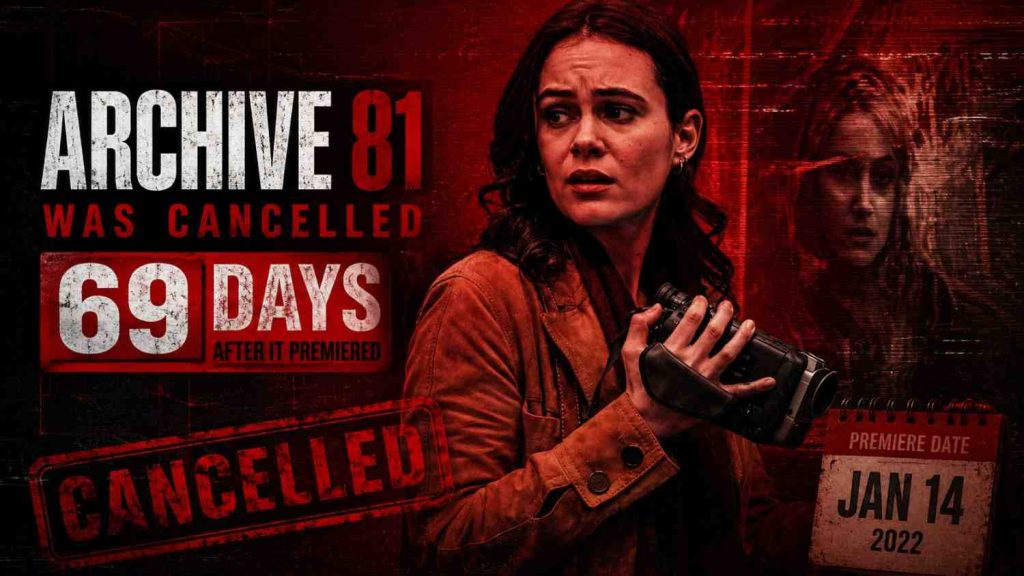
Archive 81 premiered on Netflix on January 14, 2022. Deadline reported the cancellation on March 24, 2022. That is 69 days from premiere to confirmed cancellation, which is a short runway even by Netflix’s famously fast standards.
The opening numbers were not the problem. Between January 9 and January 30, 2022, the show was watched for roughly 128.47 million hours globally, according to Netflix’s own weekly Top 10 data. It also entered Nielsen’s weekly streaming ratings during its premiere period, a threshold that fewer than 10 percent of Netflix originals clear.
No public renewal conversation ever took place. Netflix did not extend a conditional renewal, request more data, or signal any interest in continuing the show. The cancellation came quietly and quickly, with no reported negotiation period before the decision was announced.
Sixty-nine days is the kind of timeline that tells you Netflix ran the numbers early and did not like what it saw past week two. Most shows that Netflix cancels at least complete a full ratings cycle before a decision is made. Archive 81 did not get that.
Archive 81 ended its run after a single eight-episode season, with no continuation, spin-off, or alternate ending ever produced. For the full breakdown of what that ending actually meant for Dan, Melody, and Samuel, see Archive 81’s ending explained.
The Numbers Looked Good Until You See the Drop-Off
Strong opening numbers were real. The problem was the shape of what came after them. Netflix does not make renewal decisions based on total viewing hours alone. The internal model reportedly weights completion rates, long-tail retention, and the ratio of cost-per-episode to sustained audience size over multiple weeks, not just the premiere burst.
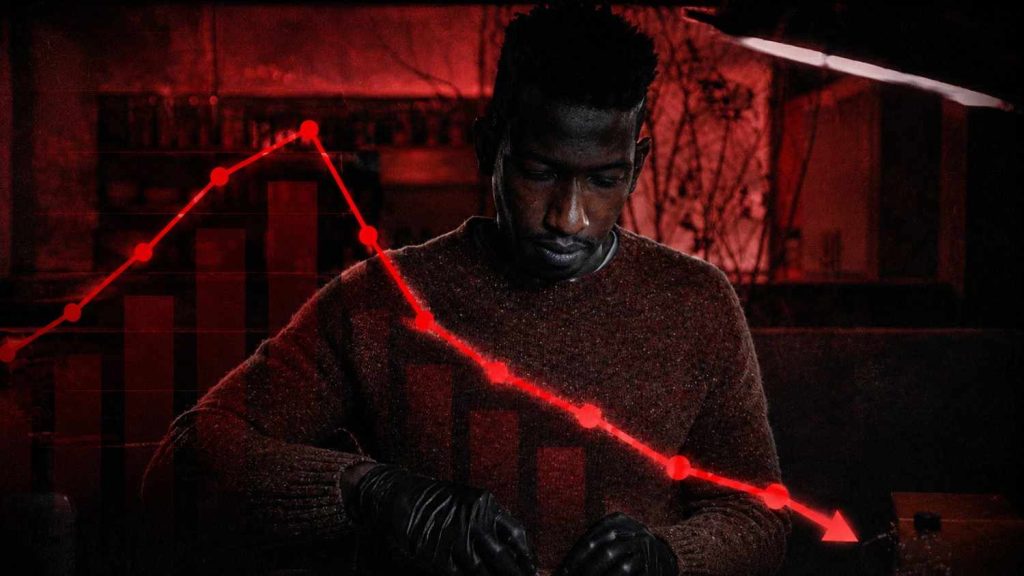
Archive 81 had a spike-and-drop viewership curve. Horror fans and mystery audiences binged it heavily in the first two weeks, which produced the strong opening figure. Then viewership fell sharply.
Google Trends data from January through March 2022 shows the same pattern. A sharp peak in the week of the January 14 premiere, rapid decline through February, and minimal sustained search interest through March. The show was not a slow burn that built word-of-mouth. It was a front-loaded binge that did not sustain a conversation.
Netflix’s model favors shows that bring viewers back week after week and keep subscribers from canceling. A show that gets binged in two weeks and then disappears from the cultural conversation is, under that model, a weaker bet than a slower-burning show with consistent engagement over two or three months. Archive 81 had the binge profile without the retention tail. That combination made the cost question more acute, not less.
What Actually Happened at the End of Archive 81
Spoilers below for anyone who needs a refresher before the next section makes full sense.
Season 1 ends with Dan pulling Melody from 1994 into the present, but in doing so, he becomes trapped in the past himself. The two timelines collapse around the Visser building, the Karag entity’s ritual, and the Vos cult’s full plan coming to a head. The final shot leaves Dan’s fate genuinely unresolved in 1994, with the Davenport character positioned as the thread connecting the larger mythology into a potential Season 2.
It is a textbook setup for a mythology-heavy show building toward a second season. The tragedy is that it became a first-and-only-season finale instead.
Archive 81 Cost More Than It Looked — Why the Budget Made the Math Impossible
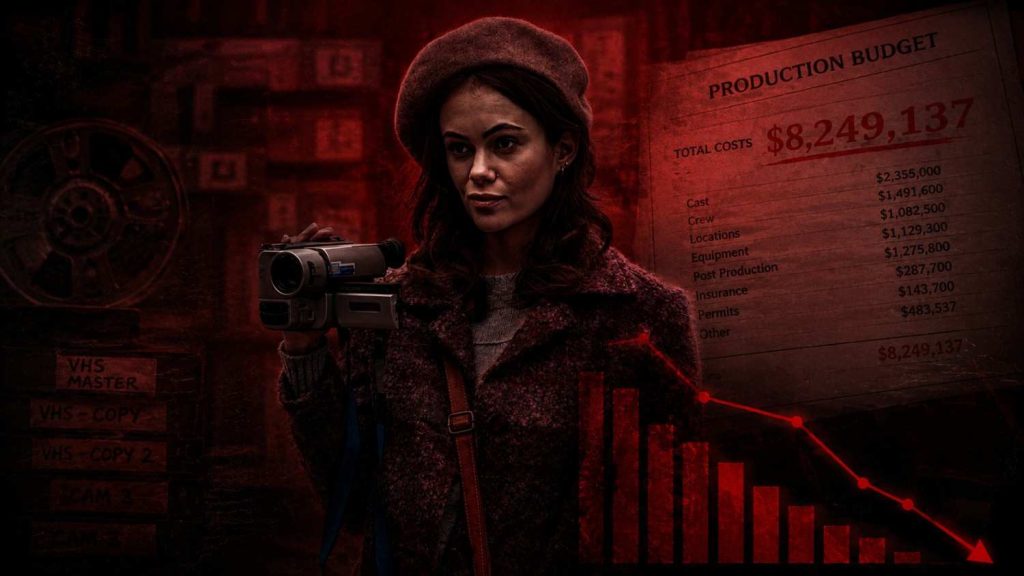
The production cost is where the math breaks down, and it is the part that most coverage glosses over. Archive 81 required two fully realized production timelines running simultaneously across every episode.
The present-day storyline was manageable. Dan in a remote restoration facility, working through old tapes, is not expensive to shoot. The 1994 storyline is a different conversation entirely. Melody’s storyline required period-accurate sets, costumes, practical New York apartment locations, and the kind of production design that does not come cheap when you are building an entire building’s worth of 1990s New York across eight episodes.
The supernatural and found-footage visual effects work added another layer of cost. The degraded VHS aesthetics required specific post-production treatment. The horror practical design for the Karag sequences required work beyond standard drama budgets. Per-episode costs in this range are not unusual for prestige genre television, but they require a sustained audience that can justify the spend over time, not just in the opening week.
This is the same calculation that ended Mindhunter — a prestige production with a devoted but not massive audience, where the cost-per-viewer ratio exceeded what Netflix’s model can absorb. Archive 81 landed in the same category. Critically praised, visually distinctive, expensive to make, and dependent on an audience that showed up intensely for two weeks and then moved on.
Pre-Production for Season 2 Was Days Away When Netflix Made the Call
This is the detail that almost never appears in the standard “why was it cancelled” write-ups, and it is the one that makes the cancellation genuinely painful rather than just disappointing.
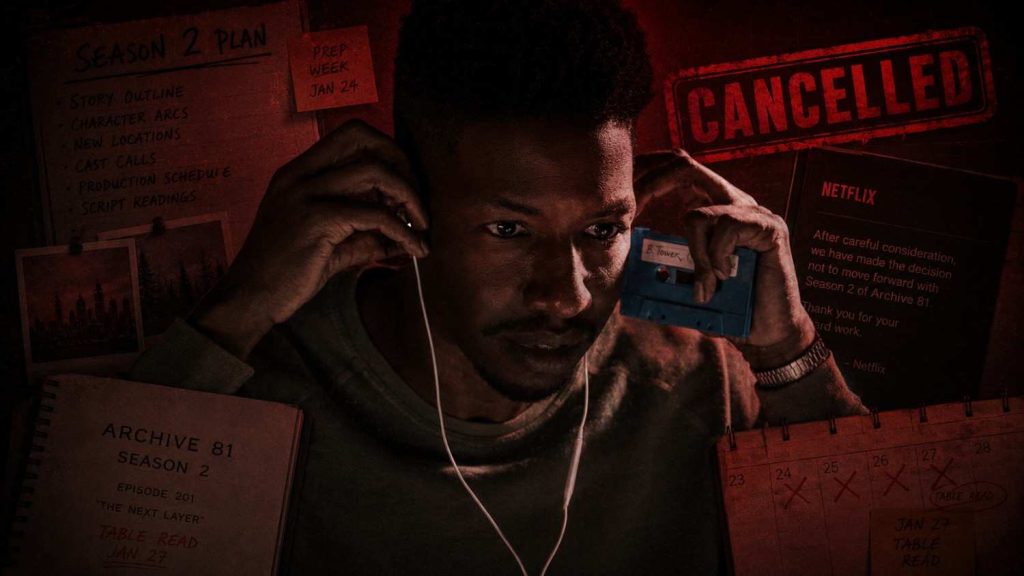
Season 2 scripts were reportedly complete when Netflix made the cancellation call. Crew and production sources, referenced in post-cancellation reporting and cast-adjacent social media, indicated that pre-production was days from formally beginning, not weeks or months away. This was not “we were thinking about Season 2.” This was a production that was already in motion.
Showrunner Rebecca Sonnenshine spoke publicly after the cancellation about the amount of story the show never got to tell. Her comments were not vague. She described a mapped-out Season 2 arc, not a loosely sketched set of ideas. The planned second season was reportedly centered on Davenport, the character whose presence in Season 1 was clearly structured as setup for a larger role. The surviving mythology, the Karag entity’s history, and the cult’s longer arc across time were all planned to expand significantly.
Think about what that means logistically. The writers’ room completed a full season of scripts. A production timeline was drawn up. Pre-production scheduling was in place. And then the call came.
It was not a show that died on the vine from lack of attention. It was a show that was already running when the engine was cut. That specific detail, days from pre-production, is what separates this cancellation from a show that simply did not perform well enough to earn renewal consideration.
Is Archive 81 Coming Back? The Rights Situation Makes It Nearly Impossible
No, Archive 81 is not coming back, and the reason is not Netflix’s mood. It is structural.
Archive 81 was produced as a Netflix original. Under that arrangement, Netflix holds the production rights and the first-window distribution. When a show is cancelled under that structure, the IP does not automatically revert to the creators or become available for another platform to pick up. The rights stay with Netflix.
For a revival to happen, another streaming platform would need to negotiate rights acquisition from Netflix for a show Netflix has already decided it does not want to continue producing. Netflix’s financial incentive to do that is essentially zero. Licensing a cancelled show to a competitor creates no meaningful revenue for Netflix, and it creates a comparison: another platform did what Netflix would not. That is not a deal Netflix has a reason to make.
The podcast angle is also not a workaround. The original Archive 81 podcast, created by Daniel Powell and Marc Sollinger, exists independently of the Netflix adaptation. The podcast and the Netflix show share a title and some structural DNA, but they diverge substantially in story, characters, and mythology. Another platform could theoretically produce a new adaptation from the podcast source material. What they could not do is continue the Netflix show’s specific storyline, characters, or the Davenport arc that Season 1 was building toward.
There are no credible revival talks reported as of 2026. Fan petitions have circulated since 2022 and have not produced any documented network interest. The door is not just closed. It is locked from the inside.
Archive 81 Joins a Pattern Netflix Has Repeated With Prestige Genre Shows
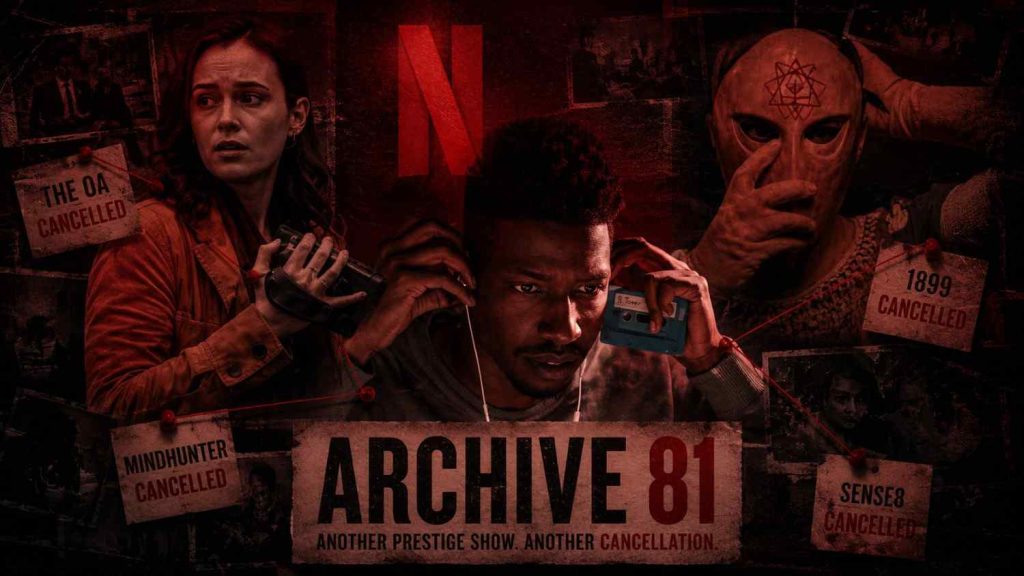
Archive 81’s cancellation is not an isolated decision. It fits a pattern Netflix has repeated with specific types of shows: high-concept, visually distinctive, critically praised, cost-heavy, and dependent on an audience that tends to binge once and not return.
The OA got two seasons before Netflix cancelled it mid-production on a planned five-season arc. 1899 was cancelled after one season despite being one of the most expensive international productions Netflix had made. Warrior Nun ran two seasons before cancellation despite a vocal and organized fanbase. And Mindhunter’s third season was cancelled in near-identical circumstances to Archive 81, with a fully mapped-out season that never got made because the cost-per-viewer math did not work.
The common thread across all of these is not quality. Every one of them is genuinely well-made television. The common thread is the mismatch between what prestige genre shows cost to produce and how Netflix’s subscriber retention model values an audience that watches intensely once.
Netflix’s model is built on keeping subscribers from canceling, not on rewarding the most devoted audiences. A show with five million obsessive fans who binge it in a week and then tell everyone about it is, under that model, worth less than a show with fifteen million casual viewers who return to the platform twice a month. That math is cold, but it is consistent.
Archive 81 was a genuinely good show that arrived at the wrong time for the wrong platform’s economics. That is frustrating. It is also the truth.
FAQ
Why was Archive 81 cancelled?
Netflix cancelled Archive 81 in March 2022 because its viewership dropped sharply after a strong opening two weeks, and the sustained audience was not large enough to justify the show’s production cost. The show required period-accurate 1994 sets, dual-timeline production design, supernatural visual effects, and found-footage post-production work that pushed per-episode costs into a range where Netflix needed consistent long-term viewership to break even on its investment. The opening numbers were solid, but the audience did not stick around past the premiere window.
Was Archive 81 actually close to getting a Season 2?
Yes, significantly closer than most cancelled shows get. Season 2 scripts were reportedly completed and pre-production was days from formally beginning when Netflix confirmed the cancellation in March 2022. Showrunner Rebecca Sonnenshine spoke publicly about having a detailed arc planned for Season 2, centered on the Davenport character and expanding the mythology introduced in the finale. This was not a vague “we had ideas” situation. It was an active production timeline that was stopped just before the formal start of pre-production.
Can Archive 81 be picked up by another streaming service?
Not in any practical sense. Netflix holds the production rights as a Netflix original, so those rights do not revert to the creators automatically after cancellation. Another platform would need to negotiate rights acquisition from Netflix, and Netflix has almost no incentive to license a cancelled show to a competitor. The original Archive 81 podcast exists independently, and another platform could theoretically produce a new adaptation from that source material. What they cannot do is continue the Netflix show’s specific characters, storylines, or the Davenport arc that Season 1 set up.
How many people actually watched Archive 81 on Netflix?
In the three weeks following the January 2022 premiere, Archive 81 accumulated roughly 128 million viewing hours globally, according to Netflix’s own Top 10 data. The show also crossed into Nielsen’s weekly streaming ratings during the same period, which fewer than 10 percent of Netflix originals achieve. The issue was not the opening performance. The issue was that viewership fell off quickly after the premiere window, and the long-tail retention numbers did not support renewal at the show’s production cost.
Did the showrunner ever say what Season 2 would have been about?
Rebecca Sonnenshine confirmed in post-cancellation interviews that there was a substantial amount of story the show never got to tell. The planned Season 2 arc was reportedly built around the Davenport character, who was seeded throughout Season 1 as the connective tissue for the larger mythology. The planned expansion included the Karag entity’s full history, the Vos cult’s longer arc across time, and the surviving characters from the Season 1 finale. The arc was described in mapped-out terms, not as early-stage development.
Is the Archive 81 cancellation similar to what happened to Mindhunter?
The structural parallels are strong. Both shows were prestige productions with devoted but not massive audiences. Both were cancelled while full seasons of scripts existed and production was either in progress or imminent. Both were cancelled because the cost-per-viewer math under Netflix’s renewal model did not work, not because of any creative failure. The Mindhunter situation also involved a fully planned season that never got made, and director David Fincher has confirmed the show is unlikely to return for the same structural reasons.
Why does Netflix keep cancelling good shows after one season?
Netflix’s renewal model is built around subscriber retention at scale, not around rewarding the most dedicated fanbases. A show that costs a significant amount per episode needs a sustained audience large enough to justify the spend over time. Prestige genre shows tend to attract intense but smaller audiences that binge quickly and then leave. That profile looks great in week-one data and looks much weaker by week six. Netflix is not cancelling these shows because they are bad. It is cancelling them because the cost-to-sustained-viewership ratio does not fit the platform’s economics.
The Cancellation Was Not the Show’s Failure — It Was the Platform’s Math
The single clearest takeaway from all of this is that Archive 81 was cancelled because of a specific economic model, not because it did not work as television. The writing was sharp, the mythology was layered, the cast was genuinely committed, and the production design was doing something distinctive. None of that was in dispute when Netflix made the call.
What was in dispute was whether 128 million opening hours and a devoted genre audience could justify per-episode costs that required sustained viewership well past the premiere window. The answer was no, and Netflix made that determination in 69 days. The fact that scripts were written and pre-production was days away does not change the math. It just makes the math more visible.
If this pattern frustrates you, the same economic logic killed Mindhunter’s planned third season in nearly identical circumstances, a complete story arc, a devoted audience, and a cost-per-viewer ratio that Netflix’s model could not absorb. Understanding how Netflix actually makes these decisions does not make the loss of Archive 81 less real. It just means you know exactly where to direct the frustration.