
TL;DR
- A Supe in The Boys gets abilities from Compound V, a Vought-developed serum administered either before birth or as a dose given to an adult, and the timing changes everything about the outcome.
- Power strength is not standardized across Supes. Adult-dosed characters like Termite and Web Weaver get minor, situational abilities, while womb-exposed characters like Homelander develop far more powerful and stable ones.
- Ryan is the only character the show has confirmed as naturally conceived, born to two Compound V-affected parents rather than dosed after the fact.
- Hughie’s power use has been shown as temporary and situational, which is a different category from Ryan or Homelander’s permanent abilities.
- Comic canon and show canon are not interchangeable. Several “facts” repeated online about Compound V come from Garth Ennis and Darick Robertson’s original comics, not the Amazon series.
- Vought’s casting choices for new Supes, like Firecracker, increasingly favor media influence over raw power, a shift with consequences for how the story keeps moving.
Most explainers about The Boys treat Supes like a stat sheet. Who can fly the fastest, who hits the hardest, who wins in a fight between Homelander and Soldier Boy. That’s a fun bar argument, but it skips the actual mechanic the show has been building since season one: the same drug produces wildly different results depending on how and when someone gets it.
Most people watching just accept that some Supes are strong and some are weak, the way some people are tall and some are short. But the show is not being random. It’s tracking something specific about dosage, timing, and what Vought wants from a given Supe at a given moment, and that logic explains plot decisions that otherwise look arbitrary.
This piece walks through how Compound V actually functions on screen, which “facts” are comic canon versus show canon, why Ryan gets treated as a containment risk instead of an asset, and what Vought’s newer Supe casting choices say about where the story is headed. If you came here just wanting the pecking order, the Seven’s power rankings cover that angle directly.

What Exactly Is a Supe, and How Does Compound V Actually Work?
A Supe is anyone whose abilities come from Compound V, a serum Vought developed and has administered on screen in two distinct ways: injected into a fetus in the womb, or dosed directly into an adult. The show treats this timing distinction as the load-bearing mechanic behind every power difference fans argue about.
In-utero dosing is how Vought creates its flagship Supes, the ones raised inside the company’s pipeline from birth. Homelander is the clearest example, engineered and trained from infancy rather than recruited later in life. This is also the version of Compound V exposure the show treats as producing the most stable, powerful results.
Adult dosing works differently. A grown person given Compound V gets a power, but the show has repeatedly shown these abilities landing on the smaller or more situational end of the spectrum. Termite’s shrinking and Web Weaver’s webs both fit this pattern: real powers, real consequences, but nowhere near Homelander’s tier.
There’s also a middle category the show rarely dwells on: adult dosing during Vought’s earlier, more militarized era, when recruits were given Compound V primarily for combat use. Soldier Boy’s original squad falls into this bucket. Their abilities skew physical and situational rather than the polished, stable output Vought’s modern in-utero program produces, which suggests the company’s methods improved over decades of internal testing rather than staying fixed.
One thing worth being straight about: the show has never given a lab-coat explanation for why one adult gets shrinking and another gets webs. That randomness is a real gap in the show’s own internal logic, not something this piece is going to pretend to solve for you.
For a closer look at how one specific Supe’s dosing and upbringing shaped a very different power profile, the Clara Vought’s full story piece traces that arc from the beginning.
| Dosage Type | Example Supes | General Power Tier Observed | Timing |
|---|---|---|---|
| In-utero | Homelander, Ryan | High, stable | Before birth |
| Adult dose, combat-era | Early Vought recruits | Variable, often physical | Adulthood |
| Adult dose, modern/civilian | Termite, Web Weaver, Hughie Sr. | Minor to situational | Adulthood |
| Unclear origin | Several minor Supes | Unconfirmed | Not established on screen |
Comic Canon vs. TV Canon: Which Supe Facts Are Actually Confirmed on Screen?
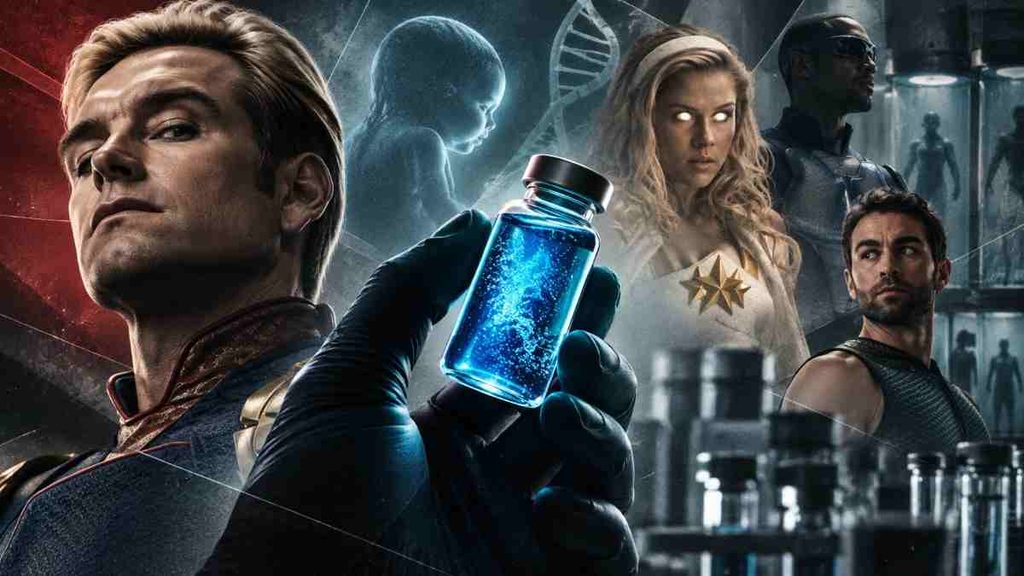
The Amazon show and the original comic series by Garth Ennis and Darick Robertson are related but not identical, and several details about Compound V that circulate online actually come from the comics rather than anything dramatized in the series. Fan wikis routinely blend the two without flagging the difference, which is how “facts” spread that the show itself has never confirmed.
This matters because the comics handle character fates, power origins, and even Vought’s internal history differently than the show does in several places. Someone reading a wiki page assembled from both sources ends up with a version of Compound V lore that no single piece of media actually depicts.
The safest rule for anyone trying to sound informed in a group chat: if a detail about how Compound V works only shows up in forum posts citing “the comics,” treat it as background lore, not something the show itself has stated. When Vought’s origins come up, the Vought and Homelander timeline lays out what the show itself has actually established, in order.
Is Ryan the Only Natural-Born Supe? What the Show Has Actually Shown
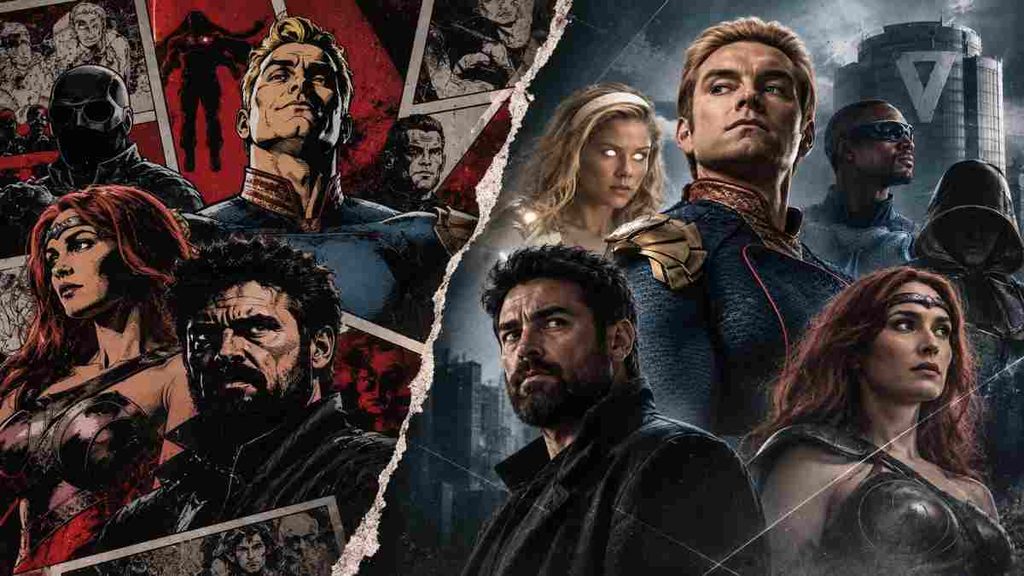
Ryan is the only character the show has established as conceived naturally, born to two Compound V-affected parents rather than dosed in the womb or after birth through injection. That distinction is why every character around him treats him differently than they treat lab-created Supes.
Ryan is not a product Vought engineered on purpose. He’s an outcome nobody planned for, which makes him unpredictable in a way that a company built around controlling its assets cannot stand. That’s the actual reason his existence generates so much tension among characters who would otherwise be fighting over a weapon, not a person.
This distinction is TV canon only. The comics handle Supe reproduction differently, so anyone cross-referencing lore from both sources will end up confused about what “natural-born” even means for this character.

Does Hughie Get Powers Permanently? Temporary Compound V, Explained
No. Hughie’s use of Compound V has been shown on screen as a short-term, situational choice rather than a permanent transformation, which puts him in a different category from characters whose powers are an origin event they carry for life.
Hughie Sr.’s storyline works as a useful contrast. His dose produces real effects, but the show pairs those effects with visible cost rather than treating the power as a clean upgrade. That pairing is the show using temporary or adult dosing to ask what a person gives up for a power, not just what they gain.
Treat this as one of the clearest examples of the show changing its own rules mid-run: early seasons mostly treated Compound V as permanent and binary, and later seasons introduced a reversible, costly version of the same drug as a distinct plot tool. That shift also opens the door for future characters to gain temporary abilities without the show needing to explain away a permanent power that never gets used again.
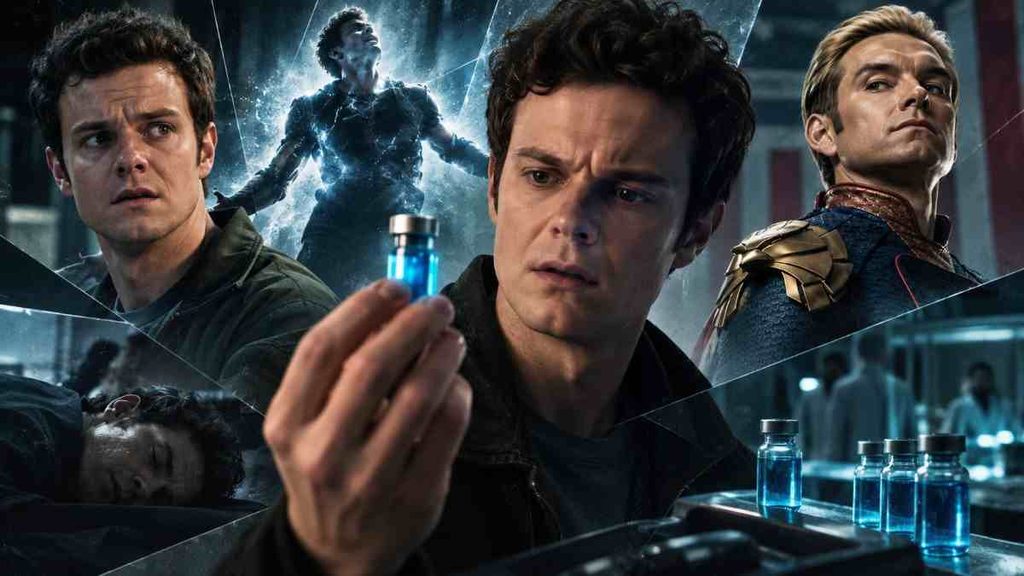
The Weakest-to-Strongest Question Everyone Asks (and Why It’s the Wrong Frame)
Homelander is the character the show consistently treats as the top of the power hierarchy, but “strongest” and “most dangerous” are not the same measurement inside the show’s own logic. Firecracker is a clean example: her raw power is unremarkable, yet the show treats her as a serious threat because of the influence she wields, not her fists.
This is the actual insight buried under every ranked list online. A power tier list measures what a Supe can physically do. It says nothing about how much damage a Supe can cause through a platform, a following, or Vought’s PR machine, which is increasingly the more dangerous category in this show.
Ranking Supes by strength alone also misses how Vought itself has stopped prioritizing raw strength in its newer recruits. A company that once wanted the next Homelander now seems just as interested in the next Firecracker, someone who can shape a narrative faster than she can throw a punch.
| Supe | Raw Power Tier | Primary Danger Source |
|---|---|---|
| Homelander | Very high | Physical |
| Firecracker | Low | Social and political |
| Termite | Low | Physical, situational |
| Web Weaver | Low | Physical, situational |
| Hughie Sr. | Low | Physical, with cognitive cost |
Vought clearly understands this distinction too. The company’s decision to introduce a Supe like Firecracker, whose value is almost entirely about reach rather than combat ability, says something about where Vought’s actual priorities sit.
The Change Ledger: How Amazon’s Rules for Supe Powers Have Shifted Season to Season
The show has not kept its own rules about Compound V static. Three shifts stand out as genuine changes to the internal logic rather than one-off plot beats.
| What Changed | What It Altered | Status |
|---|---|---|
| Adult civilian dosing shown as a visible plot device | Introduced temporary, cost-attached power grants distinct from permanent Supe status | Confirmed on screen |
| Introduction of a naturally conceived Supe (Ryan) | Established that Compound V effects can pass through inheritance, not just direct dosing | Confirmed on screen |
| Supes cast primarily for media and political value (Firecracker) | Shifted the show’s danger metric from raw power toward influence | Confirmed on screen |
Each of these changes stands on its own. None of them require the others to make sense, which is exactly why they read as deliberate rule additions rather than retroactive fixes. Viewers tracking the show season to season can use this ledger as a quick check whenever a new Supe’s powers seem to break an earlier rule.
Three Things This Rulebook Changes About How You Watch the Rest of the Show
Vought’s Casting Signals a Strategic Pivot
Firecracker’s introduction is not a one-off character choice. It signals that Vought, as an in-universe company, has started treating media reach as a form of power worth casting for, which changes what kind of Supe a viewer should expect the show to introduce next.
Ryan Is a Containment Problem, Not an Asset
Once you understand that Ryan was not engineered, his entire arc reads differently. Other characters are not fighting over how to use him. They’re fighting over how to control something none of them actually designed.
Getting Powers Is a Cost-Benefit Decision, Not a Wish
Hughie and Hughie Sr.’s storylines both frame taking Compound V as a trade, not a gift. Any future guest-Supe storyline that follows this same pattern is likely setting up a cost the character will pay later, not a power-up with no downside.

FAQ: The Questions Readers Still Ask About Supes and Their Powers
Who are all the Supes in The Boys and what are their powers?
There are dozens of named Supes across the show, ranging from major cast members like Homelander and Starlight to minor one-episode characters like Termite. Rather than repeat a full roster here, the Seven’s power rankings cover the full lineup with each character’s specific ability.
Is Ryan the only natural Supe in The Boys?
Yes, based on what the show has confirmed. Ryan was conceived naturally by two Compound V-affected parents, rather than dosed in the womb or after birth, which makes him distinct from every other named Supe the series has introduced so far.
Does Hughie keep his powers permanently?
No. Hughie’s power use has been depicted as temporary and situational rather than a permanent transformation. This distinguishes him from Hughie Sr., whose storyline shows a dose producing lasting effects alongside real cost.
Who is the strongest Supe in The Boys?
Homelander is the character the show consistently treats as the top of the raw power hierarchy. That said, raw power and actual danger are not the same thing in this show, since characters like Firecracker cause damage through influence rather than physical strength.
Are the comics and the show the same canon for Supe powers?
No. The Amazon series and Garth Ennis and Darick Robertson’s original comics diverge on several details about Compound V and character origins. Fans researching lore should treat wiki pages that blend both sources with caution, since they often present comic-only details as show canon.
The most useful thing to take from all this: The Boys isn’t handing out powers at random, it’s tracking a consistent set of internal rules about timing, dosage, and now, increasingly, influence. Once you see the in-utero versus adult-dose split, half the show’s plot decisions stop looking arbitrary and start looking like a company optimizing a product line.
Next time a new Supe shows up, ask two questions before worrying about their power level: when did they get dosed, and what does Vought actually want from them. That’ll tell you more about where their arc is headed than any strength ranking will.