What the Met Gala Bezos Backlash Is Actually About
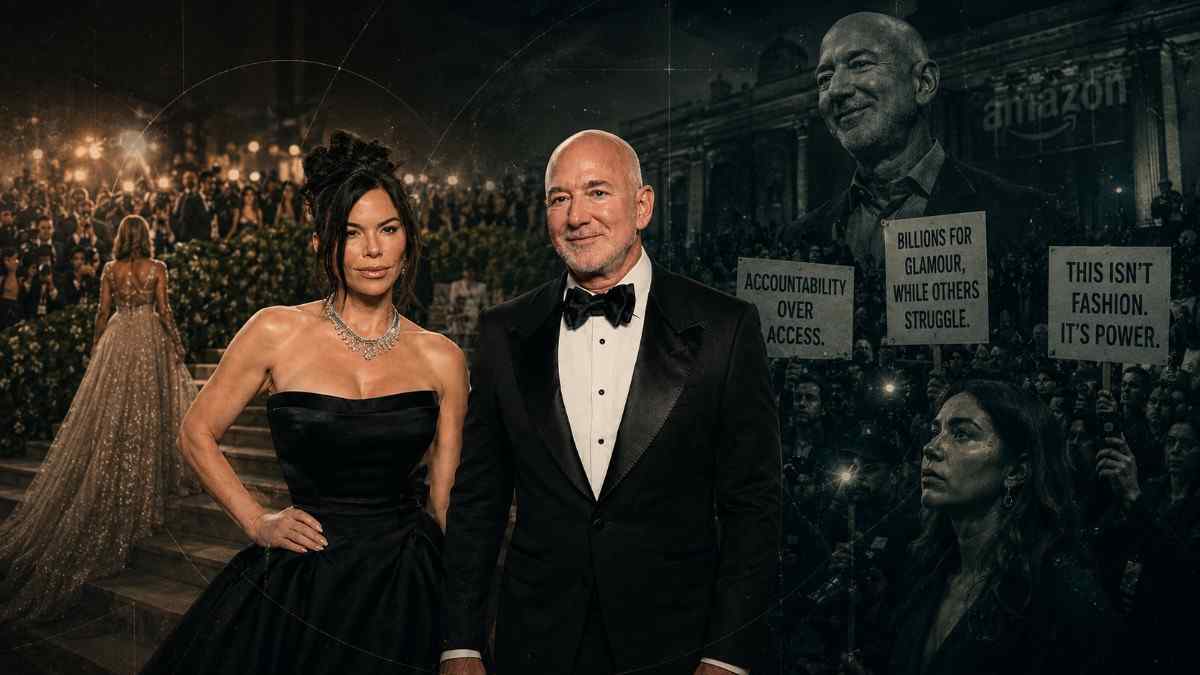
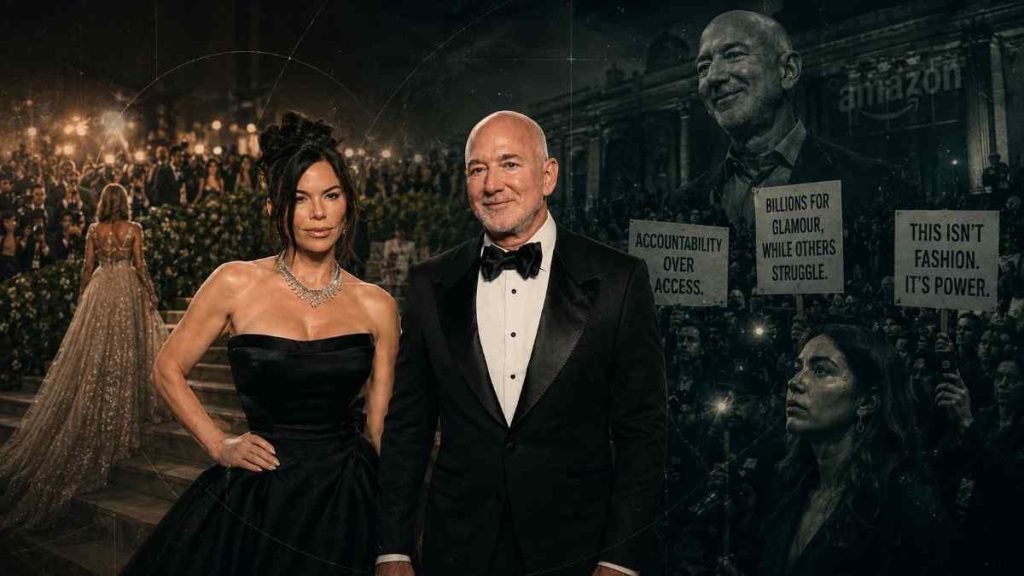
The backlash is about one specific, documented shift: Bezos did not just write a check. He and Lauren Sánchez served as co-chairs of the 2026 Met Gala, which placed them at the center of the event’s identity rather than in the background as corporate sponsors.
That distinction matters. Past Met Galas have been sponsored by corporations whose labor practices are also worth scrutinizing. Nobody protested outside the museum when a luxury conglomerate wrote the check because no individual’s face was attached to it. When Bezos became the face of the event, every specific grievance people already had with him became part of the night’s story.
Those grievances are documented and specific. Amazon has been fighting unionization efforts at its warehouses for years, with the first successful union vote at a Staten Island facility making international news in 2022. The company went through major layoffs in 2022 and 2023 that affected tens of thousands of employees. Then, in late 2024, the Washington Post declined to endorse a presidential candidate for the first time in decades, a decision widely attributed to pressure from Bezos, who owns the paper.
When someone carries all of that into the co-chair role at an event estimated to cost $30,000 per ticket, the reaction is going to be different than the annual “rich people party” complaint. Anti-billionaire sentiment in the US has been rising measurably since 2020. By 2026, that sentiment had a name, a political movement, and years of accumulated grievance behind it. Bezos co-chairing the Met Gala dropped all of that into the middle of an event that fashion insiders had always treated as a neutral cultural celebration.
It is not neutral anymore.
Why the 2026 Met Gala Controversy Feels Different From Past Years
The Met Gala has been called tone-deaf before. The “eat the rich” discourse around the event is not new.
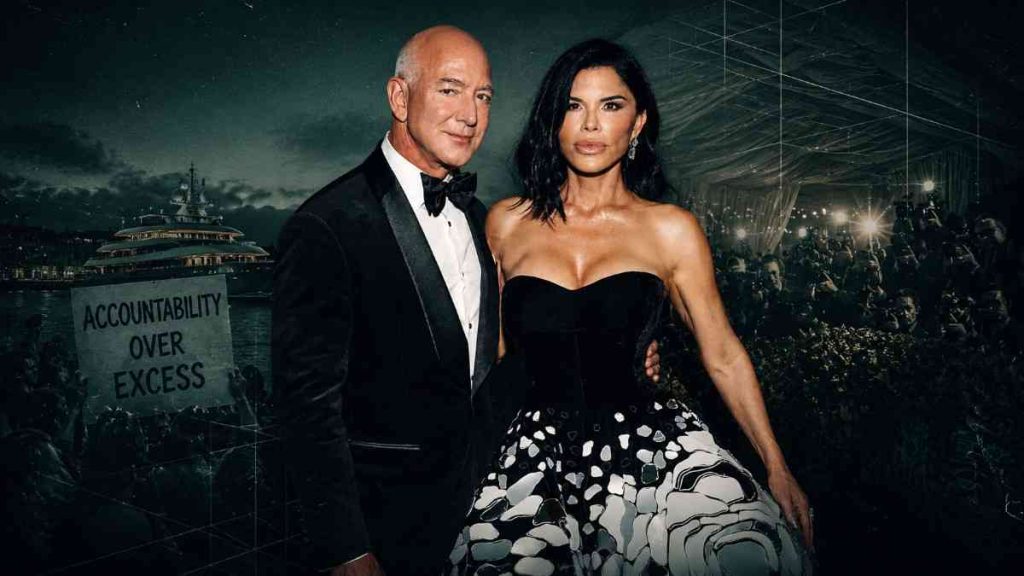
What is new in 2026 is the presence of a named individual with a specific and recent political footprint rather than a faceless corporate logo. There is a meaningful difference between “a fashion corporation sponsored this event” and “the man who reportedly influenced the Washington Post’s endorsement process is standing at the top of the stairs in a tuxedo.”
Named individuals are easier to hold accountable than brands. When a corporation sponsors a cultural event, the criticism gets diffused across PR departments and brand teams. When a person is the co-chair, the accountability lands on a face.
The celebrity shade factor is also notable. BuzzFeed documented at least nine celebrities who made public comments that read as distancing moves from the event, which is genuinely unusual. Celebrities almost never publicly criticize events they are adjacent to because the professional costs are real. When named, visible celebrities start making comments at other events or on social media, it signals that the cultural permission to criticize has shifted.
The timing also intensified everything. The Washington Post editorial controversy was still relatively fresh, Amazon’s labor battles had not resolved, and the broader conversation about billionaire influence over media and politics was louder than it had been in years.
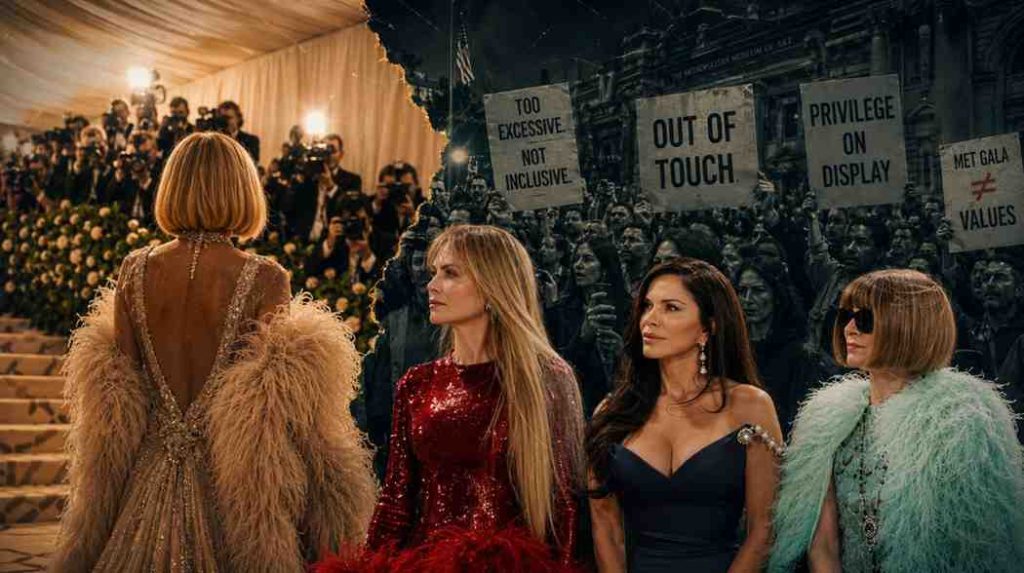
Why Celebrities Still Show Up to the Met Gala Despite the Backlash
The short answer: the career incentives for attending are real, measurable, and largely invisible to anyone who does not work in entertainment or fashion. Celebrities do not show up despite their values. They show up because the professional cost of NOT showing up is also real, and almost nobody covers that part of the story.
The Anna Wintour Factor
Anna Wintour has controlled the Met Gala guest list for decades. Her influence over which celebrities receive Vogue coverage, which designers get elevated into mainstream cultural conversation, and whose career gets a high-fashion endorsement is not theoretical. It is operational.
Skipping a Wintour-run event is not the same as skipping a party you were invited to. It is a relationship decision with a person who has real influence over a meaningful slice of the entertainment and fashion ecosystem. The fashion and entertainment worlds run on access and relationships. Removing yourself from the room where those relationships are maintained has a cost, even when it is never stated out loud.
The Career Incentive Is Real and Measurable
The Met Gala generates more social media impressions, press coverage, and brand conversation in roughly 24 hours than almost any other single entertainment event outside the Oscars. For celebrities whose income depends on brand partnerships, that is a working night.
Brands pay to dress attendees. The PR value of a Met Gala appearance can be calculated in terms of media placement, social engagement, and brand association. For a celebrity actively managing their public image through partnerships, skipping the Met Gala is not a political gesture. It is a financial decision with a real cost attached. You can read more about celebrity professional incentives and how they shape attendance decisions in ways that rarely make headlines.
The Social Cost of Skipping Is Not Zero
Actors and musicians who skip the Met Gala without a clear and stated reason risk being read as difficult or out of the loop by the industry people who do attend. There is no equivalent prestige event to show up to instead. Boycotting the Met Gala does not redirect your career capital somewhere else. It removes you from the room where conversations about casting, partnerships, covers, and collaborations happen.
Who Actually Skipped or Spoke Out About the 2026 Met Gala
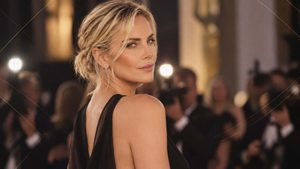
A small but named group of celebrities made public comments that read as deliberate distancing from the event. The most direct was Charlize Theron. At a separate public event, she said of Bezos and Lauren Sánchez, “they suck and we’re cool,” according to reporting from the Hollywood Reporter. She was not at the Met Gala.
BuzzFeed’s coverage compiled at least nine celebrities who seemingly shaded the event through public comments, social media timing, or conspicuous absences. Forbes documented others who skipped without public comment. The distinction between those two groups matters: a celebrity who makes a public statement is making a different kind of choice than one who simply did not attend.
That distinction matters even more when you factor in scheduling realities. Not every absence is a political statement. The count of celebrities who made genuinely public, named statements criticizing the event is smaller than the discourse suggested. Online amplification of celebrity shade can make it seem like widespread revolt when the actual number of people willing to go on record is closer to a handful.
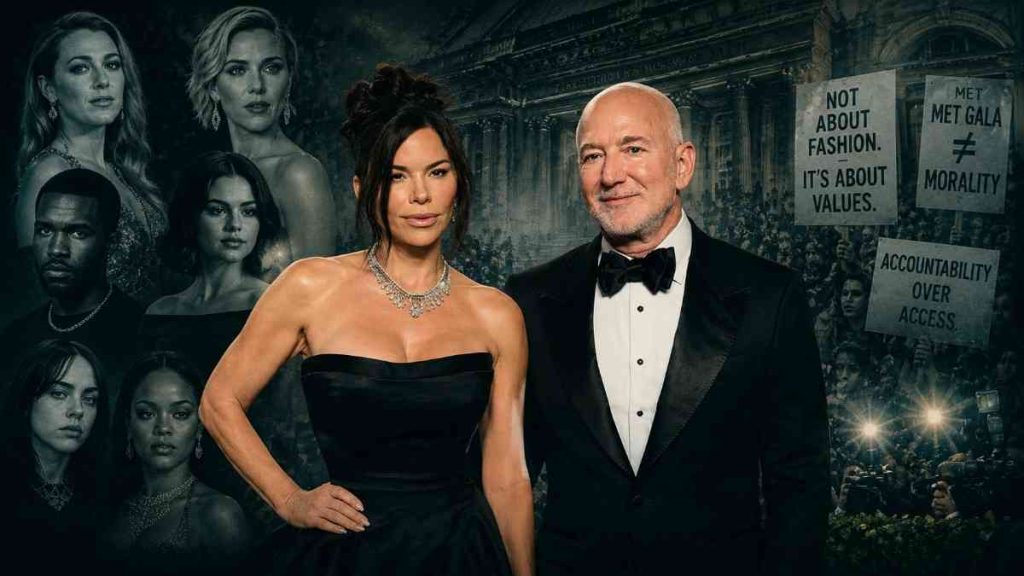
Is Showing Up the Same as Endorsing Jeff Bezos?
The honest answer is: it depends on what “endorsing” means, and that line is getting harder to hold.
Attendance at a sponsored event has never historically been treated as political endorsement. Every major cultural event is sponsored by companies with complicated records. If attendance equaled endorsement, celebrities would have nowhere to go.
But the Bezos co-chairmanship changed the threshold in a specific way. When the sponsor is a named individual who has made specific, recent, politically charged decisions, the “I’m here for the art, not the sponsor” argument gets thinner. Several celebrities who attended made no public comment about Bezos either way. That silence is not the same as endorsement, but it is not neutral either.
What the 2026 backlash revealed is that the window for treating Met Gala attendance as politically neutral is closing. The event is too visible, the sponsor is too controversial, and the public is too attuned to the gap between celebrity values-signaling and celebrity behavior for the old “it’s just fashion” framing to hold.
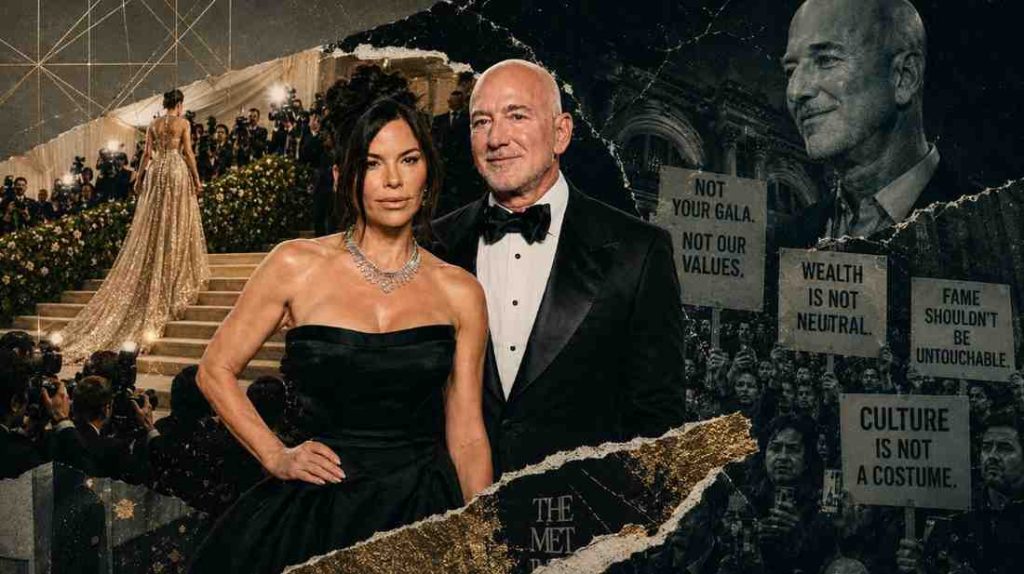
What the Bezos Backlash Actually Reveals About the Met Gala
The 2026 backlash made one uncomfortable truth difficult to ignore: the Met Gala has always been a power event dressed as a cultural celebration. Bezos co-chairing it did not corrupt something innocent. It made visible something that was already there.
The event was created as a fundraiser for the Metropolitan Museum of Art’s Costume Institute, and it still technically serves that function. But the event’s real function is the consolidation and display of social capital between the fashion industry, the entertainment industry, and the financial class that underwrites both. Calling it a charity fashion event obscures what is actually happening.
Bezos co-chairing did not introduce billionaire power to the Met Gala. Billionaire power has been writing the checks for decades. What Bezos did, by being named and visible and specifically controversial at this particular political moment, is make the underlying dynamic impossible to discuss as if it were not there. The protesters outside were not protesting fashion. They were protesting the fiction that power and culture operate in separate spheres.
FAQ
Why did Jeff Bezos co-chair the 2026 Met Gala and why is that controversial?
Bezos and Lauren Sánchez served as co-chairs of the 2026 Met Gala, making them the public faces of the event rather than background financial backers. This was controversial because Bezos carried significant existing baggage into the role: Amazon’s documented labor conflicts, major layoffs, and his reported intervention in Washington Post editorial decisions, including the paper’s choice not to endorse a presidential candidate in 2024. Placing that track record at the center of a high-visibility cultural celebration generated pushback that went beyond the usual annual criticism of the event.
Did any celebrities actually boycott the 2026 Met Gala because of Bezos?
A small number of named celebrities publicly distanced themselves from the event. Charlize Theron made the most direct public comment, saying of Bezos and Lauren Sánchez that “they suck and we’re cool” at a separate event, according to Hollywood Reporter. BuzzFeed documented at least nine celebrities who made comments or took actions that read as distancing moves. The majority of the guest list attended without public comment. Not every absence was politically motivated, as scheduling conflicts and personal circumstances also explain some gaps.
Why do celebrities go to the Met Gala even when they disagree with the sponsor?
The career incentives for attending are real and measurable. Anna Wintour controls the guest list, and her network has genuine influence over Vogue coverage, brand partnerships, and fashion-world access. The event generates more press and social media value in 24 hours than almost any other entertainment event outside the Oscars. For celebrities whose income depends on brand deals, a Met Gala appearance is a working night with calculable returns. Skipping removes them from rooms where consequential industry conversations happen, with no equivalent alternative event to replace that access.
Is attending the Met Gala the same as endorsing Jeff Bezos?
Not automatically, but the line is thinner in 2026 than it has been before. Attendance at a sponsored event has historically not been treated as political endorsement, since almost all major cultural events are underwritten by corporations with complicated records. But when the sponsor is a named individual who has made specific, recent, politically charged decisions, the “I’m here for the art, not the sponsor” argument weakens. Celebrities who attended and said nothing are not technically endorsing Bezos, but their silence exists in a more charged context than it would have in previous years.
Why is anti-billionaire sentiment so high right now?
The pandemic made wealth concentration data visible to people who had not been tracking it closely before. Between 2020 and 2023, multiple studies documented that the wealthiest individuals in the US grew significantly richer while millions of workers faced unemployment, wage stagnation, and housing instability. That data, combined with high-profile labor battles at companies like Amazon and Starbucks, gave the existing resentment a specific vocabulary and set of targets. By 2026, that sentiment had accumulated years of evidence and political momentum, which is why a Met Gala co-chairmanship that might have passed with minimal comment in 2018 became a flashpoint.
What does Anna Wintour have to do with why celebrities attend the Met Gala?
Anna Wintour has curated the Met Gala guest list for decades and her influence over the fashion and entertainment industries is operational, not just symbolic. Vogue covers, designer relationships, and access to the broader fashion world are all shaped by her network. Skipping a Wintour-run event is a relationship decision with real professional consequences that are unspoken but understood in the industry. There is no documented list of celebrities penalized for skipping, but the entertainment and fashion worlds run on access, and removing yourself from key rooms carries a cost even when nothing is ever said directly.
Has the Met Gala always been about power or did the Bezos year change something?
The Bezos co-chairmanship did not introduce billionaire power to the Met Gala. Financial power has been underwriting the event for decades. What Bezos did, by being a named and specifically controversial individual at a politically charged moment, is make the underlying dynamic visible and impossible to discuss around. The event has always functioned to consolidate social capital between the fashion industry, entertainment industry, and financial class. The 2026 controversy did not corrupt that dynamic. It made it impossible to pretend the dynamic did not exist.
The Bigger Picture the Bezos Year Exposed
The 2026 Met Gala backlash was not a turning point for the Met Gala as an institution. The event will return next year, the carpet will be full, and Anna Wintour will still control the guest list. But something shifted in how openly people are willing to name what the event actually is and what it is actually for.
The celebrities who attended are not villains for going. They made career decisions within a system of incentives that is real and consequential. The celebrities who spoke out made a different kind of calculation and absorbed whatever professional cost came with it. The more useful question is why the situation exists in the first place, and who benefits from the fiction that fashion and power operate in separate spheres.
If the usual coverage of the Met Gala Bezos backlash felt like it was missing something, what it was missing is this: the structural explanation. The incentives are the story. The next time a celebrity shows up somewhere you think they should not be, ask what it would cost them not to go. That number is almost never zero, and it is almost never reported.