What Is the Man in Yellow in FROM, and Is He Running the Town or Trapped in It?
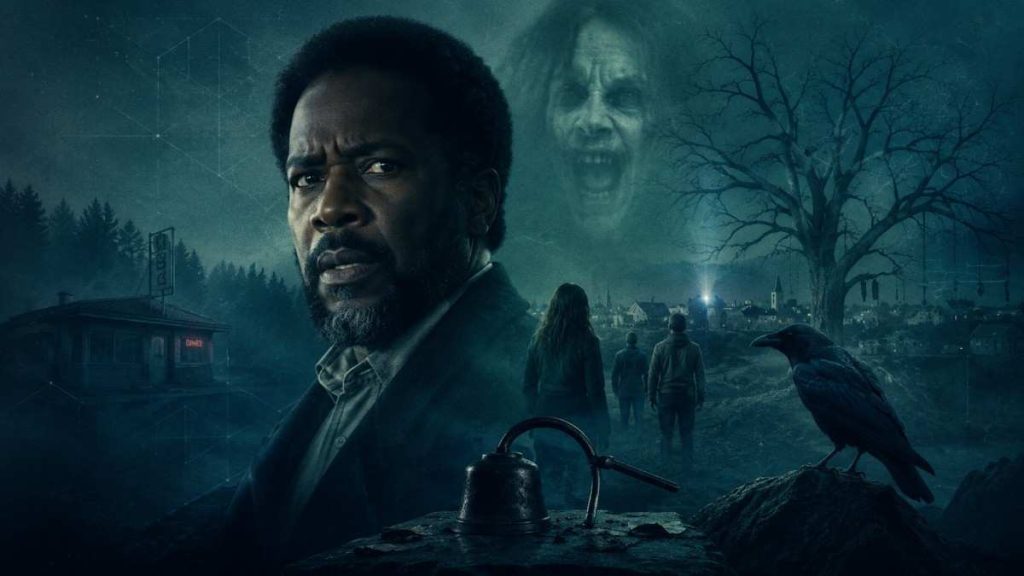
The Man in Yellow is not simply the show’s villain, and the evidence from Season 4 suggests he is not simply a victim either. The most coherent reading of everything the show has presented is that he is something closer to a system function a consciousness that the town generated, possibly from trauma or ritual, that now operates with a kind of autonomy the town’s original architects never intended.
Two competing theories dominate fan spaces right now. The first is that the Man in Yellow is the architect: the entity who built or summoned the town and uses it as a feeding mechanism. The second is that he is a prisoner, just like everyone else, but one who has been inside long enough to absorb enough of the town’s rules to appear in control. Both of these have evidence. Neither fully accounts for what Season 4 has shown.
The third option, the one almost no one is discussing, comes from the pattern of who sees him. Victor saw him as a child. Henry is seeing him now. Elgin saw him during his near-death experience. These are not random characters. They are characters the show has repeatedly marked as having an unusual permeability to the town’s deeper layer. The Man in Yellow does not appear to everyone. He appears to the ones the town has flagged, which implies he is part of the town’s selection mechanism, not its control system.
There is also the “Sophia is the Man in Yellow” reading, which has circulated since Season 3 and picks up steam with every new Sophia scene. The breakdown of that theory and why it does not quite hold together lives in the Man in Yellow analysis, but the short version is this: Sophia shares attributes with the entity, but the show has not given her the visual or narrative signature that would confirm identity rather than parallel. It is possible they are connected without being the same.
This question is load-bearing for the entire finale. The Man in Yellow’s nature architect, prisoner, or system function, determines what “solving” the town would even look like. If he built it, defeating him ends the cycle. If he is trapped in it, defeating him does nothing. The answer to this question has to come at least partially in the finale, because Season 5 cannot run a meaningful plot without a clearer target.
Is Fatima Dying, or Turning Into One of the Creatures?
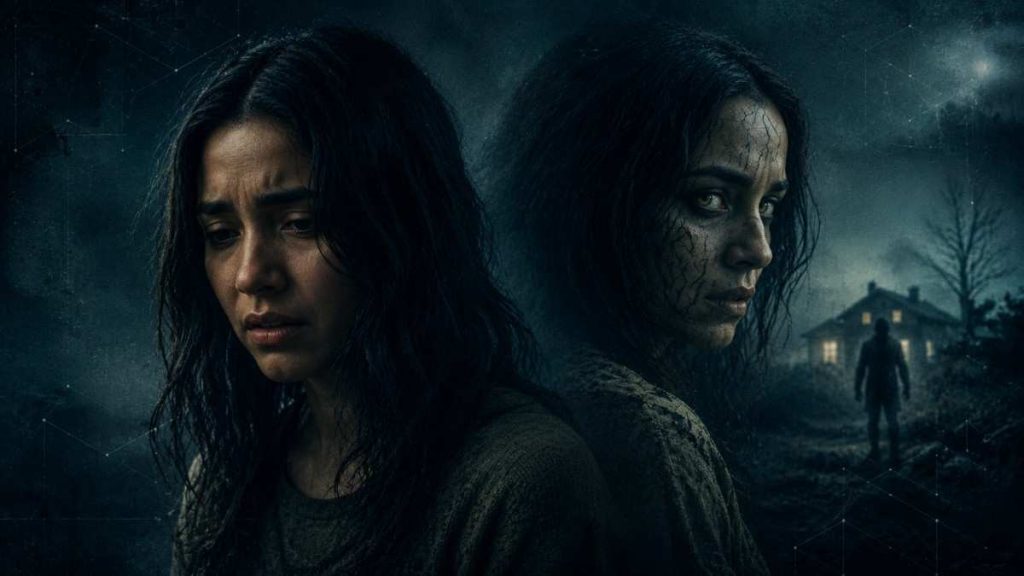
The evidence from Episode 8 points toward conversion, not illness. The specific physical markers Fatima is displaying the disorientation, the way her body is responding to the town’s environment match the early-stage pattern the show has used before when a character is being absorbed into the creature system, not when a character is dying from something organic.
What the Episode 8 Evidence Actually Shows
The fan debate has framed this as a binary: either Fatima is sick and might die, or she is fine and will recover. Episode 8 closes that debate. The show is deliberately staging her deterioration with visual language it has used before, and it is not the visual language of illness. The parallels are specific enough that if you have rewatched earlier seasons, you will have caught them.
Why Conversion Would Change Everything
If Fatima is mid-conversion, this would be the first time the audience has watched that process from the inside, in real time, through a character we have invested in across multiple seasons. Every prior creature was either already a creature when we met them, or the conversion happened off-screen. Watching it happen to Fatima and watching Ellis process it would be a completely different kind of horror than the show has deployed before.
The Season 5 Implications
A converted Fatima would mean Ellis spends Season 5 being hunted by his wife at night. That is not a throwaway detail. That is a central emotional engine for an entire season. The show setting that up now, in the final episodes of Season 4, is not an accident. The Reddit reading that Fatima “becomes one of the monsters and will haunt Ellis during Season 5” is the bleakest possible version of this storyline, and the evidence from Episode 8 makes it more likely than the alternative.
For a comparative look at how the show handles “is this character actually gone” questions, the Jim situation in Season 4 is a useful anchor. The show has a pattern of leaving characters in ambiguous physical states before delivering a definitive answer one or two episodes later.
Did Tabitha and Jade Open the Wrong Door?
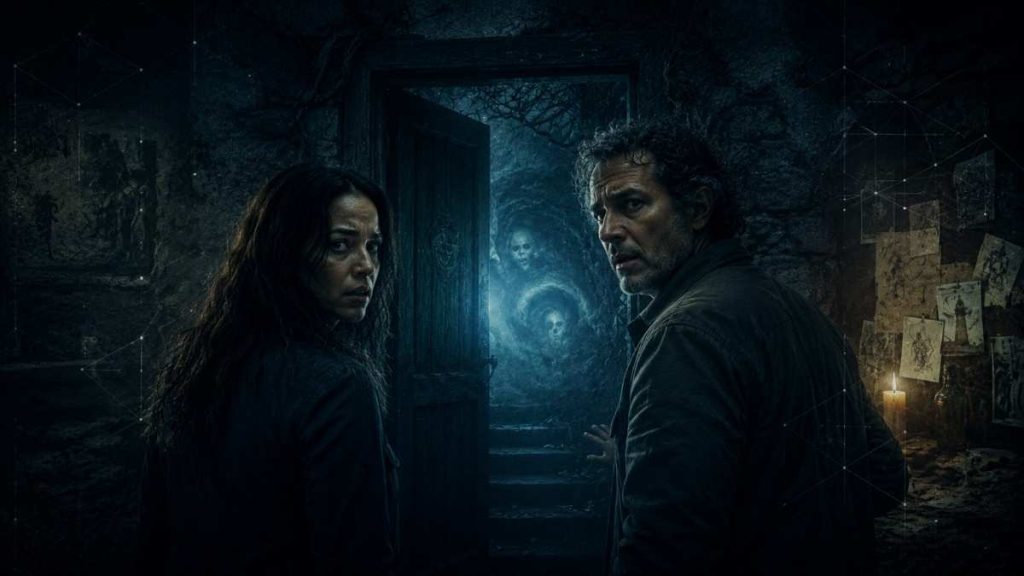
They opened the wrong door, or they opened the right door at the wrong time, or they opened the right door correctly and something was waiting on the other side that should not have been. Episode 8 suggests option three. The response the town gave to their action was not neutral. Something changed in the way the town is operating, and it changed in a direction that made things worse, not better.
The community version of this theory asks “did they make a mistake?” That is the right instinct but the wrong question. The more precise question is: what came through, or what became possible, because of what they did? The door itself may have been the correct mechanism. The problem may be that the door opens in both directions.
Tabitha and Jade were not operating blindly. They had accumulated more direct information about the town’s architecture than almost any other character by the end of Season 3. The show gave them agency and evidence and still ended up here. That suggests the mistake was not ignorance — it was that the information they had was deliberately incomplete. If the reincarnation framework Boyd introduces in Season 4 is real, Tabitha and Jade may have been carrying psychological imprints from previous cycles that the town specifically cultivated to point them toward this door, at this moment, for reasons that served the cycle rather than ended it.
The lighthouse has been the show’s most consistent symbol for “things that look like escape mechanisms but function as traps,” and the full lighthouse theory breakdown maps how the show has used that structure across all four seasons. The door and the lighthouse are not the same object, but they operate on the same principle: they offer the shape of a solution while obscuring the actual mechanism.
The finale question here is not just “what happened.” It is “can it be undone in one episode?” The honest answer from the pacing of Season 4 is probably not. This is more likely a Season 5 problem that the finale has to define clearly enough that the audience understands the shape of it.
What Does the Reincarnation Theory Actually Mean for the Characters We Already Know?
Boyd’s disclosure is the most mythology-dense moment Season 4 has delivered, and the fan conversation has mostly responded to it as a standalone reveal rather than following its implications outward. If Tabitha and Jade hold psychic imprints and memory traces from historical cycles, the downstream question is immediate: are they the only ones? Or is this a property of the town that applies more broadly?
The character this question lands on hardest is Victor. Victor survived a child massacre that killed every other child in his cohort. The show has never given a satisfying explanation for why. The reincarnation framework suggests a possible answer: Victor may have survived not because of luck or because he hid well enough, but because the town needed him to carry something forward. He is not just a survivor. He may be a vessel.
The acid detail Victor shares with Henry in Episode 8 is not a throwaway backstory beat. Victor explains something was wrong with the acid he took with his wife — the substance that was supposed to be a spiritual bridge to the town’s deeper layer was compromised. That is a clue about selection and sabotage, not just a sad personal history. The town, or something working through the town, interfered with Victor’s attempt to access deeper information. That interference implies agency, and that agency implies a reason.
Henry now sits in the same structural position Victor occupied as a child. The town is showing him things. The Man in Yellow is appearing to him. Boyd is disclosing mythology to him. Whether that makes Henry the next cycle-carrier or the person who finally breaks the cycle is the question the finale has to at least begin to answer. A deeper look at what the town actually is explains the cosmological framework these characters are operating inside, which makes the reincarnation detail land with much more weight.
Will Henry Point a Gun at Victor, and What Would That Mean?
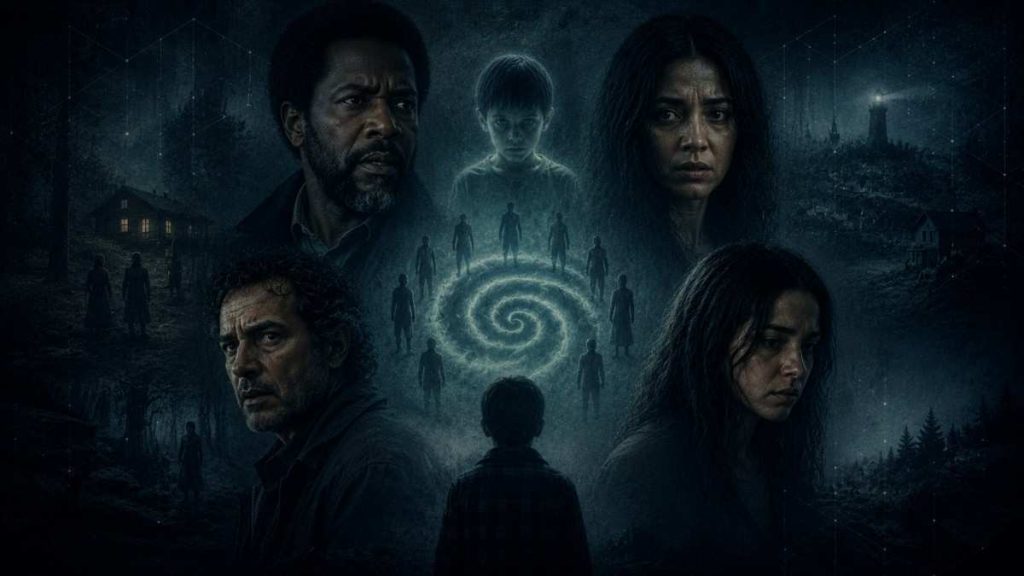
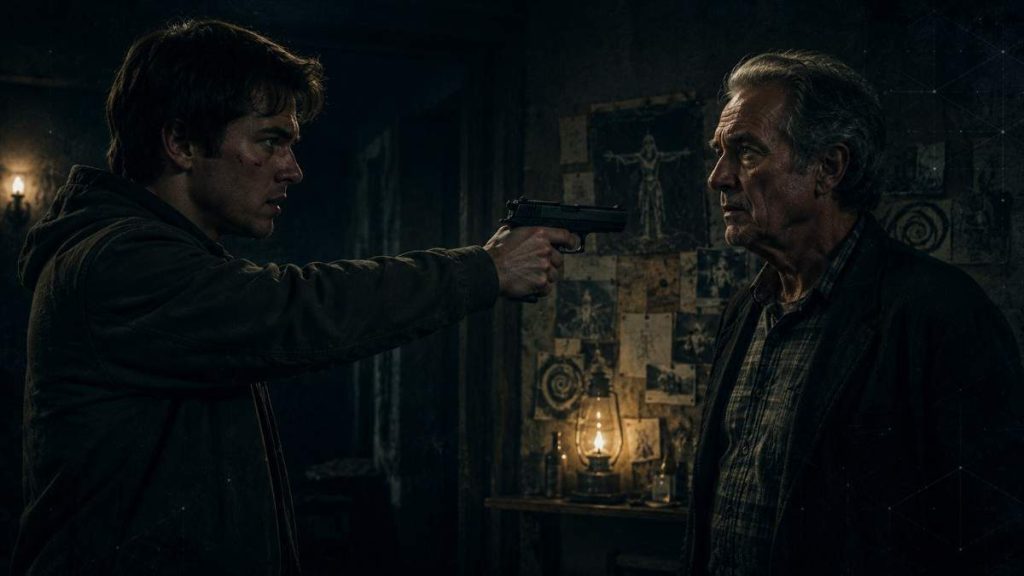
The Reddit prediction, Henry will point a gun at Victor, believing Victor is the threat is not just a dramatic beat. It is the structural risk that makes the finale dangerous in a specific way. Victor is the character who holds the most accumulated mythology knowledge in the entire show. If Henry moves against him before Victor can transfer what he knows, the show loses its primary information source at the exact moment the audience needs answers.
The tension between Henry and Victor has been building in a recognizable pattern. Victor withholds information. Henry perceives the withholding as threat. The acid backstory in Episode 8 adds a new layer: Victor has been burned before by trusting the wrong person with the wrong substance at the wrong time. His caution is not arbitrary. It is a learned response to a specific catastrophe.
That said, Victor’s trustworthiness in Season 4 is genuinely complicated. The show has given us reasons to wonder whether Victor’s version of events is fully accurate, or whether his own imprinting has colored what he remembers and reports. A character who carries psychic traces from previous cycles might not have clean access to objective history. He might be delivering the town’s preferred narrative rather than the truth.
The gun scenario would mirror a classic horror beat: the protagonist kills the only person who could explain everything, in the name of protecting themselves from a threat that was never what they thought it was. FROM has earned the right to do that beat. The question is whether the show wants to spend the finale on irony or on revelation.
Can Anyone Actually Escape the Town, and What Would “Escape” Even Look Like?
Four seasons in, the show has never fully defined escape. That is deliberate, and it is also a problem. Audiences can sustain ambiguity about how escape works for a long time. They cannot sustain ambiguity about whether escape is even a real concept forever. Season 4 needs to give the idea of escape at least a shape, even if it does not deliver the exit.
What the Show Has Established
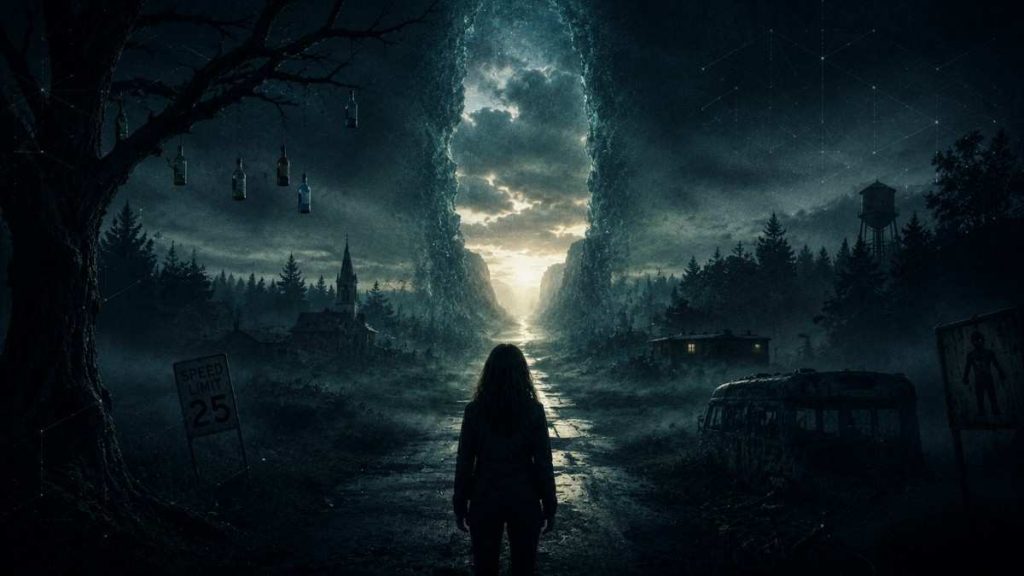
The physical rules are clear: you cannot drive out, walk out, or navigate out. The forest loops. The roads return you to the same place. Characters who have tried systematic physical escape have failed without exception across four seasons.
What Season 4 Adds
The door mechanism suggests escape might be metaphysical rather than physical. You do not leave through geography. You leave through some kind of spiritual or dimensional mechanism that requires the town’s permission, or the circumvention of the system that generates the town’s rules. That reframing makes the question harder, not easier.
The Purgatory Theory Problem
The purgatory reading is the most persistent fan interpretation the show has ever generated. Season 4 has made it simultaneously more plausible and harder to confirm. If the town is purgatory, escape would require something like absolution or completion of an unfinished task. The bottle symbolism is one of the show’s clearest gestures toward this reading. The bottle traps something that wants to move. The town traps people who are, by the show’s logic, somehow incomplete. Whether the show will ever fully commit to that framework or keep it as ambient metaphor is a genuine open question.
What Are the Monsters’ Origins, and Does the Show Owe Us an Answer Before Season 5?
The show owes the audience a directional answer on creature origins before Season 5. Not a complete answer, but enough to make the creature threat feel like it has a logic rather than just an atmosphere.
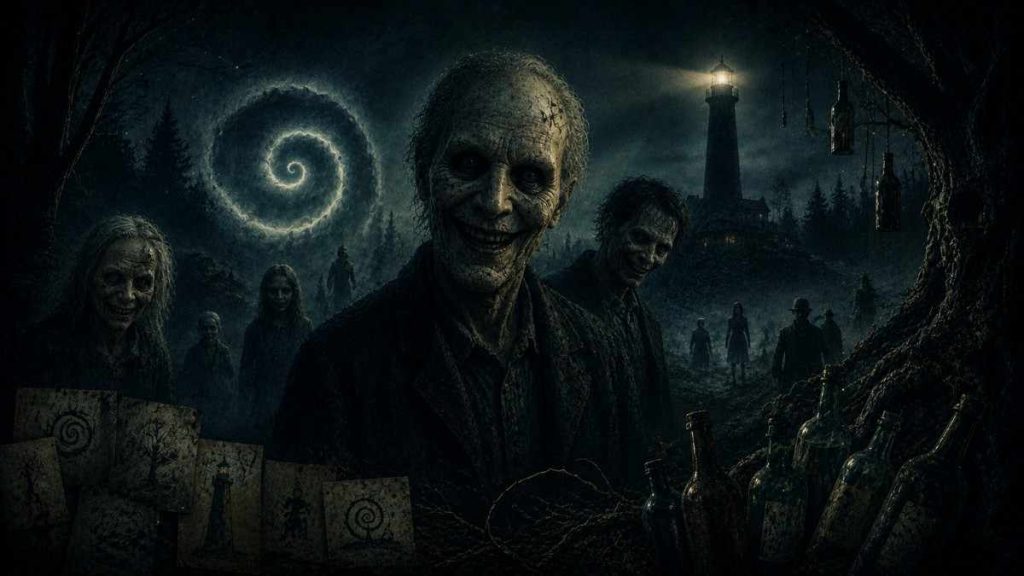
Fatima’s trajectory is the most important data point the show has dropped on this question. If she is mid-conversion, then the creatures are not external entities that invaded the town. They are the town’s own residents, transformed by a process the town administers. That changes the moral stakes of every fight scene the show has ever staged. Every creature killed in self-defense would be a person who was already trapped, now trapped in a worse way.
The reincarnation framework adds another layer. If people cycle through the town across multiple lives, the creatures may represent a failed cycle people who could not complete whatever the town requires and got locked into a non-human form as a consequence. The town would then be running two systems simultaneously: the surface system of survival that the Mathewson family and others navigate, and a deeper system that either completes souls or consumes them.
The “creatures as victims” reveal has been telegraphed for two seasons. The show has given creatures moments of apparent humanity pausing before kills, behaving in ways that suggest memory or recognition that do not fit a pure predator framework. The finale landing on a clear signal about whether these moments are meaningful would justify four seasons of careful creature staging.
Is FROM Season 4 the Last Time the Show Can Afford a Cliffhanger?
FROM has been renewed for Season 5 by MGM+. That answers the survival question. It does not answer the patience question.
Mythology-heavy serialized shows have a specific failure pattern. They run multiple seasons generating questions faster than they answer them, banking on audience investment in characters to carry the load while the mythology stays unresolved. At a certain point, the audience reads the unanswered questions not as intriguing but as evasion. The show stops feeling like a puzzle and starts feeling like a stall.
FROM is not there yet. But it is close enough that the Season 4 finale has a job to do that goes beyond plot mechanics. The shows that have collapsed under the weight of this pattern did not fail because they ran out of ideas. They failed because they kept treating the audience’s patience as infinite. The history of shows cancelled before resolution is not a comfortable read for any FROM fan right now, and the pattern is worth understanding before the finale airs.
The question “does FROM Season 4 have a proper ending or another cliffhanger?” has a clear answer from the evidence: no, Season 4 does not fully resolve. But the distinction between a productive cliffhanger and a frustrating one is whether the finale closes something real. A cliffhanger that follows a genuine answer is satisfying. A cliffhanger that follows more questions is the thing that ends fandoms.
What Does the Season 4 Finale Need to Set Up for Season 5 to Make Sense?
The finale has five structural jobs. Not five things fans want — five things the narrative machinery requires to give Season 5 a coherent starting position.
The Man in Yellow Needs a Partial Answer
Season 5 cannot sustain full mystery on this character. The audience needs to know whether he is an architect, a prisoner, or a system function even if the full implications of that answer take another season to play out. A second season of total opacity on the show’s most searched question would be a structural error.
Fatima’s Direction Needs to Be Definitive
Alive and recovering, dead, or mid-conversion. The show cannot leave all three options open heading into Season 5 without it reading as a failure of narrative commitment. Episode 8 has pointed clearly in one direction. The finale needs to confirm it.
The Door Needs a Visible Consequence
Tabitha and Jade’s action needs an effect that the audience can see, not one that is implied. If opening the door changed the rules of the town, the finale has to show at least one concrete way those rules changed. Otherwise the entire Season 4 arc for those two characters has no payoff.
Boyd’s Disclosure Needs to Land on Someone Else
Boyd knows about the reincarnation framework. Right now, the other characters do not. For Season 5 to use this mythology, at least one other character needs to act on the information in the finale. The show cannot run Season 5 with this knowledge sitting unused in Boyd’s corner.
Victor and Henry Need a Clear Alignment or Rupture
They cannot stay in their current holding pattern. The finale needs to either lock them into an alliance with Henry finally accepting what Victor knows or break them apart in a way that forces both characters to operate differently in Season 5. The status quo between them is not sustainable as a Season 5 premise.
The shows that have handled this transition well did it by treating the finale as a door, not a wall. You close something meaningful, and the closing creates the shape of what comes next. FROM has the pieces in place to do exactly that. Whether the finale uses them is the only question left.
FAQ
Who is the Man in Yellow at the end of FROM Season 4?
The Man in Yellow has not been fully identified as of Season 4 Episode 8. The two main fan readings are that he is the architect of the town who created or summoned it, or that he is a trapped consciousness who has been inside the system long enough to appear in control. A third reading, supported by the pattern of who sees him, suggests he is a function of the town’s selection mechanism rather than its ruler. He appears specifically to characters the show has marked as having unusual sensitivity to the town’s deeper layer: Victor, Henry, and Elgin. His identity is one of the questions the Season 4 finale is expected to partially address.
Is there a Season 5 of FROM confirmed?
Yes. MGM+ renewed FROM for a fifth season before Season 4 completed its run. The renewal means the Season 4 finale functions as a transition point rather than a series conclusion. Audiences should expect the finale to move multiple storylines into resolution-ready positions without closing the central mysteries completely.
Does FROM Season 4 have a proper ending, or is it another cliffhanger?
Based on everything Season 4 has built toward, the finale is unlikely to be a full resolution. The show has too many active storylines to close them all in one episode. What distinguishes a productive cliffhanger from a frustrating one is whether something real is answered first. The Season 4 finale appears to be set up to answer at least one load-bearing question before opening new ones — but that is doing heavy lifting for an audience that has been patient for four seasons.
Is Fatima dying or becoming a creature in FROM Season 4?
The evidence from Episode 8 points toward conversion rather than illness. The physical symptoms Fatima is displaying match the early-stage deterioration pattern the show has used for characters who later became creatures, not the pattern for characters who die from organic causes. If that reading holds, Fatima would be the first character whose full conversion the audience watches in real time, which would retroactively change the meaning of the creature system and create a central emotional engine for Season 5 through Ellis.
What is the reincarnation theory in FROM Season 4, and does it hold up?
Boyd discloses in Season 4 that Tabitha and Jade hold psychic imprints and memory traces from previous cycles within the town — a form of reincarnation that suggests the same souls are repeatedly drawn back into the system. The theory holds up against the available evidence. It explains why Tabitha and Jade have unusually deep access to the town’s architecture, why Victor may have survived when other children did not, and why the town’s cycle keeps producing the same archetypes of people. The weak point is that the show has not yet shown another character consciously accessing those imprints, which means the theory is confirmed as mythology but not yet confirmed as a working plot mechanism.
What is the most common objection to ranking FROM’s mysteries by importance?
The objection is that all of FROM’s mysteries are equally important because they form one interconnected system. That sounds reasonable, but it is not how the show actually works. Some questions are prerequisites. You cannot fully answer who the Man in Yellow is without first establishing what the town is. You cannot fully resolve whether anyone can escape without knowing what the cycle requires for completion. The show has a hierarchy whether fans acknowledge it or not. Mapping that hierarchy does not reduce the mythology. It gives you a better way to watch the finale.
The Only Question That Actually Matters Going Into the Finale
Four seasons of FROM have produced one genuinely load-bearing question underneath all the others: does the town have a purpose, or is it a trap? Every other mystery , the Man in Yellow, the creatures, the cycle, the door, the reincarnation framework flows from the answer to that one. A trap implies an architect who can be defeated. A purpose implies a system that has to be completed. Those are different shows, and the finale is the moment FROM has to pick one.
Watch the finale with that frame in mind. When the Man in Yellow appears, ask not what he wants but what the town is using him for. When Fatima’s storyline resolves, ask whether the town is punishing her or processing her. When Tabitha and Jade face the consequences of the door, ask whether the show frames it as a mistake or a move in a larger game. Those are the signals that will tell you which direction Season 5 is going before Season 5 exists.
The show has earned its audience’s continued attention. Season 4 has been the most mythology-dense run FROM has produced. The finale either banks that progress or resets it. Given everything the season has built Boyd’s disclosure, Fatima’s arc, Victor and Henry’s collision course the pieces are there for a finale that delivers something real. FROM knows where it is going. The finale is where it starts showing us the map.