
Most Old Pokémon Cards Are Worth Very Little
Energy cards, trainer cards, common cards, and non-holo rares from the Unlimited print run are almost universally worth under $5. A played Unlimited Edition Base Set Charizard in poor condition might sell for $30 to $50 on eBay on a good day. The same card as a 1st Edition near-mint copy is worth $3,000 to $6,000. Same Pokémon, same set, completely different value.
The card itself is almost irrelevant. The variant and condition are everything.
What makes most cards low-value:
- Common and uncommon cards, identified by a circle or diamond symbol in the bottom-right corner
- Energy cards of any type, from any set
- Unlimited Edition print runs, recognizable by the drop shadow on the art frame
- Cards with visible play wear: heavy scratches on the art, bent or creased corners, whitening along the edges

The Four Things That Determine Whether an Old Pokémon Card Is Valuable
Four factors create virtually all of the value in vintage Pokémon cards.
1. The 1st Edition Stamp
The 1st Edition stamp is the single biggest value driver in Pokémon card collecting. A 1st Edition Base Set Charizard in near-mint condition is worth roughly 20 to 40 times more than an Unlimited copy in the same condition. The stamp is small, easy to overlook when flipping through a binder, and covered in detail in the next section.
2. The Shadowless Variant
The earliest print run of the Base Set lacked the drop shadow on the right side of the card art frame. These Shadowless cards carry significant premiums over Unlimited copies. Every 1st Edition card is automatically Shadowless, but not every Shadowless card has the 1st Edition stamp.
3. Holographic Rarity
The foil treatment covers the card art area and catches the light with a rainbow shimmer. Holographic rares are marked by a star symbol in the bottom-right corner. Holo status is a necessary condition for any card worth over $100, but it is not sufficient on its own.
4. PSA Grade
PSA (Professional Sports Authenticator) assigns a card a condition score on a 1 to 10 scale. A PSA 10 1st Edition Base Set Charizard has sold for approximately $550,000. The same card ungraded in near-mint condition sells for $3,000 to $6,000. The grade is the multiplier.
How to Identify a 1st Edition Pokémon Card
The 1st Edition stamp is a small “Edition 1” mark with a circled numeral 1, located on the left side of the card, below the card art box.
Step-by-step:
- Orient the card normally, Pokémon name at the top.
- Look at the left side of the card art frame, roughly in the middle of the card vertically.
- On a 1st Edition card, you will see a small black oval with a bold “1” inside it, followed by the text “Edition” in small print directly to the right of the oval.
- On an Unlimited Edition card, that space is blank.
- The stamp is roughly the size of a pea. Slow down for this check when flipping through a binder.
- Genuine stamps are crisp and dark. Counterfeit stamps often show slightly blurry text or misaligned positioning.

How to Identify a Shadowless Pokémon Card
Look at the right side of the card art box, the colored rectangular frame surrounding the Pokémon’s image.
On an Unlimited Edition card: The right edge and bottom edge of the art box have a slightly darker shaded area, roughly 1 to 2 millimeters wide, creating a drop shadow effect. The left edge does NOT have this shadow.
On a Shadowless card: The right edge of the art box meets the card background with a clean, single line. Both the left and right edges of the art box look the same.
Hold the card under good direct lighting and compare the right edge of the art frame to the left edge. On an Unlimited card, the right side is noticeably darker. On a Shadowless card, both sides match.
A Shadowless Charizard without the 1st Edition stamp sells for roughly $500 to $1,000 in strong condition. The Unlimited version in similar condition might fetch $150 to $300.

The Most Valuable Old Pokémon Cards in 2026
Prices below reflect raw (ungraded) and PSA-graded values based on recent 2025 to 2026 sales data.
Pikachu Illustrator (1998 Japanese Promo)
The only PSA 10 copy sold for $16.5 million in February 2026. Only 39 copies exist worldwide. This card was never sold in stores.
1st Edition Base Set Charizard
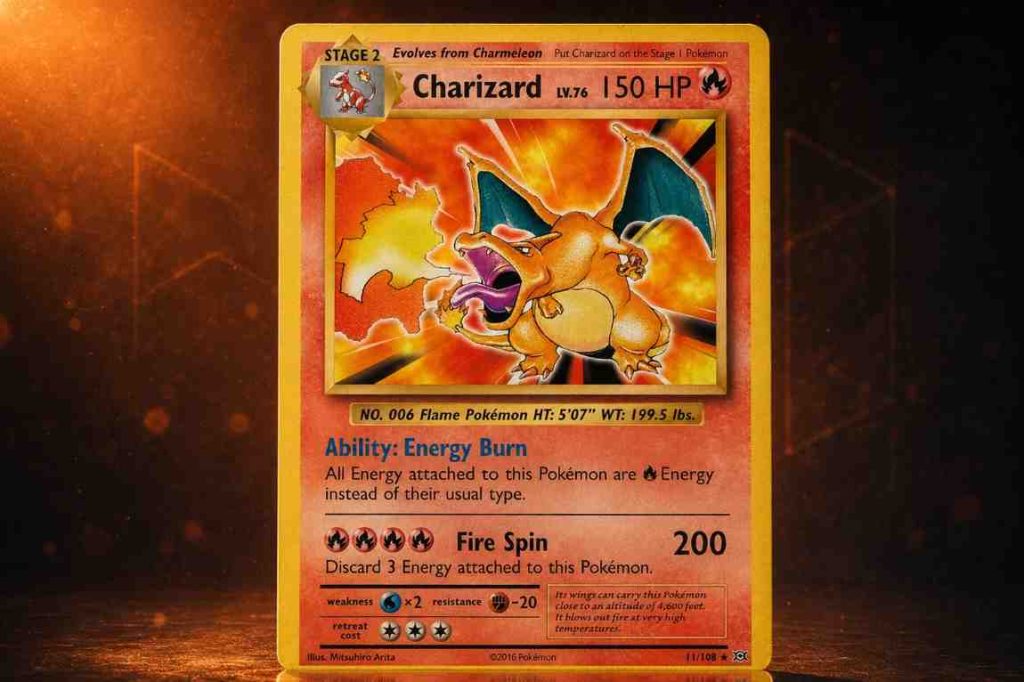
Raw near-mint examples sell for $3,000 to $6,000. PSA 9 copies sell for $30,000 to $70,000. The only PSA 10 sold in late 2025 for approximately $550,000. Charizard is also the most counterfeited Pokémon card in existence.
1st Edition Base Set Blastoise
PSA 10 examples have sold for approximately $88,000. Raw near-mint copies sell for $800 to $2,000.
1st Edition Base Set Venusaur
PSA 10 examples reach strong six-figure territory. Raw near-mint copies run $400 to $1,200.
1st Edition Base Set Chansey
One of the most underrated 1st Edition holos. PSA 10 copies have reached five figures. Raw near-mint copies sell for $200 to $600.
Shadowless Base Set Charizard (Non-1st Edition)
Near-mint raw copies sell for $500 to $1,000. Played copies drop to $100 or less quickly.
1st Edition Jungle and Fossil Set Holos
A 1st Edition Fossil Gengar PSA 10 has sold for over $10,000. These sets are worth checking if you have 1st Edition stamps on cards beyond the Base Set.
Neo Genesis Lugia (1st Edition)
Raw near-mint copies sell for $1,500 to $4,000. PSA 10 copies have sold for over $140,000.

PSA Grading: Why Condition Multiplies Value
PSA grades cards on a 1 to 10 scale. The requirements get dramatically stricter as you approach 10.
- PSA 7 (Near Mint): Minor edge wear visible under close inspection.
- PSA 8 (Near Mint-Mint): Very slight edge wear, minor imperfections only.
- PSA 9 (Mint): Only the most minor imperfections allowed. Centering must be close to perfect.
- PSA 10 (Gem Mint): Near-perfect centering, four perfectly sharp corners, no surface scratches, flawless edges.
A card is worth getting graded if:
- It is a confirmed 1st Edition or Shadowless holo in visibly strong condition
- The raw value is at least $200 in near-mint condition
- Corners are sharp with no whitening, the surface has no scratches under direct light, and centering looks close to even on all four sides
A card is NOT worth getting graded if:
- It has any bent corners, creasing, or surface scratches
- It is an Unlimited Edition card (with very few exceptions above $500)

How to Spot a Fake Charizard
Charizard is by a wide margin the most counterfeited Pokémon card. Four quick checks:
The light test: Very slightly bend the card edge. Genuine Base Set cards show a black middle layer between the front and back printing layers. Most fakes show only white layers.
The texture check: Run your fingertip across the card back. Genuine cards feel slightly textured with a fine matte surface. Many fakes feel slicker.
The stamp inspection: On a genuine 1st Edition card, the stamp is crisply printed and perfectly aligned. Fakes often show blurry text or irregular oval shapes.
The color test: Genuine Base Set card backs are a specific deep royal blue. Fakes are often slightly lighter or differently toned.
If any check raises doubts, have the card reviewed by a professional before selling or submitting for grading.
What to Do Right Now
Handling is a real risk. Cards lose grade value from fingerprints on the holo surface, bent corners caused by careless flipping, and contact with rough surfaces.
Handle potentially valuable cards correctly:
- Hold by the edges only, never touch the card face
- Place on a clean soft surface only
- Slide into a soft penny sleeve immediately if the card might have value, then into a semi-rigid holder
Where to look up current values: TCGPlayer’s market price tool reflects actual recent sales. eBay’s “Sold Listings” filter shows what cards have actually sold for, not what sellers hope to get.
Where to sell:
- PSA-graded high-value cards: Heritage Auctions or PWCC
- Raw near-mint cards above $200: eBay with detailed photos, or local card shops (expect 40 to 60 percent of market value from a shop)
- Lower-value cards: bulk sales to dealers or local Facebook Marketplace groups
FAQ
How do I tell if my Pokémon card is 1st Edition just by looking at it?
Look at the left side of the card, just below the card art box. On a 1st Edition card, there is a small black oval with a bold “1” inside it and the word “Edition” beside it. On an Unlimited card, that area is completely blank.
What is a Shadowless Pokémon card and how do I recognize it?
Look at the right edge of the rectangular box surrounding the Pokémon’s image. On an Unlimited card, that right edge is slightly darker than the left edge. On a Shadowless card, both edges of the art box look identical.
Are Unlimited Edition Base Set cards worth anything?
Most are worth very little. An Unlimited Charizard in near-mint condition might reach $150 to $300. Unlimited commons and energy cards are generally worth under $5.
My Pokémon cards have edge whitening. Does that kill the value?
Edge whitening significantly reduces value and will prevent a PSA 9 or PSA 10 grade. A 1st Edition Charizard with heavy edge whitening might sell raw for $500 to $1,000 instead of $3,000 to $6,000 for a near-mint copy.
Is it worth getting my Pokémon cards graded by PSA?
Only for specific cards. PSA fees start at roughly $25 to $50 per card. Grading makes sense for a confirmed 1st Edition or Shadowless holo worth at least $200 raw in near-mint condition. Grading a $20 Unlimited holo loses money.
How do I know if my Charizard is fake?
Check the inner card layer for a black middle layer, inspect the 1st Edition stamp for crispness, feel the card back for matte texture, and compare the card back color to a verified genuine copy.
What are the chances I randomly have a 1st Edition Charizard from childhood?
Realistically, low. Most Base Set packs sold at retail in 2000 or later were Unlimited. If packs were bought specifically at launch in late 1999 or from hobby stores in that window, there is a real but modest chance. Check the stamp first.