
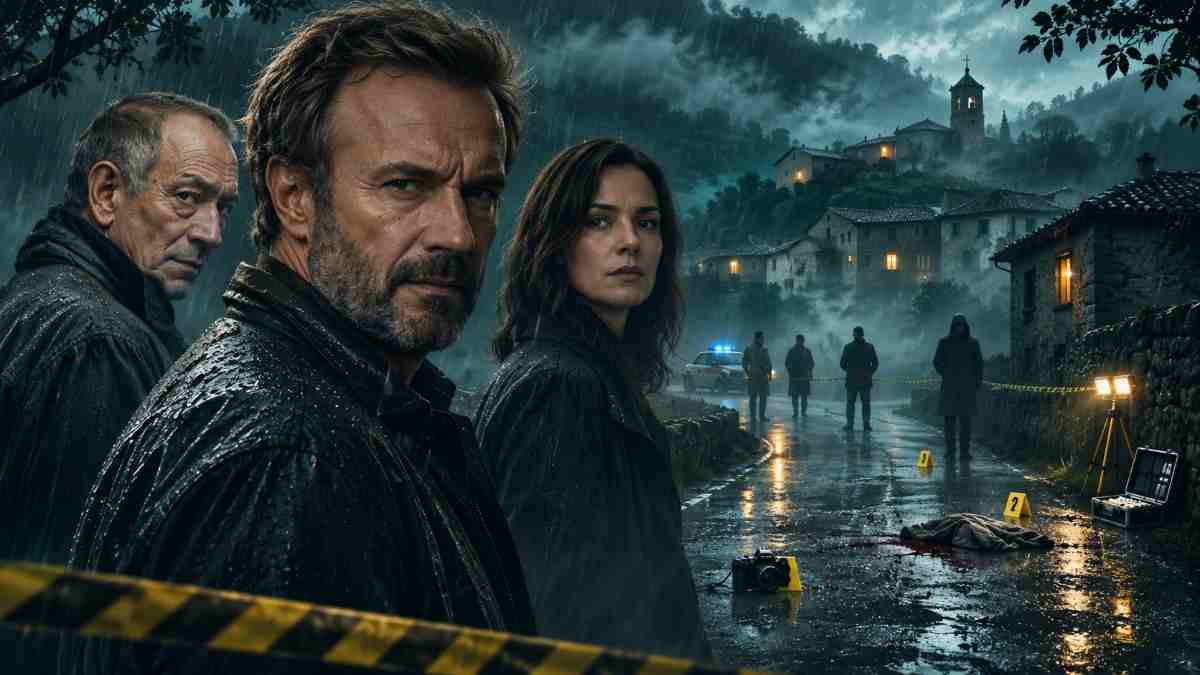
Murder in Galicia ends without a twist or a last-minute confession, and that is why it hits so hard. The three-part Spanish drama, called El crimen de Pazos at home, follows Civil Guard Sergeant Elías Lago as he tries to stop a husband he believes attacked his wife from getting a second chance. By the finale, he has lost. Irene Freire is dead, Aniceto has survived his own suicide attempt, and the man who sounded the alarm is the one pushed out of the force. The series landed on Netflix on Nov. 13, 2026, and in its first four days it reached No. 7 on Netflix’s global non-English TV chart. Who killed Irene? Why did nobody stop him? What happens to Elías? And how much of it really happened? Here is Murder in Galicia ending explained, along with the true story of Isabel Fuentes, the woman Spanish newspapers called the woman who was “killed twice.”
Who killed Irene in Murder in Galicia? Her husband, Aniceto Rodríguez. He beat her with a hammer and staged it as a burglary, then, weeks later, stabbed her to death in her hospital bed after she was moved out of intensive care. He tried to kill himself with the same knife but survived. The finale skips ahead two years to his trial, where Elías Lago testifies, and the end titles say no one in the judiciary was sanctioned and Elías took early retirement. The story is real: it is based on the 2015 murder of Isabel Fuentes in Pazos, near Verín in Galicia. Her husband, Aniceto Rodríguez Caneiro, was sentenced to 31 years in prison in 2017 and died behind bars in September 2018.
TL;DR
- The killer is the husband: Aniceto attacks Irene twice, first with a hammer at home and then with a knife at the hospital. The second attack kills her.
- The system is the real subject: Elías asks for protection, an arrest and DNA tests again and again. The judge refuses each request for lack of evidence.
- Elías pays the price: After Irene’s death, details of the sealed case leak to the press, Elías is suspected, sent for a psychological evaluation and put on leave.
- The finale: Two years later, he testifies at Aniceto’s trial and asks the court not to let Irene become just another case. The end titles say he took early retirement.
- True story: Isabel Fuentes, 66, was attacked in Pazos on April 2, 2015, and killed at the hospital in Ourense on May 8, 2015. Aniceto Rodríguez Caneiro was sentenced to 31 years and died in prison in 2018.
- Elías is based on a real officer: Sergeant Eduardo Novoa, who led the local judicial police team in Verín and who worked with the show’s creators.
What Is Murder in Galicia?
Murder in Galicia is a three-episode limited series from Bambú Producciones, the Spanish company behind The Asunta Case. According to Spanish Wikipedia’s entry for El crimen de Pazos, it was created by Ramón Campos, Gema R. Neira, Curro Serrano and David Orea, directed by Carlos Sedes, and released on Netflix on Nov. 13, 2026. The three episodes are titled “Madrugada,” “Noche” and “Mañana” (early morning, night and morning).
The cast is led by Tristán Ulloa as Sergeant Elías Lago, with Miguel Borines as Aniceto, Carlos Blanco as Elías’s partner Turrientes (“Turri”), Fer Fraga as fellow officer Barreiro, Isabel Garrido as journalist Antía Cerviño and Verónica Sánchez as Judge Begoña Loiro.
It is not Netflix’s only take on the case. A week earlier, on Nov. 6, Netflix released a feature documentary, Unprotected: Murder in Galicia (Desprotexida: El crimen de Pazos), built around interviews with the real investigators and Isabel’s family. ABC reported the two-step release plan, documentary first and drama second.
Both found an audience. Netflix’s own Top 10 data shows the documentary at No. 8 among non-English films for the week of Nov. 2 to 8, with 1.6 million views, and the drama at No. 7 among non-English shows for Nov. 9 to 15, with 2.8 million views in its first four days.
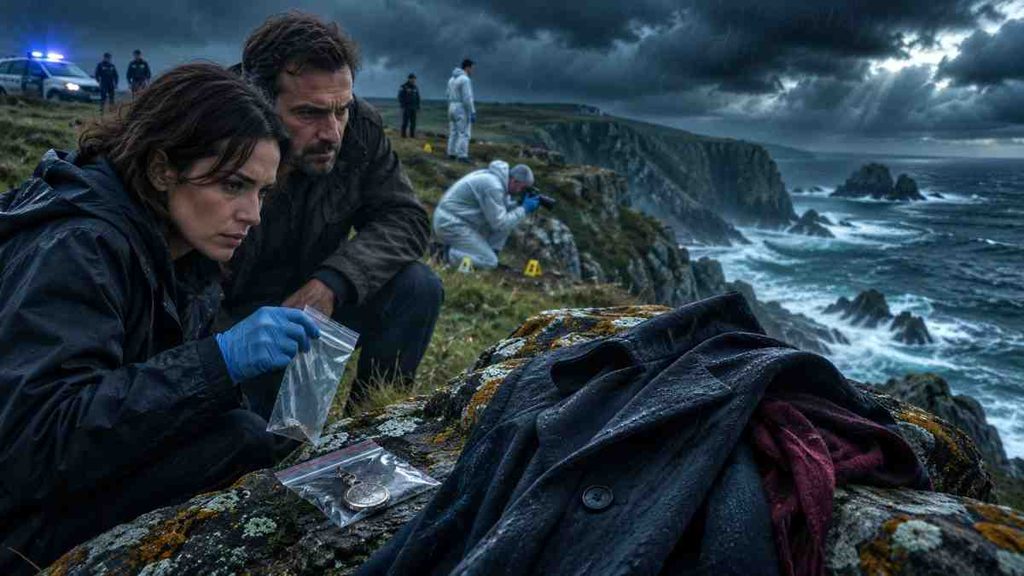
A Quick Recap: What Happens in Murder in Galicia
The night of the “robbery”
The series opens in the early hours of April 2, 2015, in the village of Pazos. Aniceto, in his robe and slippers, pounds on his neighbours’ door and tells them robbers have broken in and killed his wife. When they get to the house, Irene is still breathing. An ambulance takes her to the hospital while Elías and Turri arrive at the scene.
Aniceto says he was in bed and woke to find the attackers gone through the back door with keys from Irene’s bag.
Almost none of it fits. According to The Cinemaholic’s breakdown, nothing was actually stolen, the hammer was found inside the house, and the burglars supposedly picked the one right key out of seven to escape through the back. Indiatimes’ recap adds that the bedroom sits right next to the living room, the bed does not look slept in, and the blood pattern suggests Irene was lying on the sofa when she was struck with the claw end of the hammer. Elías leaves the house that first night already thinking of Aniceto as his main suspect.
Weeks of warnings
The DNA test on the hammer is delayed because the judge has not signed off, and the lab is backed up anyway. Neighbours call them a devoted couple, and Aniceto sits by her bed every day.
Elías digs into their history and learns that the two had been together for decades but only married a few years earlier, after Irene’s mother died. The Cinemaholic notes that this sets off a theory in Elías’s head about control and money, including the question of a widow’s pension, though the show never settles on one motive.
Judge Begoña turns down each request: no arrest, no restriction on Aniceto’s hospital visits, no order to keep Irene in a more secure unit. Her answer is always the same. There is not enough evidence. When the hospital says Irene will soon leave intensive care, Elías is no longer chasing a confession. He is trying to keep her alive until she can speak.
The hospital
Irene is moved to a regular ward. Aniceto keeps visiting. One day he gets her alone, stabs her, and then turns the knife on himself. Irene dies. Aniceto survives and ends up in intensive care.
Murder in Galicia Ending Explained
Who killed Irene, and why?
There is no mystery about the killer. Aniceto attacked Irene twice: once with a hammer at home, dressed up as a robbery, and once, fatally, in her hospital room.
The finale does give one more detail. According to The Cinemaholic and TheReviewGeek’s finale recap, Aniceto leaves a note by Irene’s bed claiming he killed her to end her suffering. The Cinemaholic points out the obvious problem: a note addressed to the person you are about to kill is really written for everyone else. It frames a planned murder as a mercy killing.
What the show does not do is hand viewers a neat motive. The pension theory, jealousy over Irene’s new independence after her mother’s death and a need for control all float around Elías’s investigation. The series leaves them open, and that matches the real case. As Oxygen’s report on the documentary puts it, there were multiple theories, but Aniceto’s motive was never determined.
Who leaked the case to the press?
Right after Irene’s death, a newspaper article lays out the sealed investigation, including the warnings Elías gave and the judge’s refusals. Judge Begoña blames Elías. He denies it. Turri suspects Barreiro, who is in a relationship with Antía, the reporter who wrote the story.
The series never confirms the source. The Cinemaholic rules out Barreiro, who tells Antía he said nothing, and argues Turri is the likeliest leaker, since he shared Elías’s suspicions from the start. That is one site’s reading, not something the show states.
What happens to Elías Lago?
This is the heart of the ending. Instead of being thanked for getting it right, Elías is treated as a problem.
His superiors want the case closed, worry he is helping the family’s lawyer, ask him to transfer and send him for a psychological assessment. According to TheReviewGeek, the evaluation finds him at high risk of anxiety, depression and PTSD, and he is put on paid leave. Indiatimes reports that an official review then clears Judge Begoña, with her colleagues agreeing that there was not enough evidence to restrict Aniceto at the time.
Elías makes one last choice: he gives copies of the investigation file to the lawyer representing Irene’s relatives, a family he did not even know existed because none of them visited her in the hospital.
The trial and the final scene
The show jumps ahead two years. Elías is called as a witness at Aniceto’s trial. The defence tries to pin the failures on his investigation. He admits his mistakes but tells the court that the system failed Irene, that she could have survived the first attack if anyone had listened, and that her death should not be filed away as one more case.
The series cuts between his testimony and protests against violence toward women. Then the end titles roll. According to TheReviewGeek and Indiatimes, they say Aniceto died in prison in 2018, that no one in the judiciary faced sanctions over the case, and that Elías took early retirement.
What the ending means
Murder in Galicia is less a whodunit than a “why did nobody stop it.” The killer is obvious by the end of the first episode. The question the show keeps asking is how a woman can be killed in a hospital when the police had already said, in writing, that her husband was dangerous.
Tristán Ulloa said as much in an interview with ABC, quoted in English by Comic Basics: “Here, nothing at all is resolved; instead, questions are raised for us to think about: Can a human error make a single link in a large chain solely responsible? And should we sacrifice that link because it made a mistake?”
Aniceto is convicted, but the institutional failure never gets a verdict, and the only person who visibly pays a professional price is the officer who tried hardest to prevent the murder.
Is Murder in Galicia a True Story?
Yes. The series is inspired by the murder of Isabel Fuentes, a 66-year-old woman from Pazos, in the municipality of Verín in the province of Ourense. The show changes names (Isabel becomes Irene Freire, Sergeant Eduardo Novoa becomes Elías Lago) and adds or reshapes some supporting storylines, but the main timeline closely follows the public record.
The first attack: April 2, 2015
According to La Voz de Galicia, Isabel was at home in Pazos in the early hours of April 1 to 2, 2015, when she was struck in the head with a hammer. Her husband, Aniceto Rodríguez, ran to the neighbours for help and told the Civil Guard she had been attacked during a robbery. She was taken to the hospital complex in Ourense (CHUO) in critical condition, spent time in a coma and in intensive care, and slowly began to recover.
The details in the show come straight from the investigators’ account. In the documentary, as quoted by Oxygen, Novoa said: “From the get go there was a series of clues that Aniceto’s story was a lie.” Investigators noted that nothing had been stolen, that the timing of his story did not work, and that the attack appeared to have happened while Isabel was lying down. Forensic examiner Fernando Serulla told the documentary that the injuries were “caused by three precise blows exclusively directed to the head.”
The warnings and the judge
Oxygen, citing ABC, reports that investigators went to the judge in Verín three separate times asking to arrest Aniceto, and that the judge considered the evidence to be “mere suspicions.” The judge also rejected requests to tap his phone or to stop him visiting Isabel in the hospital. Auralcrave’s fact-versus-fiction piece adds, citing La Voz de Galicia, that Novoa’s proposals included asking the hospital to keep Isabel in intensive care for longer or assigning a permanent police guard.
In the documentary, Novoa explained his fear plainly: “The kind of attack that Isabel had suffered was so brutal that I was sure that as soon as he had the opportunity, if one presented itself in the future, Aniceto would try it again.”
The second attack: May 8, 2015
On April 29, Isabel was moved from intensive care to a regular room, according to La Voz de Galicia. At 6 a.m. on May 8, 2015, Aniceto, a former butcher, stabbed her four times and killed her. ABC reports that he had been staying by her bed day and night, aware that she was close to being able to speak again, and that he used a knife with a 17-centimetre blade while her roommate was sedated. He then cut himself and suffered a stroke. Oxygen notes that the attack came 37 days after the first one.
The conviction and his death
Aniceto was tried by a jury at the Provincial Court of Ourense in June 2017. ABC reports that he denied the crime at trial even though he had admitted it earlier, and that his defence argued mental disorder without success. He was sentenced to 31 years in prison: 12 years for the attempted murder at home and 19 for the murder at the hospital.
He did not serve long. La Región reported that he died in the early hours of Sept. 21, 2018, of cardiovascular failure in A Lama prison, after suffering a stroke while in custody.
The family’s fight with the judiciary
Isabel’s relatives believed the system failed her. According to La Voz de Galicia, they argued that the investigating judge had been negligent by not acting on the Civil Guard’s evidence after the first attack. The case had been handled as a violent robbery and placed under secrecy, which, the family said, kept them from joining the case or learning about the suspicions. Their complaint to Spain’s General Council of the Judiciary was initially shelved, and in February 2019 the Supreme Court ordered the council to review it again.
The series’ end titles say no one in the judiciary faced sanctions. Auralcrave reports that the appeals went on for years and that each ruling found the judge had acted within the law. Courts did not find wrongdoing by the judge, and this article does not suggest otherwise.
Who Is Elías Lago in Real Life? Where Is Eduardo Novoa Now?
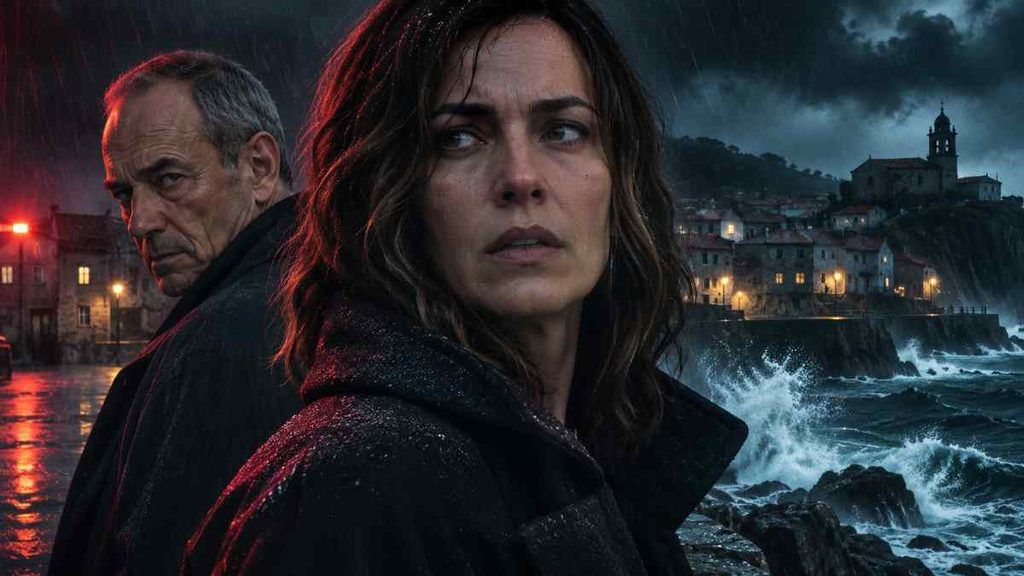
Elías is based on Eduardo Novoa, who at the time headed the judicial police team of the Civil Guard in Verín. According to The Cinemaholic’s profile, Novoa sat for a roughly three-hour interview with co-creator Ramón Campos, helped with the screenwriting and was present during filming.
Campos explained why he built the series around him. Speaking to Mujerhoy, as quoted by Comic Basics, he said: “Eduardo came to Bambú two or three years ago, and I recorded a camera interview with him so everyone involved in the series could watch it. The question was what had happened for a man to still cry today when he remembers the case. He feels he failed, but everyone failed.”
In real life, Novoa took early retirement from the Civil Guard at 48. The Cinemaholic notes that he never gave an explicit reason, and that the show’s portrayal of him being targeted by his superiors is not a documented account of what happened to him. Auralcrave reports that he was sidelined over suspicions that he was behind the press leak, which he was never shown to be. Sources differ on that point, so it is best treated as unconfirmed.
As for where Eduardo Novoa is now, he has kept his private life out of public view. The Cinemaholic reports that he appeared on Nov. 7, 2026, at the Mostra de Curtas Vila de Noia film festival with Campos, director Carlos Sedes and cast members after a screening of the first episode, and that he has called for stronger protection for victims of gender-based violence.
What the Series Changes
The core sequence is real. Several smaller pieces are dramatized:
- Names: Isabel Fuentes becomes Irene Freire, and Eduardo Novoa becomes Elías Lago. The judge is renamed Begoña Loiro.
- The leak subplot: iFORHER notes that the relationship between Barreiro and the journalist was created for the drama, and Indiatimes says parts of the leak storyline were invented.
- The motive: The show floats jealousy and money. The real motive was never established.
- Timing: Auralcrave points out that the 37 days between the attacks are not clearly shown on screen.
- Elías’s departure: The show depicts a man pushed out. The real officer retired early without publicly explaining why.
For more Netflix stories pulled from real cases, see our explainer on whether The Widower is a true story, our update on where Esther Estepa is now, and our roundup of true crime cases with the biggest 2026 updates. If you want another Spanish-language finale broken down, read The Final Problem ending explained.
Will There Be a Murder in Galicia Season 2?
No. Murder in Galicia is listed as a limited series in Netflix’s Top 10, and the real case is closed: Aniceto Rodríguez Caneiro was convicted and has died.
FAQ
Who killed Irene in Murder in Galicia?
Her husband, Aniceto. He attacked her with a hammer at home and staged it as a robbery, then stabbed her to death in her hospital room weeks later.
Why did Aniceto kill his wife?
The show never confirms a motive. It raises jealousy, control and money, including a possible widow’s pension. In the real case, Oxygen reports that the motive was never determined.
What happens to Elías at the end of Murder in Galicia?
He is suspected of leaking the case, sent for a psychological assessment and put on leave. Two years later, he testifies at Aniceto’s trial. The end titles say he took early retirement.
Is Murder in Galicia based on a true story?
Yes. It is based on the 2015 murder of Isabel Fuentes in Pazos, Galicia, who was attacked with a hammer at home and stabbed to death 37 days later at the hospital in Ourense.
Was the judge punished in real life?
No. Isabel’s family pursued complaints and appeals for years. The series’ end titles say no one in the judiciary faced sanctions, and reports say the rulings found the judge acted within the law.
Sources
- El crimen de Pazos, Spanish Wikipedia
- Netflix Top 10, non-English TV (global weekly data for weeks ending Nov. 8 and Nov. 15, 2026)
- ABC: El crimen machista de Pazos
- La Voz de Galicia: La doble muerte de Isabel Fuentes
- La Voz de Galicia: Fallece en la cárcel el hombre que asesinó a su mujer
- La Región: Muere en la cárcel Aniceto Rodríguez
- Oxygen: Where Is Aniceto Rodríguez After Isabel Fuentes Murder
- The Cinemaholic: Murder in Galicia ending explained
- The Cinemaholic: Who is Sergeant Elías Lago in real life?
- TheReviewGeek: Episode 3 recap and ending explained
- Indiatimes: Murder in Galicia recap and ending explained
- Auralcrave: Fact vs. fiction
- Comic Basics: Murder in Galicia ending explained
- iFORHER: Murder in Galicia ending explained