
First, the Basics: Who Is Spider-Noir and Why Is Everyone Confused?
Ben Reilly, not Peter Parker. That’s the first thing to get straight, because the show never explains it, and the gap between those two names is where most of the confusion lives.
In the Amazon Prime series, the protagonist is a WWI veteran named Ben Reilly. He works as a private detective in 1930s New York. He got his powers from a mutated spider bite during a POW camp liberation in the war.
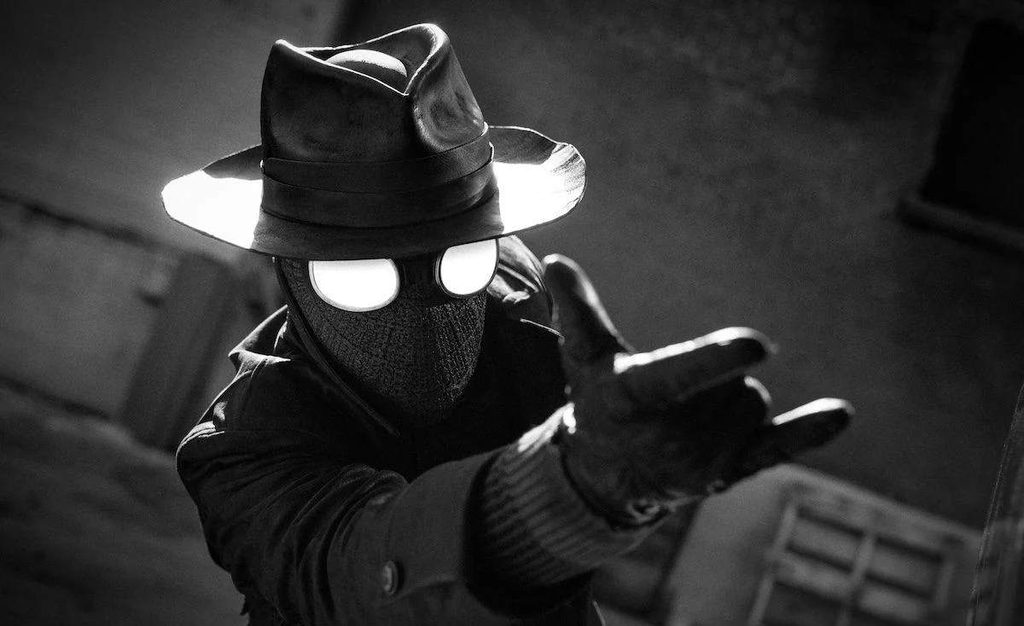
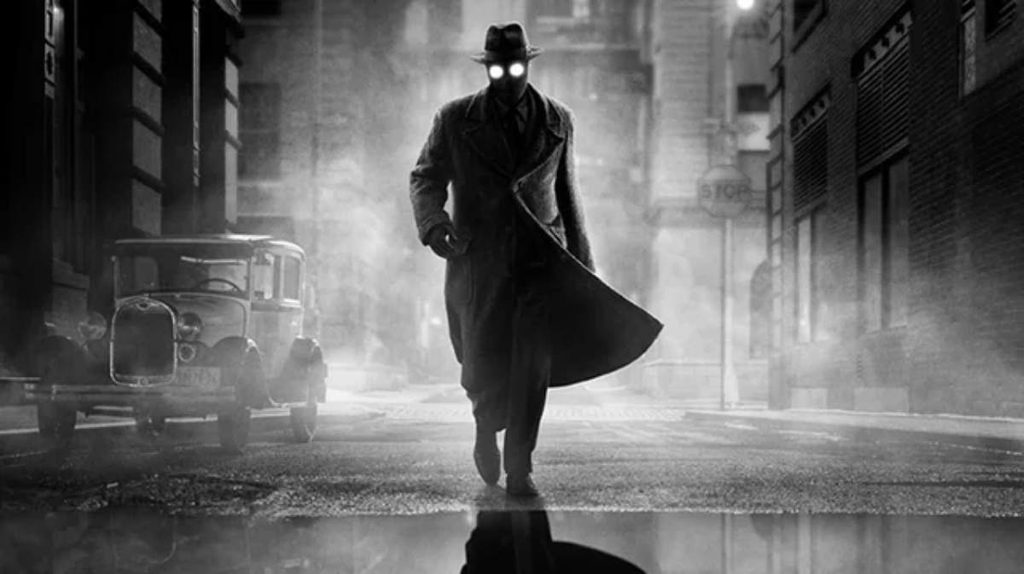
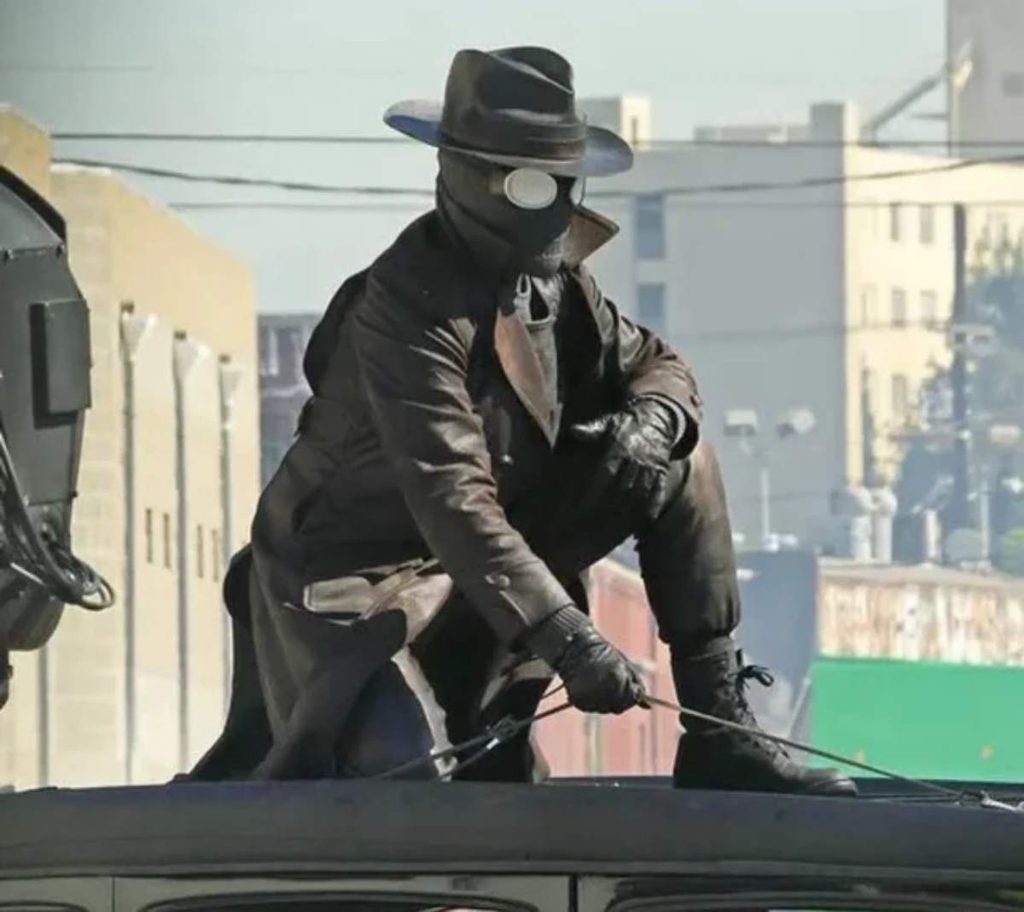
He wears the black-and-white costume and operates in the noir moral universe of hard choices and harder consequences. What the show does not do is tell you what happened to Peter Parker.
In the original 2009 Marvel Comics run by David Hine and Fabrice Sapolsky, the Spider-Man Noir character is Peter Parker: a Depression-era vigilante in 1933 Manhattan who gets his powers through a spider connected to the totemic mythology of Anansi, the spider deity. The show shifted the origin to WWI, moved the timeline back by roughly two decades, and swapped in a completely different name. Both of those choices matter, and they show up in almost every theory below.
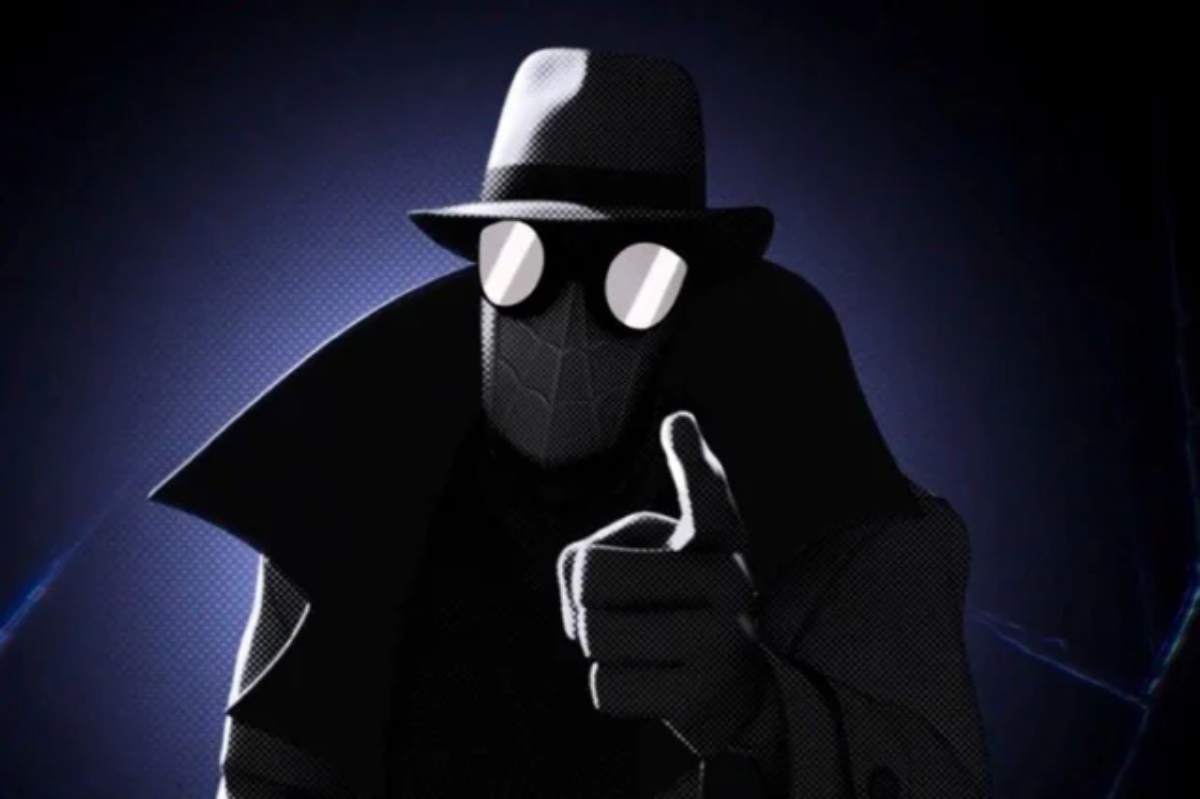
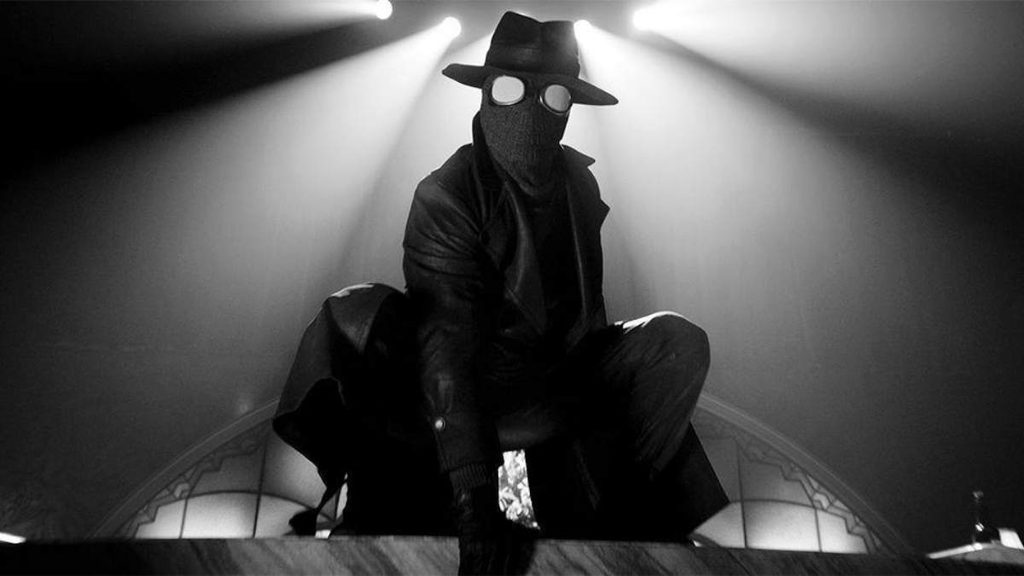
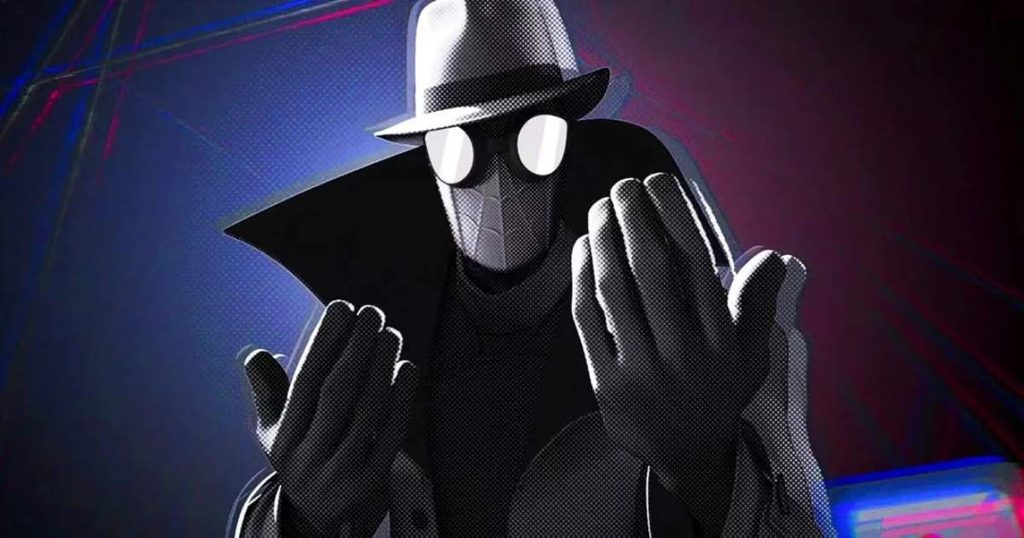
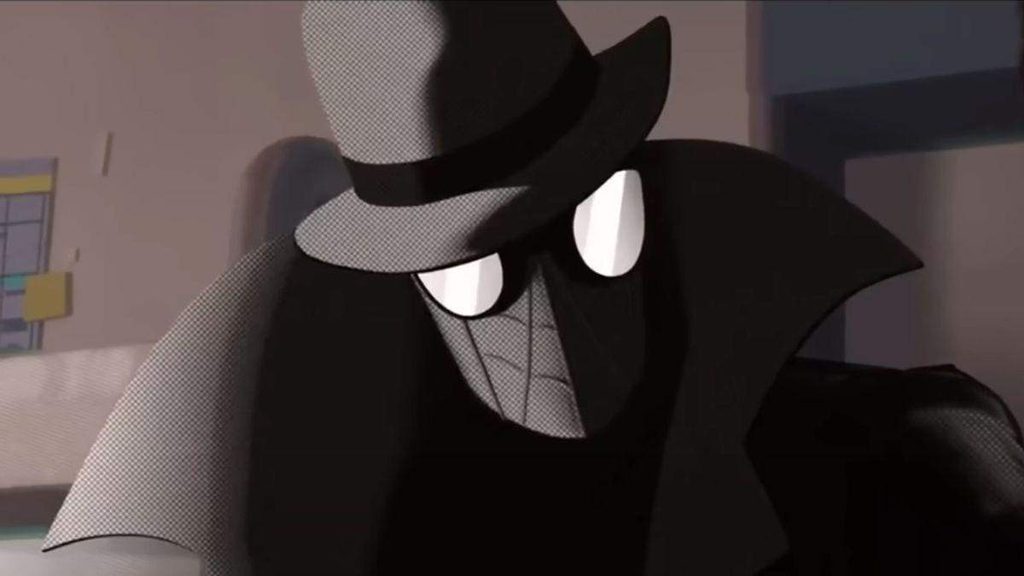
The black-and-white visual style is worth flagging here too. Spider-Man: Into the Spider-Verse (2018) rendered Spider-Man Noir in black and white to signal that his universe operates differently from the others. The live-action show is using the same language, and that is almost certainly not a coincidence.
—
Spider-Noir Theories #1: Peter Parker Is Dead, and Ben Reilly Knows It
This is the most evidence-backed of the spider noir theories in circulation, and the show has essentially confirmed the shape of it without confirming the details.
The theory runs like this: Ben Reilly did not choose to replace Peter Parker. Parker died, most likely in WWI, and Reilly is carrying that death in some form. Whether he assumed Parker’s identity, was given it, or is simply living in the shadow of someone the audience has never met, the show’s refusal to name Parker at all is load-bearing silence.
What the Show Actually Shows
The evidence trail inside the show is mostly behavioral. Reilly carries himself with survivor’s guilt rather than heroic confidence. He is not a man discovering his powers and figuring out what to do with them. He is a man who already knows the cost and keeps going anyway.
Fan analysis across multiple Reddit threads on r/Spiderman has flagged that his reactions to certain situations, particularly anything involving loss or sacrifice, read more like someone re-living a specific event than someone processing a general war trauma.
Why This Changes Everything
If Parker is dead, the show is not an origin story. It is a replacement story. That reframes every character motivation on the screen. Every subsequent theory in this piece gets more interesting if this one is true.
Spider-Noir Theories #2: Ben Reilly Is a Clone, and He Doesn’t Know It
The name “Ben Reilly” is not neutral in Marvel history, and the show’s writers know exactly what they picked.
In mainstream Marvel Comics, Ben Reilly is one of Peter Parker’s most famous clones. He was created by the Jackal as part of the Clone Saga, a storyline from the mid-1990s that ran across the Spider-Man titles and remains one of the most discussed arcs in the franchise’s history. Ben Reilly eventually operated as the Scarlet Spider and briefly replaced Peter Parker as Spider-Man.
The show named its protagonist after a clone. That is either the most meaningful naming choice in the series or a red herring constructed to look like one.
The Evidence from the Origin
The spider that bit Reilly during the war was described as “mutated” and was being held in a German military facility. Fan theorists on r/Spiderman have noted that the combination of “mutated” and “controlled environment” sounds less like a naturally occurring spider and more like a designed one. A spider engineered to transfer specific abilities is not a lab accident. It is a delivery mechanism.
What a Clone Story Would Mean
If Reilly is a clone of Peter Parker, created before or during the war, several things snap into focus: the survivor’s guilt makes more sense as a designed emotional profile, the absence of Parker in the narrative becomes more intentional, and the show has a Season 2 reveal already built into its foundation. The character’s entire identity becomes the question the show is slowly answering.
Spider-Noir Theories #3: The Spider-God Subplot Is Setting Up a Much Darker Season 2
The show stripped the mystical origin out of the comics version on the surface. Several fans believe it buried it instead.
In the original Spider-Man Noir comics, the spider that gives Peter Parker his powers is connected to Anansi, a totemic spider deity with roots in West African mythology. The idea is that Spider-people across Marvel history are not just accident victims who happened to be near a radioactive spider. They are chosen, or inherited, or channeled by something older than science.
The show’s version of the origin, a mutated spider in a German POW camp, removes the explicit mythology. It does not deny it.
The Totemic Reading
The theory holds that the “mutated” spider was not a scientific creation. It was a vessel for the same totemic entity that operates across multiple universes, moving through different hosts in different timelines. Reilly’s powers are not biological in origin. They are inherited from something that has been around a lot longer than 1917.
This matters for the show’s internal logic because it answers a question the show raises and then ignores: why was that specific spider in that specific facility? A German military operation in WWI is not a natural habitat for a spider with the ability to transfer superhuman abilities.
The Season 2 Implication
If the spider was a totemic agent, then there are others like it across timelines. That is a natural thread to pull for a second season: Reilly encounters evidence that his origin was not singular, that other versions of this have happened before, and that something is orchestrating it. That is also a setup for a multiverse story.
Spider-Noir Theories #4: The 1930s Setting Is a Multiverse Quarantine Zone
The show’s isolation from the rest of Marvel might not be a budget limitation or a creative preference. It might be the story.
In Marvel’s multiverse framework, certain universes are designated as isolated or divergent from the main timeline. Spider-Noir’s universe in the comics is Earth-90214, a designation that places it well outside the primary continuity. The theory is that this isolation is not incidental. The 1930s setting, the visual distinctiveness, and the complete absence of any other Marvel characters or references are all features of a universe being kept separate.
The Visual Language Argument
Into the Spider-Verse established that Spider-Man Noir’s black-and-white appearance is a dimension-specific signature. His universe has its own physics, and those physics express themselves visually. The live-action show uses the same aesthetic, which is a specific choice to align with that established logic rather than with the original comics, which were published in color.
Why Quarantine Matters Narratively
A quarantined universe explains why no other heroes have shown up. It explains why the world feels sealed off and self-contained. And it sets up a natural breaking point: the moment when the quarantine ends, or is violated, is the moment the show’s story becomes a multiverse story. The 1930s setting is not just atmosphere. It is a containment protocol.
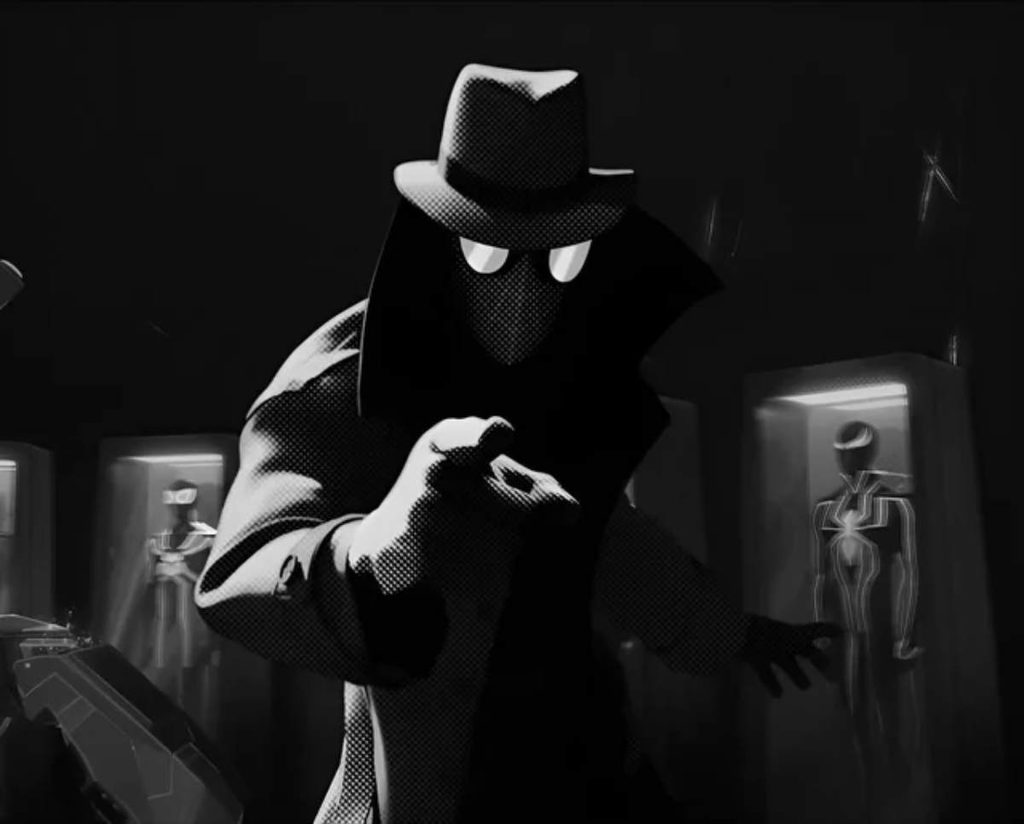
Spider-Noir Theories #5: Nicolas Cage’s Casting Is Actually an In-Universe Clue
This is the most shareable of the spider noir theories in the piece, and it is more structurally sound than it looks at first.
Nicolas Cage voiced Spider-Man Noir in Spider-Man: Into the Spider-Verse in 2018. He delivered one of the film’s most memorable performances in roughly twelve minutes of screen time. He now plays what is, on paper, the same character in a live-action Amazon Prime series.
The theory is not that this is stunt casting for nostalgia. The theory is that Cage’s presence is a deliberate in-universe signal that the live-action show and the animated film are connected at the multiverse level.
How the Spider-Verse Framework Supports This
The animated Spider-Verse franchise has already established that the same Spider-person can exist across multiple forms in multiple universes. The multiverse, in that franchise’s logic, is not a metaphor. It is a transit system.
If the live-action show is operating within that logic, then Cage is not playing a character who happens to share a name and backstory with his animated counterpart. He is playing the same entity at a different point in his dimensional history, which means the show is already inside the Spider-Verse multiverse whether it has announced that or not.
What It Would Mean Going Forward
A confirmed connection between the live-action show and the Spider-Verse films would make Spider-Noir a natural bridge between the animated franchise and whatever Marvel does with its multiverse in live-action. Cage becomes the connective tissue between two formats, which is exactly the kind of structural role a casting decision at this level would be designed to serve.
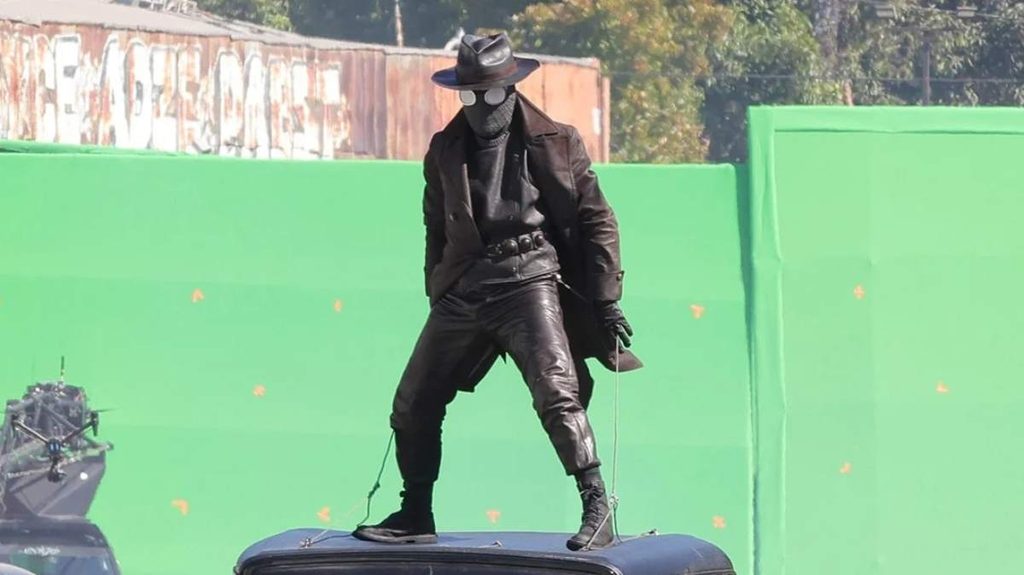
Spider-Noir Theories #6: Lonnie Is Not Who He Appears to Be
Lonnie is the show’s most discussed supporting character, and the discussion is almost entirely about what he is hiding.
The character has attracted significant fan attention for behavior that does not track with a straightforward supporting role. Fan analysis across multiple Reddit threads has flagged scenes where Lonnie’s reactions to Reilly’s activities are a beat too measured, too unsurprised, for someone who is supposed to be in the dark.
The Plant Theory
The primary theory is that Lonnie is working for, or at minimum reporting to, someone in the show’s criminal network. The Osborn and Fisk organizations, both of which anchor Spider-Man Noir stories in the comics, are the most frequently cited candidates. If Lonnie has a handler, then several scenes in the first season read differently: his helpfulness is not loyalty, it is management.
The Hidden Identity Version
A secondary version of the theory holds that Lonnie is the show’s version of a character with a known Marvel alias who has not been revealed yet. The show has already demonstrated it is comfortable with identity subversion, given the entire premise. If the Ben Reilly name was chosen to carry weight, the name Lonnie may be carrying weight too.
Either version of this theory has the same implication: the first season may have seeded Lonnie’s real role in ways that only become visible on a rewatch.
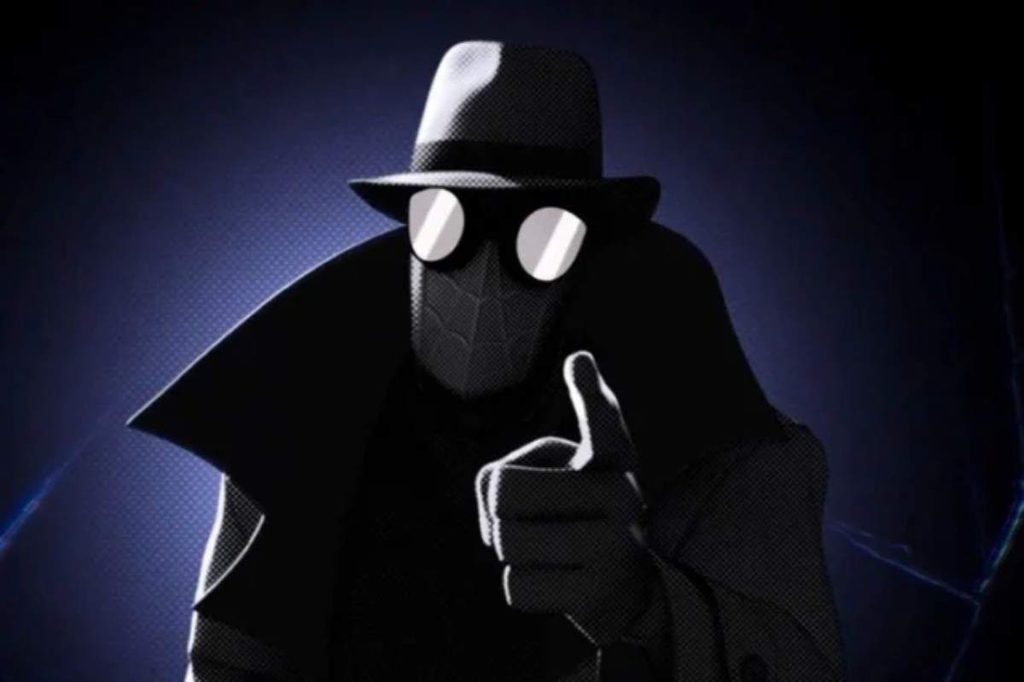
Spider-Noir Theories #7: Ogden Is the Real Villain, and the Show Has Already Told You
The noir genre has one rule that never breaks: the person helping the detective is the person the detective should be watching most closely.
Ogden is presented as a morally ambiguous figure whose relationship with Reilly sits somewhere between ally and obstacle. He has information. He has access. He has reasons to be involved in Reilly’s cases that are never fully explained. In a straight drama, that might just be a complicated supporting character. In a noir, it is a confession.
The Evidence Pattern
Fan analysis has identified a recurring pattern in Ogden’s behavior: he steers Reilly away from specific investigative threads. Not always, and not obviously, but consistently enough that the aggregate looks intentional. The threads he avoids are also, notably, the ones that would logically circle back to the show’s larger criminal infrastructure.
The scenes where Ogden has information he should not have are equally telling. Knowing things a character has no explained access to is one of the oldest tells in noir writing, and the show is too genre-literate to have made that choice accidentally.
What the Reveal Would Do
If Ogden is the real villain, the show’s first season is structured as a slow burn rather than a mystery with a clean resolution. Season 2 would not need to introduce a new antagonist. It already has one, and Reilly has been sitting across a desk from him the entire time.
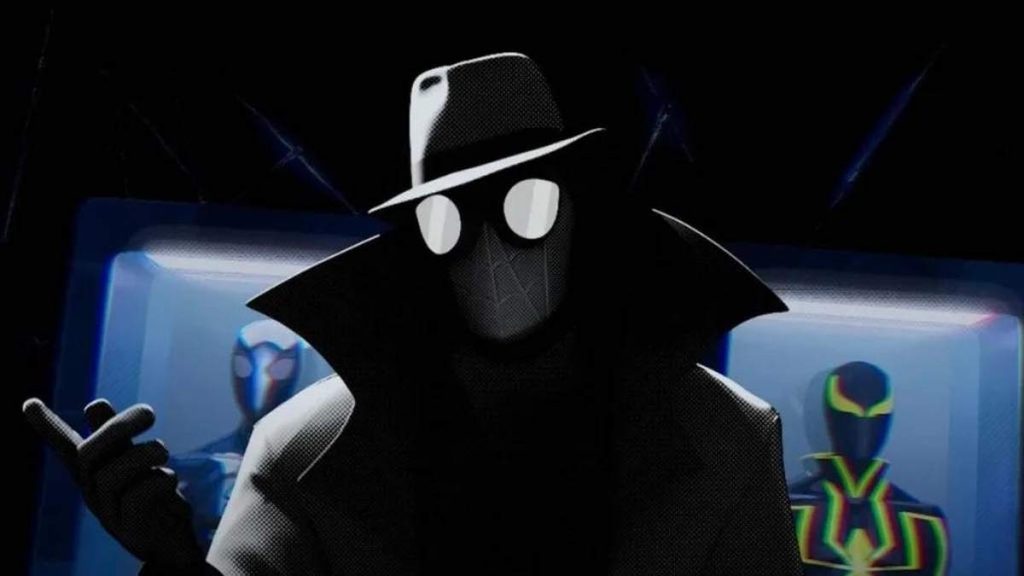
Spider-Noir Theories #8: The Show Is a Stealth Prequel to the 1960s Spider-Man Universe
This is the theory that started as a Reddit joke and became harder to dismiss the more people did the math.
The origin of this theory is r/Spiderman, and the logic is straightforward: if Ben Reilly is a young-ish man in the 1930s, a simple generational calculation puts him in grandfather or great-uncle territory by 1962. That is the year Peter Parker first appeared in Marvel Comics, bitten by a radioactive spider and launching one of the most recognizable franchises in fiction.
The Math
If Reilly is approximately 25 in 1933, he is 54 in 1962. Old enough to have a nephew’s child who could grow up to be a teenager. The Peter Parker of the 1960s comics is a teenager. That family connection, if the show is building toward it, would mean that the original Spider-Man origin story was never random. It was inherited.
Why This Holds Together
The show’s choice of the Ben Reilly name combined with the WWI time frame produces a specific generational window. That window lines up with the 1960s origin too cleanly to be accidental if the writers were thinking about long-form continuity. Marvel has built longer retcons than this. Extending the logic backward in time, through a great-uncle who was a spider-powered detective decades earlier, fits the franchise’s pattern of making origin stories more connected over time.
Spider-Noir Theories #9: Spider-Noir Is Marvel’s Setup for Secret Wars
This is the biggest swing. It is also the one with the most external support from the franchise’s announced roadmap.
Avengers: Secret Wars is scheduled for release in 2027. It is expected to function as Marvel’s live-action version of the 2015 comic event of the same name, where heroes and villains from collapsing universes are pulled onto a single composite battlefield called Battleworld. The comic event drew characters from dozens of alternate Earths, including spider-variants from multiple timelines.
Why Spider-Noir Fits the Architecture
The show’s deliberate separation from the MCU, its visual distinctiveness, and its multiverse-compatible origin are all features of a character designed to be imported. A hero who exists in a sealed, visually distinct universe with a completed arc is exactly the kind of piece you move onto a multiverse battlefield.
The Spider-Verse animated films have already built the narrative template for this. Gathering spider-variants from different universes is not a new idea in this franchise. It is an established genre with its own rules and emotional logic.
The Cage Connection, Revisited
Nicolas Cage’s dual presence, animated and live-action, gives Marvel a built-in narrative justification for bringing this version of the character into a larger crossover. If the animated and live-action versions are the same entity at different dimensional moments, then Cage has already crossed universes within the franchise’s own history. Doing it again in Secret Wars is not a leap. It is a completion.
If the show runs two or three seasons before 2027, Reilly’s arc will be complete enough to function as a standalone story and rich enough to bring emotional weight into a crossover event. Marvel rarely builds pieces it does not intend to play. Spider-Noir looks very much like a piece.
FAQ
Is Spider-Noir connected to the MCU?
As of the first season of the Amazon Prime series, Spider-Noir has no confirmed connection to the Marvel Cinematic Universe. The show operates in its own continuity, set in 1930s New York with no reference to MCU events or characters. The character’s universe in Marvel Comics is designated Earth-90214, which places it outside the primary MCU timeline. Whether a future crossover is planned has not been confirmed by Marvel or Amazon, though several fan theories point to the show’s structure as multiverse-compatible by design.
Is Ben Reilly actually Peter Parker in disguise in Spider-Noir?
The show does not confirm this, but it does not rule it out either. The most supported fan theory holds that Peter Parker is dead, likely from WWI, and Ben Reilly is either living with that loss in some form or actively carrying Parker’s identity. The show’s refusal to mention Parker by name at any point in the first season is treated by most analysts as a deliberate narrative choice rather than an oversight. A direct identity overlap, where Reilly is somehow Parker or believes himself to be, remains a possible Season 2 reveal.
Why is Spider-Noir filmed in black and white?
The black-and-white visual style directly mirrors how Spider-Man Noir appeared in Spider-Man: Into the Spider-Verse (2018), where the color choice was used to signal that his universe operates under different physics than the other Spider-people. The live-action show adopts the same visual language, aligning itself with the animated multiverse framework rather than with the original 2009 comics, which were published in full color. This is widely read as a deliberate in-universe signal, not just an aesthetic preference.
What is the Spider-God subplot in Spider-Noir, and does it matter?
In the original Spider-Man Noir comics, the spider that grants powers is connected to Anansi, a totemic spider deity from West African mythology. The live-action show shifts the origin to a “mutated” spider in a German military facility during WWI, which removes the explicit mystical element on the surface. The fan theory that has gained the most traction is that the spider was still a totemic vessel, not a scientific accident, and that Reilly’s powers are inherited from something older than the war. If true, that subplot becomes the show’s most significant long-term mythology thread.
Could Spider-Noir appear in Secret Wars?
Avengers: Secret Wars is scheduled for 2027, and the show’s structure makes the character theoretically compatible with that kind of crossover event. The Spider-Verse animated franchise has already established a template for gathering spider-variants from different universes. Nicolas Cage’s dual role across the animated film and the live-action show gives Marvel a built-in narrative justification for importing the character into a larger event. Nothing has been confirmed, but the show’s multiverse-compatible design makes it a logical candidate.
Is the Ben Reilly name a reference to the Clone Saga?
Yes, almost certainly. In Marvel Comics, Ben Reilly is Peter Parker’s most famous clone, the central figure of the 1990s Clone Saga. The show’s writers chose that name with full knowledge of what it carries in Marvel history. The most active theory built on this is that the show’s Ben Reilly may also be a clone, possibly of Peter Parker, possibly designed before or during WWI by whoever was operating the facility where the spider was held. Using the name as a pure homage without any narrative payoff would be an unusual choice for a show that is otherwise very deliberate about its references.
Why did Marvel cast Nicolas Cage specifically?
Nicolas Cage voiced Spider-Man Noir in Spider-Man: Into the Spider-Verse in 2018, making him the only actor with an established history playing the character. The practical answer is legacy casting. The more interesting theory is that Cage’s presence is a structural signal: the live-action character and the animated character are the same entity at different points in their dimensional history, which would place the show inside the Spider-Verse multiverse by implication. If that connection is intentional, Cage is not playing a character who resembles his animated role. He is playing the same role across formats.
What is the stealth prequel theory about Spider-Noir?
The theory originated on r/Spiderman and works like this: if Ben Reilly is approximately 25 years old in the 1930s show, he would be in his mid-50s by 1962, which is when Peter Parker first appeared in Marvel Comics as a teenager. Generationally, that places Reilly in great-uncle territory relative to the original Spider-Man. The implication is that the Parker family’s history with spiders did not begin with a radioactive accident in a science exhibit. It began decades earlier with Ben Reilly, and the 1962 origin was an inheritance rather than a coincidence.
These Spider-Noir Theories Work Better as a System Than They Do Alone
The single most important thing these nine spider noir theories share is that none of them require the show to have made a mistake. Every one of them is built on something the writers chose: a name, a setting, a visual style, a silence, a casting decision. When that many deliberate choices point in the same direction, the most reasonable conclusion is that the direction is intentional.
The Ben Reilly name alone disqualifies “accident” as an explanation. Marvel’s most famous clone is not a naming choice you make carelessly for a show with multiverse ambitions.
The clearest next move is a rewatch of the first season with Theory 7 in mind. Ogden’s scene patterns are the most visible evidence thread in the show, and they read completely differently once you are looking for the steering rather than the help. After that, the animated Spider-Verse films are worth revisiting with fresh eyes on how the black-and-white dimension is treated. The live-action show is speaking the same visual language, and that conversation has been going on longer than the show has existed.