
Where Is Kouri Richins Right Now?
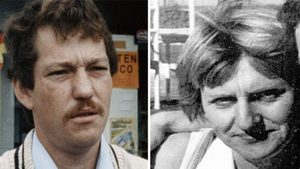
Kouri Richins is currently housed at Summit County Jail in Utah. Following her May 14, 2026 sentencing, the Utah Department of Corrections released a formal mugshot, which signals that the intake and classification process with UDOC has begun. A prison transfer had not been publicly confirmed as of this article’s last update.
This is standard Utah procedure. After a conviction and sentencing in a case of this magnitude, defendants typically remain in county custody while appellate paperwork is filed. The state corrections system also completes a classification assessment during this period. That assessment determines which facility the incarcerated person is assigned to based on security level, medical needs, and other factors.
The UDOC mugshot release is meaningful because it indicates the state has formally taken custody of Richins in a record-keeping sense, even if physical transfer is still pending. Readers tracking this case should check the Utah Department of Corrections offender search tool directly for the most current housing information. Transfer timing is not typically announced publicly in advance.
Last Updated: June 2026.

The Kouri Richins Case: Full Timeline
For readers who need the full context before the legal details make sense, here is the complete sequence of events.
- March 2022: Eric Richins, 39, dies at the family’s home in Utah. Fentanyl poisoning is later confirmed as the cause of death.
- Spring through Summer 2022: Kouri Richins receives approximately $1.3 million in life insurance payments in the months following Eric’s death. By September 2022, prosecutors say most of those funds had already been spent, largely to pay down personal debt.
- Late 2022: Kouri Richins publishes “Are You With Me?”, a children’s book about grief written in Eric’s memory and dedicated to their three sons. The book goes on sale commercially.
- May 2023: Richins is arrested. She faces charges of aggravated murder and distribution of a controlled substance.
- 2024 through early 2025: Pre-trial proceedings include suppression hearings tied to search warrants. The children’s book manuscript and related materials become a point of legal dispute.
- Spring 2025: Trial begins. Jurors hear testimony about fentanyl toxicology, financial records, and an alleged extramarital relationship.
- 2025: The jury convicts Richins on all counts.
- May 14, 2026: Richins is sentenced to life without parole. Her sons give victim impact statements. She announces her intention to appeal.

What Was Kouri Richins Sentenced To and What Does “Consecutive” Mean?
Kouri Richins received a sentence of life in prison without the possibility of parole for aggravated murder, a first-degree felony under Utah law. The judge also imposed additional prison terms for the distribution of a controlled substance charge, and those terms are to be served consecutively.
“Consecutive” versus “concurrent” matters enormously here. Concurrent sentences run at the same time a person serves the longest term and the others effectively disappear into it. Consecutive sentences stack. Each one begins only after the previous one ends.
In practice, when the base sentence is already life without parole, consecutive additions don’t change the immediate outcome of never leaving prison. What they signal is the court’s deliberate statement that the full weight of every charge should be felt independently.
Under Utah law, a sentence of life without the possibility of parole for aggravated murder carries exactly that meaning. There is no parole board review attached and no minimum time served before eligibility. The word “without” in “life without parole” is not a formality. The consecutive structure was the judge’s discretionary choice, reflecting the court’s view of this case across all charges, not just the murder count alone.

Why the Children’s Book Became Central to the Prosecution’s Case
The children’s book was never just a strange footnote. Prosecutors used it as a window into state of mind, and the distinction matters legally.
“Are You With Me?” was published commercially in late 2022, while Eric Richins’ death was still under scrutiny. From the prosecution’s perspective, writing and releasing a public grief memoir during that period was not evidence of mourning. It was evidence of a calculated effort to construct a narrative and control how the world understood Kouri’s relationship with her dead husband.
This is the kind of reasoning a jury can follow without needing a law degree. The gap between what someone says publicly and what the evidence shows privately is exactly the kind of dissonance that makes premeditation arguments land. The prosecution knew that, and leaned into it.
Pre-trial legal battles around the book were substantial. Defense attorneys challenged whether materials related to the manuscript could be used at trial, and the search warrant disputes that arose from those challenges are now among the most likely grounds for the appeal Richins has vowed to pursue. For readers tracking similar cases where a parent’s public persona became part of the legal record, the Shanda Vander Ark case offers a parallel worth understanding a very different crime, but the same pattern of documented behavior colliding with a guilty verdict.

Her Sons Testified Against Her at Sentencing
Two of Eric and Kouri Richins’ sons delivered victim impact statements at the May 14, 2026 sentencing hearing. Per KSL reporting, the boys told the court they feared their mother.
Victim impact statements are not just emotional moments. They are legally part of the sentencing record and can inform a judge’s discretion when a sentencing range allows for variation. In this case, their statements were delivered before the judge imposed the consecutive structure on top of the life without parole term.
Eric and Kouri Richins had three sons together. Who is currently raising them is a question many readers are asking, and it is one that public reporting has not answered with a confirmed name. The family’s guardianship arrangements have not been disclosed in available court records or news coverage.
What is confirmed is that at least two of those children stood in a courtroom and said, on record, that they were afraid of their mother. That detail lives in this case long after sentencing day.
Is Kouri Richins Appealing, and What Does That Process Actually Look Like?
Yes, Richins intends to appeal. She stated publicly after sentencing that she plans to “fight these charges,” and an appeal is her legal right under Utah law.
What Happens in a Utah Murder Appeal
The Utah Court of Appeals or Utah Supreme Court reviews the trial record. The standard is not whether the jury got it right. The standard is whether legal errors occurred during the trial that materially affected the outcome. That is a narrow path. An appeal cannot simply relitigate the facts, it has to identify a specific legal mistake.
What Grounds Would She Use
The pre-trial disputes over the search warrants tied to the children’s book manuscript are among the most plausible appellate arguments. If those search warrants were improperly issued and the evidence obtained through them was improperly admitted, that could form a legitimate appellate challenge. Jury instruction disputes and constitutional claims are also standard grounds in murder conviction appeals.
How Long This Takes
Appeals in Utah murder cases are not fast. From sentencing to a final appellate ruling, the process typically spans 18 months to several years. Richins will remain incarcerated throughout that process. An appeal does not pause a sentence.
What the Realistic Outcome Looks Like
Life-without-parole sentences for aggravated murder are rarely overturned on appeal in Utah. The bar is high and the review is narrow. Richins’ appeal is not a sign that her situation is unstable, it is a standard legal step that her attorneys are obligated to pursue if there are arguable grounds. Readers should understand it as part of the process, not as a meaningful challenge to the likelihood that she serves this sentence in full.

What Happened to Skye Lazaro and Why Is He Part of This Story?
Skye Lazaro was identified during the case as a man with whom Kouri Richins allegedly had a romantic relationship outside her marriage to Eric. Prosecutors presented the alleged affair as one leg of a three-part motive framework.
The motive triangle the prosecution built looked like this: Richins was financially overextended and had accumulated significant personal debt. She was allegedly involved with another man and, prosecutors argued, wanted out of the marriage. Eric Richins’ life insurance policy paid approximately $1.3 million on his death.
The prosecution’s argument was that all three of those facts pointed in the same direction. The specifics of Lazaro’s legal involvement or current cooperation status are not clearly confirmed in available public reporting. His current whereabouts are not a matter of confirmed public record, and this piece won’t speculate beyond what reporting has established.
What is clear is that his connection to Richins gave prosecutors the relational context they needed to complete the motive argument.

What Did Eric Richins’ Death Mean Financially?
The financial picture prosecutors built was direct: Richins collected roughly $1.3 million in life insurance money in the months after Eric’s death, and that money was largely gone by September 2022.
Eric Richins owned a successful contracting business in Utah. Kouri Richins worked as a real estate agent, buying and flipping properties. On the surface, this was a family with income.
Below the surface, prosecutors argued, Kouri was carrying significant personal debt that the couple’s legitimate income wasn’t resolving fast enough. The prosecution’s framing was not that she was broke in any ordinary sense. It was that she was financially cornered in a way that made the life insurance payout feel like a solution.
When investigators traced where the money went after Eric died, the picture that emerged supported the argument that one person in the marriage was carrying financial pressure the other may not have fully known about. For readers who want to understand how financial motive gets established in a case like this, the Sarah Boone case is another example of how prosecutors connect financial records and relationship dynamics in a murder trial.

FAQ
Where is Kouri Richins now in 2026?
As of mid-2026, Kouri Richins is housed at Summit County Jail in Utah following her May 14, 2026 sentencing. The Utah Department of Corrections released a formal mugshot after conviction, signaling that UDOC intake has begun. Her transfer to a state correctional facility had not been publicly confirmed at the time of this article’s last update. Readers can use the UDOC offender search tool directly for current housing status, as transfer timing is not typically announced publicly.
What was Kouri Richins sentenced to?
Richins was sentenced to life in prison without the possibility of parole for aggravated murder, a first-degree felony under Utah law. The judge also imposed additional consecutive prison terms for the distribution of a controlled substance charge. Consecutive means each sentence begins after the previous one ends. Since the base sentence is already life without parole, the additional terms reinforce the court’s position that every charge carries independent weight.
Is Kouri Richins appealing her sentence?
Yes. Richins publicly stated after sentencing that she intends to appeal her conviction and fight the charges. Under Utah law, defendants convicted of aggravated murder have the right to appeal to the Utah Court of Appeals or Utah Supreme Court. That process typically takes 18 months to several years. An appeal does not pause a sentence — Richins remains incarcerated throughout. Life-without-parole sentences for aggravated murder in Utah are rarely overturned on appeal, as the standard is legal error at trial, not factual disagreement with the jury’s verdict.
Who is raising Kouri Richins’ sons after sentencing?
Eric and Kouri Richins had three sons together. Public reporting has not confirmed the identity of their current guardian or disclosed the family’s custody arrangements. What is confirmed is that at least two of the sons delivered victim impact statements at the May 14, 2026 sentencing hearing, telling the court they were afraid of their mother. Their guardianship situation has not been part of the public court record available at the time of writing.
How much life insurance money did Kouri Richins get after her husband died?
Prosecutors stated that Richins collected approximately $1.3 million in life insurance payments in the months following Eric Richins’ death in March 2022. By September 2022, most of that money was reportedly spent, with prosecutors arguing it went largely toward paying down personal debt. This financial record was central to the prosecution’s motive argument — the payout represented a direct and immediate financial benefit from Eric’s death.
Why did Kouri Richins write a children’s book after her husband died?
Richins published “Are You With Me?” in late 2022, describing it as a tribute to Eric written for their sons. The book was about grief and was sold commercially. Prosecutors did not accept the framing that the book was simply a memorial. They argued it was part of a calculated effort to present a public narrative of mourning while under scrutiny. The book and materials related to its creation became the subject of significant pre-trial legal battles over search warrants, and those disputes are among the most likely grounds for the appeal Richins has announced.
What charges was Kouri Richins convicted of?
A jury convicted Kouri Richins of aggravated murder, a first-degree felony under Utah law, for the fentanyl poisoning death of her husband Eric Richins. She was also convicted on a charge related to the distribution of a controlled substance. The aggravated murder conviction carries a mandatory sentence of life without the possibility of parole in Utah, which is what the judge imposed on May 14, 2026, along with additional consecutive terms for the distribution charge.
The Verdict Is In. The Story Isn’t.
The single most important thing to understand about this case right now is that a sentence of life without parole in Utah is not a headline that ages into irrelevance. It is a legal outcome that Richins is actively contesting, and the appeal process she has begun will take years to resolve. What she argues in that appeal, and whether any pre-trial legal errors around the search warrants tied to the children’s book manuscript give her appellate grounds, is the actual open question in this case.
The grief book detail was never just irony. It was the prosecution’s clearest window into state of mind, and it generated the pre-trial battles most likely to fuel the appeal. Whether that appeal accomplishes anything is a different question. Utah’s appellate standard is narrow, life-without-parole sentences are rarely reversed, and the evidence presented at trial was substantial.
Check back on this piece as updates emerge. The UDOC offender search tool will show her housing location once a transfer is confirmed. The Utah courts’ public case search will reflect appellate filings as they are entered. The case is not moving fast, but it is moving.