

Where Is Jodi Arias Right Now?
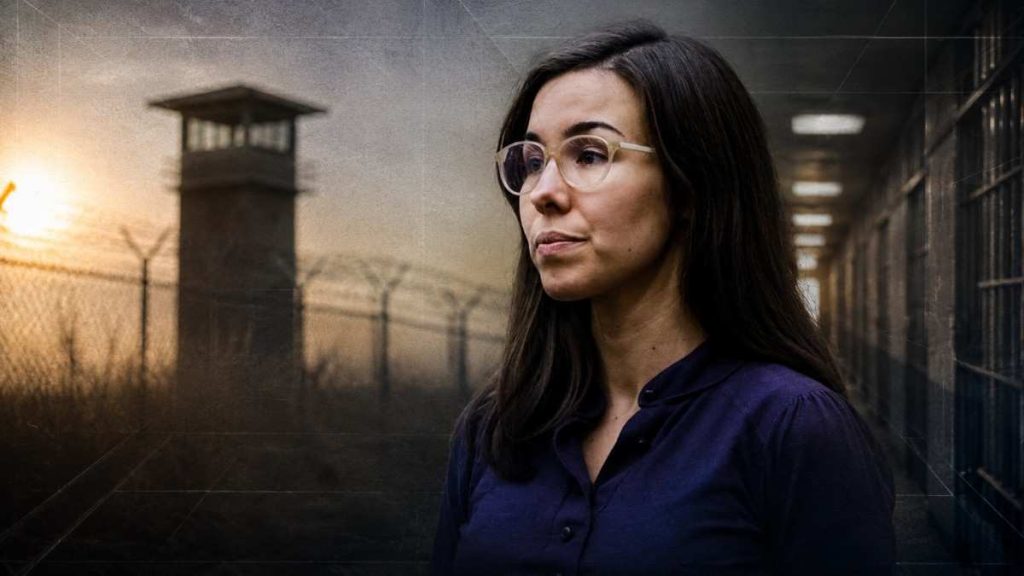
Jodi Arias is currently incarcerated at the Arizona State Prison Complex in Perryville, located in Goodyear, Arizona. She has been housed there since her sentencing was finalized on April 13, 2015, making it more than a decade at the same facility.
Perryville is the only state-level women’s correctional facility in Arizona. It houses roughly 4,000 women across multiple housing units and serves as the destination for virtually every woman sentenced to a significant prison term in the state. Arias is not in a satellite facility or a county jail. She is in the primary women’s prison in Arizona, and nothing about her housing status has changed in the past several years.
The answer to “how many years is she serving” is not a number. Her sentence is life without the possibility of parole, which means there is no projected release date, no countdown, and no eligibility review coming up. The sentence is permanent unless a court overturns it or a governor commutes it.
The Sentence Explained: Life Without Parole, Not Life With It
A significant number of people searching Jodi Arias believe she might eventually be paroled. That confusion is understandable because “life in prison” and “life without parole” sound similar but function completely differently under the law.
Arias was convicted of first-degree murder on May 8, 2013. First-degree murder in Arizona requires the prosecution to prove premeditation, meaning the jury found that she planned the killing. After conviction, the case moved to the penalty phase, where the jury was asked to choose between the death penalty and life in prison.
The penalty phase produced two deadlocked juries. The first jury could not reach unanimous agreement. A second penalty phase jury also deadlocked. When a jury cannot agree on death, the decision falls to the judge.
Judge Sherry Stephens sentenced Arias to life without the possibility of parole on April 13, 2015. That phrase, “without the possibility of parole,” is the legally operative language. She cannot petition a parole board. No such board has jurisdiction over her case. The only mechanisms that could change her sentence are a successful appellate ruling overturning the conviction or sentence, or a formal commutation by an Arizona governor.

What Is Jodi Arias Doing in Prison? The 2026 Updates
This is the section that answers why she is trending right now. Three things happened in early 2026 that collectively created a new media cycle around a case that was otherwise legally dormant.
The Prison Blog
Arias has been running a blog from inside Perryville Prison. The blog became public knowledge through coverage by Arizona Family (azfamily.com) in January 2026. Arizona’s prison system allows some forms of written communication with the outside world, and Arias has been using that access to maintain a public-facing written presence.
This is unusual for a high-profile lifer. Most people convicted of nationally covered murders go quiet after sentencing. Arias has not. The blog gave her a channel to speak directly to a public audience without going through a journalist.
The Lost Evidence Claim
Through her blog and related public statements in early 2026, Arias claimed that evidence related to her case had been lost or destroyed. This is the detail worth paying close attention to, because it is not just a grievance. It is the kind of claim that can serve as the foundation for specific legal challenges.
Brady violations, which involve the prosecution withholding or failing to preserve exculpatory evidence, are a recognized basis for post-conviction appeals. Chain-of-custody challenges work similarly. When a defendant makes a “lost evidence” claim publicly before filing anything in court, it often signals that their legal team is testing language or building toward a motion. No court has validated Arias’s claim as of early 2026. It is a public statement, not a filed argument.
The 2026 Documentary
“Obsessed: Unraveling Jodi Arias,” produced by True Crime Arizona, was released in early 2026. The documentary covers the case with her participation and appears to have been the primary driver of renewed search interest. This is a pattern worth noting: the case sees a measurable spike in public attention every time a new documentary, podcast series, or long-form media project drops. The 2026 release is simply the latest instance of that cycle.
For readers tracking other cases drawing similar renewed attention, the 2026 true crime case updates piece covers several that have seen parallel media revivals this year.
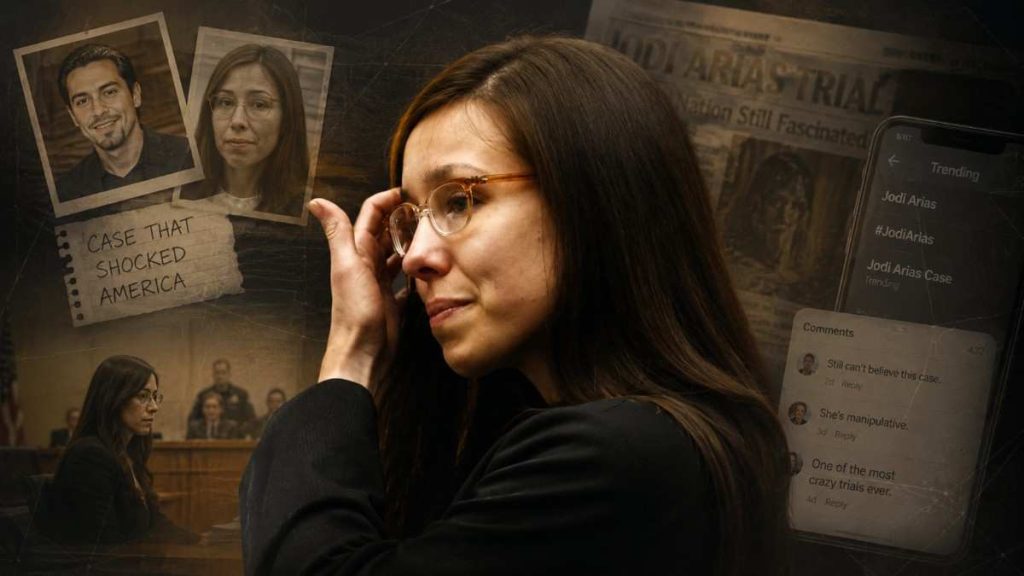
Jodi Arias Appeals: What Has Actually Been Filed?
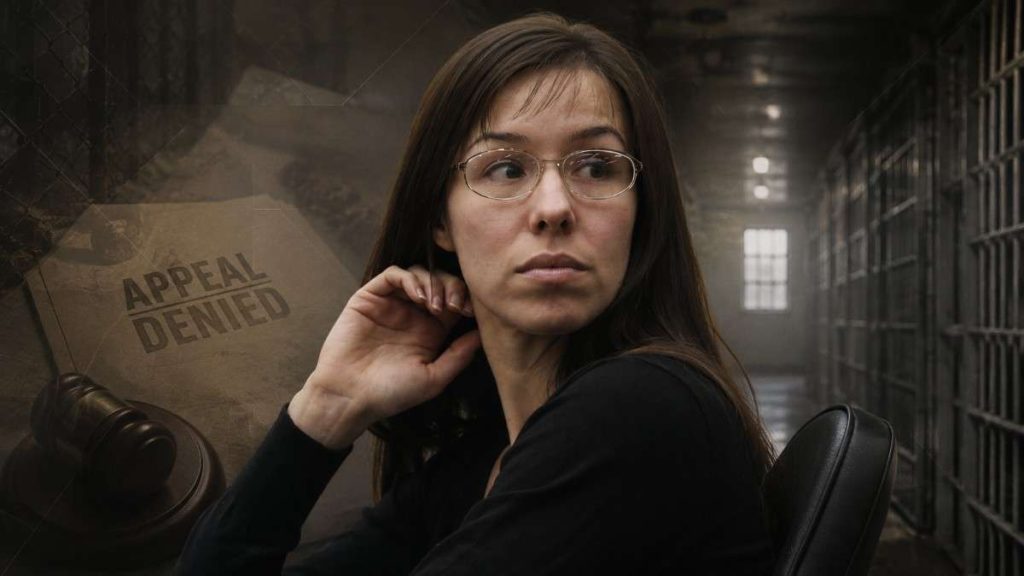
After sentencing, Arias filed a direct appeal with the Arizona Court of Appeals, which is standard procedure for anyone convicted of a serious felony in Arizona. A direct appeal reviews whether legal errors occurred during the trial, including issues with jury instructions, evidentiary rulings, or procedural decisions. It does not retry guilt or innocence.
The appeals process for a life sentence in Arizona can take years and often does. Courts move slowly through large records, and the Arias trial generated an exceptionally large record given its length and the volume of evidence introduced. As of 2026, no appeal has overturned or materially altered her conviction or sentence.
Fox News reported in 2026 that Arias was signaling a “fresh legal push,” with the lost evidence claim appearing to be part of that positioning. Signaling a legal strategy and having a viable legal claim are genuinely different things. Defense attorneys and defendants in high-profile cases regularly surface new theories publicly before or without filing them formally in court. Nothing filed as of early 2026 had produced movement.
Does Jodi Arias Have Visitors? Family and Personal Life in Prison
Limited public information exists about Arias’s day-to-day personal life inside Perryville. What is known comes mostly from the trial period and the years immediately following.
Her parents, Sandy and Bill Arias, were a consistent presence during the trial and were visibly distressed throughout the proceedings. They testified on her behalf during the penalty phase. Since the 2015 sentencing, the Arias family has maintained an extremely low public profile, and there is no confirmed public record of regular visits in recent years.
Reports of a relationship Arias reportedly formed in prison circulated in the years following her sentencing, but there is no confirmed current relationship status. The “Jodi Arias now married” searches that appear in query data do not have a confirmed answer. No marriage has been publicly documented.
What Was Jodi Arias Diagnosed With?
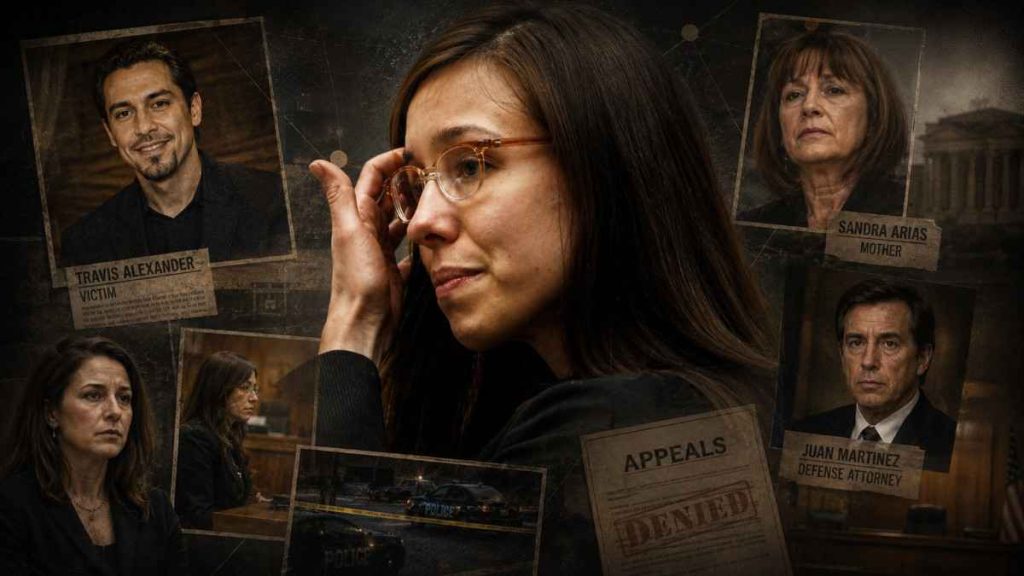
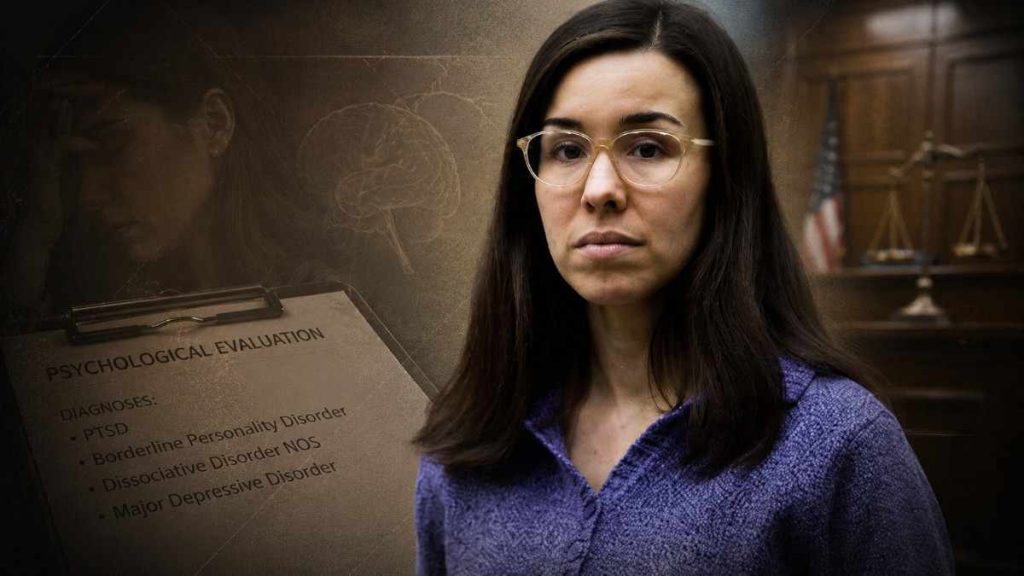
The diagnosis question comes up constantly, and the answer requires separating trial testimony from clinical fact. During the trial, defense expert Richard Samuels testified that Arias showed signs of PTSD related to the killing. He argued she experienced a dissociative episode during the crime, which he used to explain her claimed memory gaps about the details of the attack.
A second defense expert, Alyce LaViolette, testified that Arias was a victim of domestic violence perpetrated by Travis Alexander. LaViolette’s testimony was among the most contested elements of the trial, drawing sharp cross-examination and significant public backlash.
The prosecution disputed both diagnoses directly. Their experts testified that the evidence was inconsistent with both PTSD-related amnesia and domestic abuse victimization. The jury convicted her of first-degree murder with a premeditation finding. That verdict effectively rejected the PTSD and self-defense framework entirely.
No psychiatric diagnosis from the trial governs how Arias is classified or treated inside Perryville. The defense testimony was legal strategy presented at trial, not a clinical finding that survived scrutiny or shaped any post-conviction determination.
Why Does This Case Keep Trending? The Real Answer
The Jodi Arias case is nearly 20 years old. Travis Alexander was killed in June 2008. The verdict came in 2013. Sentencing in 2015. And yet here we are in 2026, with a new documentary, a prison blog, and fresh search volume. Every few years, the cycle repeats. The question worth asking is why.
The Psychology of Premeditated-Romance Cases
Cases that combine intimate partner violence, clear premeditation, and a defendant who maintains innocence activate a specific kind of sustained public curiosity that stranger-danger murders or cold cases do not. The question the public keeps returning to is not simply “what happened.” It is “how does a person get there.” How does a romantic relationship end in 27 stab wounds, a slit throat, and a gunshot?
The crime and the backstory feel cognitively irreconcilable, and the public keeps orbiting it trying to reconcile them. That irreconcilability is the engine. Cases where the psychology of the perpetrator feels genuinely impossible to resolve generate long-tail attention that more straightforward cases do not.
The Alex Murdaugh case follows a similar pattern, as explored in the Alex Murdaugh prison update piece on this site, where the same question keeps surfacing: how does someone presenting as a particular kind of person commit a particular kind of act?
The Defendant Who Keeps Generating Content
Most convicted killers disappear from public consciousness quickly because they stop producing new material. Arias does not. The prison blog, the documentary participation, and the 2026 evidence claims are all examples of a defendant who is an active participant in keeping her own story alive. That is a different dynamic from a passive cold case resurface.
Every time she generates new content, someone covers it. Every time someone covers it, search volume spikes. Every search spike attracts more coverage. The cycle feeds itself, and Arias appears to understand that cycle well enough to participate in it intentionally.
The Algorithm Keeps Finding New Audiences
A 22-year-old in 2026 was four years old when Travis Alexander was killed. For that audience, this is not a memory they are revisiting. It is a discovery. True crime content on YouTube, TikTok, and podcasts continuously introduces the case to people who were children during the original trial coverage.
Every new documentary, every podcast episode, every Reddit thread creates a first wave of searchers who then Google “where is Jodi Arias now” for the very first time. This is why the search volume is durable rather than decaying. The case does not need existing fans to sustain interest. It keeps recruiting new ones.
The cases where a defendant’s behavior after conviction continues to generate this kind of sustained curiosity follow a recognizable pattern, one you can also see in the Nicholas Godejohn post-conviction story, where the story’s second chapter became almost as compelling as the first.
The Key Facts at a Glance
- Crime: Murder of Travis Alexander, Mesa, Arizona, June 4, 2008
- Verdict: First-degree murder, May 8, 2013
- Sentence: Life without the possibility of parole, April 13, 2015
- Current location: Arizona State Prison Complex, Perryville, Goodyear, Arizona
- Age: 45 (born July 9, 1980)
- Release date: None. Sentence is life without parole.
- Pending legal activity: Claimed lost evidence (public statement, early 2026); no confirmed filed appeal has altered the sentence
- 2026 media: “Obsessed: Unraveling Jodi Arias,” produced by True Crime Arizona
FAQ: Jodi Arias Questions People Still Ask
How many years is Jodi Arias serving?
Jodi Arias is serving life without the possibility of parole. There is no fixed number of years attached to this sentence. It is permanent unless a court overturns the conviction or sentence through a successful appeal, or unless an Arizona governor issues a formal commutation. Neither outcome has any current legal basis. She has been at Perryville Prison in Goodyear, Arizona since her sentencing was finalized on April 13, 2015.
Will Jodi Arias ever get out of prison?
Under her current sentence, no. Life without the possibility of parole means she cannot petition a parole board at any point. The only legal mechanisms that could change this are a successful appellate ruling overturning her conviction or sentence, or a gubernatorial commutation. As of 2026, no appeal has come close to achieving either. She publicly claimed evidence was lost in early 2026, which may signal a forthcoming legal move, but no court has validated that claim or opened any related proceeding.
Does Jodi Arias’ family visit her in prison?
Her parents, Sandy and Bill Arias, were present throughout the trial and testified during the penalty phase. Since her sentencing in April 2015, the Arias family has maintained a very low public profile. There is no confirmed public record of regular family visits post-sentencing. The family has not given media interviews or made public statements in the years following the conclusion of the trial.
What was Jodi Arias diagnosed with at trial?
Defense experts testified during the trial that Arias showed signs of PTSD and was a victim of domestic violence. Prosecution experts directly contested both claims. The jury convicted her of first-degree murder with a premeditation finding, which effectively rejected both the PTSD and self-defense frameworks. No formal psychiatric diagnosis from the trial shaped her post-conviction classification or housing. The defense testimony was legal strategy, not a clinically accepted finding that survived cross-examination intact.
Is Jodi Arias running a blog from prison?
Yes. Arizona Family (azfamily.com) reported in January 2026 that Arias has been maintaining a blog from inside Perryville Prison. Arizona’s prison system allows limited forms of external written communication, and Arias has used this channel to make public statements, including her claim that evidence in her case was lost or destroyed. The blog represents her most direct public communication channel since the conclusion of her trial proceedings.
Is there a Jodi Arias documentary in 2026?
Yes. “Obsessed: Unraveling Jodi Arias,” produced by True Crime Arizona, was released in early 2026. The documentary covers the case with her participation and generated a measurable spike in public search interest following its release. This follows a documented pattern in which new media coverage of the case reliably produces a new wave of first-time viewers who then search for current updates on her status and sentence.
Why does the Jodi Arias case keep coming up years after the trial?
Three factors sustain it. First, the combination of premeditation and romantic motive creates a psychological puzzle the public keeps returning to without resolution. Second, Arias actively generates new material from prison, including a blog and documentary participation, which creates ongoing news cycles. Third, true crime platforms continuously introduce the case to younger audiences for whom this is a discovery rather than a memory. A 22-year-old in 2026 was four years old when the murder occurred. Every new platform brings a new cohort of first-time searchers.
What is Jodi Arias claiming about lost evidence in 2026?
In early 2026, Arias publicly stated that evidence related to her case had been lost or destroyed. This type of claim can form the basis of post-conviction appeals on Brady violation grounds, which involve the prosecution failing to preserve or disclose exculpatory material. As of early 2026, this is a public statement made through her prison blog and related media coverage. No court has validated the claim, and no filed legal motion has publicly emerged from it. It appears consistent with early-stage legal positioning rather than an active, filed appeal.
The Case That Won’t Close
Jodi Arias is at Perryville. Her sentence has not changed. The legal situation, despite the signals coming out of early 2026, remains what it has been since April 13, 2015: life without the possibility of parole.
What keeps changing is everything around the sentence. The documentary. The blog. The evidence claims. The TikTok generations discovering the trial footage for the first time. Each of those things is real, and each of them creates the impression of a story still in motion even though the legal conclusion landed a decade ago.
The most honest answer to why this case won’t close is that it was never just a legal event. It became a cultural object, and cultural objects do not behave the same way court verdicts do. Court verdicts end. Cultural objects get reinterpreted, rediscovered, and repackaged for whoever is paying attention this year. As long as Arias keeps generating content and platforms keep finding new audiences for it, the search volume will stay durable. The question people are really asking when they type her name into a search bar is not just “where is she.” It is “how does a person become that.” That question has no verdict and no sentencing date.