

The Essential Rick and Morty Lore Episodes to Watch in Order
The essential Rick and Morty lore episodes, in release order, are Rick Potion #9, Close Rick-Counters of the Rick Kind, The Wedding Squanchers, The Rickshank Redemption, The Ricklantis Mixup, Star Mort Rickturn of the Jerri, Rickternal Friendship of the Spotless Mort, Rickmurai Jack, Solaricks, and the season 6 and season 9 episodes that pay off the Evil Morty arc. This is the broadcast-order version, the one that matches how the show actually aired.
Two other valid orders exist below, and they’re not interchangeable with this one. If you’ve never watched the show at all, the chronological order will spoil comedic beats before you’ve earned them. If you’re only trying to remember what the Central Finite Curve even is before a premiere, the full release-order list has too much padding.
Rick and Morty’s lore is genuinely spread across nine years of episodes, several specials, and at least one interactive experiment, which is exactly why one flat list has never been enough to answer this question properly.
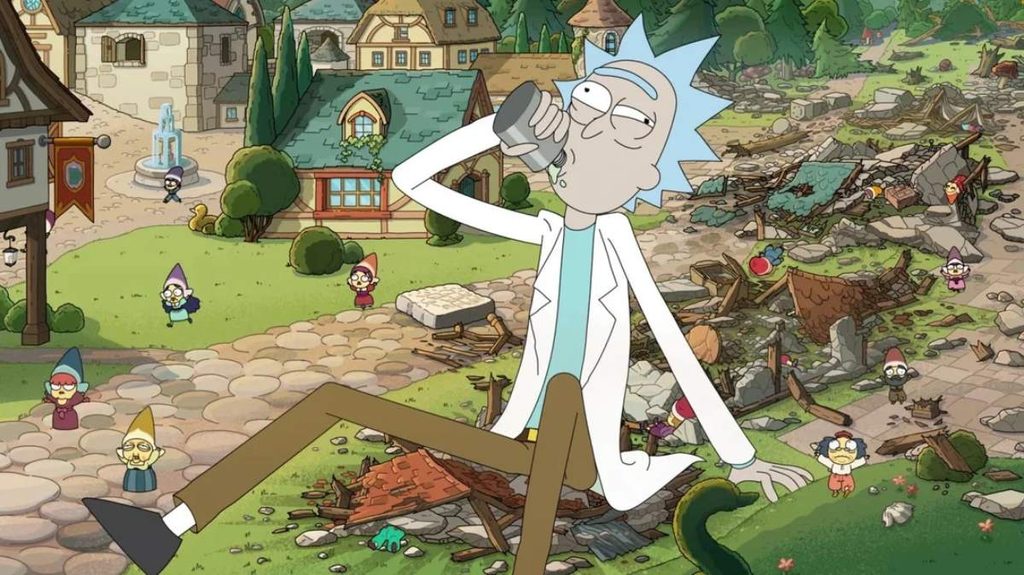
Release Order vs. Chronological Order: Why Rick and Morty’s Timeline Isn’t the Same as Its Air Date Order
Release order is the sequence episodes actually aired in. Chronological order is the sequence events happened inside the story, and Rick and Morty deliberately breaks these apart with flashback-heavy episodes that reveal earlier history long after the “present day” has already moved forward.
Rickternal Friendship of the Spotless Mort is the clearest example. It reveals Rick’s backstory with Birdperson and Diane in season 5, but the events themselves happen decades before anything in season 1 ever aired. Watching in release order means you meet adult Rick first and learn his origin story afterward, backward from how most origin stories usually work.
This matters if you’re trying to build an actual timeline instead of just tracking what happened onscreen when. The two orders answer two different questions: one tells you what the show revealed and when, the other tells you what actually happened and in what sequence.
Fans who try to merge the two orders into a single hybrid list usually end up with something that satisfies neither goal. A hybrid list spoils the emotional reveal of the Birdperson and Diane material by front-loading it, while also failing to preserve the surprise the show’s original airing order was built around. Picking one lens and sticking with it produces a cleaner result than trying to split the difference.

The Fastest Rick and Morty Lore Order (13 Episodes)
The fastest path to the full multiverse payoff, without the padding episodes, runs 13 entries deep and skips two episodes that even dedicated lore trackers flag as optional. This list gets you Evil Morty, the Citadel, and the Galactic Federation arc without the detours.
| Episode Title | Season/Episode | Why It Matters |
|---|---|---|
| Rick Potion #9 | S1E9 | Establishes the “replacement” universe the main characters live in for the rest of the series |
| Close Rick-Counters of the Rick Kind | S2E1 | Introduces the Citadel of Ricks and the wider multiverse structure |
| The Wedding Squanchers | S3E7 | Sets up Rick’s surrender to the Galactic Federation |
| The Rickshank Redemption | S3E1 | Resolves the Federation arc and reveals Rick’s manipulation of events |
| The Ricklantis Mixup | S3E7 (companion) | Shows how the Citadel functions and collapses without a central Rick |
| Star Mort Rickturn of the Jerri | S4E11 | Deepens the Jerry and multiverse dynamic tied to later Citadel fallout |
| Rickternal Friendship of the Spotless Mort | S5E8 | Reveals Rick’s Birdperson and Diane backstory |
| Rickmurai Jack | S6E10 | Closes out the season 6 arc and pushes Rick’s isolation storyline forward |
| Solaricks | S6E1 | Sets the stage for the Evil Morty storyline heading into new seasons |
A widely cited fan breakdown of these lore episodes flagged two entries as genuinely debatable additions: Never Ricking Morty and Juricksic Mort. Never Ricking Morty exists specifically to mock the concept of canon, which makes including it on a “canon list” a little ironic. Juricksic Mort earns its spot mostly through a single late-episode reveal rather than sustained plot weight, which is why the fastest path leaves both out while the fuller lore path keeps them in.
Anyone deciding how deep to go should also weigh which seasons carry the most lore density in the first place, since the payoff isn’t distributed evenly. A season-by-season breakdown of Rick and Morty’s strongest and weakest runs makes that uneven distribution easier to see before committing to a rewatch.
The First-Time Viewer Order: How to Watch Rick and Morty for the Lore Without Spoiling the Comedy
Watch Rick and Morty in full release order on a first viewing, because the self-contained episodes build the running jokes and character relationships the lore episodes lean on. Skipping straight to a “lore only” watchlist on your first pass through the show is the single most common way people ruin it for themselves.
Jumping to The Rickshank Redemption without ever meeting Mr. Poopybutthole or watching Rick and Summer’s fake-family Vindicators arc means missing the emotional shorthand the writers assume you already have. The comedy episodes aren’t filler in the way a procedural’s case-of-the-week is filler. They’re doing character work the lore episodes cash in later.
If you already know the show and just want a refresher before a new season, the 13-episode path above works. If you’ve never seen a single frame of it, start from season 1, episode 1, and let the show earn its twists in the order it wrote them.

The Strict Chronological Rick and Morty Timeline, In-Universe
The true in-story order, once flashbacks are unscrambled, starts decades before the series premiere with Rick’s marriage to Diane and Beth’s birth, moves through his resistance-era work alongside Birdperson, covers his years of exile, then lands on the “present day” that most of the show actually depicts before finally reaching the Evil Morty arc. That’s a jump of roughly three seasons’ worth of broadcast time compressed into a handful of flashback scenes.
Building this timeline means pulling the Diane and Birdperson material out of its season 5 broadcast slot and placing it first, since those events predate everything else the show has shown. The exile years slot in next, followed by the version of Rick and Morty’s life audiences actually watched from season 1 onward.
This order is genuinely useful for understanding why Rick behaves the way he does, since his defining trauma happens before the story you’ve been watching even starts. It’s a worse order for a first watch, because it front-loads grief and backstory before you’ve had a chance to enjoy the show’s comedic register.

The Continuity Ledger: Tracking Universes, Ricks, and the Central Finite Curve
The Central Finite Curve is the confirmed in-show term for the subset of realities where Rick is always roughly the smartest version of himself, which the show uses to explain why so many Ricks behave similarly across universes. Everything else built around it ranges from confirmed mechanic to fan shorthand, and mixing the two up is where most “lore explained” content goes wrong.
A designation like C-137 tells you which specific Rick and Morty pairing is being tracked, but the show has never maintained that numbering system with total consistency. Treating every fan-made “which Rick is this” chart as gospel is a mistake, since several of those charts fill gaps the show itself left open on purpose.
| Identifier | What It Means | Confirmed or Fan-Extrapolated |
|---|---|---|
| Central Finite Curve | The subset of realities where Rick is consistently the smartest version of himself | Confirmed in-show concept |
| C-137 | The designation used for the main timeline’s Rick and Morty | Confirmed on-screen, inconsistently maintained afterward |
| Replacement Rick and Morty | The versions the main characters adopt after abandoning their original universe in Rick Potion #9 | Confirmed plot event |
| Evil Morty | The Morty who engineered his escape from the Central Finite Curve | Confirmed as of the season 5 finale |
Use this table as a filter before trusting any claim you read elsewhere about “which Rick” appears in a given episode. If it’s not tied to one of these four confirmed anchors, it’s probably a fan reconciliation of a joke, not an actual plot fact.
Do Rick and Morty Specials, Shorts, or Spinoffs Matter to the Lore?
No official theatrical Rick and Morty movie exists, but there are shorts, an interactive special, and holiday one-offs, and almost none of them are required to understand the core story. The one meaningful exception involves the framing device the show uses to joke about its own continuity.
| Title | Type | Skip for Lore Purposes? |
|---|---|---|
| Never Ricking Morty | Special episode | No, watch it, but treat its events as intentionally non-canon |
| Ricktional Mortpoon’s Rickmas Mortcation | Holiday special | Yes, entirely skippable |
| Promotional shorts and interactive one-offs | Short/interactive | Yes, none carry plot weight |
Never Ricking Morty is the odd one out here. It’s built around a framing device that exists to erase and rewrite continuity as a joke, which sounds like a reason to skip it but is actually the reason to watch it once you understand what it’s doing. Anyone curious about how the interactive special fits into the wider release calendar might also want a rundown of how the franchise’s non-episode content has evolved, since that pattern of joke specials feeding real continuity started well before Never Ricking Morty made it explicit.
What Can You Skip Without Losing the Rick and Morty Story?
You can skip nearly every stand-alone adventure episode without losing the throughline, but skipping any of four finale-adjacent episodes breaks the Evil Morty and Galactic Federation arcs completely. Those four are The Wedding Squanchers, The Rickshank Redemption, Rickmurai Jack, and the season 6 opener Solaricks.
Everything else falls into three genuinely skippable categories: filler alien-of-the-week adventures, Jerry-focused subplot episodes that don’t touch the main arc, and one-off parody episodes built around a single joke rather than ongoing plot. None of these are bad episodes. They’re just optional if lore is the only thing you’re after.
Skipping the four load-bearing episodes above means arriving at Evil Morty’s endgame with no idea why Rick surrendered to the Federation in the first place, which is the exact confusion the flat “lore list” competitors publish tends to create. Readers who want the full character context behind that surrender, not just the plot mechanics, can find it in a deeper breakdown of Evil Morty’s endgame and what it actually resolved.

When Rick and Morty Deliberately Makes Its Own Canon Unreliable
Rick and Morty has an in-story villain, the Story Lord, whose entire job in Never Ricking Morty is to erase and rewrite the show’s own continuity as a running joke about serialized storytelling. That means treating every single plot point as permanent, locked-in canon is a mistake baked into the show on purpose, not a tracking failure on the reader’s part.
This is worth sitting with before building any timeline. A show that literally stages a battle over whether its own history can be rewritten is telling you, in plain terms, not to treat its lore like a court transcript. Some inconsistencies are jokes about inconsistency, not continuity errors to be patched over.
Is Rick Actually C-137? What’s Confirmed and What’s Fan Theory
Yes, the Rick traveling with the main Morty is identified on-screen as designation C-137 starting in season 1, but the show later muddies whether that label represents a stable, permanent identity or just a convenient tag. The confirmed part stops at the on-screen naming.
Everything past that point is fan extrapolation. Reddit threads and wiki pages that try to map every single Rick appearance across every episode onto one consistent numbering system are doing work the show itself never committed to doing. It’s a fun exercise. It’s not confirmed canon.
Which Order Is Best for First-Time Viewers, Rewatchers, and Lore-Only Viewers?
Choose full release order for a first watch, because the comedy and character relationships the lore depends on get built in that sequence and nowhere else. Choose the fastest 13-episode path for a lore-only refresher before a new season premieres. Choose strict chronological order when you specifically want to understand Rick’s backstory motivations as one continuous read rather than a scattered reveal.
None of these three paths substitutes for watching the season immediately before a new premiere airs, since new seasons build directly on whatever the prior finale set up. Skipping straight to a “best of” list right before a premiere risks missing a setup detail from six episodes back that the new season assumes you remember.
Frequently Asked Questions
What order should I watch the Rick and Morty lore episodes in?
It depends on your goal. First-time viewers should watch in full release order so the comedy and character work land properly. Returning fans wanting a refresher before a new season should use the 13-episode fastest path. Viewers who want to understand Rick’s backstory as one continuous sequence should use the strict chronological order instead.
What’s the difference between release order and chronological order for Rick and Morty?
Release order is the sequence episodes actually aired in. Chronological order is the sequence events happened inside the story. Rick and Morty splits these apart with flashback episodes, most notably Rickternal Friendship of the Spotless Mort, which reveals decades-old backstory involving Diane and Birdperson well after the show already aired its present-day timeline.
Is Rick actually C-137?
Yes, on screen. The main Rick traveling with Morty is identified with the designation C-137 starting in season 1. The show later treats that label loosely rather than as a permanent, consistently maintained identity, which is why fan attempts to map every Rick appearance onto one fixed numbering system go beyond what’s actually confirmed.
Do the Rick and Morty specials or shorts matter to the lore?
Mostly no. Holiday specials, promotional shorts, and interactive one-offs carry no real plot weight and can be skipped entirely. The one exception is Never Ricking Morty, which is built around a framing device that jokes about erasing the show’s own continuity, making it worth watching once you understand it’s intentionally unreliable.
Can I skip episodes and still understand the Evil Morty storyline?
Yes, as long as you keep four finale-adjacent episodes: The Wedding Squanchers, The Rickshank Redemption, Rickmurai Jack, and Solaricks. Nearly every stand-alone adventure, Jerry subplot, or parody episode can be skipped without breaking the Evil Morty or Galactic Federation throughline, as long as those four load-bearing episodes stay in your watch order.
Rick and Morty’s lore isn’t confusing because the show is careless. It’s confusing because the show is actively daring you to treat it like a rigid canon, then pulling the rug out with a villain whose whole job is erasing continuity for a laugh. The most useful thing a returning viewer can do is pick one of the three paths above based on what they actually need right now, rather than chasing a single “correct” master list that doesn’t exist.
Start with the 13-episode fastest path if a new season is coming and you just need the beats back. Save the strict chronological read for a weekend when you actually want to sit with Rick’s backstory. And the next time a season finale threatens to rewrite everything you thought you knew, remember that’s not a plot hole. That’s the show doing exactly what it built the Story Lord to do.