CONFIRMED REASONS
These reasons are confirmed by reporting from ABC, Disney Entertainment, NPR, People, Today.com, and the Palm Beach Post. They are not speculation.

1. A Leaked Video Showed the Lead Allegedly Attacking Her Ex
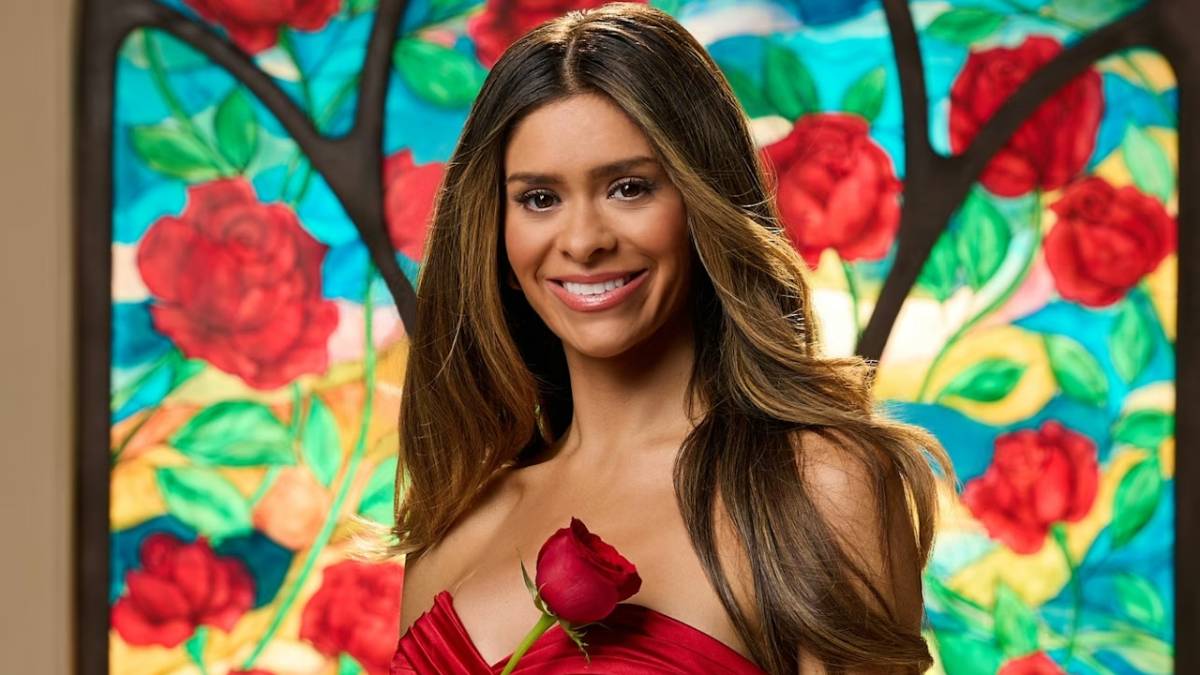
The most direct answer to why The Bachelorette was cancelled is this: TMZ published a video in March 2026 appearing to show Taylor Frankie Paul physically attacking her ex-partner in a 2023 incident, and ABC pulled the season within days.
Paul was already a known name before she ever walked into a Bachelorette casting room. She built her audience on The Secret Lives of Mormon Wives, a reality show that leaned hard into her personal life, her relationships, and the kinds of messy, public disclosures that make for great content and terrible franchise optics. ABC cast her anyway.
When the video dropped, it did not come out of nowhere. The incident itself was from 2023. A domestic violence investigation was either active or completed before the season ever finished filming. The speed of ABC’s cancellation raises an uncomfortable question that nobody in the official reporting has fully answered: what did the network know, and when did they know it?
People and NPR both confirmed the cancellation and its stated cause. The stated cause was the video and the surrounding circumstances. What the stated cause doesn’t explain is why no delay, recast, or edit solution was even attempted.
2. Disney Pulled the Plug, Not Just ABC
This detail gets buried in most coverage, and it shouldn’t. The cancellation statement came from Disney Entertainment, the corporate parent, not from ABC’s programming division acting on its own.
That distinction matters enormously. When a network’s programming team cancels a show, that’s a ratings and scheduling conversation. When Disney Entertainment makes the call at the corporate level, it’s a brand governance conversation. Those are two very different kinds of decisions.
Post-2020, Disney has made a visible and documented effort to manage all of its portfolio brands against advertiser safety and family-alignment standards. A reality TV franchise headlined by someone under a domestic violence investigation is not a manageable risk for a company that also runs Disney+, ESPN, ABC News, and a theme park empire. The liability calculus isn’t just about one season of one show. It’s about what that show being on the air says about every other property under the same umbrella.
Yahoo Entertainment and Northeastern University-sourced coverage both noted the Disney Entertainment-level announcement. Most articles filed it as a minor detail. It’s actually the clearest signal of why the cancellation was total rather than partial.
3. The Season Had Already Filmed, Making Cancellation More Deliberate
ABC didn’t cancel a show before it filmed. They cancelled a show AFTER it filmed. That changes the math completely.
Reality TV seasons typically run between three and six million dollars in production costs, depending on scale, location shoots, and talent. Season 22 was done. The footage existed. The episodes were likely edited. Airing the season would have cost ABC almost nothing beyond distribution. Cancelling it meant writing off everything already spent with zero recovery.
Networks do not do that unless the alternative is worse. The alternative ABC was weighing was airing a domestic violence controversy on a Disney-owned broadcast network while advertisers watched and competitors circled. The sunk cost of production was the smaller number in that equation.
This is what makes the cancellation structurally different from a show getting pulled before cameras roll. This was a deliberate, expensive decision made with full knowledge of what it cost. That tells you exactly how serious the reputational exposure felt to the people making the call.
4. Casting Judgment Had Already Been Under Scrutiny
By the time Taylor Frankie Paul was announced as the Season 22 lead, the franchise had already burned through multiple cycles of public criticism about who it was putting on screen and why.
Paul was not an unknown quantity. Her personal life had been publicly documented through The Secret Lives of Mormon Wives. Her relationship difficulties, including her highly publicized “softswinging” disclosure that blew up her marriage in that show’s first season, were already part of her public record before ABC cast her. The casting decision was not made in an information vacuum.
The Reddit threads that surfaced after the cancellation are full of fans pointing out that warning signs were visible before filming even started. The speed with which ABC cancelled, rather than defending the casting decision, is its own implicit acknowledgment that the vetting process had failed.
This isn’t about judging Paul’s personal life. It’s about a pattern of the franchise prioritizing casting appeal over due diligence, and then absorbing the consequences when that approach collides with a real-world situation the network can’t edit away.
SPECULATIVE AND ANALYTICAL REASONS
The following eight reasons are analytical and speculative. They are based on documented trends, reported patterns, and observable data, but they have not been confirmed as direct causes of this specific cancellation. They represent the structural context that made this cancellation possible and, arguably, overdue.
5. Ratings Had Been Declining for Years Before This
Here is the context the SERP almost entirely ignores: The Bachelorette was not a ratings powerhouse walking into Season 22. It was a franchise in a documented, multi-season ratings decline.
Linear viewership for the Bachelor franchise broadly peaked somewhere in the mid-2010s, when seasons regularly drew eight to ten million viewers per episode. Recent seasons have been pulling a fraction of those numbers. Trade reporting on the franchise’s performance in the 2023 and 2024 cycles reflects an audience that has been quietly shrinking season over season.
The video was the match. But you don’t burn down a forest with a single match unless there’s kindling already on the ground. The ratings decline was the kindling.
6. Netflix Has Eaten the Franchise’s Core Audience
Love Is Blind, The Ultimatum, Too Hot to Handle, Perfect Match. Netflix has spent the last five years methodically building a reality TV library that does what The Bachelorette does, but faster, more binge-able, and without a weekly appointment viewing requirement.
The audience that The Bachelorette built its ratings on in the 2010s was largely a 25 to 40 year old demographic that has now migrated heavily to streaming. They’re still watching reality TV. They’re watching it on Netflix, on a Friday night, all at once, while The Bachelorette asks them to remember to tune in to ABC on a Monday.
The weekly episode model was a cultural institution when there were four major networks and no streaming alternatives. In 2026, it’s a structural format problem. The show isn’t competing with other broadcast reality TV. It’s competing with an entire platform that has made relationship reality TV its calling card.
7. Controversy Has Burned Through Audience Goodwill
A franchise can survive individual controversies. What it cannot easily survive is a long string of them that each take a bite out of the audience’s willingness to keep showing up.
The Bachelor franchise’s documented controversy timeline is extensive. The Chris Harrison departure in 2021, following his comments defending a contestant’s racially insensitive photos, was a watershed moment. It cost the show its longtime host, generated months of negative coverage, and triggered a public reckoning about the franchise’s casting history and racial representation.
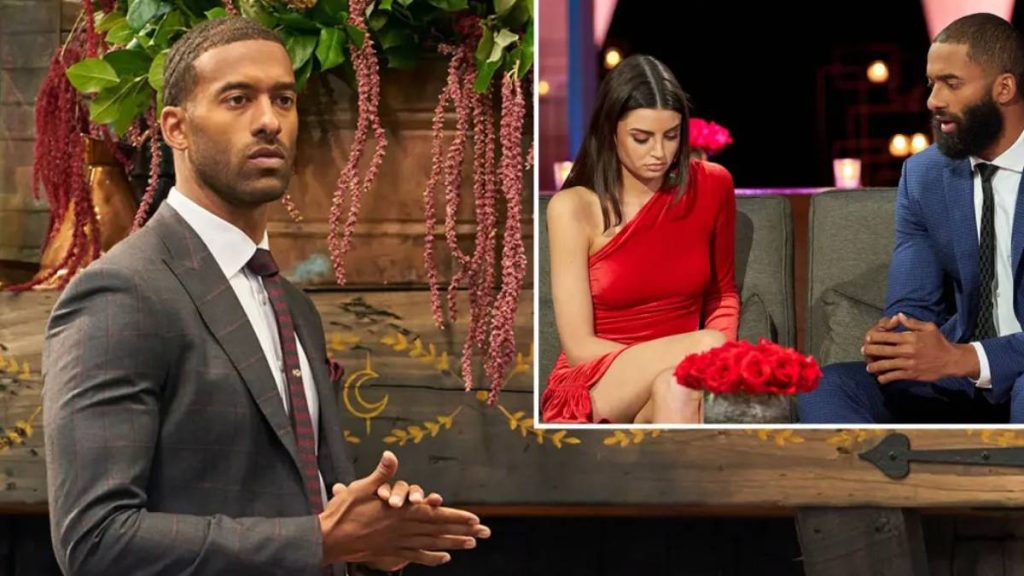
The Matt James season generated a separate set of controversies involving a contestant’s past behavior. None of these individually ended the franchise. Together, they represent a sustained erosion of goodwill among viewers who were already only casually committed.
8. Advertiser Sensitivity to Domestic Violence Is at a Historic High
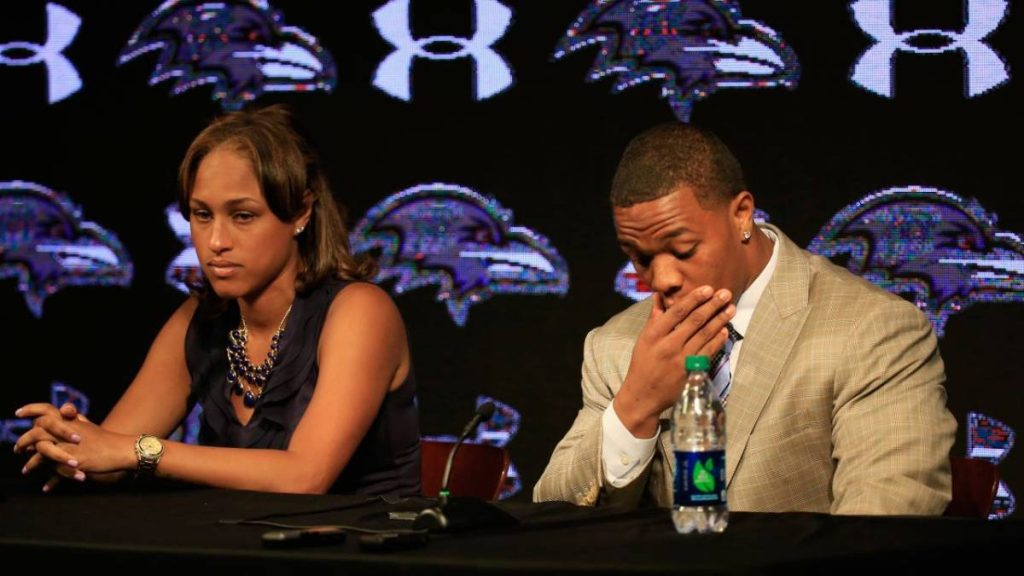
The 2014 Ray Rice NFL controversy did something permanent to how advertisers think about domestic violence associations. Before the Ray Rice video surfaced and the NFL’s initial response became its own separate scandal, brands had relatively loose protocols around pulling spend from content connected to domestic violence situations. After it, those protocols became formalized, public, and faster.
For ABC, the question of airing Season 22 was not just an audience question. It was an advertiser question. A primetime broadcast season sells advertising in advance, with those commitments contingent on brand safety. A lead under a domestic violence investigation is a brand safety red flag of the highest order for most major consumer advertisers in 2026.
The private conversations between ABC’s ad sales team and its major sponsors after the TMZ video dropped are not public record. The pattern of advertiser behavior in analogous situations is. Brands that had committed to Season 22 ad buys would have been making calls, and those calls would have been part of the calculation ABC was running when it decided cancellation was preferable to airing.
9. The Franchise Has No Clear Plan for Life After Linear TV
Survivor has reinvented its format multiple times. Real Housewives has fragmented into over a dozen city-specific franchises, each with its own audience. The Bachelor and The Bachelorette are structurally almost identical to what they were when they launched in the early 2000s.
The Hulu deal exists as a streaming home for ABC content. But a streaming home is not the same as a streaming strategy. Putting a broadcast-format show on Hulu doesn’t solve the appointment viewing problem or the binge-format competition problem. It just moves the same show to a different screen.
The franchise has not publicly announced a format reinvention, a streaming-native spin-off strategy, or a clear roadmap for how it competes in a media environment that has moved decisively away from its original model.
10. Casting Social Media Personalities Raises the Risk Profile
There was a time when The Bachelorette lead was discovered through casting calls, largely unknown to the general public, and built her public profile through the show itself. That model is gone.
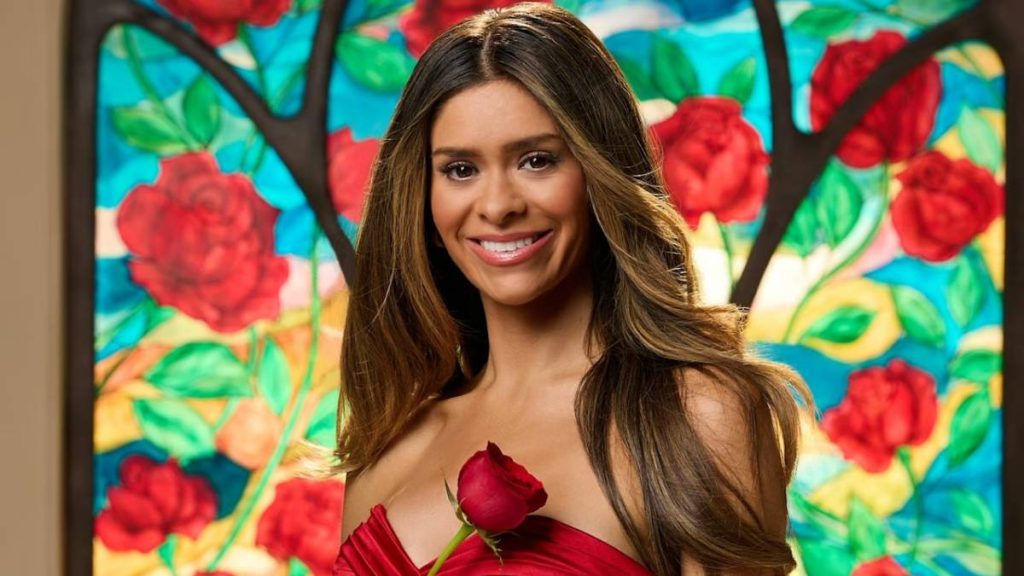
Taylor Frankie Paul had over a million followers and a documented public history before she was ever announced as the Season 22 lead. Casting her was a reach play. Her existing audience would bring built-in viewers and social media momentum. The trade-off is that a lead with an existing public record also comes with existing public baggage, documented personal history that the show cannot control, edit, or contain.
This is a structural casting shift across the entire franchise, not a one-time error. Each casting decision of that type carries more upside reach and more downside risk than the unknown-person model. Season 22 is the most visible case study in what the downside looks like.
11. ABC Has Competing Programming Priorities
Every primetime slot on ABC has an opportunity cost. Running a controversial season of a declining franchise means defending that controversy in press, managing advertiser anxiety, and absorbing the negative coverage, all while that slot could be running something cleaner that demands less institutional energy.
Networks do not make programming decisions in isolation from their overall slate. A programming team managing multiple properties simultaneously does not have unlimited capacity to run a crisis communications operation around one show.
When a show is in a multi-season ratings decline and its primary value is increasingly uncertain, the cost of controversy management becomes harder to justify against other uses of the same resources.
12. Audiences Lost During a Cancelled Season Are Hard to Win Back
This is the long-game concern that nobody in the immediate cancellation coverage is talking about, and it may be the most structurally significant issue of all.
Reality TV audiences are not loyal to franchises the way scripted drama audiences are loyal to characters and storylines. They’re loyal to seasons, to specific casts, and to the cultural conversation that forms around a current cycle. Once that cycle breaks, casual viewers find other content and build new viewing habits.
The cancellation of Season 22 means there will be no Bachelorette season cycle in 2026. Some of those viewers will return if the next season is genuinely compelling. A portion of them will have moved on to Netflix reality content that filled the gap. In 2026, a gap year for The Bachelorette is a more serious structural risk than it would have been even in 2020.

So Is The Bachelorette Actually Cancelled Forever?
The confirmed answer is narrow: Season 22 is cancelled. The franchise is not formally ended.
As of current reporting, ABC and Disney Entertainment have not announced that The Bachelorette is permanently retired. They have also not announced a Season 23 pickup. That silence is notable, but it is not the same as a formal cancellation of the franchise itself.
What this cancellation actually represents is the most significant structural stress test the franchise has faced since the Chris Harrison departure in 2021. That moment forced the show to rebuild around new hosts and a new tone. It survived, but the ratings trajectory after that rebuild was not a recovery story. It was a continuation of the decline.
Season 22’s cancellation is a harder situation than Chris Harrison, because this time ABC walked away from finished, paid-for content. That level of response suggests the network has reached a point where the franchise’s value does not automatically justify the costs of its controversies anymore. Whether a Season 23 happens depends on whether ABC can identify a lead, a format, and a cultural moment that gives the show a genuine argument for its own relevance.
That is not impossible. But it is a much harder problem to solve in 2026 than it would have been in 2016.
FAQ
Why did ABC cancel The Bachelorette Season 22 specifically?
ABC cancelled Season 22 three days before its March 23, 2026 premiere after TMZ published a video appearing to show lead Taylor Frankie Paul physically attacking her ex-partner in a 2023 incident. The cancellation statement came from Disney Entertainment at the corporate level. ABC did not attempt to delay, recast, or edit around the situation. The decision was framed around the domestic violence allegations and the surrounding investigation. Season 22 had already completed filming before the cancellation was announced, meaning ABC absorbed full production costs rather than recover any investment.
Is The Bachelorette cancelled permanently or just for one season?
As of current reporting, only Season 22 is confirmed cancelled. ABC and Disney Entertainment have not made a formal announcement ending the franchise entirely. There is no confirmed Season 23 pickup either, which leaves the franchise in an unresolved state. The cancellation is the most serious structural event the show has faced since the Chris Harrison controversy in 2021. Whether the franchise continues depends on ABC’s decision about whether to invest in another season given the current ratings trajectory, advertiser climate, and audience trust situation.
Who is Taylor Frankie Paul and why was she chosen as the lead?
Taylor Frankie Paul is a social media personality who gained significant public attention through The Secret Lives of Mormon Wives, a reality show that documented her personal life, her marriage, and her highly publicized relationship disclosures. She had an established following and built-in social media reach before ABC cast her. The casting followed a broader franchise trend of selecting leads who are already minor public figures rather than relative unknowns. That approach generates pre-season buzz but also means the lead arrives with a documented public record that the show cannot control.
Why didn’t ABC just replace the lead or delay the season?
Replacing the lead means reshooting an entire season of footage around a new person, which is effectively producing a new season. Delaying means the controversy stays in the news while the season sits on a shelf. Neither option resolves the core problem, which was a Disney-owned broadcast network being associated with an active domestic violence investigation. The cleanest way to remove the association was to remove the season entirely. The cost of cancellation was apparently lower than the cost of continued exposure.
Did ratings problems contribute to this cancellation?
This is speculative but analytically well-supported. The Bachelorette had been in a documented multi-season ratings decline before Season 22 was ever announced. A show drawing strong ratings and delivering clear advertiser value has much more institutional protection when a controversy lands. Networks absorb controversy costs when the math still works. A franchise already trending downward has a thinner margin for error. The Taylor Frankie Paul video was the triggering event, but a healthier show with stronger ratings would likely have gotten a different response from the network.
Will The Bachelorette move to Hulu instead of ABC?
No confirmed announcement has been made about The Bachelorette moving to a Hulu-only format. ABC content does stream on Hulu as part of the Disney-Hulu deal, but that arrangement is a distribution channel, not a new format strategy. Moving a broadcast-format show to streaming doesn’t resolve the core competitive challenges the franchise faces from Netflix reality content. A genuine streaming pivot would require format changes, not just a platform change. Nothing in current reporting suggests that kind of reinvention is in active development.
Has The Bachelorette ever been cancelled before Season 22?
No previous season of The Bachelorette had been cancelled after filming was completed before Season 22. The show has had seasons with significant controversies, casting problems, and format changes, but none resulted in a post-production cancellation. The closest structural parallel was the Chris Harrison departure in 2021, which forced a host transition and generated sustained negative coverage. That situation was resolved with new hosts and a continued schedule. Season 22’s cancellation is structurally different because ABC chose to walk away from finished, paid-for content rather than manage the controversy through the air date.

The single most important thing this story tells you is not that one video ended a season. It’s that ABC’s response to that video tells you exactly how the network privately assessed the franchise’s health before the video ever surfaced. You don’t absorb multi-million dollar sunk costs and cancel a finished season of a beloved, profitable show. You do that when the show is already in a place where the math of defending it no longer clears the bar.
If you want to understand whether The Bachelorette survives this, watch what ABC does in the next six months, not what they say. A real Season 23 commitment means the network believes the franchise is worth rebuilding around. Continued silence means the cancellation of Season 22 is functioning as a quiet exit rather than a dramatic pause.
The franchise has survived worse moments than this on paper. What it has never faced is a worse moment arriving on top of an already-weakened structural foundation. That combination is what makes Season 22’s story genuinely different from everything that came before it.