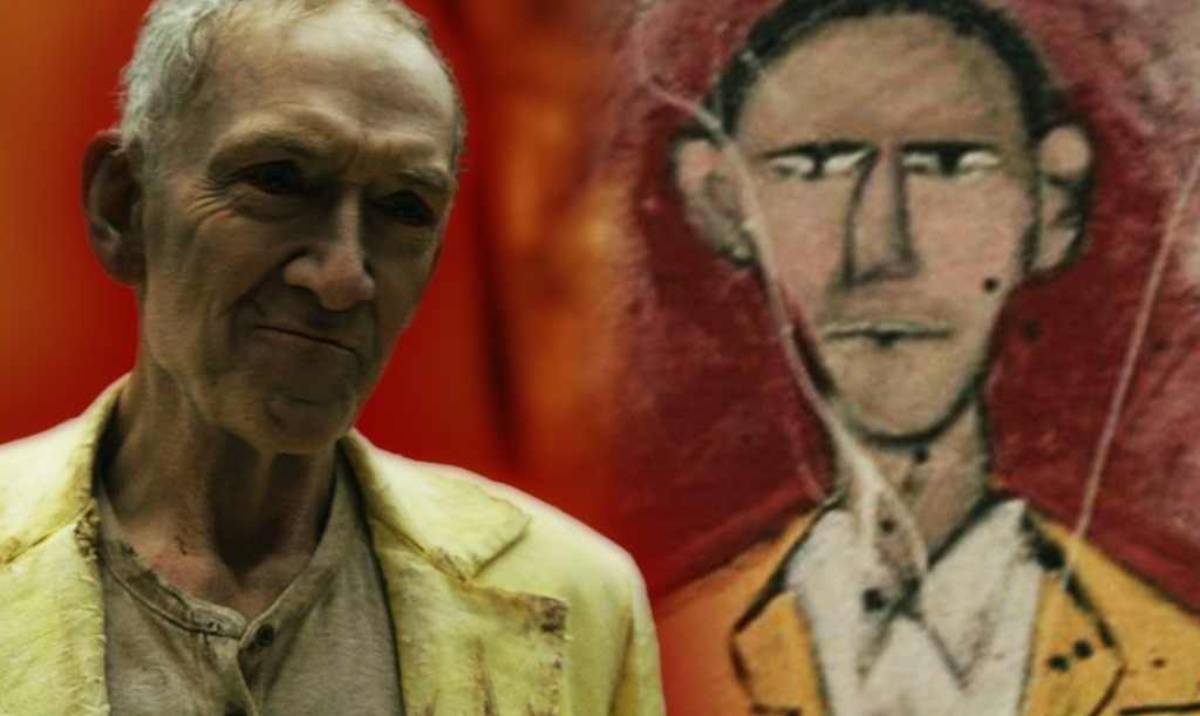
What Season 4 Episode 1 Just Confirmed About the Man in Yellow
The one confirmed fact is this: the Man in Yellow can shapeshift, and he chose Sophia as his form.
That choice is not random. Sophia is a character with existing relationships inside the Town. Showing up as her is not a power display for an outsider. It is a manipulation tool calibrated for an insider audience, which tells you something about how the Man in Yellow operates. He does not announce himself. He infiltrates.
What the Sophia reveal does NOT confirm is almost as important as what it does confirm. His origin is still unknown. His motivation is still unknown. Whether his yellow-suited appearance is his actual form or just another costume is still unknown. He could be singular or plural. The “Man in Yellow” may not even be one entity.
Here is the direct answer embedded for anyone who needs it before going further: the Man in Yellow is a confirmed shapeshifting entity of unknown origin who has been operating in or around the Township since at least the Season 3 finale. His relationship to the Boy in White, to Anghkooey, and to the monsters’ immortality pact remains completely unconfirmed as of Season 4 Episode 1.
The Sophia appearance does one more important thing. It establishes that whatever form he takes, he has access to the identities of people connected to the Town. That is a significant capability, and it maps onto specific theories below in ways that either support or complicate them.
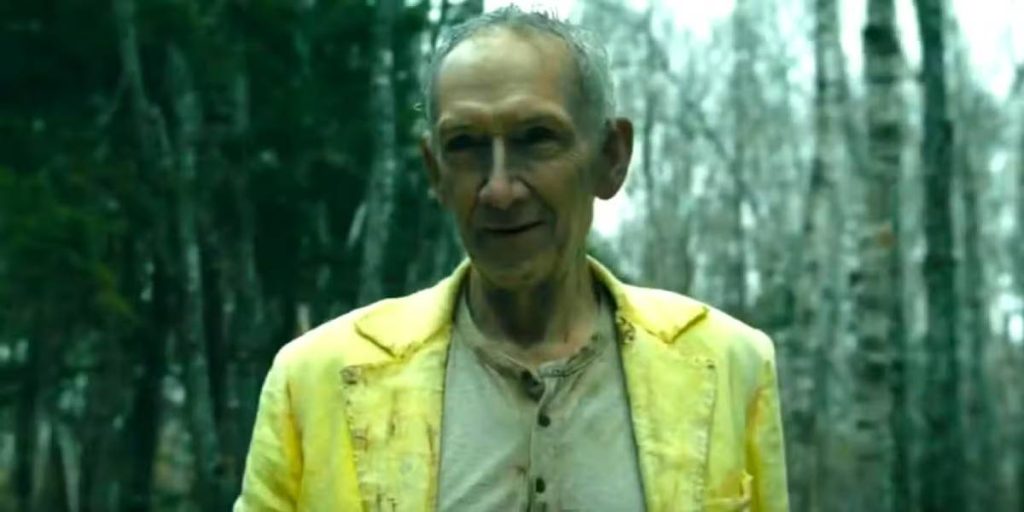
Theory 1: The Man in Yellow Is a Former Lighthouse Keeper
The lighthouse has been central to FROM’s mythology since Season 1, and the strongest version of this theory argues the Man in Yellow was once its human caretaker.
Under this theory, whoever kept the lighthouse before the current trapped residents arrived either made a deal with the Town’s underlying entity or was gradually transformed by prolonged exposure to whatever supernatural force the lighthouse channels. That history would explain his insider knowledge of the Township’s geography, his access to spaces that should be inaccessible, and the period-appropriate look of his yellow suit, which reads as clothing from several decades back rather than something contemporary.
Why Fans Believe It
- The Man in Yellow appeared at or near the lighthouse specifically during the Season 3 finale. That is not a neutral location choice for a show that has spent three seasons making the lighthouse feel significant.
- His clothing suggests he predates the current group of trapped residents, which aligns with a “long-time caretaker” origin.
- The lighthouse in FROM is associated with signals, with communication between the Township and whatever lies beyond it. A former keeper would have intimate knowledge of that system.
What Argues Against It
The shapeshifter confirmation from Season 4 is the biggest problem for this theory in its pure form. A human caretaker who made a deal or got transformed does not easily explain the ability to take on the appearance of Sophia with apparent precision. The shapeshifting ability implies something with a much deeper supernatural architecture than a corrupted human.
The lighthouse connection may also be geographic coincidence. The Season 3 finale staged a lot of significant events in a concentrated area. His appearance there may say more about narrative staging than biographical origin.
Credibility after the shapeshifter filter: Low-to-medium. The lighthouse detail is still worth noting, but the human caretaker origin is now the weakest part of this theory.
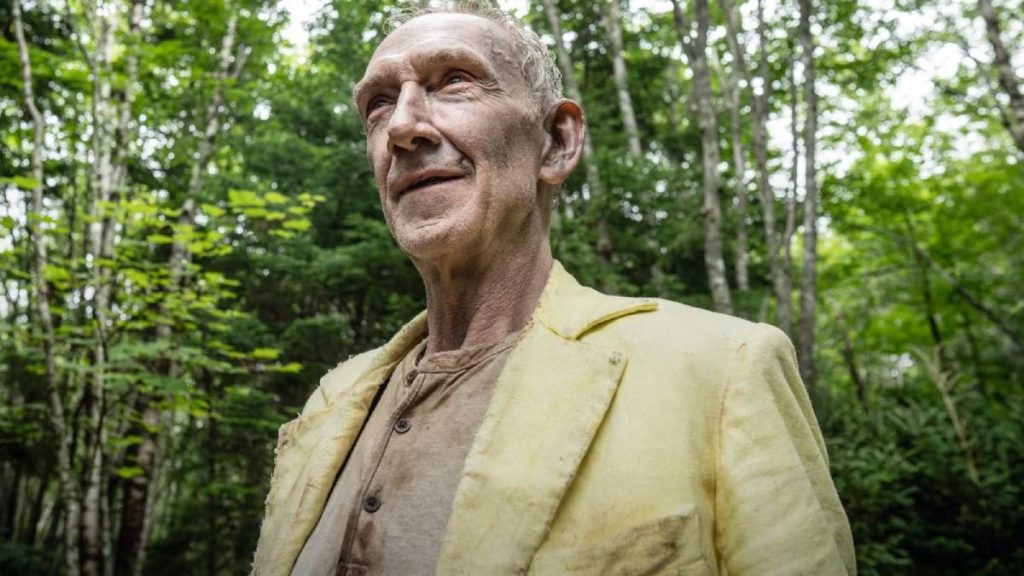
Theory 2: The Man in Yellow Is Hastur, The King in Yellow
This theory has the strongest literary foundation of any on this list, and the Season 4 confirmation does not break it.
The King in Yellow is an 1895 horror collection by Robert W. Chambers. The central entity in those stories, Hastur, is associated with a mysterious yellow sign, with madness, and with places that operate by rules incomprehensible to ordinary humans. Places from which there is no return. Chambers’ work predates Lovecraft but influenced him directly, and FROM’s showrunners have cited cosmic horror as a genre touchstone for the series.
Why Fans Believe It
The visual overlap is too specific to dismiss as coincidence. Yellow as a signature color for a supernatural figure. An entity that cannot be fully seen or named. A location that traps people inside its own logic. All of these are Chambers hallmarks, and FROM deploys all of them.
The Man in Yellow’s communication style also matches Hastur’s literary function. He does not explain. He does not offer deals out loud. He appears, he acts, and he leaves. Every interaction deepens confusion rather than resolving it, which is precisely how Hastur works in Chambers’ stories. He is not a villain who monologues. He is a presence that simply IS, and your proximity to him determines whether you survive.
What Argues Against It
FROM is an original IP. The creative team may be using Chambers’ aesthetic as inspiration without adopting his mythology directly. Shapeshifting is not a core Hastur attribute in the source material, though FROM has never claimed to be a faithful adaptation of anything.
The counterargument to the counterargument: FROM regularly takes horror influences and reinterprets them. The monsters in the Town do not map neatly onto any single source either. Using Chambers as a framework rather than a blueprint is entirely consistent with how this show operates.
Credibility after the shapeshifter filter: High. Shapeshifting does not contradict Hastur mythology, and an ancient cosmic entity adopting human forms is actually MORE consistent with Chambers than a fixed appearance would be.
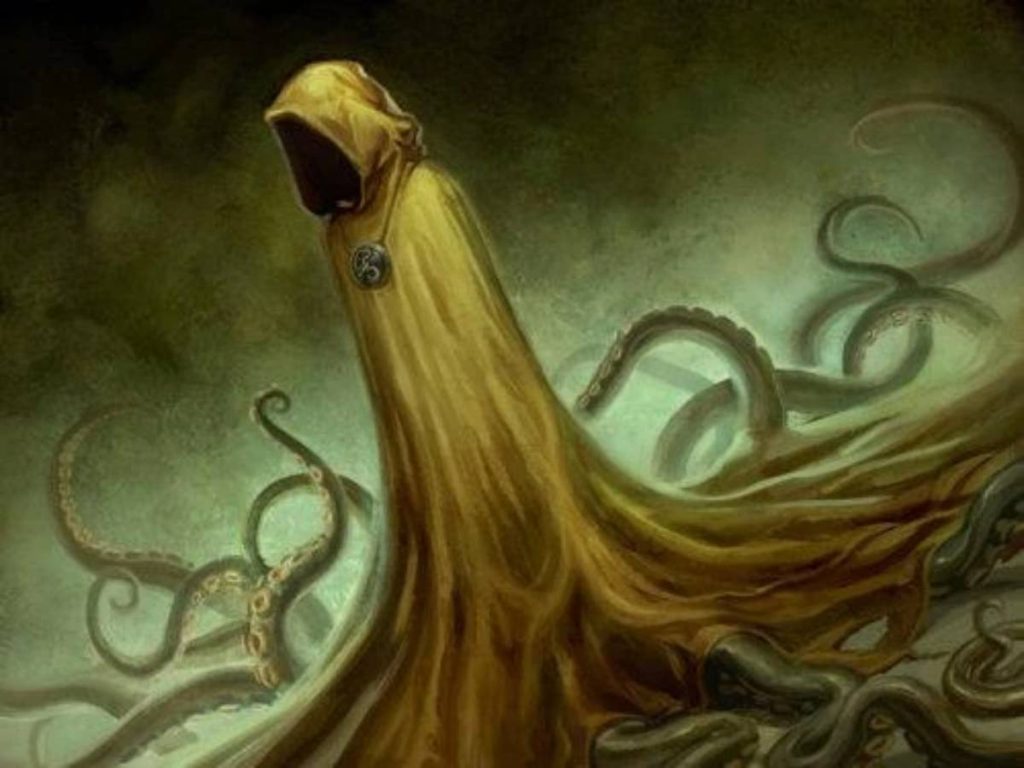
Theory 3: Randall Will Become the Man in Yellow
This theory is the most dramatic on the list and the one most directly challenged by the Season 4 reveal.
Randall (played by A.J. Simmons) has been one of FROM’s most deliberately destabilized characters. The Music Box Monster’s possession of him in Season 2 was not a throwaway arc. It has been building, slowly and deliberately, across multiple seasons. The theory argues Randall is not simply being used by whatever entity controls the Township. He is being shaped by it, transformed into something new. The endpoint of that transformation, according to this theory, is the Man in Yellow himself.
Why Fans Believe It
- Randall’s possession arc is one of the most carefully paced storylines in the show. FROM does not spend this much time on a character transformation without a significant payoff in mind.
- He demonstrates access to knowledge he should not have, which is a pattern associated with the Man in Yellow’s apparent omniscience about Township affairs.
- The music box’s connection to the wider supernatural system suggests Randall is plugged into something bigger than a simple haunting.
What Argues Against It
Here is where the Season 4 confirmation lands hardest on this theory. The Man in Yellow appeared as Sophia with apparent ease and precision. If he were simply a transformed Randall wearing a different face, the shapeshifting ability would require a level of supernatural power that does not fit a “possessed human” origin. Randall being a vessel or an avatar for the same entity is still possible. Randall literally becoming the Man in Yellow is now very hard to sustain.
The modified version of this theory, where Randall is being used as a conduit or a physical anchor for the entity in this timeline, is actually more interesting than the original formulation and survives the shapeshifter filter better.
Credibility after the shapeshifter filter: Low in its original form. Medium if modified to “Randall as vessel.”
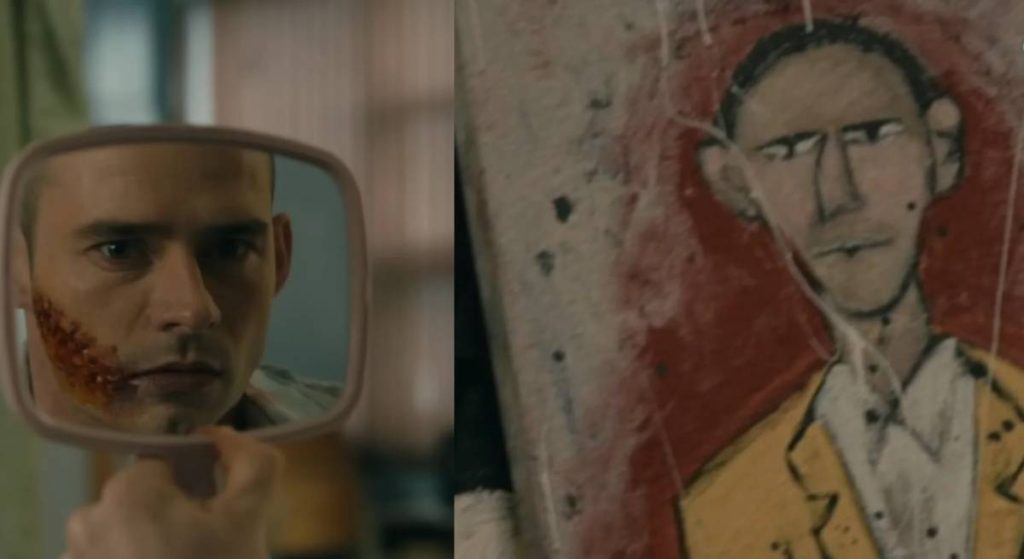
Theory 4: The Man in Yellow Is the Boy in White’s Dark Opposite
This is the theory with the most narrative elegance, and the one that best explains why Jim specifically had to die.
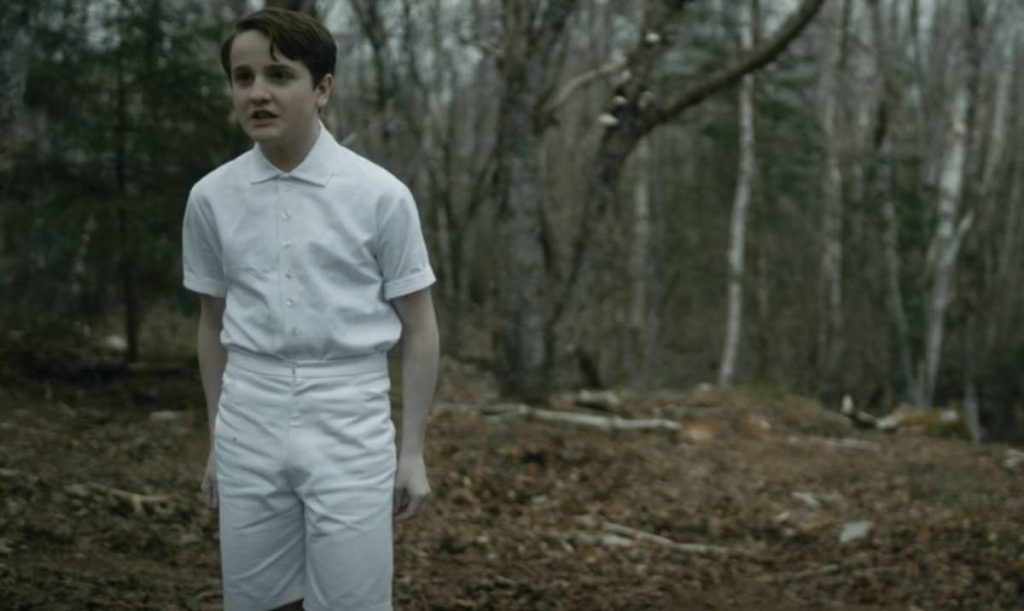
The Boy in White functions in FROM as a cryptic but apparently benevolent presence. He appears to characters like Ethan. He steers people away from danger. He operates in the same supernatural register as the Man in Yellow but with opposite effect. The theory holds that the Township exists as a contested space between two ancient forces, and the trapped residents are caught in the middle of something they do not have the framework to understand.
The Symmetry Case
The visual language of the show makes this case almost on its own. White and yellow are not accidental costume choices on a show this carefully designed. The Boy in White’s appearances consistently precede moments of possible escape or hope. The Man in Yellow’s appearances, including the Jim killing, follow moments where characters get dangerously close to understanding how the Township actually works.
Jim was close. He was asking the right questions, making the right connections, and pulling threads that the Town’s system apparently cannot afford to have pulled. The Man in Yellow did not kill Jim because Jim was a threat in a physical sense. He killed Jim because Jim was a threat in an informational sense. That is a specific kind of killing, and it fits the Man in Yellow’s function as a system enforcer perfectly.
What Argues Against It
The show has never confirmed these two figures are aware of each other or operate on the same metaphysical tier. Stacking two unconfirmed mystery figures against each other as a deliberate binary is speculative even by fan theory standards. The Boy in White’s origins are just as murky as the Man in Yellow’s, so treating their relationship as a known dynamic involves two layers of assumption.
The shapeshifter confirmation does not hurt this theory. An entity defined by opposition to a pure, fixed presence like the Boy in White would logically be characterized by instability, by the ability to take on false appearances. That actually fits.
Credibility after the shapeshifter filter: High. This theory gains coherence from the shapeshifter reveal rather than losing it.
Theory 5: The Man in Yellow Is the Original Entity Who Created the Monster Pact
This theory positions the Man in Yellow not as a character inside the story but as the author of the story itself, and it is the one most consistent with everything the show has shown us.
The creatures in the Township, the ones that come out at night and cannot be killed by conventional means, were granted immortality through some kind of original agreement or pact. Anghkooey, the supernatural force that underlies the Town’s rules, is connected to this history. This theory argues that the Man in Yellow is not a visitor or a product of the Township. He is its architect. He made the deal that created the monsters. He set the rules about talismans. He has been maintaining the system ever since. His appearance in the Season 3 finale is not an introduction. It is an inspection.
Why Fans Believe It
His authority over the Town feels systemic, not incidental. He killed Jim without consequence or resistance from any other force in the Township. No monster intervened. No supernatural barrier stopped him. He operated with the ease of someone who owns the space.
The Reddit community on r/FromSeries has consistently described him in terms that match this theory, with the most upvoted characterization being something close to “the demon who made the original pact with the villagers.” His yellow suit and formal appearance support this reading. He looks like a host, not a guest. Someone who considers the Town to be HIS arrangement.
What the Shapeshifter Reveal Adds
The shapeshifting ability creates one interesting complication for this theory. If he is the all-powerful architect of the system, why bother adopting the form of Sophia? Why manipulate when you can simply act?
The most satisfying answer is that the pact itself may require consent or proximity. An entity who created a system based on a deal may be bound by deal-like logic, meaning he cannot simply force compliance. He has to appear, to approach, to gain access through relationships rather than through raw power. Shapeshifting is not a sign of weakness. It is a sign that the rules apply to him too.
Credibility after the shapeshifter filter: Very high. The shapeshifter reveal actually strengthens this theory rather than complicating it, once you apply the “bound by his own pact” logic.
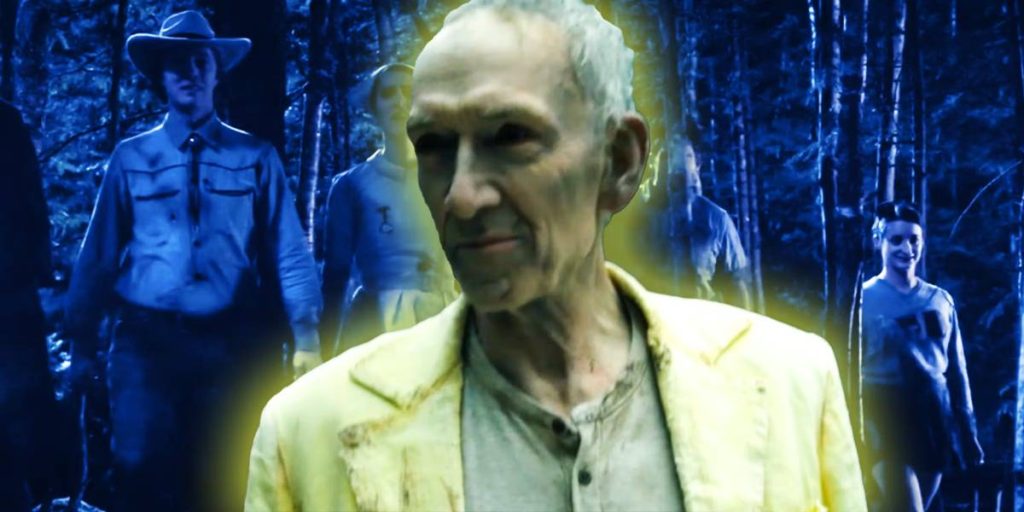
Which Theories Survive the Shapeshifter Reveal: A Ranked Assessment
Now that we have walked through all five, here is the full ranking with the shapeshifter confirmation applied as a filter.
Tier 1: Still Standing Strong
Theory 5 (Original pact-maker) and Theory 4 (Boy in White’s antithesis) both survive and arguably improve. The pact-maker theory gains coherence because the shapeshifting ability maps onto deal-based supernatural logic rather than contradicting it. The antithesis theory gains coherence because an entity defined by opposition to the Boy in White’s fixed purity would logically be characterized by false appearances.
Tier 2: Compatible but Speculative
Theory 2 (Hastur/King in Yellow) remains strong as a framework, but it requires accepting that FROM is engaging with Chambers’ mythology rather than just his aesthetic. That distinction cannot be confirmed from available evidence. It is the most intellectually satisfying literary connection on this list. It may also be a coincidence of inspiration rather than a direct adaptation.
Tier 3: Needs Modification to Survive
Theory 3 (Randall transformation) does not survive in its original form. The version where Randall is a vessel or conduit for the same entity that appears as the Man in Yellow is still plausible and interesting. The version where Randall literally becomes the Man in Yellow is now very difficult to defend after the Sophia shapeshifting scene.
Tier 4: Probably Retire This One
Theory 1 (Lighthouse keeper) is the weakest survivor. The geographic connection to the lighthouse is real and worth noting. The human caretaker origin is the part that does not hold up. A possessed or corrupted former human does not easily generate the kind of shapeshifting ability and systemic authority the Man in Yellow displays.
The honest answer about why Jim died: the two strongest theories, Theories 4 and 5, both converge on the same explanation. Jim was getting close to understanding either the rules of the pact (Theory 5) or the relationship between the Township’s competing forces (Theory 4). The Man in Yellow’s response was consistent with an entity whose primary function is to maintain a system that depends on the trapped residents NOT understanding it. That is the most evidence-supported explanation available with current information.
FAQ
Who is the Man in Yellow in FROM and what is his connection to the monsters?
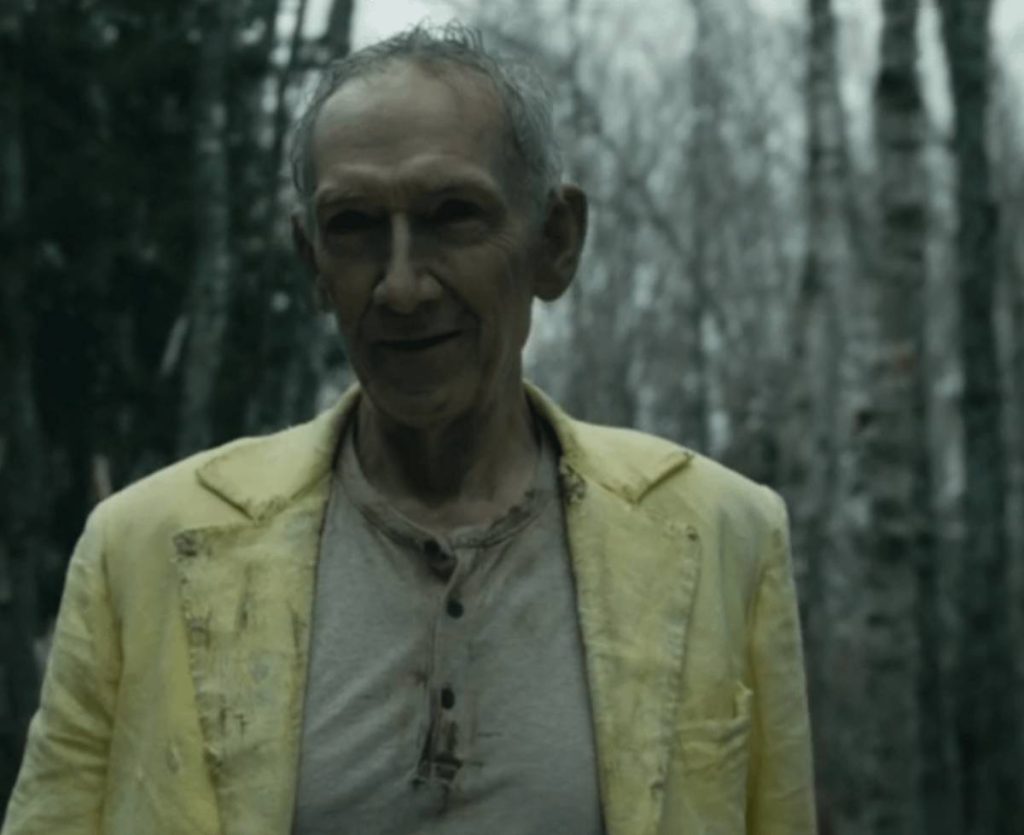
The Man in Yellow is a supernatural entity in the FROM universe played by Douglas E. Hughes. He first appeared in the Season 3 finale when he killed Jim Matthews without warning. His exact connection to the Township’s monsters is unconfirmed, but the leading theory holds that he is the original entity who granted the creatures their immortality through a pact, making him the architect of the Town’s supernatural system rather than just a participant in it. As of Season 4 Episode 1, no official explanation of his role has been provided.
Did Season 4 Episode 1 confirm who the Man in Yellow really is?
Season 4 Episode 1 confirmed that the Man in Yellow is a shapeshifter. He appeared in the form of Sophia, a character recognized by the Town’s residents. That is the only confirmed new information about him as of the most recently aired episode. His origin, motivation, relationship to the Boy in White, and connection to Anghkooey all remain officially unconfirmed. The shapeshifter reveal eliminates theories that require him to have a fixed human identity but does not confirm any specific origin theory.
Why did the Man in Yellow kill Jim in FROM?
The show offers no explicit in-universe explanation for Jim’s death. The two most supported theories both point to the same underlying logic: Jim was getting too close to understanding how the Township actually works. Under the antithesis theory, the Man in Yellow functions as a system enforcer who eliminates threats to the Town’s equilibrium. Under the original pact theory, Jim’s questions were threatening to expose the rules of an arrangement that depends on ignorance to function. Either way, the killing reads as intentional and targeted rather than random.
Is the Man in Yellow the same entity as the Boy in White in FROM?
The show has not confirmed a direct relationship between the two figures, but the antithesis theory argues they are opposite ends of the same supernatural spectrum. The Boy in White is associated with guidance, hope, and possible escape. The Man in Yellow is associated with enforcement, death, and containment. Their visual contrast, white versus yellow, appears deliberate given how carefully FROM uses color throughout its production design. They are probably not the same entity, but they may be operating within the same metaphysical system with opposing goals.
Is there a connection between the Man in Yellow and The King in Yellow by Robert W. Chambers?
The connection is strongly implied through visual and thematic overlap but has not been confirmed by FROM’s creative team. Robert W. Chambers’ 1895 horror collection introduced Hastur, an entity associated with yellow as a color of dread, with madness, and with inescapable places. FROM’s showrunners have cited cosmic horror as a genre influence. The Man in Yellow shares Hastur’s defining characteristics: yellow as signature color, communication that creates confusion rather than clarity, and an association with a location that operates by incomprehensible rules. Whether this is direct adaptation or shared inspiration is still an open question.
Can the Man in Yellow take the form of anyone connected to the Township?
Based on available evidence, yes. His appearance as Sophia in Season 4 Episode 1 suggests he can adopt the form of people with existing relationships inside the Town. He appeared as someone Sophia’s community would recognize and respond to, which implies his shapeshifting is calibrated to exploit specific relationships rather than being unlimited. Whether he has appeared in other forms in earlier seasons without viewers recognizing him as the Man in Yellow is a question fans have raised and the show has not yet answered.
Which Man in Yellow theory is most likely to be correct based on current evidence?
The original pact-maker theory is the most consistent with everything the show has confirmed. His systemic authority over the Township, his ability to kill without interference from any other supernatural force, his formal appearance suggesting a host rather than a visitor, and his shapeshifting ability which maps neatly onto deal-based supernatural logic all point toward an entity who created the rules rather than one operating within them. The Boy in White antithesis theory is a strong secondary framework that complements rather than contradicts the pact-maker reading.
The Theory That Holds Up Best
The pact-maker and the antithesis theories are not actually in competition. They describe different aspects of the same entity. If the Man in Yellow created the Township’s monster system through an original deal, then his opposition to the Boy in White is the RESULT of that creation. The Boy in White wants people to understand the system and escape. The Man in Yellow built a system designed to prevent exactly that. The shapeshifting ability, the Jim killing, the Sophia appearance in Season 4, all of it fits inside that combined framework without contradiction.
What Season 4 really did was narrow the field. The human origin theories, the lighthouse keeper, the literal Randall transformation, had their window and the shapeshifter confirmation closed it. What remains is something much older, much less human, and significantly more interesting to watch play out.
Watch who the Man in Yellow appears as next. If he keeps choosing people with emotional significance to the Town’s current residents, the pact-based shapeshifting logic holds. If he appears as someone from OUTSIDE the Township’s history, the theory landscape opens up again in a completely different direction. That is the tell to watch for in Season 4.