Is The Strangers Based on a True Story? The Short Answer
Partially. Bryan Bertino has confirmed the screenplay drew on the 1969 Manson Family murders and a real break-in scare from his own childhood. It is not a dramatization of one documented home invasion homicide, no matter what the opening title card implies.
That distinction matters because “inspired by” and “based on” get used interchangeably online, but they mean very different things. One means a filmmaker borrowed a feeling or a fragment. The other means the plot follows real events, and The Strangers is firmly the former.
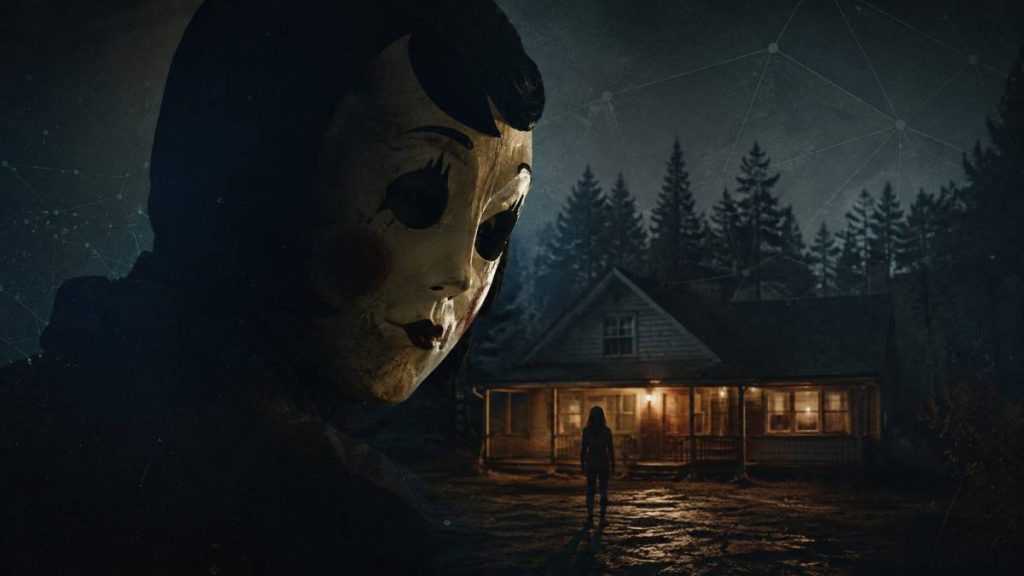
What Does the Opening Title Card Actually Mean?
The title card is a framing device, not a factual disclaimer. It tells the audience the events happened to James Hoyt and Kristen McKay on February 11, 2005, but neither of those people exist, and that date corresponds to no known crime.
This is the most misunderstood part of the entire “true story” claim, and it’s why so many viewers leave convinced they just watched a real case. The card borrows the language of true crime to make fiction feel closer to home, and it worked well enough that people are still Googling it years later.
The Real-Life Break-In That Inspired Bryan Bertino’s Childhood Fear
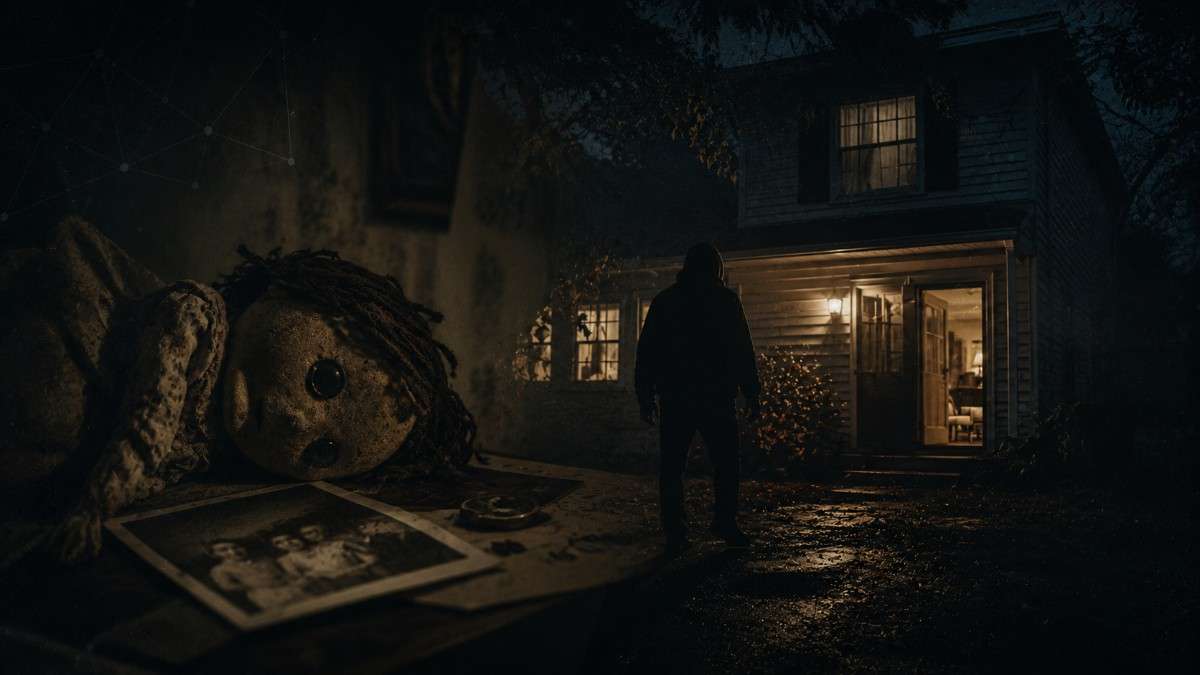
The most personal inspiration behind the film came from Bertino’s own childhood. As a kid home alone, someone knocked on his door and asked for a person who didn’t live there, and nothing violent followed.
This detail matters more to the “true story” claim than any specific murder case, because it’s the one piece Bertino has spoken about firsthand rather than something journalists connected after the fact. It’s also the germ of the film’s opening scene, where a knock at the door starts the entire nightmare.
Did the Manson Family Murders Inspire The Strangers?
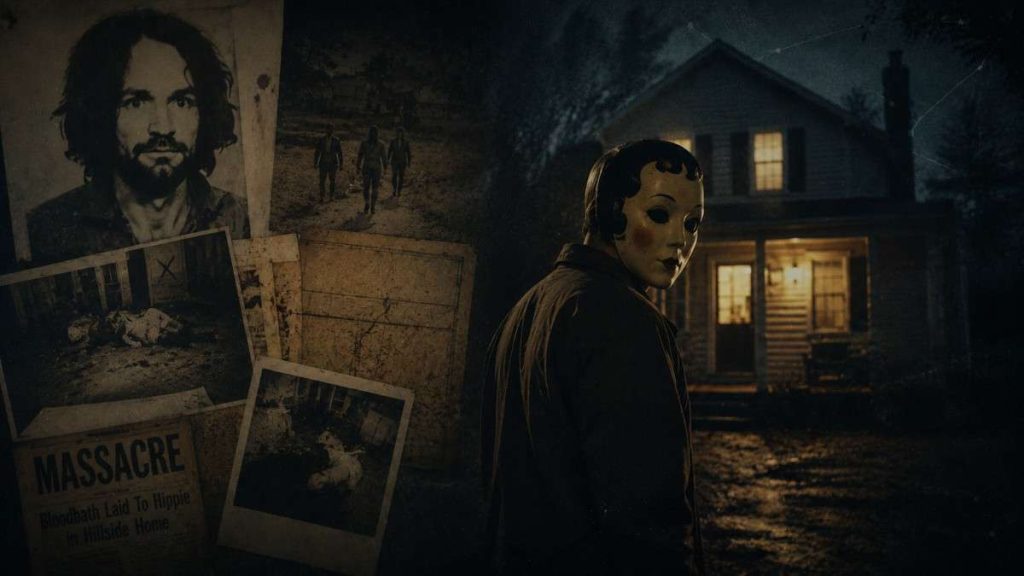
Yes. Bertino has directly credited the Tate-LaBianca murders, carried out by members of Charles Manson’s group between August 8 and 10, 1969, as a source of inspiration.
What Bertino borrowed wasn’t the specifics of the case but the psychological horror underneath it: strangers with no connection to their victims, no motive a person can reason with, destroying a home for no discernible reason. The masked trio never explains itself in any satisfying way, because that senselessness is the point, lifted straight from the unsettling core of the Manson case. If that kind of psychology behind real killers interests you, real killer documentary shows tackle the same question from a different angle.
Are the Keddie Cabin Murders Really Connected to The Strangers?
This is the one connection Bertino has not personally confirmed. The comparison came from journalists and true crime writers after the film’s release, not from the director himself.
The actual 1981 case involved four people killed overnight in a cabin in Keddie, California: Sue Sharp, John Sharp, Dana Wingate, and Tina Sharp. Sue’s surviving child discovered the scene, Tina’s remains weren’t found until three years later, and the case remains unsolved.
Most articles ranking for this topic present Keddie as a confirmed inspiration on the same level as Manson, and that’s not accurate. Bertino talking about a knock on his door and a filmmaker inspired by an unsolved quadruple homicide are not the same category of claim.
| Source | What Happened | Confirmed by Bertino? | Where It’s Documented |
|---|---|---|---|
| Bertino’s childhood incident | A stranger knocked asking for someone who didn’t live there | Yes | Bertino’s own account |
| Manson Family murders (1969) | Tate-LaBianca killings by members of Charles Manson’s group | Yes | Bertino’s own account |
| Keddie Cabin Murders (1981) | Four victims killed in a California cabin, case unsolved | No | Journalist-drawn comparison after release |
Strangers Movie True Story Claims, Fact-Checked
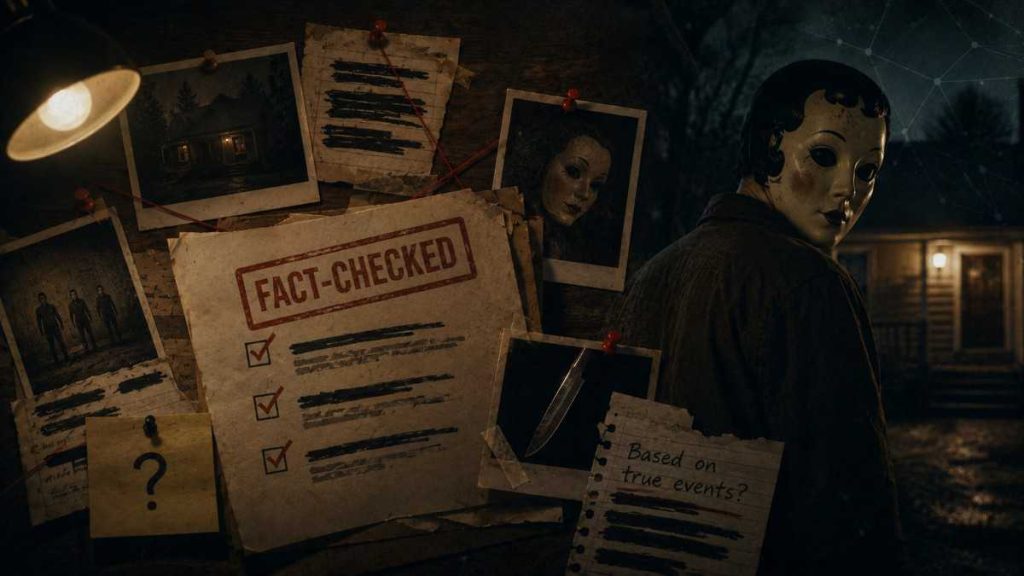
Run the film’s claims through three quick checks before taking them at face value. First, look for a direct statement from the director, not a summary someone else wrote about their intentions. Second, check whether names, dates, or locations in the film actually match a documented case rather than sounding vaguely similar. Third, figure out whether the connection came from the filmmaker or from journalists after the fact.
Apply that checklist here and The Strangers holds up: two confirmed sources, one speculative one, and a title card doing a lot of dramatic heavy lifting.
Who Are the Three Killers, and Are They Based on Real People?
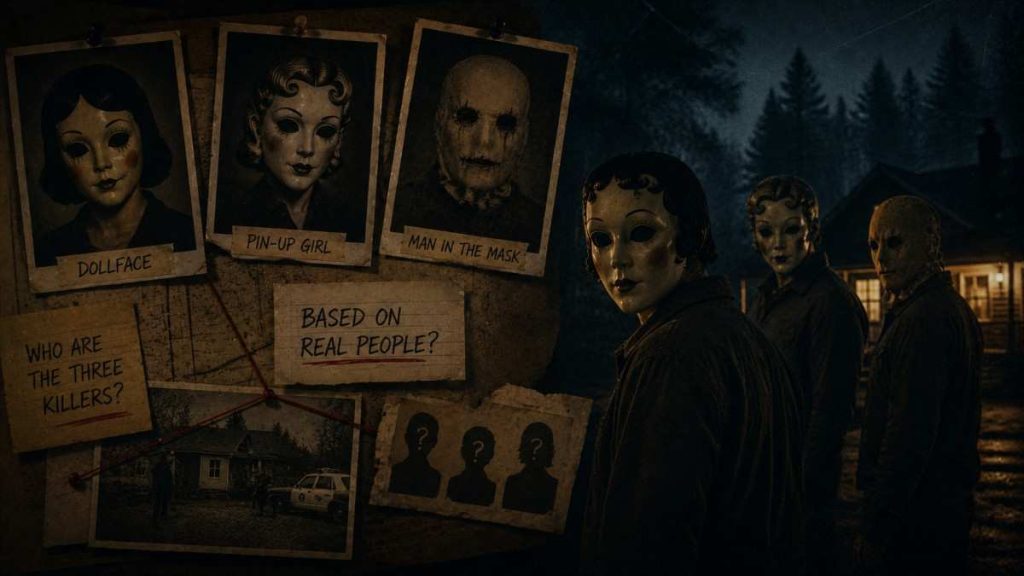
Spoiler note: this section covers plot details, including the ending. The three masked attackers are known as Dollface, Pin-Up Girl, and the Man in the Mask, and none of them are based on a real, named killer.
When the couple asks why they’re doing this, the answer given onscreen is simply “because you were home.” It’s not a motive in any traditional sense. It reinforces that the violence is random and opportunistic, looping back to the Manson-inspired theme of strangers with no rational reason to target their victims.
Is The Strangers: Chapter 1 Also Based on a True Story?
No new true crime source is involved. The Strangers: Chapter 1, released in 2024, continues the story using the same fictional Hoyt property and franchise mythology established in 2008, rather than dramatizing a new real case.
The franchise has grown into a planned trilogy, with additional chapters expanding the backstory of the masked killers rather than introducing anything resembling a real crime. That expansion is a storytelling choice, not a documented history lesson.
| Film | Year | Director | True Story Claim Status |
|---|---|---|---|
| The Strangers | 2008 | Bryan Bertino | Partially inspired by real events, not a direct dramatization |
| The Strangers: Prey at Night | 2018 | Johannes Roberts | Sequel, no new true crime claim |
| The Strangers: Chapter 1 | 2024 | Renny Harlin | Reboot/continuation, same fictional mythology, no new true crime claim |
“True story” claims in horror marketing almost always mean something narrower than they sound. The Strangers borrowed a feeling from Bertino’s own scare and a psychological theme from the Manson murders, then dressed it up with a title card implying far more documentation than exists. For more on the real, unsolved cases that occasionally get pulled into pop culture like this, a murder mystery shows list is a solid next stop.
FAQ
What did the killers say when asked why they picked that house?
One of the masked attackers tells the couple they were targeted simply “because you were home.” It’s the film’s only real answer to the motive question, deliberately unsatisfying, underlining that the attack was random and opportunistic rather than personal or planned.
Is Kristen McKay a real person?
No. Kristen McKay is a fictional character created for the 2008 film, along with James Hoyt. The opening title card presents them as real people this happened to, but no victims by those names exist in any documented case.
What inspired the 2024 Strangers reboot?
Chapter 1 draws on the same fictional mythology Bertino built for the original 2008 film rather than introducing a new true crime source. It expands the backstory of the masked killers within the existing Strangers universe.
Is The Strangers: Chapter 2 confirmed, and is it also based on a true story?
Chapter 2 has been publicly discussed as part of the planned trilogy, though a confirmed release date should be verified through current reporting. There is no indication it introduces a new true crime claim beyond what the franchise has already established.
What’s the difference between “inspired by true events” and “based on a true story”?
“Inspired by” typically means a filmmaker borrowed a feeling or fragment from something real, while “based on” implies the plot follows documented events closely. Studios often blur this distinction because the vaguer phrase sounds scarier while carrying less obligation to accuracy.
Why do so many people think The Strangers is a true story?
The confusion mostly comes from the opening title card’s confident, factual tone, combined with Bertino’s own comments about real inspirations. Once a movie states dates and names onscreen the way a documentary would, viewers reasonably assume there’s a specific case behind it.