
Where Is Jodi Arias Right Now?
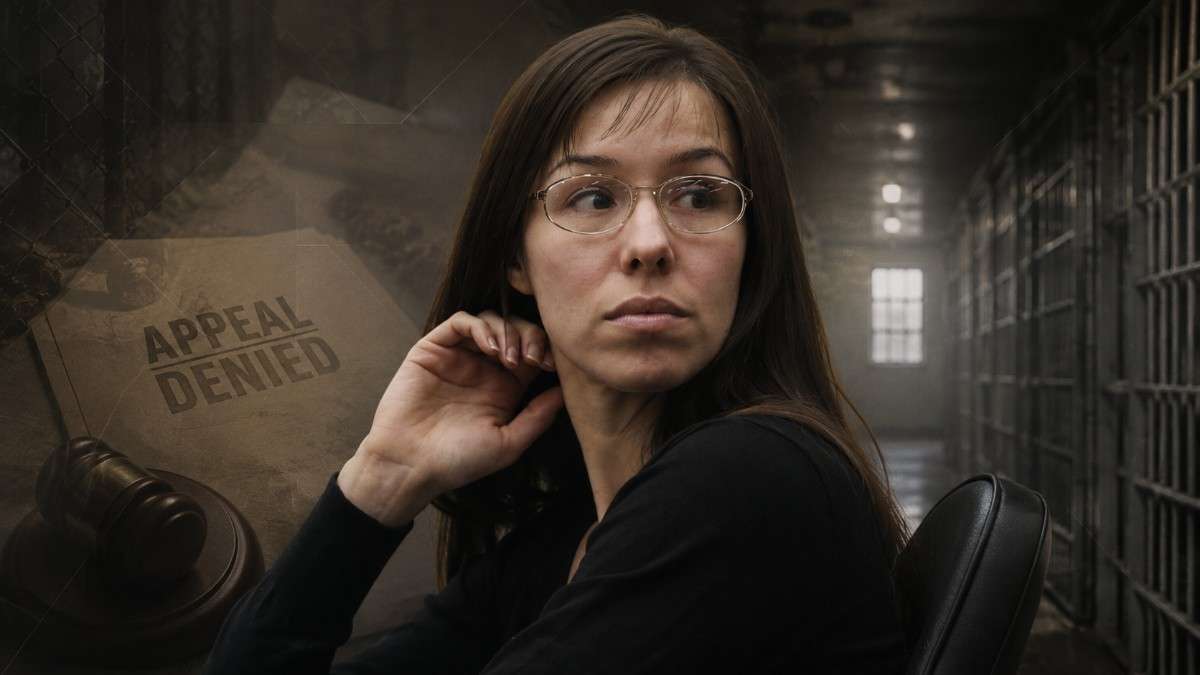
Jodi Arias is currently incarcerated at Perryville State Prison for Women in Goodyear, Arizona, serving a life sentence with no possibility of parole. She is 45 years old as of 2026. There is no release date because parole is not a mechanism available under her sentence.
She was convicted of first-degree murder on May 8, 2013, for the June 2008 killing of Travis Alexander at his home in Mesa, Arizona. Sentencing came later, on April 13, 2015, after a prolonged legal process involving two separate penalty phase juries.
The reason the sentencing took so long comes down to two hung juries. After her conviction, the prosecution sought the death penalty. The first penalty phase jury deadlocked and could not reach a unanimous verdict on death. A second penalty phase jury was convened, and that jury also deadlocked. Under Arizona law at the time, when a second penalty phase jury fails to reach a unanimous verdict on capital punishment, the judge is required to impose life without the possibility of parole. That is the sentence Arias received on April 13, 2015.
Perryville is Arizona’s primary correctional facility for women. It houses the state’s most serious female offenders across multiple units with varying security levels. Arias is one of the highest-profile inmates in the Arizona Department of Corrections system.
What Is Jodi Arias Doing in Prison in 2026?
For most of the decade following her sentencing, Arias largely disappeared from the news cycle. That changed in January 2026, when she resurfaced in ways that are genuinely unusual for someone in her situation.
The Documentary and Her First Public Statements in Years
In January 2026, True Crime Arizona released a documentary called “Obsessed: Unraveling Jodi Arias.” Arias participated in the production and made her first extended public statements in years. The statements were notable not just because she spoke publicly, but because of what she said.
She claimed that evidence in her case had been lost. Specifically, she has alleged that evidence favorable to her defense was not properly preserved. As of this writing, those claims have not been substantiated by any court filings or independent verification. The claim functions as a legal signal more than a proven fact at this stage.
This is a pattern worth recognizing. Arias has historically used media moments to reintroduce her version of events to a new audience. The documentary appearance in 2026 follows the same structural logic as her earlier media behavior during and after the trial.
The Prison Blog
Reporting from AZFamily in January 2026 confirmed that Arias is running a blog from inside Perryville Prison. Prison blogging is not as unusual as it sounds. Inmates can communicate through approved third-party platforms, and some use those channels to maintain a public presence. The specific content and current posting frequency of Arias’s blog had not been independently confirmed in detail at the time of this writing.
The blog is worth noting as a strategy. Staying visible in a media landscape that naturally moves on from old cases requires consistent output. Most inmates serving life without parole do not maintain a public-facing blog. Those who follow the true crime cases of 2026 have noticed this pattern playing out in real time.

Will Jodi Arias Ever Get Out of Prison?
The short answer is that it is extremely unlikely, but the full answer requires knowing what legal routes actually exist. Under her current sentence, parole is simply not available. It is not a question of waiting long enough or demonstrating good behavior. The sentence forecloses it entirely.
Two legal mechanisms could theoretically change her situation. The first is a successful appeal overturning her conviction or sentence. The second is executive clemency, meaning a pardon or commutation from an Arizona governor. Both carry extremely high bars.
A successful appeal would require proving one of a narrow set of legal errors: a constitutional violation at trial, newly discovered evidence that could not have been found through reasonable diligence before trial, or prosecutorial misconduct. None of the appeals filed in the years following her sentencing have produced a new outcome.
The “lost evidence” claim she raised in the January 2026 documentary feeds into this appeal framework. If she could demonstrate that evidence favorable to her defense was deliberately or negligently destroyed, that could theoretically support a constitutional argument. Claiming evidence was lost and proving it in a way that meets the legal standard for a new trial are entirely different things, however. Courts require specific, documented proof, not assertions.
Executive clemency is even less likely. An Arizona governor commuting the sentence of a woman convicted of a brutal, premeditated murder with a high-profile victim and a deeply engaged victim’s family would be a significant political act. There is no evidence any Arizona official is considering it.
The honest framing is this: Arias will almost certainly remain at Perryville for the rest of her life.
What Was Jodi Arias Diagnosed With, and Did It Affect the Trial?
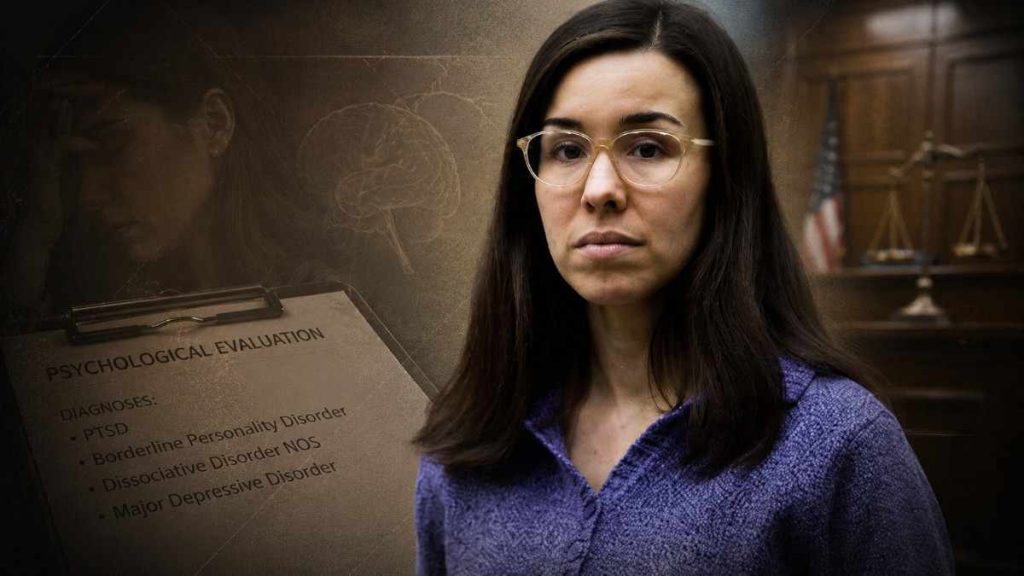
During the trial, defense experts testified that Arias had post-traumatic stress disorder and borderline personality disorder as part of the defense’s psychological case. Borderline personality disorder is a clinical condition characterized by intense emotional responses, unstable interpersonal relationships, and in many cases an intense fear of abandonment. It is a real diagnosis with real treatment pathways.
The defense’s argument was that her mental state at the time of the killing was relevant to the question of premeditation. The prosecution countered effectively by pointing to the planning evident in the crime itself. She rented a car in a different name, turned off location tracking on her phone, and reportedly dyed her hair. These actions, the prosecution argued, reflected deliberate advance planning that was inconsistent with a dissociative or reactive mental state. The jury agreed with the prosecution, returning a first-degree murder conviction.
What is relevant to the current moment is something slightly different. The same pattern of controlling her own narrative, maintaining a public presence, and positioning herself as misunderstood that appeared in the trial defense is visible again in the 2026 documentary and the prison blog.
Why Does the Jodi Arias Case Keep Coming Back?
This is the question the basic search results never answer, and it is the most interesting one. The search volume for “Jodi Arias now” does not behave like the search volume for other high-profile murder cases from the same era. It stays elevated, spikes, and resurfaces on a predictable cycle. There are three reasons for that.
She Generates Her Own News Cycle
Most defendants serving life without parole disappear from public view within a few years of sentencing. They stop giving interviews, stop appearing in documentaries, and the media moves on. The search volume declines, and the case becomes a historical reference rather than an active conversation.
Arias has not done that. The 2026 documentary, the prison blog, the legal signals, and earlier media appearances since her sentencing form a clear pattern. Every two to three years, there is a new Arias media moment, and each one generates a fresh round of search traffic. Compare that to other cases from the same era where defendants went silent after sentencing; the search volume on those cases declined steadily and has not recovered.
The Trial Was Unusual Enough to Stay in Memory
The trial ran from January to May 2013 and became one of HLN’s most-watched live broadcast events in the network’s history. Arias testified for 18 days. Most criminal defendants do not testify at all, and 18 days of direct and cross-examination created something most trials never produce: parasocial familiarity. The true crime genre has expanded enormously since 2013, and the Arias case is one of the foundational cases that new audiences discover when they start exploring the genre. Similar dynamics have played out elsewhere, including cases like the one followed by Dee Dee Blanchard case followers who came to the story years after the original coverage.
The Case Never Felt Fully “Resolved” to the Public
Cases that feel finished stop generating search traffic. Cases that feel contested stay alive online. The Arias case has two structural features that keep it feeling unresolved. First, the two deadlocked juries on the death penalty created an ambiguous ending. A first-degree murder conviction is definitive, but the penalty phase outcome was not. Second, Arias herself has never stopped asserting that the case was handled unjustly. A case where the convicted person has gone silent reads as resolved; a case where the convicted person keeps talking reads as ongoing.
What Happened to the People Connected to the Case?
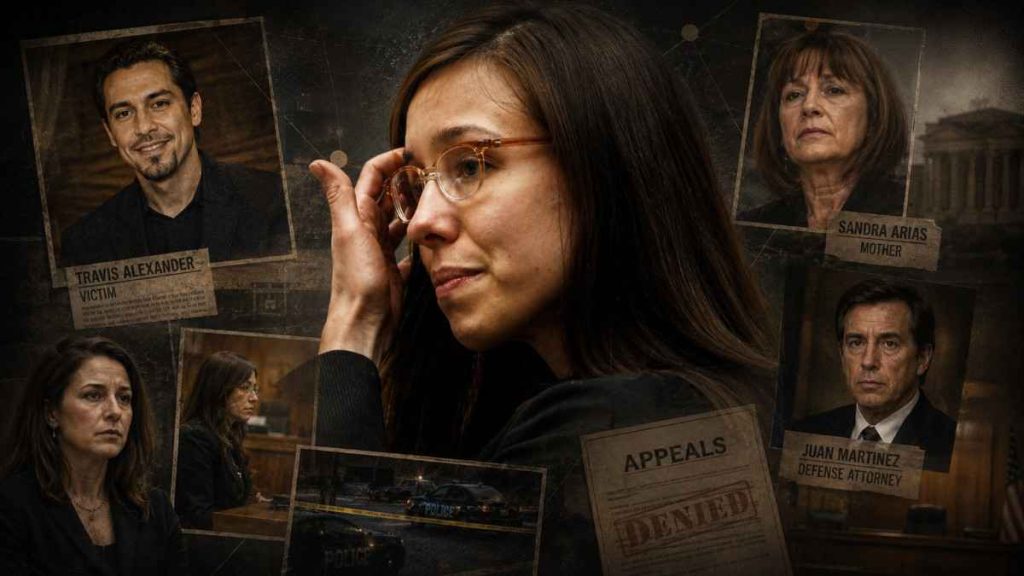
Travis Alexander was 30 years old when he was killed in June 2008. He was a motivational speaker and an active member of his Mormon community in Mesa, Arizona. His family has consistently opposed any leniency for Arias, and his siblings delivered victim impact statements during the sentencing proceedings that were among the most widely covered moments of the entire case.
Arias’s own family largely retreated from public life after the trial. There is no confirmed record of regular prison visits, and her family members have not made public statements in recent years.
Kirk Nurmi, Arias’s lead defense attorney, wrote a book about the case after it concluded. His account was notable for how critical he was of his own client. He described the attorney-client relationship as among the most difficult of his career and made clear that he did not personally like Arias. Nurmi has since left criminal defense practice.
Juan Martinez, the prosecutor who secured the conviction, was later subject to disciplinary proceedings by the Arizona State Bar related to conduct in other cases. He was reprimanded and eventually resigned from the Maricopa County Attorney’s Office. His departure was unrelated to the Arias case itself, but it added another layer of post-trial news that kept the broader case ecosystem in circulation.
The Real Story Is the Pattern
The case against Jodi Arias was legally resolved in 2015. The cultural case, the one that keeps generating search traffic and documentary deals and podcast episodes, has never closed. That distinction is worth sitting with.
What makes the Arias case genuinely unusual is not the crime itself or even the trial. It is the fact that she has refused to disappear. Every few years, she surfaces again through a new media vehicle, reintroducing her version of events to an audience that has partially turned over since the last time. The 2026 documentary is the most recent example, but it is not the first, and if the pattern holds, it will not be the last.
If you want to follow any new legal developments, watch for actual court filings rather than documentary claims. Arias is very good at signaling legal action through media. She is considerably less successful at producing legal outcomes. The difference between those two things is where the real story of the next few years will be.